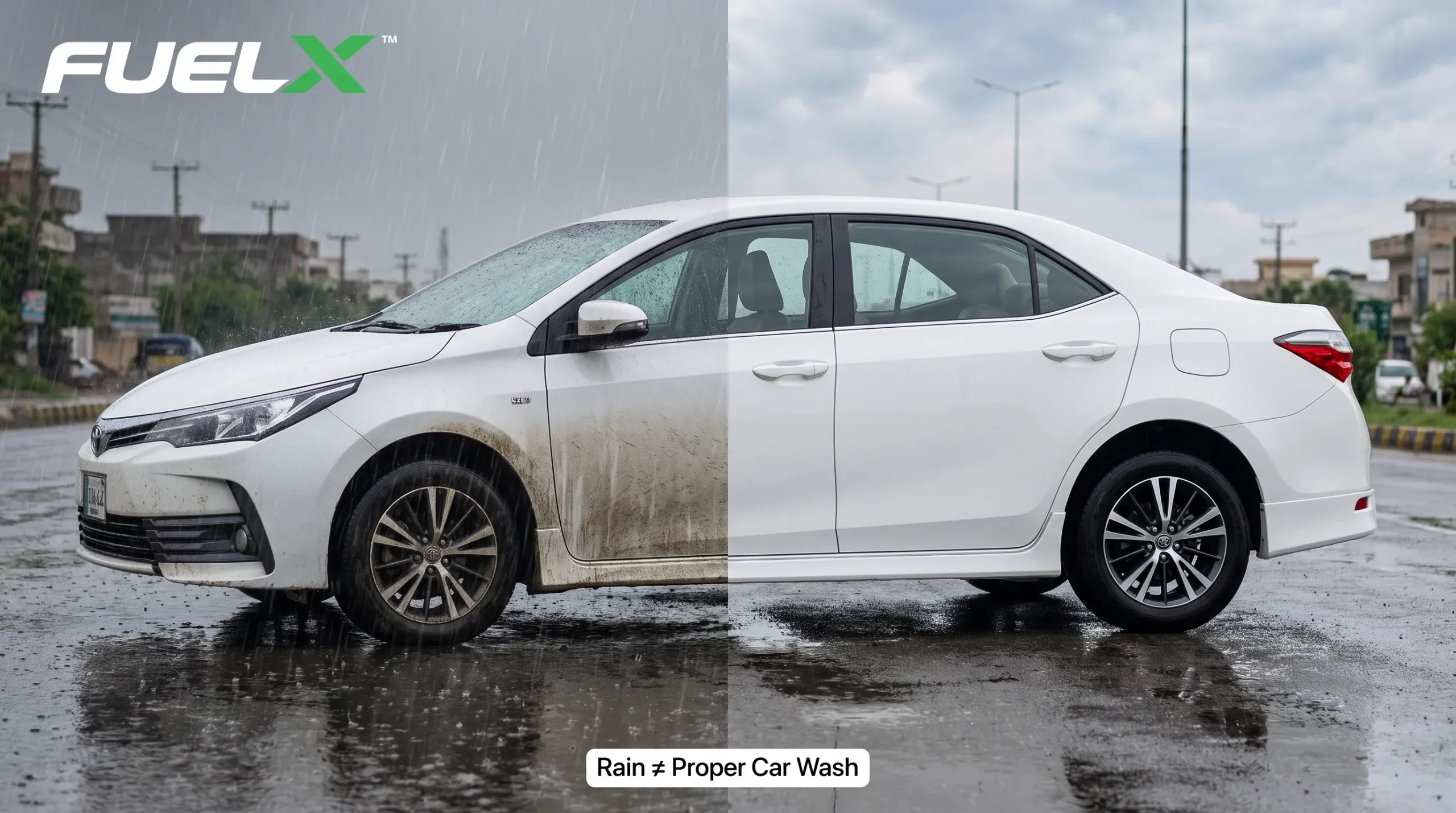
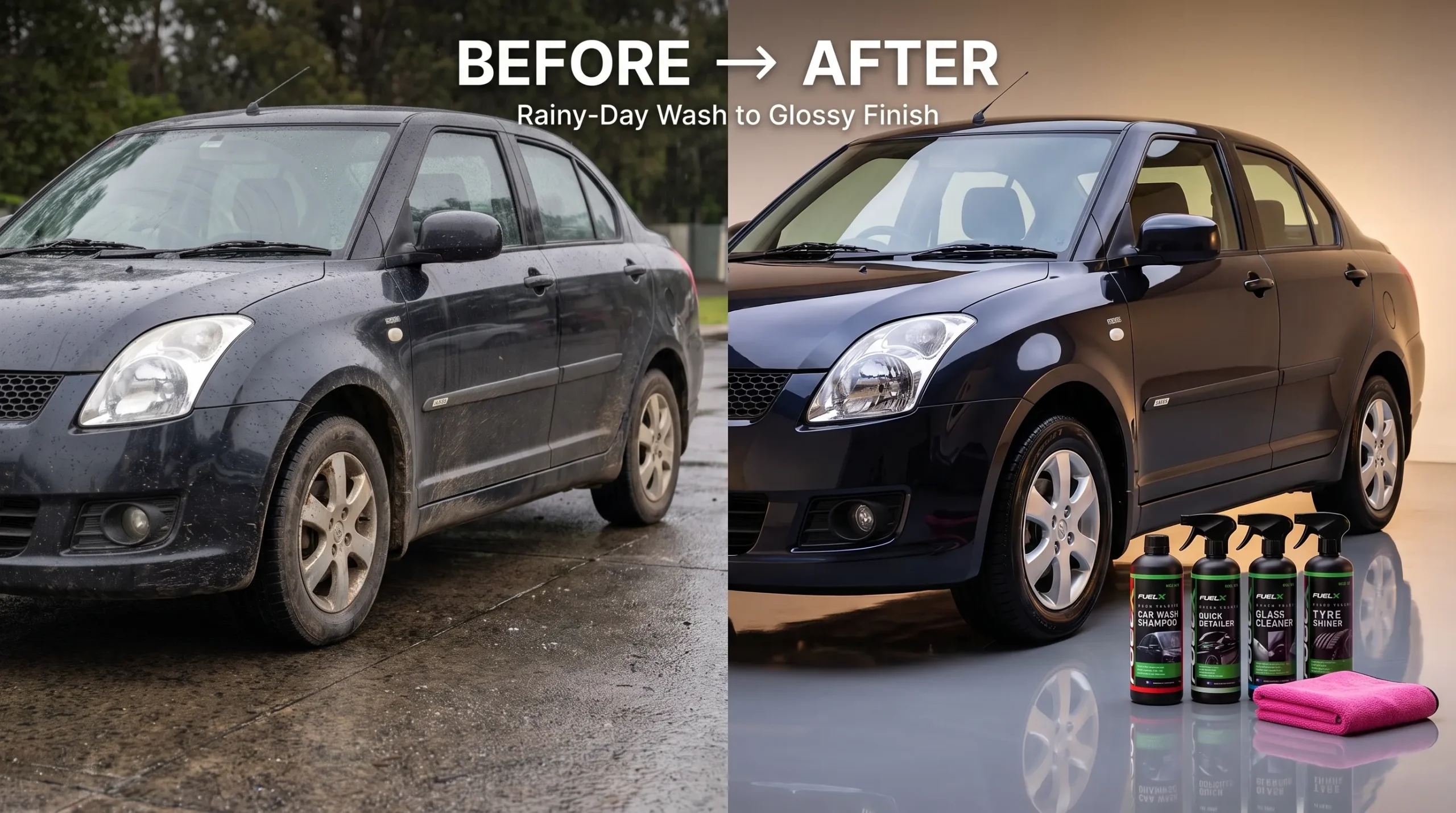
A rainy day can make your car look freshly washed for a few minutes, but once the water dries, you may notice muddy lower panels, dull paint, streaky glass, and small water spots. This is especially common when rain falls on roads already covered with dust, mud, oil residue, and other contaminants.
The solution is not simply to wash the car again or apply more polish. The real difference comes from how you rinse, wash, dry, and finish the vehicle.
For example, if your car has been driven through wet roads for 30–60 minutes during monsoon weather, the lower doors and wheel arches can collect a noticeable layer of road grime even when the upper body still looks relatively clean. If that grime is rubbed directly with a cloth, the particles can move across the paint and contribute to fine swirl marks.
A proper post-rain routine removes those contaminants first and then restores the clean, glossy appearance.
Why Does Your Car Look Dull After Rain?
Rain does not automatically mean your car has been properly washed. Several things can make the paint look less glossy after a rainy day.
Rainwater Mixes With Road Dirt
As rain falls, it lands on roads, parking areas, and other contaminated surfaces. Vehicles then splash this mixture onto their own bodywork.
The lower 20–30 cm of the car is usually particularly vulnerable because it is close to the road surface. Mud can accumulate around the wheel arches, lower doors, bumpers, and side skirts.
The problem becomes more noticeable when a car is driven through standing water. A clean-looking vehicle can pick up a visible layer of brown or grey road grime within a relatively short drive.
Water Spots Form When Droplets Dry
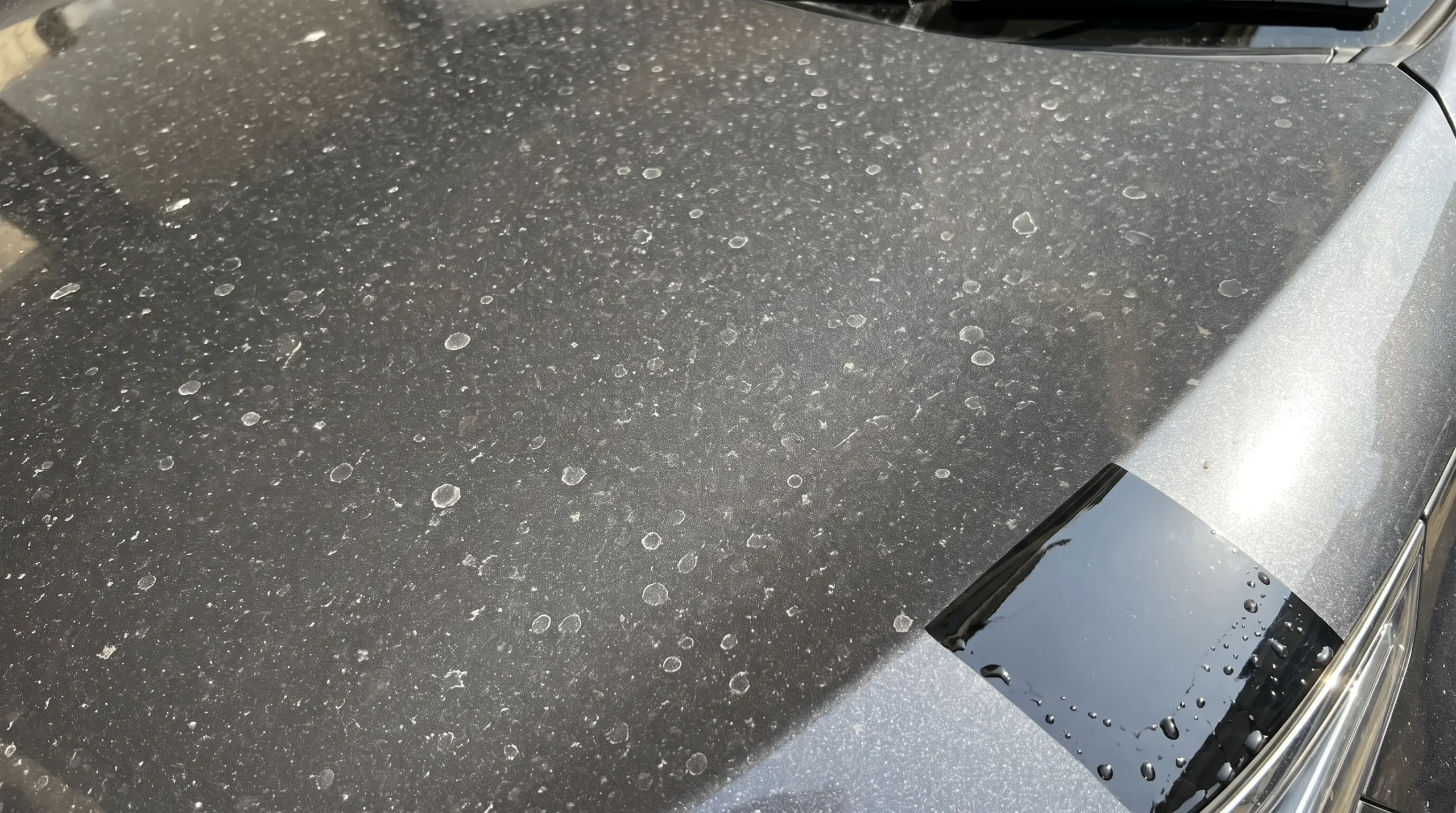
When a water droplet evaporates, the water disappears but dissolved minerals and other residue can remain on the surface.
Imagine a few drops of hard water drying on a glass table. You may see a circular white mark afterward. A similar process can happen on automotive paint.
The effect is often more visible on black, dark blue, and other darker vehicles because the contrast between the paint and the residue is greater.
Incorrect Drying Can Reduce Gloss
Leaving the car to air-dry may seem harmless, but dozens or hundreds of individual droplets can remain across the paint.
If the water contains minerals, every dried droplet has the potential to leave residue behind.
There is another problem: wiping a dirty car with a rough or contaminated cloth can drag grit across the paint. A clean microfiber towel is much better suited to drying because its fibers can absorb water while reducing the need for aggressive rubbing.
Household Cleaning Products Can Be Too Harsh
Dishwashing liquid is designed to remove grease and food residue from dishes. A car’s exterior has different requirements.
For routine vehicle washing, a dedicated car shampoo is a better option because it is formulated specifically for automotive surfaces.
The objective is not simply to produce foam. The objective is to loosen and remove contamination while allowing you to clean the vehicle with as little unnecessary friction as possible.
What Do You Need to Make Your Car Shine?
You do not need a professional detailing studio to achieve a clean finish at home.
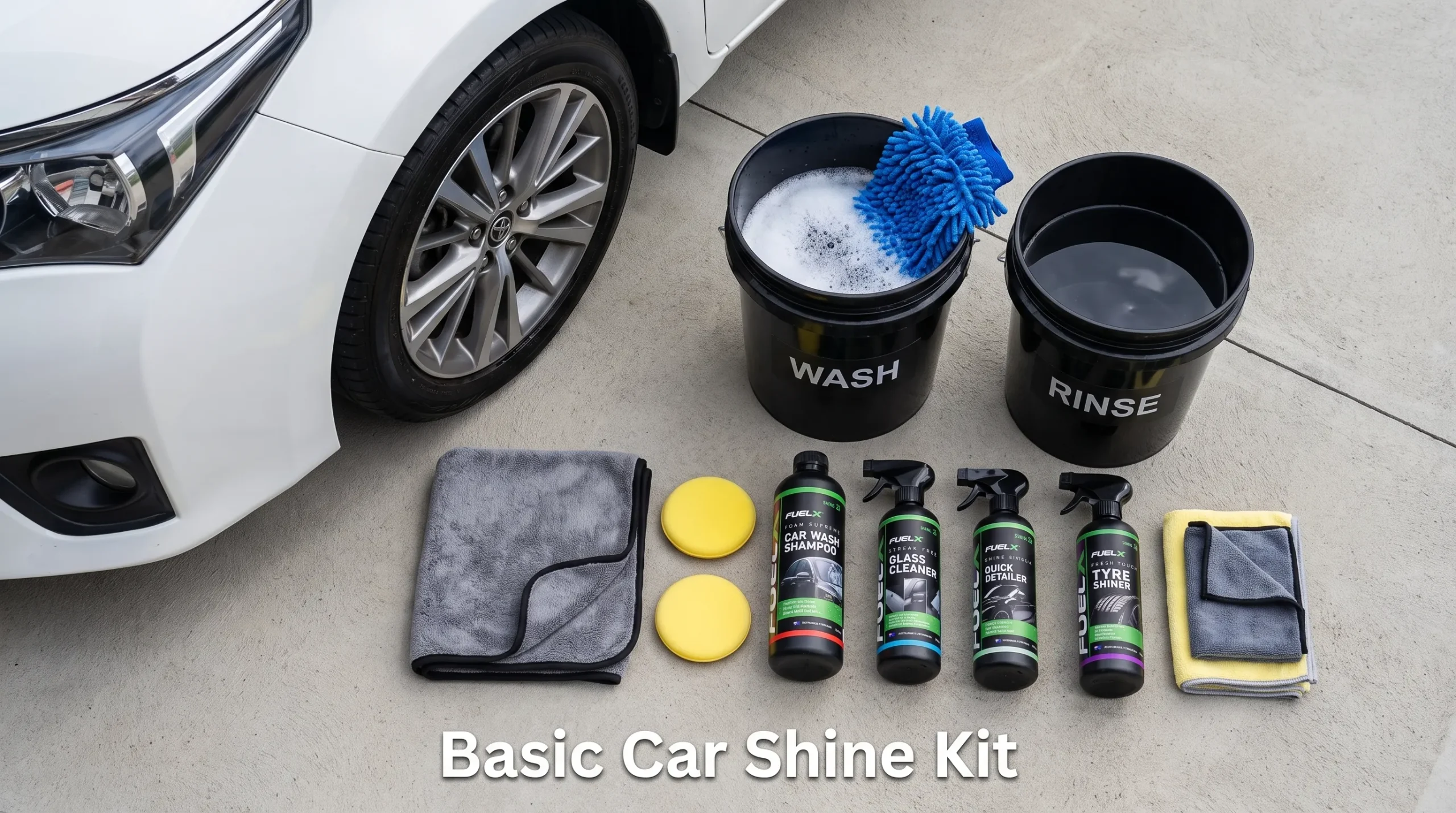
A practical setup includes:
Two buckets
Clean water
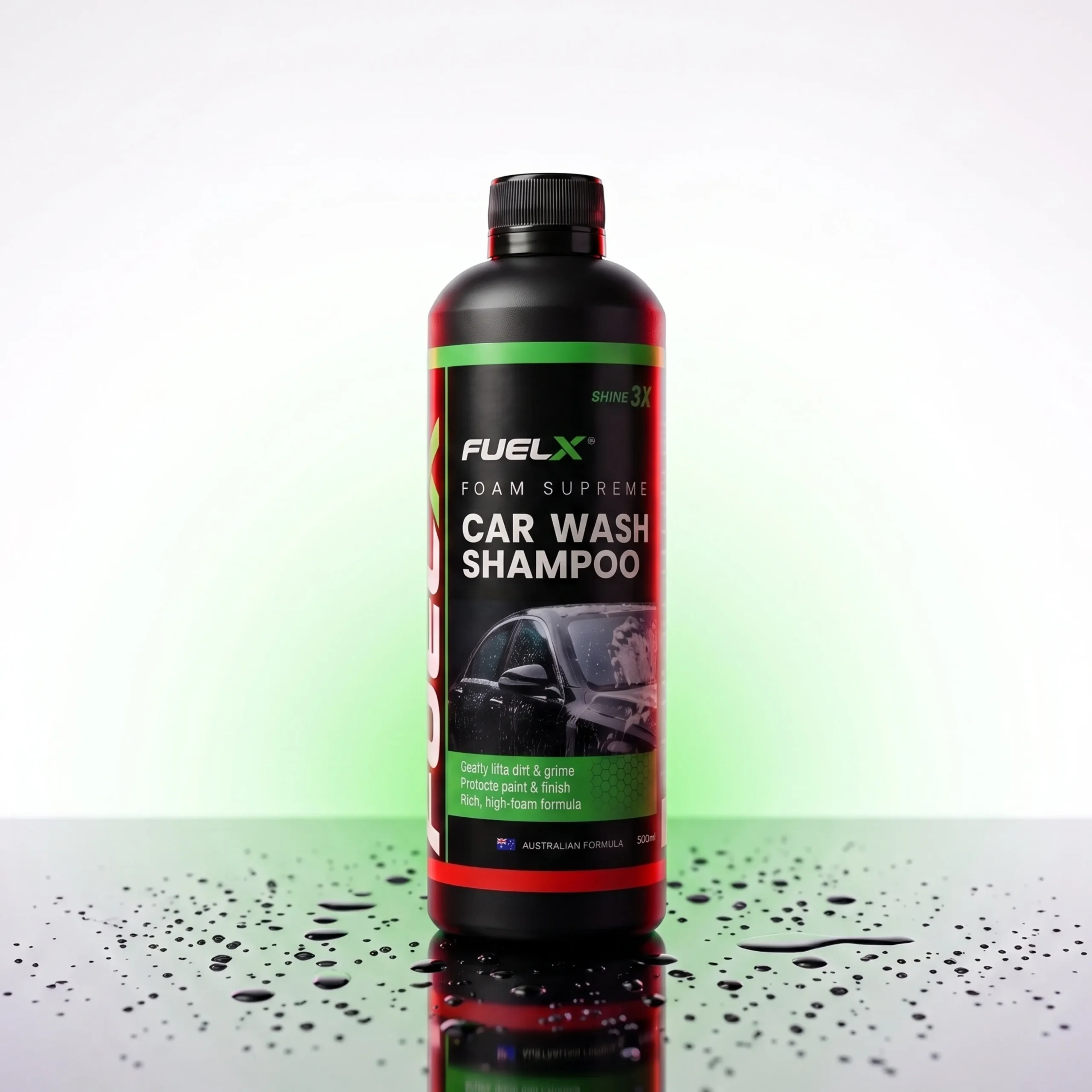
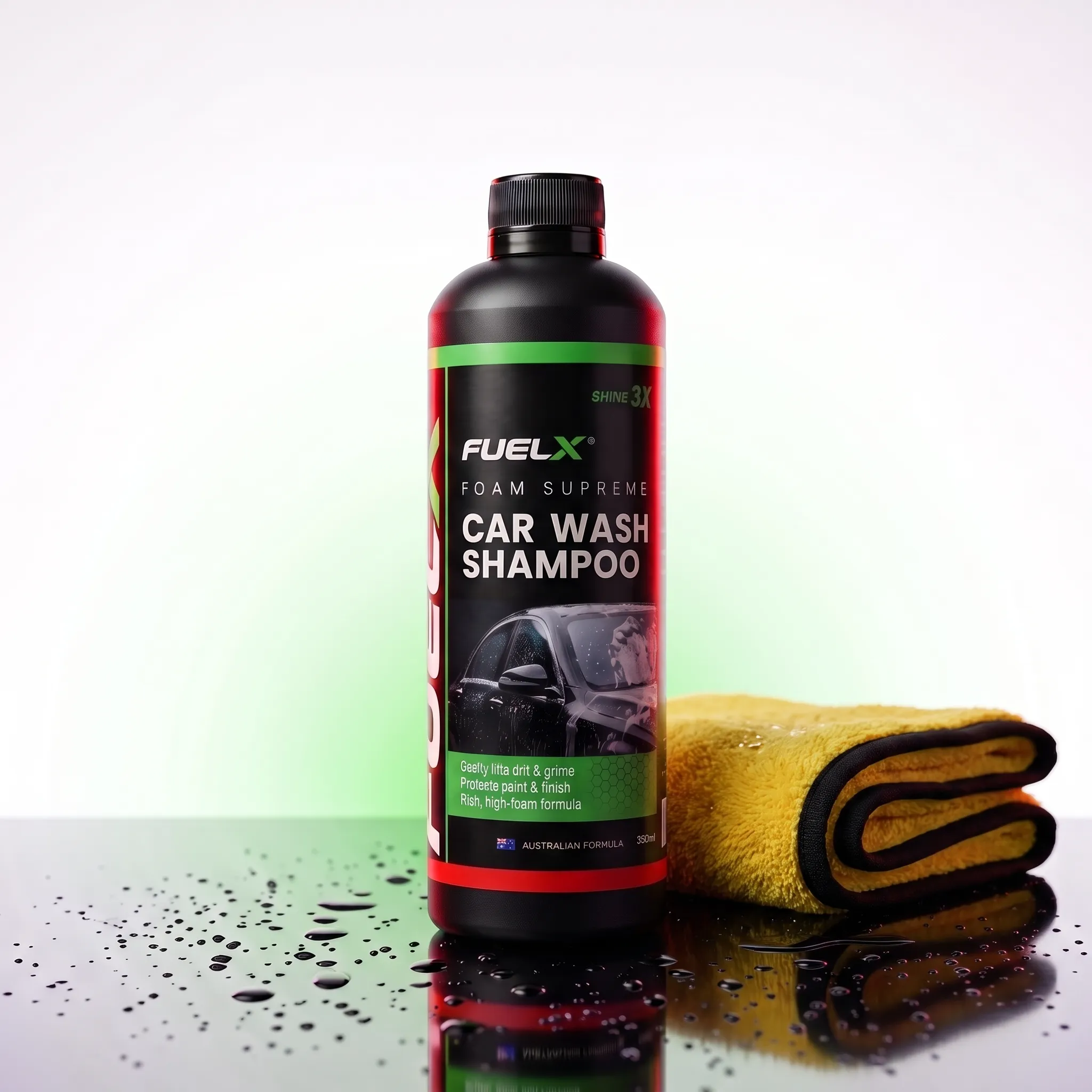
Automotive car wash shampoo
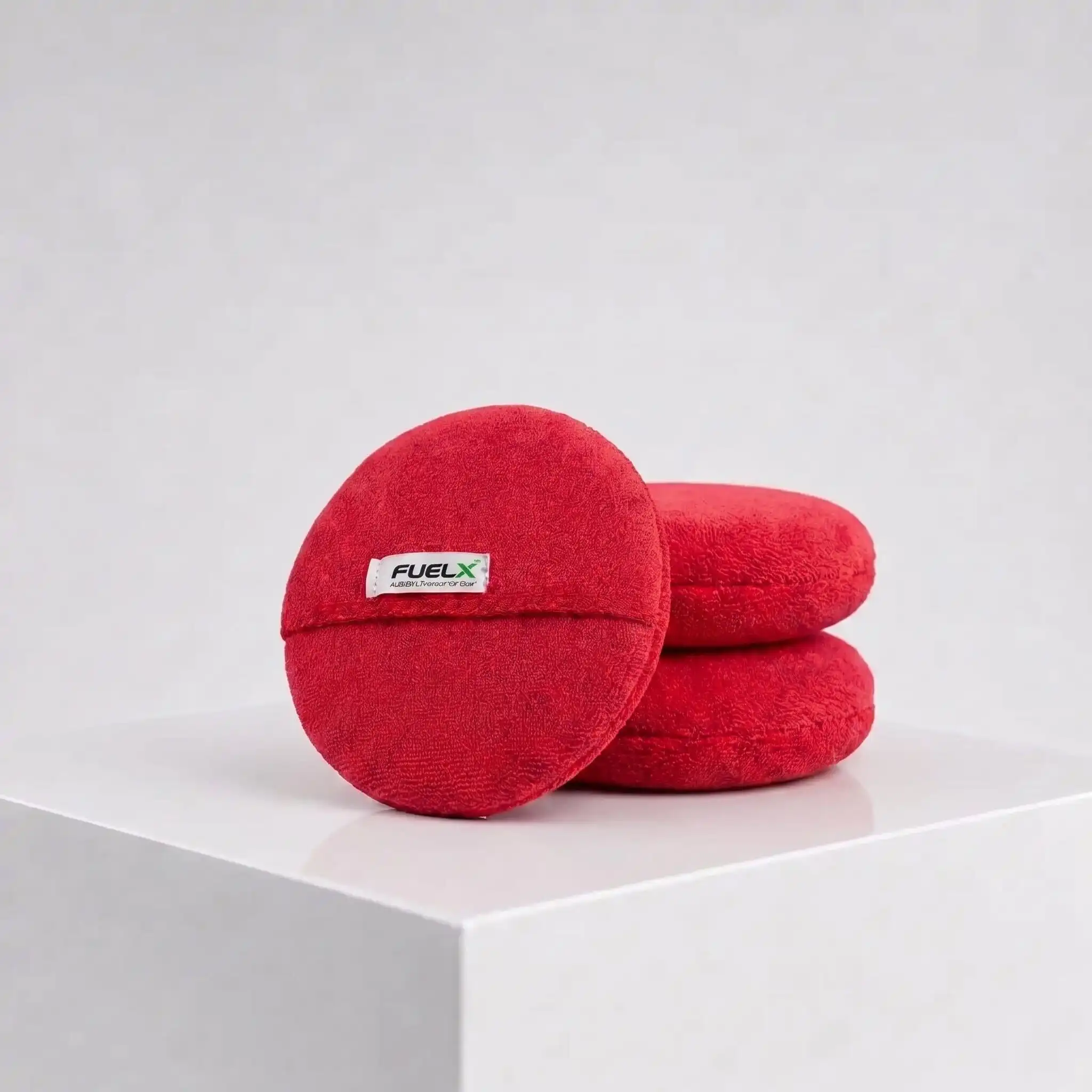
Soft microfiber wash mitt or sponge
One or more clean microfiber drying towels
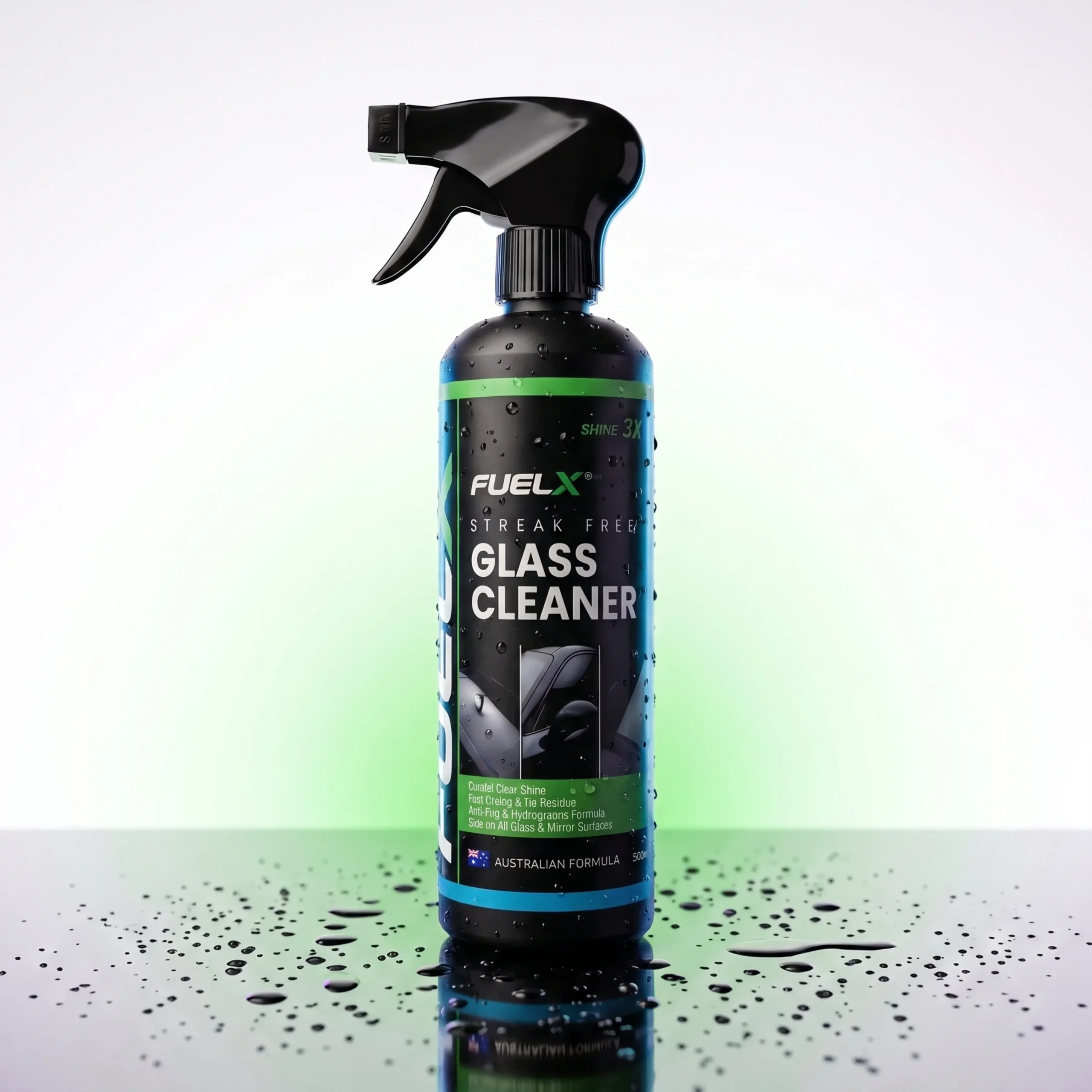
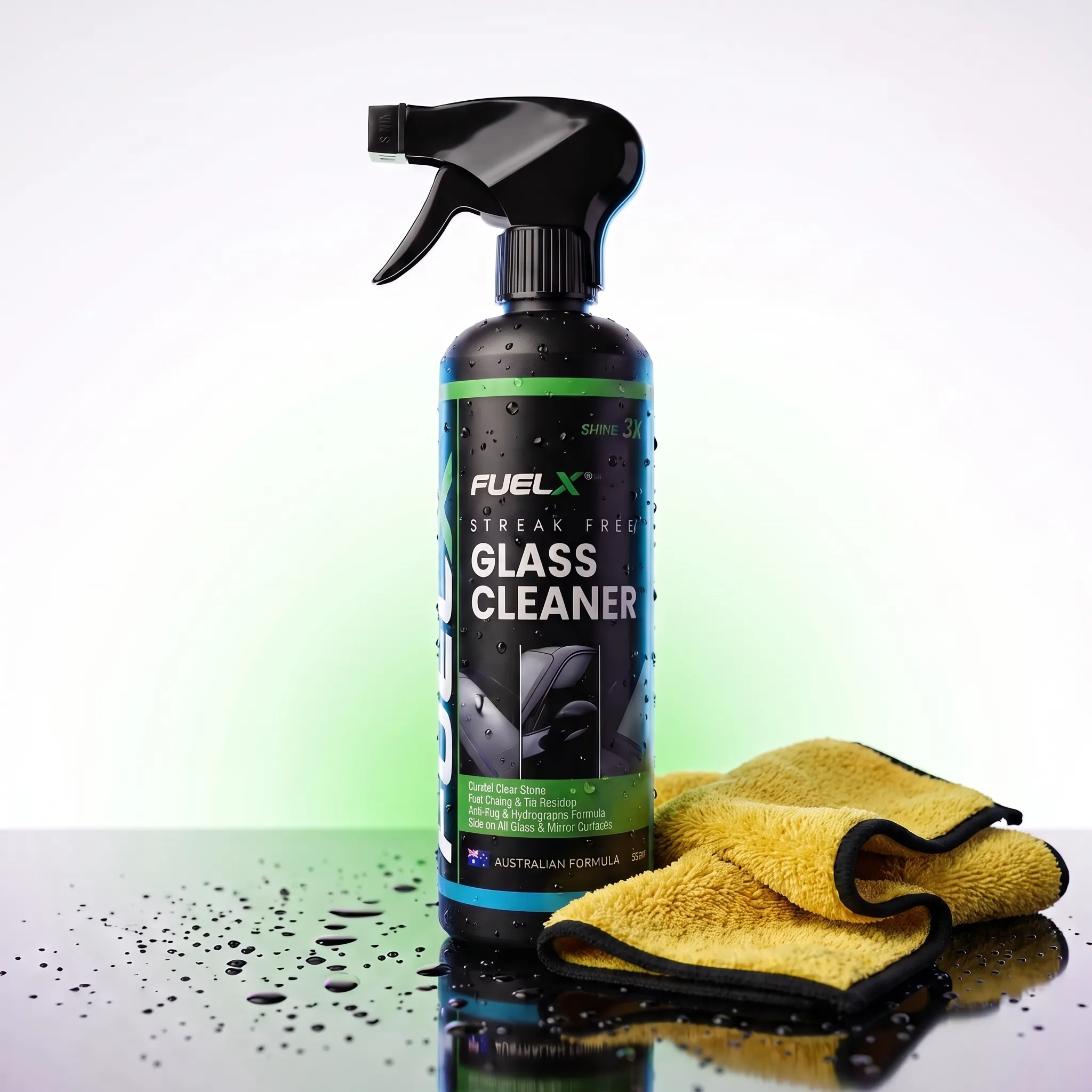
Glass cleaner
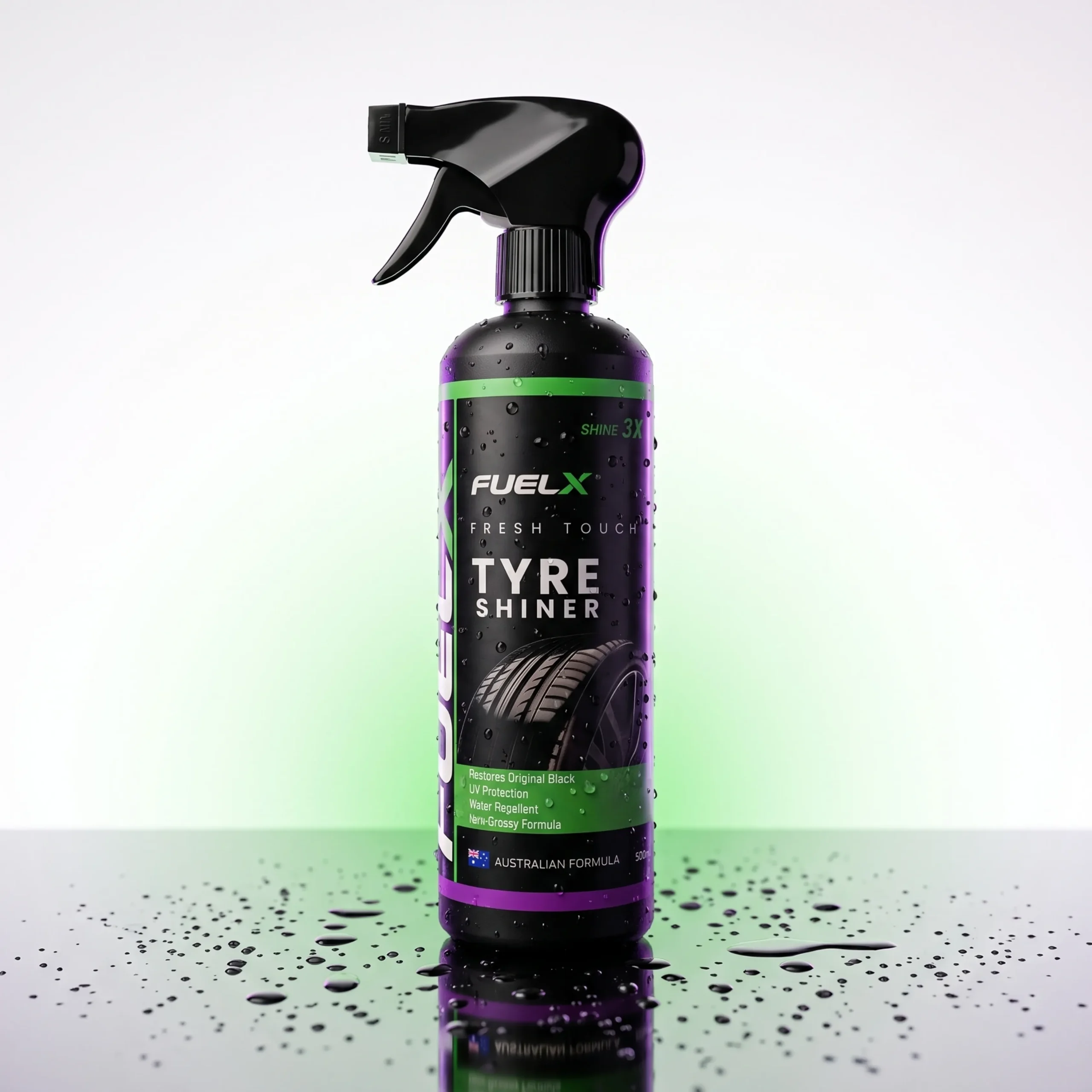
Tyre shiner
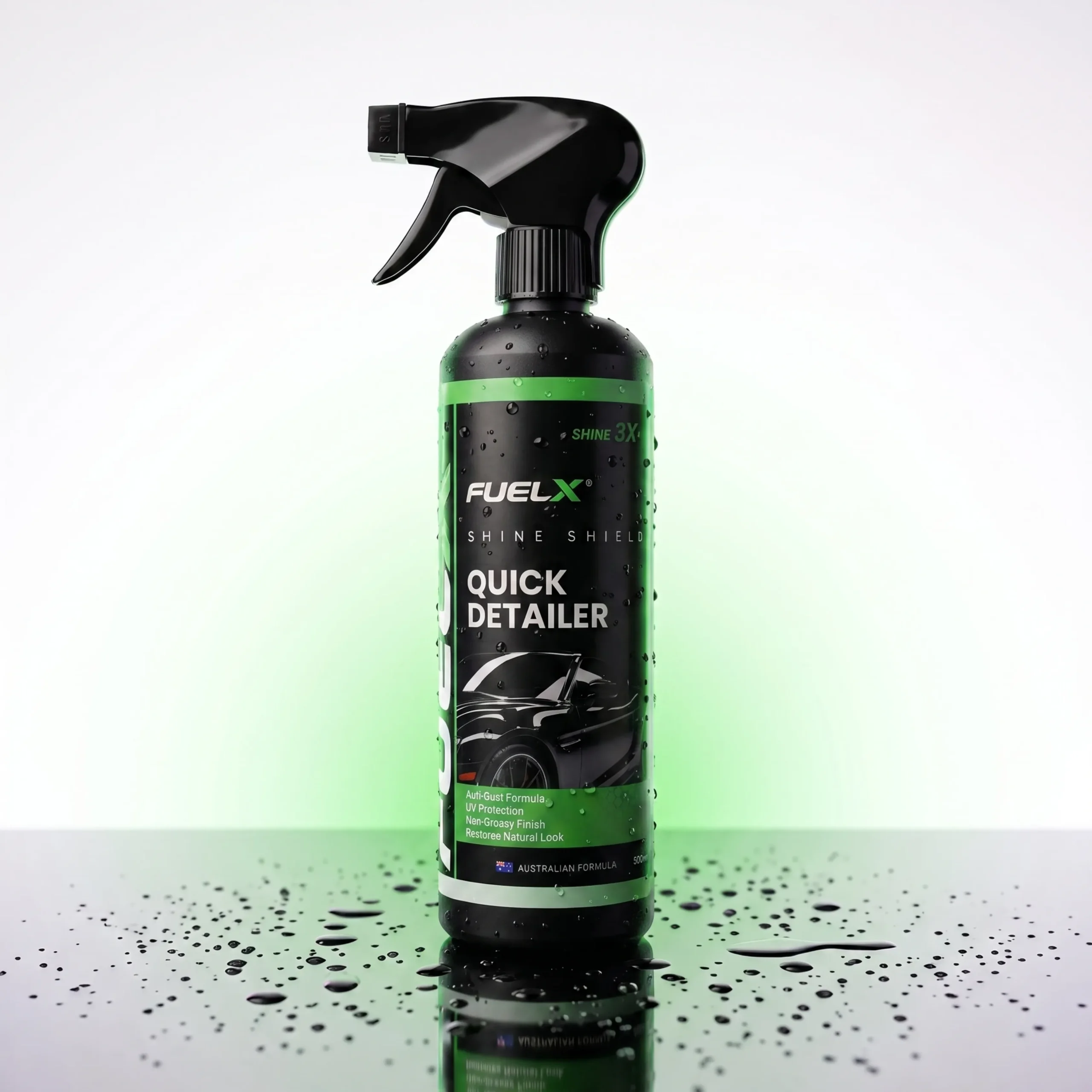
Quick detailer
Separate towels for glass and dirtier areas
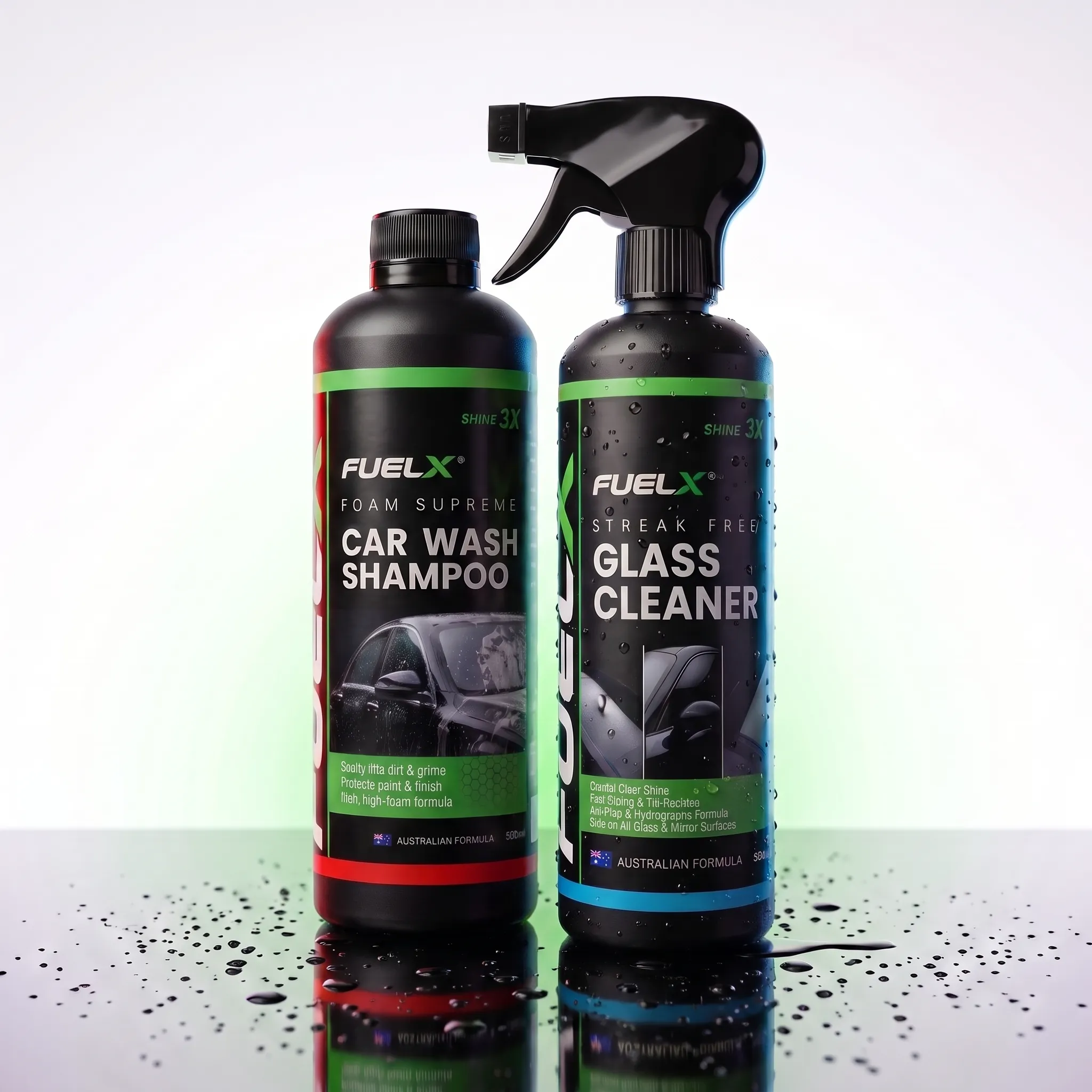
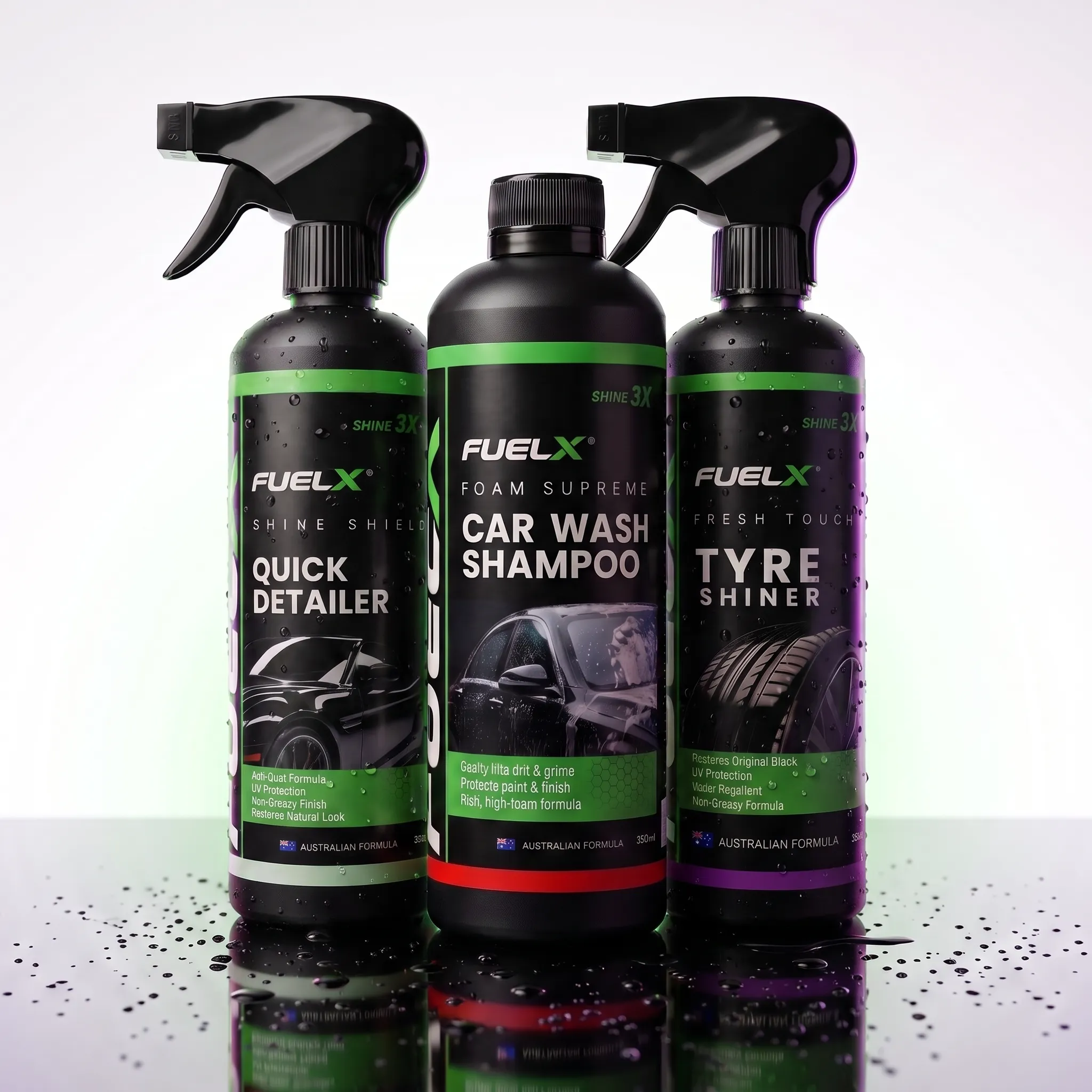
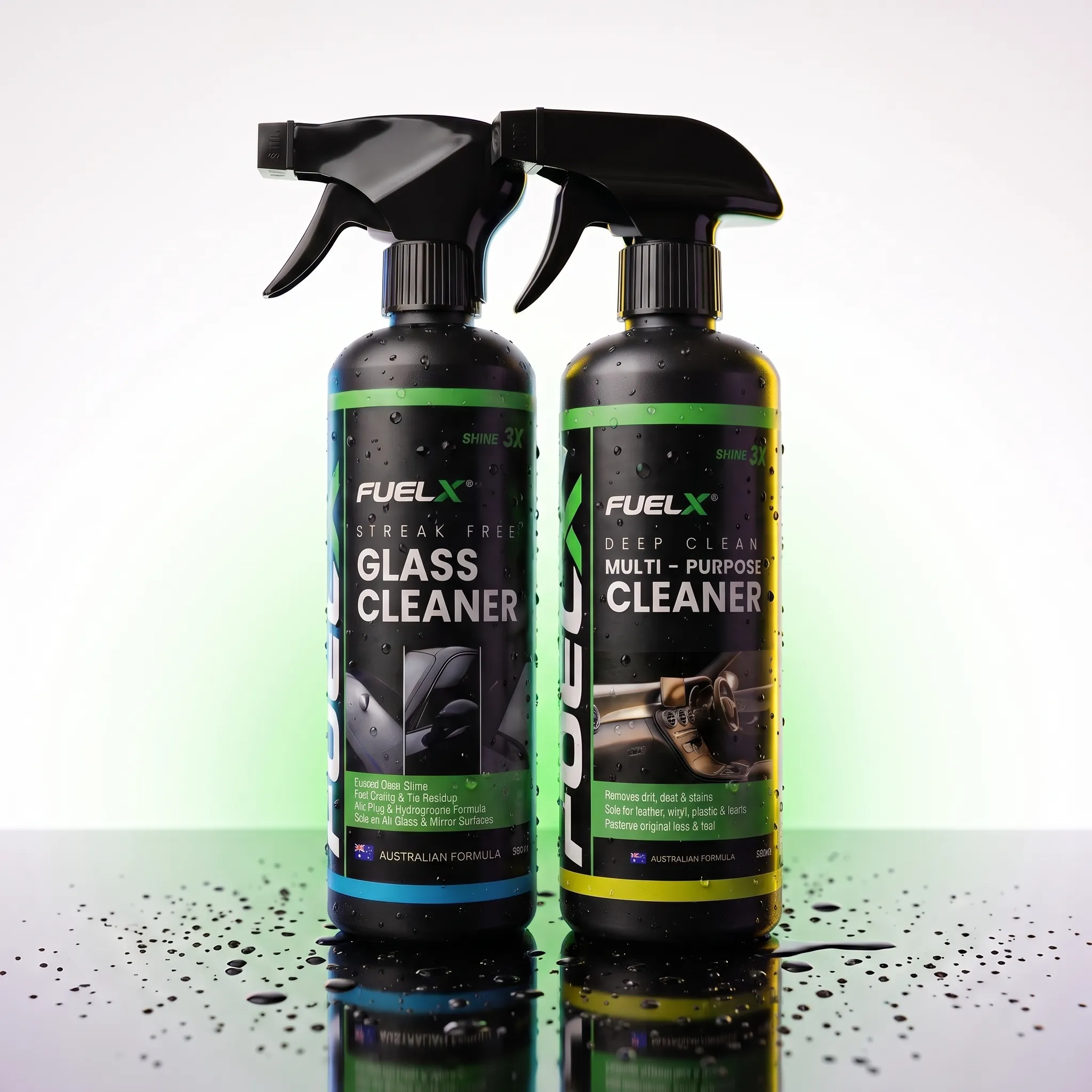
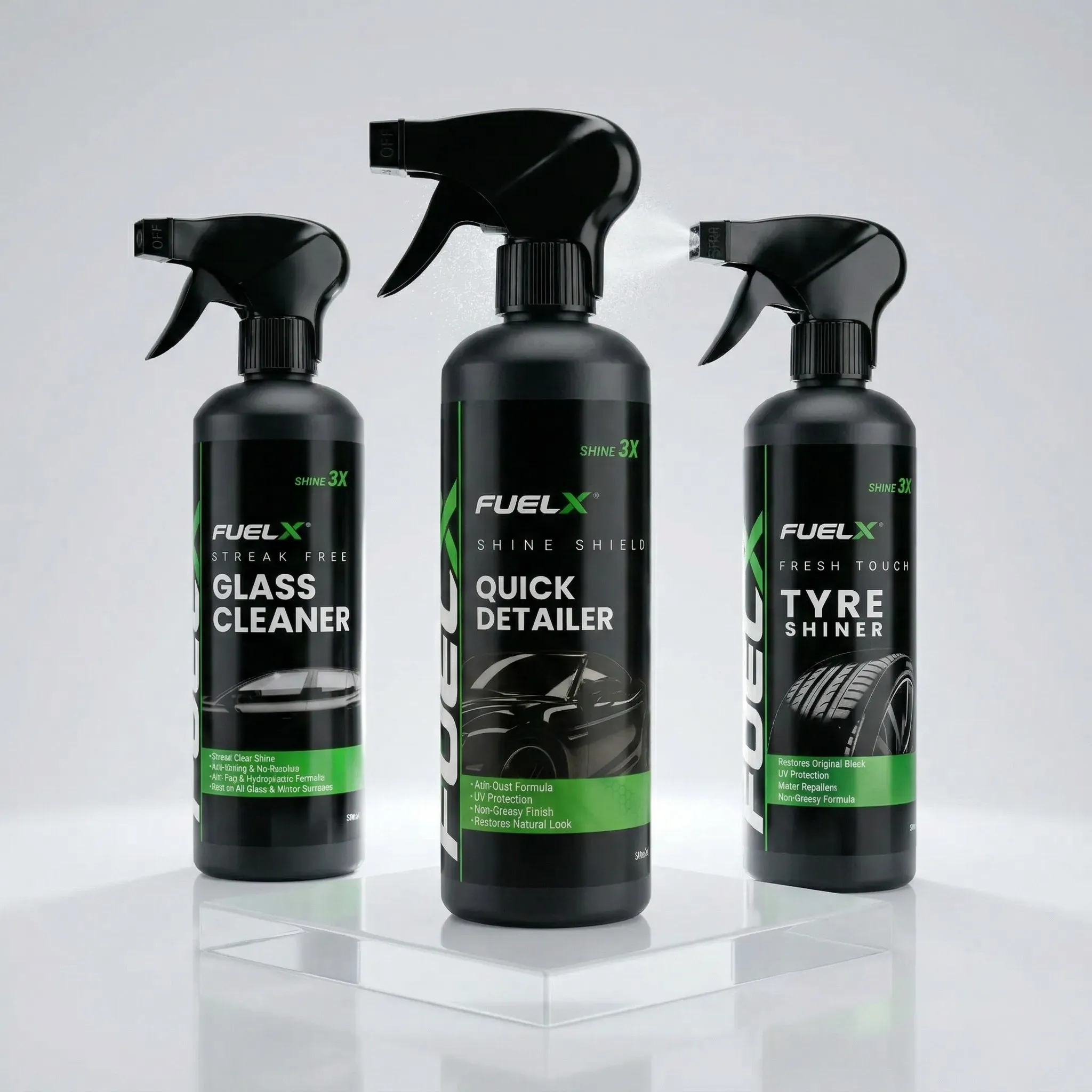
For a FuelX-focused routine, products such as FuelX Car Wash Shampoo, FuelX Premium Microfiber Detailing Towel, FuelX Glass Cleaner, FuelX Tyre Shiner, and FuelX Quick Detailer can cover most of the basic exterior-cleaning process.
The important point is that technique matters as much as the product. Using a premium product incorrectly will not produce a professional result.
Step-by-Step: How to Make Your Car Shine After a Rainy-Day Wash
1. Let Heavy Mud and Dirt Settle Before Washing
If the car has just come through heavy rain, avoid immediately rubbing the muddy surface with a sponge.
Road grime can contain fine sand, dust, and other abrasive particles. If you drag those particles across the paint, you increase the risk of creating fine scratches.
Instead, inspect the car first.
Look closely at:
Lower doors
Wheel arches
Front bumper
Rear bumper
Side skirts
Mud flaps
Areas behind the wheels
If these areas are heavily contaminated, plan to give them a thorough pre-rinse.
The simple rule is:
Don’t rub dirt away when you can rinse it away first.
2. Rinse the Car Thoroughly
Start with clean water and rinse the entire vehicle.
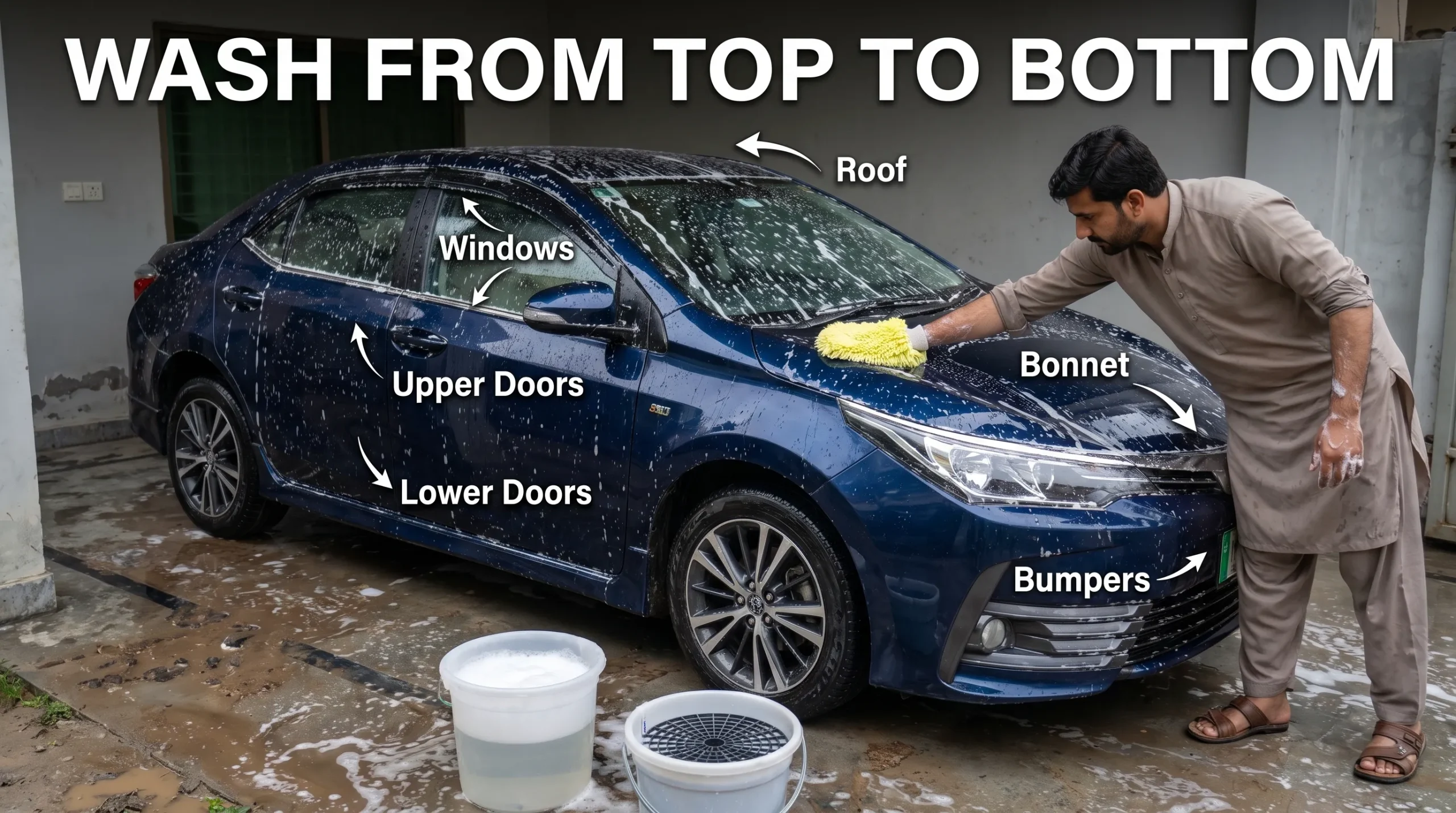
Work from the roof downward. This helps because dirty water naturally moves toward the lower sections of the vehicle.
Spend additional time around the dirtiest areas.
For example, if the lower doors have visible mud, do not immediately attack them with a wash mitt. Give them another rinse first.
A thorough pre-rinse can remove a large portion of loose contamination before physical contact with the paint.
This matters because every unnecessary rubbing motion creates another opportunity for grit to move across the surface.
3. Wash With a Proper Car Shampoo
Prepare your car shampoo according to the manufacturer’s instructions.
If you use the two-bucket method, keep one bucket for your shampoo solution and another for rinsing your wash mitt.
Work systematically:
Roof
Glass
Bonnet
Upper doors
Lower doors
Rear section
Bumpers
The reason for starting at the top is simple: upper panels generally contain less heavy road contamination than the lower parts.
Use gentle strokes and avoid putting excessive pressure on the paint.
If you find a stubborn patch of mud, do not immediately scrub harder. Rinse it again and allow the shampoo solution to loosen the contamination.
How much shampoo should you use?
Follow the manufacturer’s recommended dilution rather than guessing.
Using twice as much shampoo does not necessarily make the car twice as clean. Excess product can simply increase residue and make rinsing more difficult.
The goal is enough cleaning solution to provide effective lubrication and cleaning without unnecessary waste.
4. Rinse Away All Shampoo Residue
After washing, rinse the vehicle thoroughly.
Pay attention to areas where soap can hide:
Door handles
Side mirrors
Badges
Grilles
Window seals
Panel gaps
Trim pieces
If shampoo dries on the surface, it can leave visible marks and make the final finish look uneven.
This is particularly important during hot weather. A vehicle washed under strong Pakistani sunshine can dry considerably faster than one washed in shade.
Whenever possible, wash the car in a shaded area and avoid washing extremely hot body panels.
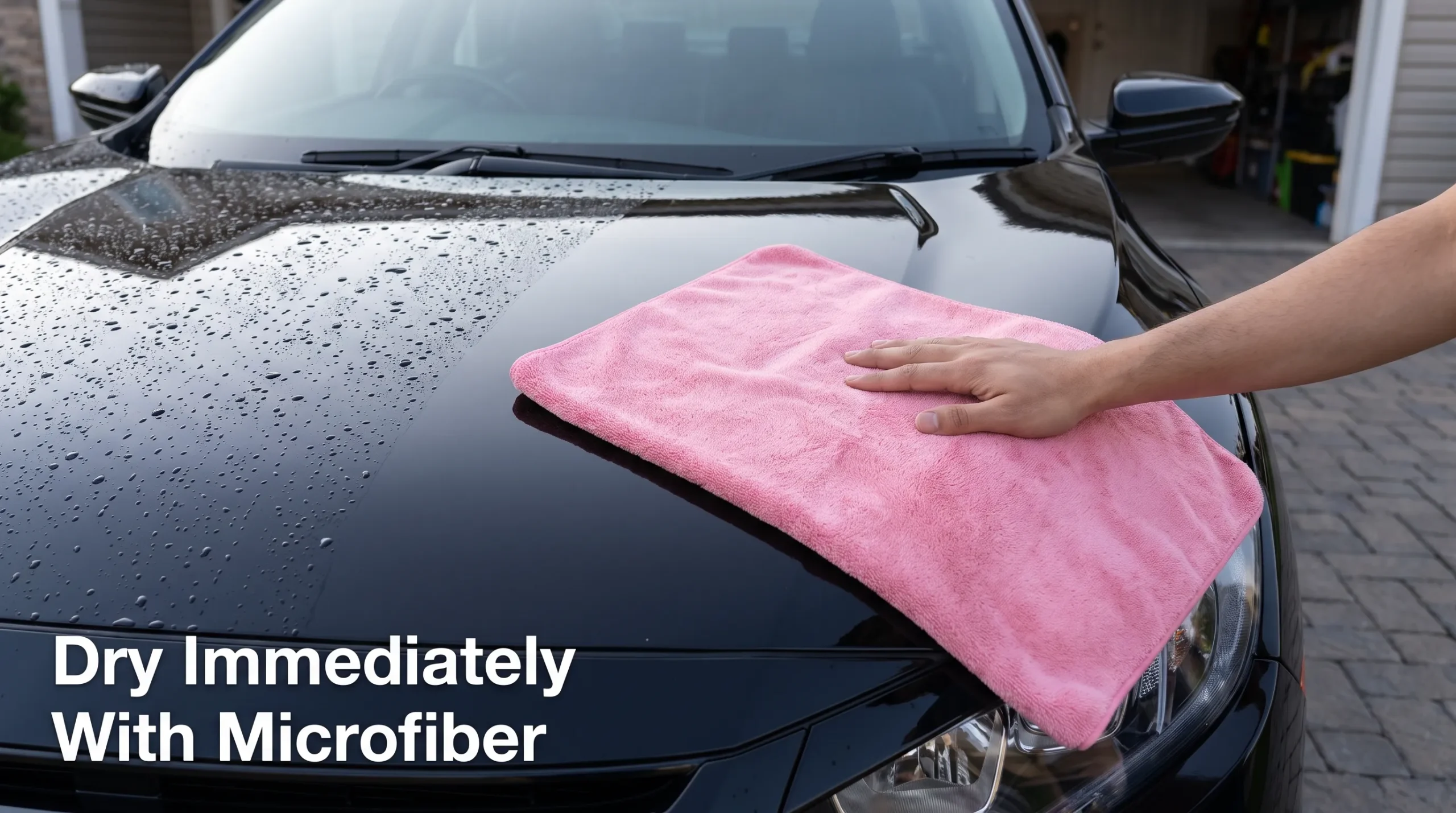
5. Dry the Car Immediately
This is one of the most important steps in achieving a glossy finish.
Once rinsing is complete, do not simply park the vehicle and wait for the water to disappear.
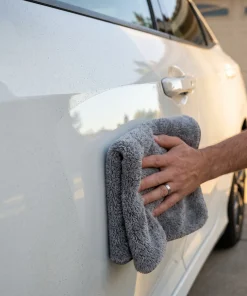
Use a clean microfiber drying towel.
Gently glide the towel across the surface or use a light patting technique. Avoid aggressive scrubbing.
If one towel becomes saturated, use another clean towel instead of repeatedly dragging a wet towel across the paint.
Why is drying so important?
Consider a car covered with 200–300 small water droplets. If those droplets dry naturally, each droplet can leave behind a small amount of mineral residue.
Even if each mark is tiny, the combined effect can make the paint look dull or spotted when viewed in sunlight.
Drying removes the water before that residue has a chance to remain on the surface.
6. Remove Remaining Water Spots
Once the car is dry, inspect it under good lighting.
Move around the vehicle and look at the paint from different angles. Some water spots are difficult to see in shade but become obvious when sunlight hits the panel.
If you notice a few light marks or fingerprints, a suitable quick detailer may help improve the finish.
Apply it according to the manufacturer’s instructions and work on small sections.
However, understand the limitation.
A quick detailer can help with light residue and enhance the appearance of a clean surface. It is not a paint-correction product.
If water spots have been sitting on the paint for a long time and have become etched into the clear coat, they may require more specialized detailing.
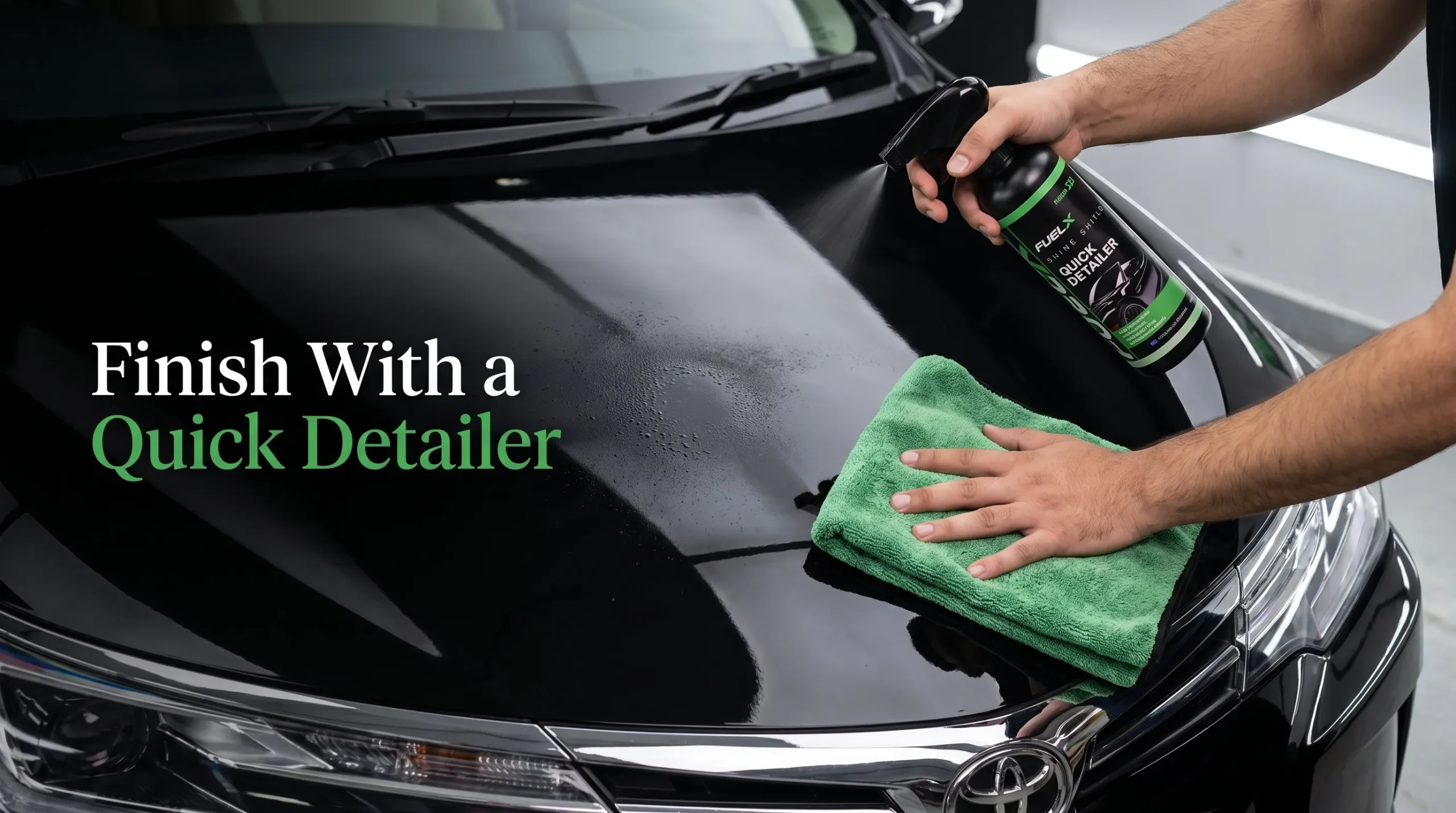
7. Use a Quick Detailer for the Final Gloss
After washing and drying, a quick detailer can provide the finishing touch.
The key is to use a small amount and work methodically.
For example:
Select one panel.
Apply the recommended amount.
Spread it evenly.
Buff gently with a clean microfiber towel.
Flip the towel to a dry side.
Perform a final light wipe.
Inspect the panel before moving on.
Do not keep adding product because the car does not immediately look glossy enough.
If the paint is dirty, oxidation is present, or the surface has scratches, adding more quick detailer will not solve the underlying problem.
A clean and properly dried surface is the foundation of good gloss.
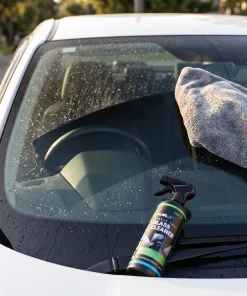
8. Clean the Glass Separately
Clean glass can make a surprisingly large difference to the overall appearance of your vehicle.
Use a dedicated glass cleaner for:
Windshield
Side windows
Rear glass
Exterior mirrors where appropriate
Use a separate microfiber cloth for glass.
This is especially important for the windshield because oily residue, road grime, and water marks can affect visibility.
At night, a dirty windshield can become even more noticeable when headlights from other vehicles reflect through moisture or residue on the glass.
So this step is not only about appearance. It also supports better visibility.
9. Finish the Tyres
Once the bodywork is finished, turn your attention to the tyres.
Clean, dark-looking tyres provide the final contrast that makes a freshly washed car look more complete.
Apply a suitable tyre shiner evenly to the sidewall.
Avoid excessive application. If too much product is left on the tyre, centrifugal force can potentially throw residue onto nearby body panels while driving.
A thin, even layer is generally preferable to a heavily coated tyre.
How to Get a Deeper Gloss Without Professional Detailing
It is important to understand that “shine” can come from several different processes.
Cleaning
Removes dirt, dust, mud, and other surface contamination.
Quick Detailing
Improves the appearance of an already-clean surface and can remove light residue.
Polishing
Uses an abrasive process to improve certain paint imperfections and reduce the appearance of fine defects.
Waxing or Sealing
Adds a protective layer and can improve gloss depending on the product and condition of the paint.
This distinction matters because many car owners expect a quick detailer to remove scratches.
For example, if you can feel a deep scratch with your fingernail, simply applying a detailing spray is unlikely to make it disappear. The vehicle may need a more advanced paint-correction process.
Common Mistakes That Make a Rainy-Day Wash Look Worse
Washing With Rainwater Alone
Rain can rinse some loose dust from the vehicle, but it does not replace proper washing.
The water may also carry pollutants and road contaminants onto your car.
Using Dish Soap
Dishwashing liquid is not the first choice for regular automotive washing. A dedicated car shampoo is better suited to the task.
Wiping Dirty Paint With a Dry Cloth
This is one of the easiest ways to create unnecessary friction.
If you can see mud or dust, rinse it first.
Using One Towel for Everything
The towel used around tyres and lower panels can collect significantly more dirt than the towel used on clean upper paint.
Keeping separate towels reduces cross-contamination.
Letting Water Dry in Strong Sunlight
A wet vehicle sitting under intense sunlight can develop visible water spots quickly, particularly when the water contains dissolved minerals.
Applying Tyre Shiner Too Early
If you apply tyre dressing and then continue washing the vehicle, water and shampoo may remove some of your work.
Complete the bodywork first, then finish the tyres.
Using Too Much Product
More product does not automatically produce more shine.
Excessive quick detailer, tyre dressing, or other finishing products can leave residue and streaks.
Washing a Very Hot Car
When body panels are extremely hot, water and cleaning products can evaporate rapidly.
For better control, wash in the shade and allow hot surfaces to cool before starting.
How Pakistan’s Rainy Weather Affects Car Shine
Pakistan’s monsoon conditions can create a difficult combination for vehicle owners: rain, road dust, mud, humidity, traffic and strong sunlight.
A car might get wet during a morning shower, collect mud during the drive to work, and then sit under strong afternoon sunlight.
That repeated wet-and-dry cycle can make water spots and road grime particularly noticeable.
For example, a vehicle travelling through busy urban roads during heavy rain can collect dirty splash water around its lower doors and wheel arches within a single journey.
Cars parked outside can also accumulate rainwater droplets that dry on the paint before the owner has a chance to clean them.
This is why monsoon car care should focus on a simple principle:
Clean the contamination and remove standing water before it has time to dry repeatedly on the surface.
How Often Should You Wash Your Car During Monsoon?
There is no universal number of days that applies to every vehicle.
Your washing frequency should depend on:
How often you drive
Road conditions
Amount of rain
Mud exposure
Parking conditions
Vehicle color
Whether the car is parked indoors or outdoors
For a regularly driven city car, a weekly wash can be a practical starting point during periods of frequent rain.
However, if you regularly drive through muddy roads or construction areas, waiting a full week may not make sense.
Similarly, if your car receives only light rain and remains relatively clean, an immediate full wash may not always be necessary.
Inspect the vehicle and respond to the actual level of contamination.
FuelX Products That Can Help Restore a Clean, Glossy Finish
A simple rainy-day exterior routine can be supported by several FuelX products.
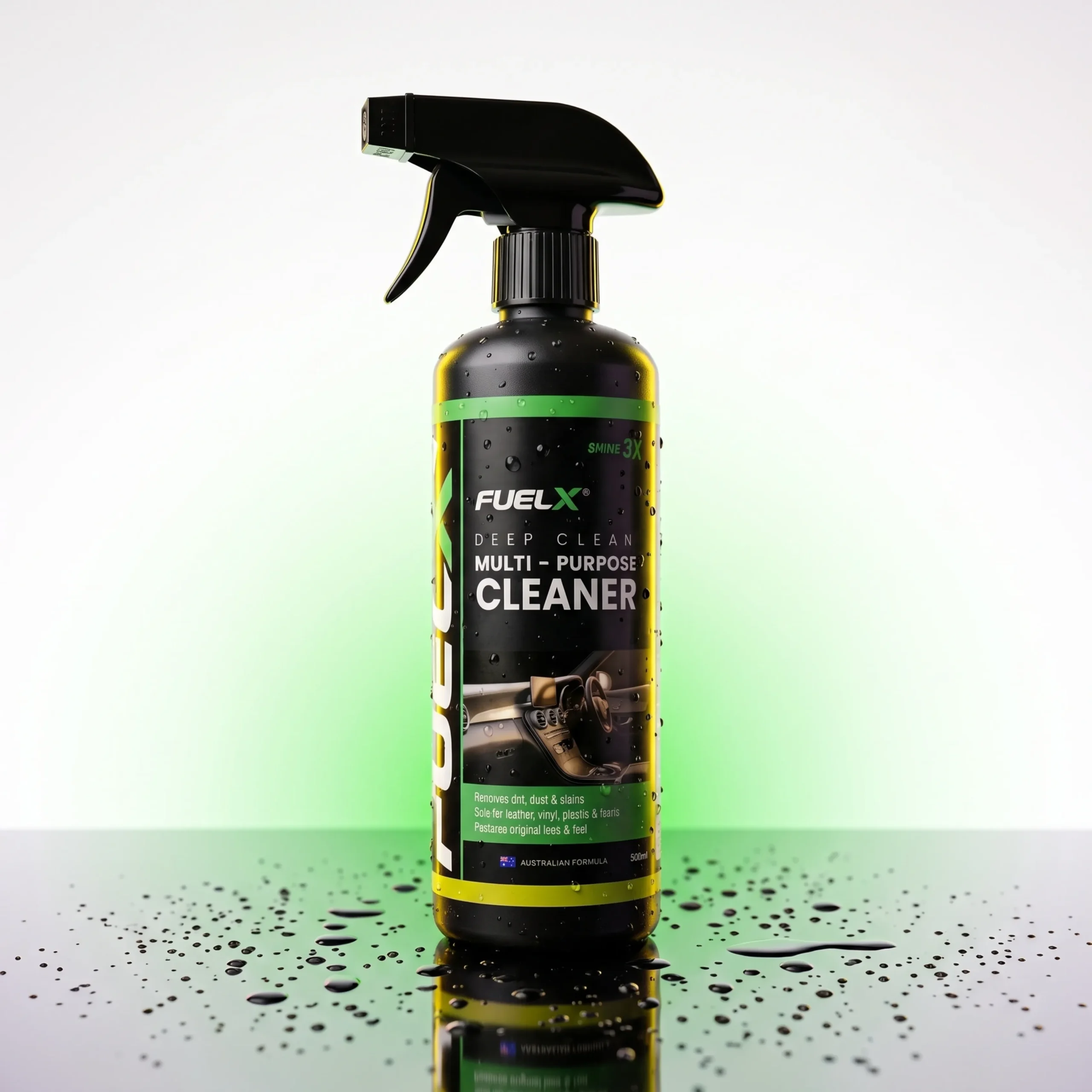
FuelX Car Wash Shampoo
Use it as the main cleaning product for routine exterior washing. Follow the recommended dilution and washing method.
FuelX Premium Microfiber Detailing Towel
A clean microfiber towel is useful for drying and finishing. Keeping the towel clean is just as important as choosing the right towel.
FuelX Quick Detailer
Use it after washing and drying when you want to improve the final appearance of an already-clean surface.
FuelX Glass Cleaner
Use it on exterior glass to remove road film, fingerprints, and other visible residue.
FuelX Tyre Shiner
Use it as the finishing step for the tyre sidewalls to give the exterior a more complete appearance.
You do not need to use every product during every wash. Build your routine around the condition of the car and the result you want.
Final Thoughts
Making your car shine after a rainy-day wash is not about covering the paint with more and more products. It starts with proper preparation and careful washing.
Rinse away loose dirt before touching the paint. Use a dedicated car shampoo, wash from top to bottom, rinse thoroughly, and dry the vehicle promptly with a clean microfiber towel. Once the surface is clean and dry, a suitable quick detailer can enhance the final appearance.
Don’t forget the glass and tyres either. Clean windows improve the overall look of the car, while properly finished tyres provide the final visual contrast.
During Pakistan’s rainy season, this routine becomes even more useful. Rain, mud, road dust, humidity and strong sunlight can quickly turn a freshly washed vehicle into a dull-looking one.
With a consistent routine and the right products, you can keep your car looking cleaner and glossier without needing professional detailing after every rainy day.
FAQ’s
Can rain make my car cleaner?
Rain can remove some loose dust, but it does not provide the same cleaning process as a proper car wash. Rainwater can also carry contaminants and leave residue behind when it dries.
Why does my car have white spots after rain?
White spots can result from minerals and other residue left behind after water droplets evaporate. They are often more visible on dark-colored paint.
Should I dry my car after washing it in the rain?
Yes. Drying with a clean microfiber towel helps remove remaining water before it evaporates and leaves visible residue.
Can I use a quick detailer on a wet car?
It depends on the specific product. Some products are designed for wet applications while others are intended for dry surfaces. Always follow the manufacturer’s instructions.
How do I remove rainwater spots from car paint?
Start with proper washing and drying. Light spots may respond to an appropriate detailing product, while older or etched mineral deposits may require specialized paint treatment.
Is car shampoo better than dish soap?
For routine car washing, a dedicated automotive shampoo is generally the better choice because it is formulated for vehicle surfaces.
How often should I wash my car during monsoon?
For many regularly driven cars, weekly washing can be a reasonable starting point during frequent rain. Vehicles exposed to heavy mud or dirty roads may require more frequent cleaning.
Can rain damage car paint?
Rain itself is not necessarily the main concern. The bigger issue is what remains on the surface afterward, including road grime, pollutants and mineral deposits. Regular cleaning and proper maintenance help keep the exterior in better condition.