A car battery is one of the hardest-working components in your vehicle, yet it’s often overlooked until something goes wrong. Every time you start your engine, power your headlights, use the air conditioning, or charge your phone through the USB port, your battery is supplying the electricity needed to keep everything running smoothly.
Unfortunately, car batteries don’t last forever. Most batteries gradually lose their ability to hold a charge, especially in countries like Pakistan, where extreme summer temperatures, heavy traffic, and dusty conditions put additional strain on the electrical system.
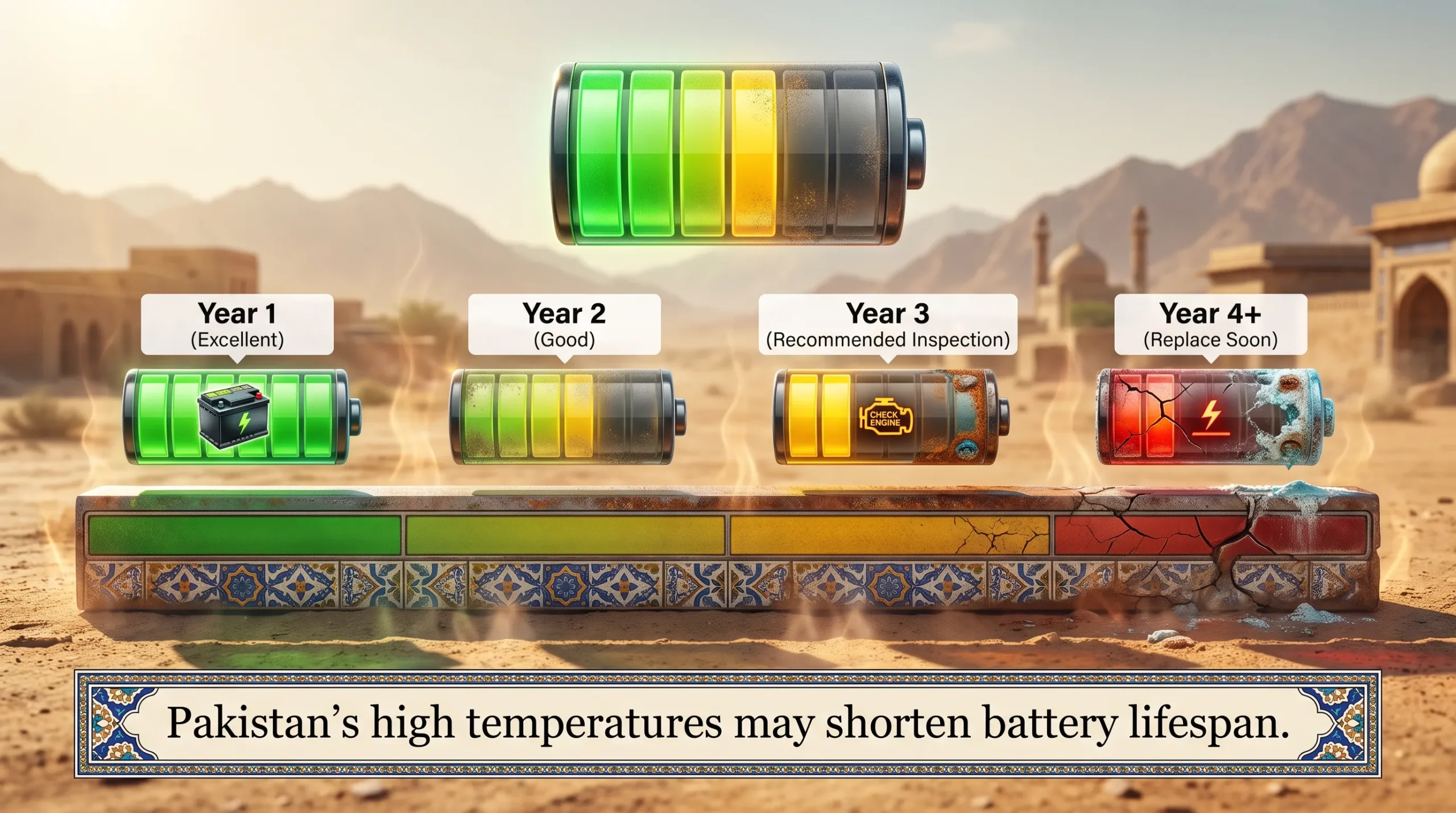
According to automotive manufacturers, a typical lead-acid car battery lasts around 3 to 5 years under ideal conditions. However, in Pakistan, where temperatures frequently exceed 40°C (104°F) during summer, many batteries begin showing signs of wear after 2 to 4 years. Heat accelerates the chemical reactions inside the battery, causing faster evaporation of electrolyte fluid and reducing its overall lifespan.
The good news is that batteries rarely fail without warning. They usually develop noticeable symptoms days, weeks, or even months before they stop working completely. Recognizing these early warning signs can help you replace your battery before it leaves you stranded on the roadside.
In this guide, we’ll explain the seven most common signs your car battery is about to fail, why they occur, how to test your battery, and practical maintenance tips to maximize its lifespan.
Why Car Batteries Fail
A car battery works by storing chemical energy and converting it into electrical energy whenever your vehicle needs power. Over time, this chemical process becomes less efficient, reducing the battery’s ability to provide the high current required to start the engine.
While aging is inevitable, several factors can significantly shorten a battery’s life.
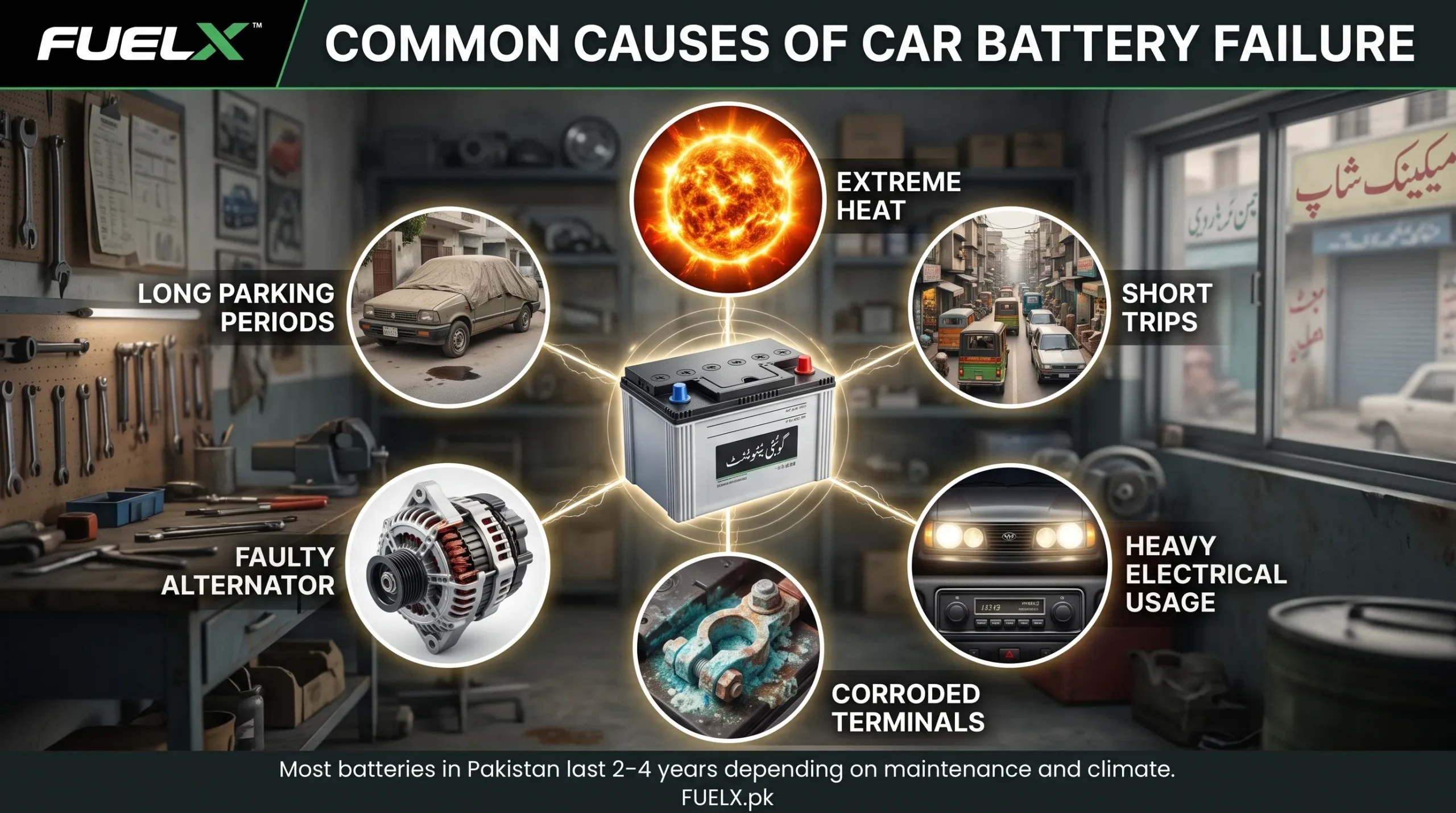
Extreme Heat
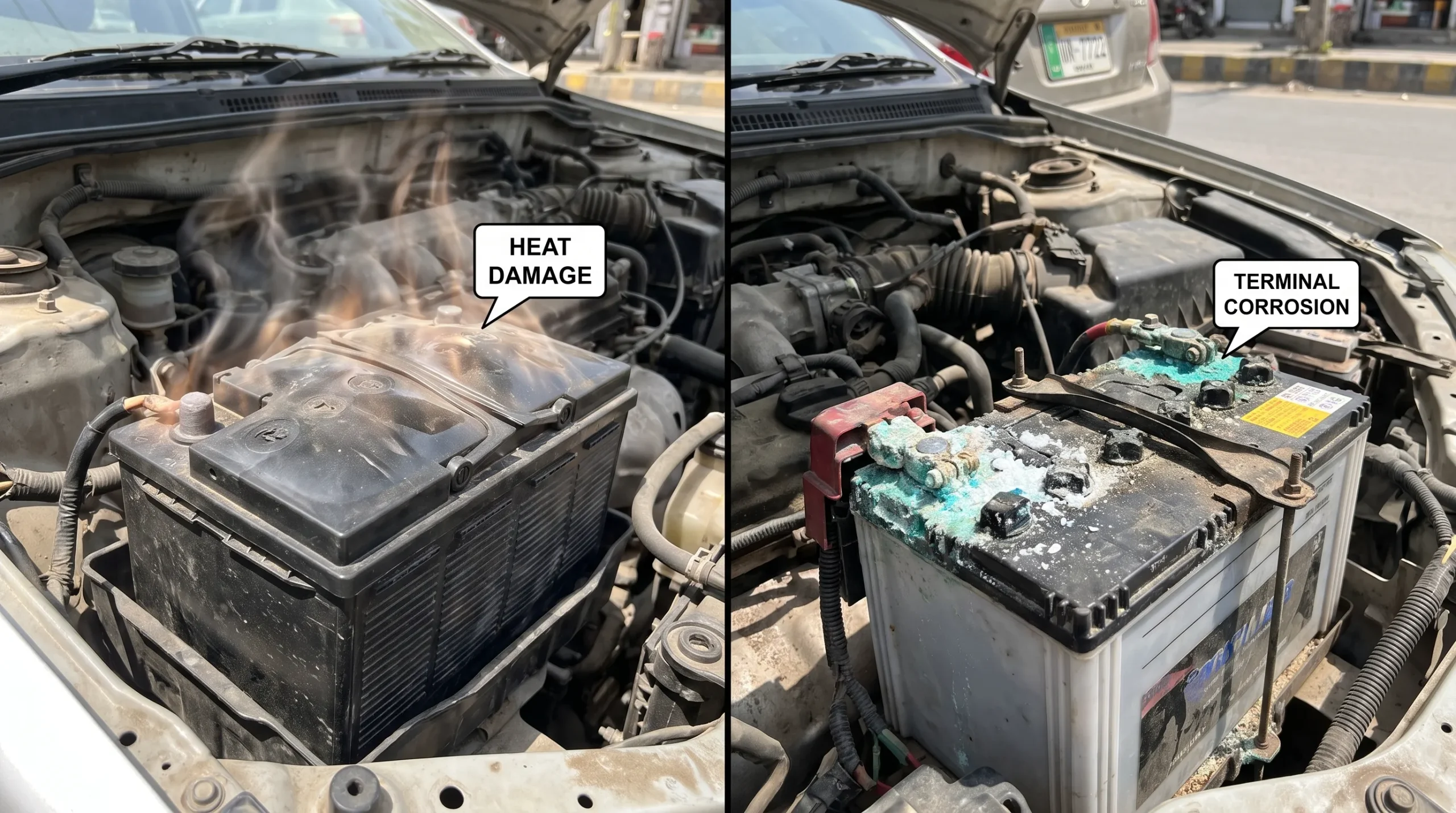
Many drivers believe winter is the biggest enemy of car batteries, but in Pakistan, summer heat is usually the primary cause of battery failure. High engine bay temperatures accelerate internal chemical reactions, causing water loss and damaging the battery plates.
Vehicles parked outdoors in direct sunlight every day often experience shorter battery life than those parked in shaded or covered areas.
Frequent Short Trips
Starting your car consumes a considerable amount of battery power. If you only drive short distances, the alternator may not have enough time to fully recharge the battery before the next engine start.
Over weeks and months, this repeated partial charging weakens the battery.
Heavy Electrical Usage
Modern vehicles rely on dozens of electrical systems, including:
Infotainment screens
Navigation systems
Dash cameras
Air conditioning blowers
USB chargers
LED lighting
Security systems
Using these accessories extensively while the engine is off places unnecessary strain on the battery.
Lack of Maintenance
Loose terminals, corrosion, damaged cables, and poor charging system performance all reduce battery efficiency.
Simple inspections every few months can often prevent major electrical problems.
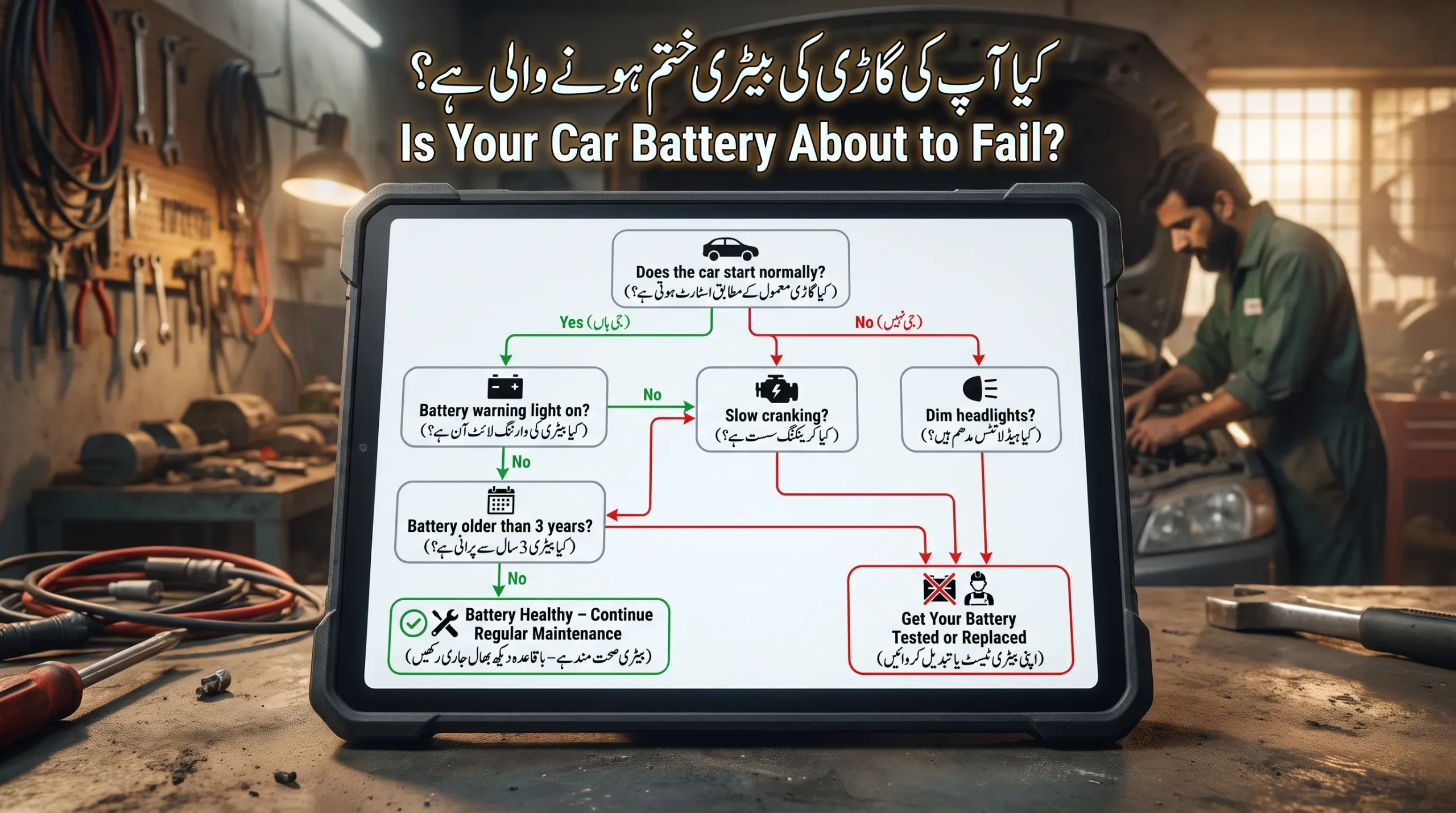
Sign #1 – The Engine Cranks Slowly
One of the earliest and most obvious symptoms of a weak battery is slow engine cranking.
Normally, your engine should crank quickly and start within one or two seconds. If it sounds sluggish or struggles before starting, your battery may not be supplying enough current.
As batteries age, the internal lead plates gradually lose their ability to produce electricity efficiently. This reduces the amount of cold cranking amps (CCA)—the high burst of current needed to turn the starter motor.
For example, if your Honda Civic or Toyota Corolla normally starts instantly but begins taking several extra seconds every morning, especially after sitting overnight, your battery may be nearing the end of its service life.
While a slow crank doesn’t always mean immediate battery replacement, it’s one of the earliest indicators that testing should be carried out before the problem worsens.
Sign #2 – The Battery Warning Light Stays On
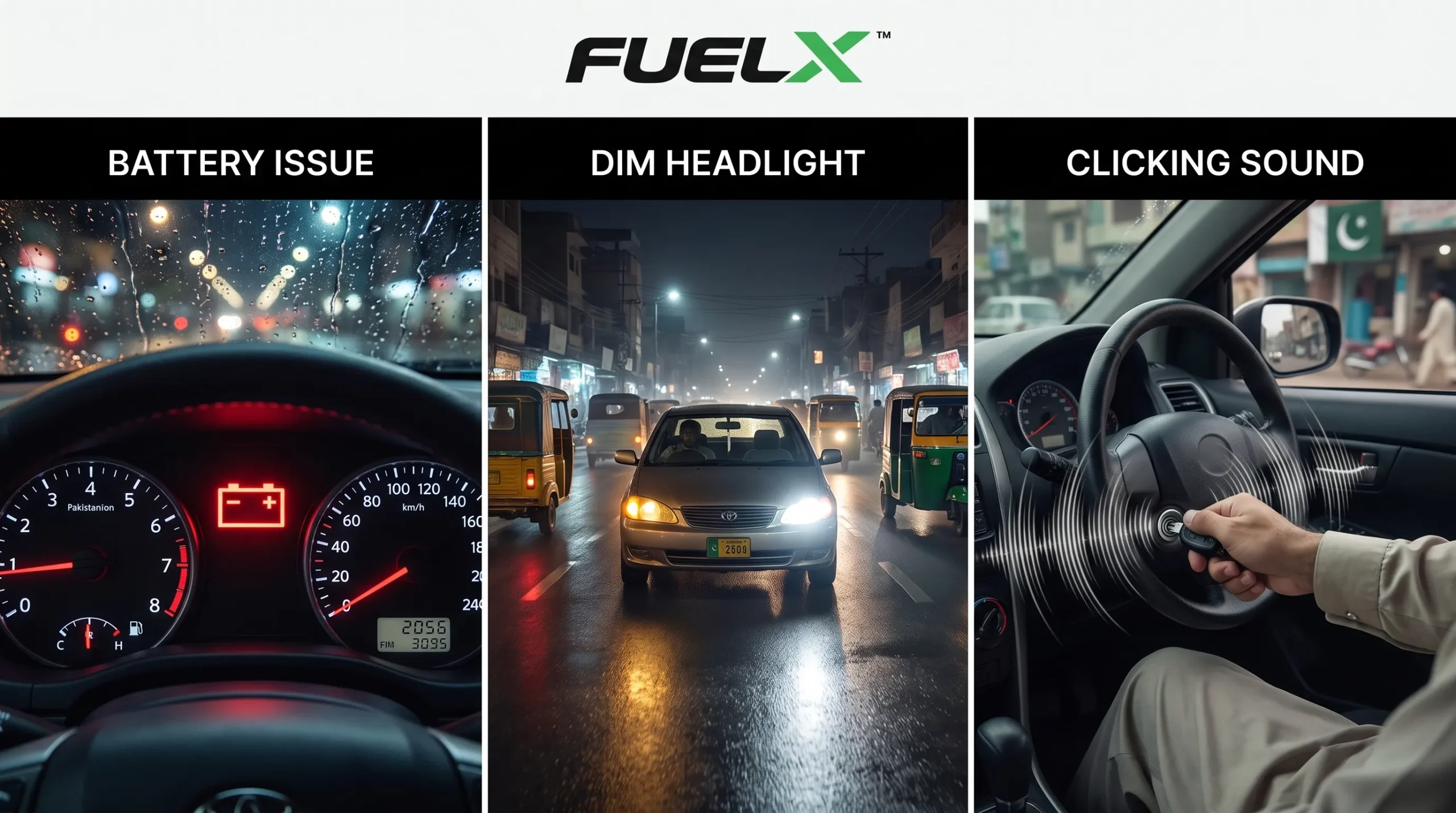
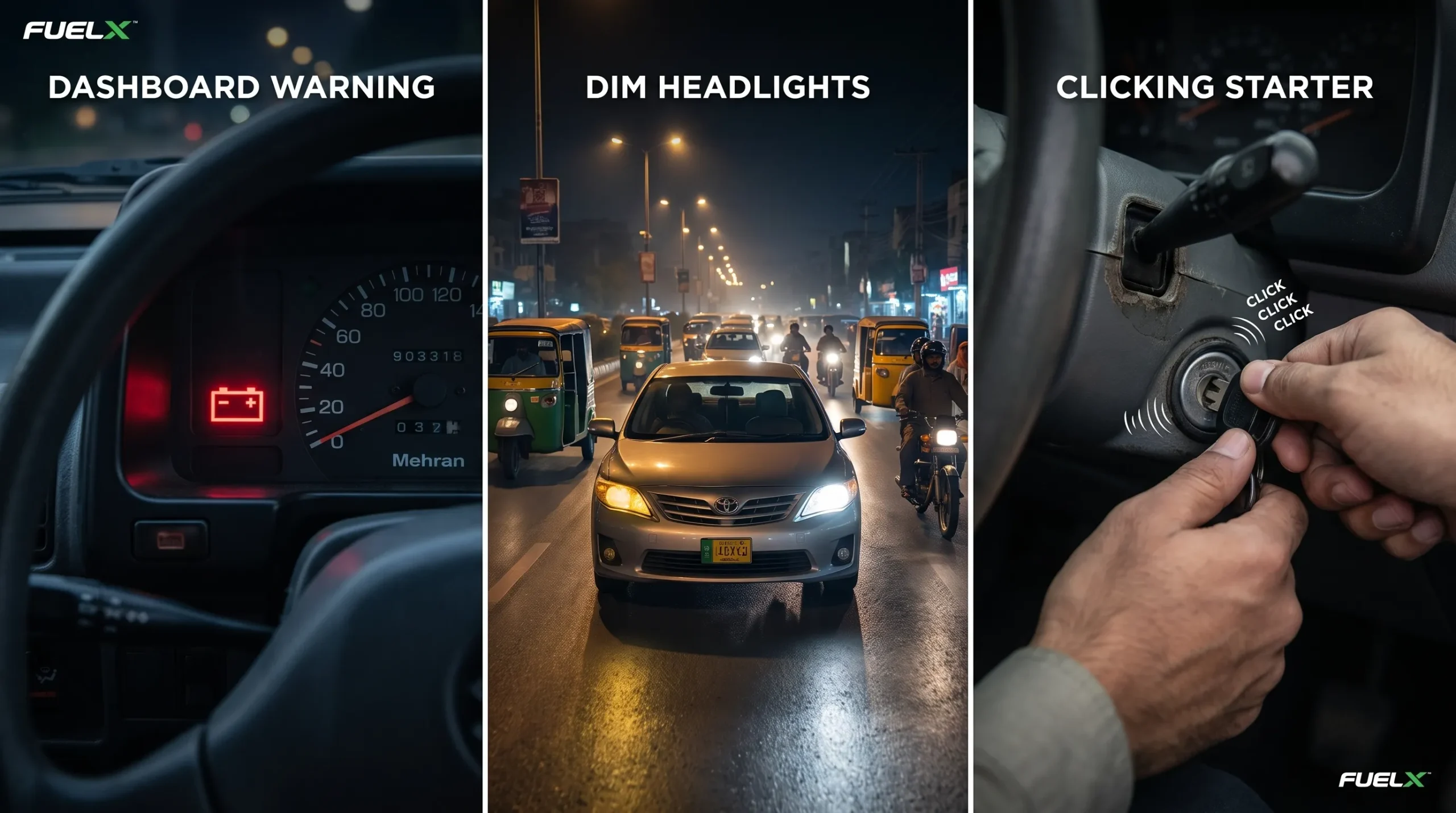
The battery-shaped warning light on your dashboard is one of the most misunderstood indicators.
Many drivers assume the battery itself has failed, but the warning light actually monitors the vehicle’s charging system, not just the battery.
The warning may indicate:
Weak battery
Failing alternator
Loose drive belt
Faulty voltage regulator
Damaged charging cables
Poor battery connections
If the alternator isn’t producing sufficient voltage (typically 13.8–14.7 volts while the engine is running), the battery won’t recharge properly and will eventually become discharged.
Ignoring this warning could leave you with a vehicle that suddenly loses electrical power or refuses to restart after being switched off.
If the warning light remains illuminated after starting the engine, have the charging system inspected by a qualified technician as soon as possible.
Sign #3 – Dim Headlights and Weak Electrical Components
A healthy battery ensures all electrical systems receive stable voltage.
When battery voltage begins dropping, the first symptoms often appear in components that consume significant electrical power.
You may notice:
Headlights becoming noticeably dimmer at night
Interior lights flickering
Power windows moving slower than usual
Weak air conditioning blower speed
Sluggish windshield wipers
A horn that sounds quieter than normal
These symptoms often become more obvious when the engine is idling because the alternator produces less electrical output at low RPM.
For example, if your headlights brighten slightly when you accelerate, this could indicate the battery is weak or the charging system isn’t maintaining proper voltage.
Since these symptoms can also result from alternator issues, it’s important to have the complete electrical system tested rather than replacing the battery based solely on electrical performance.
Sign #4 – Clicking Sound When Starting the Car
A clicking noise when turning the ignition key is another common symptom of insufficient battery power.
There are two typical scenarios:
Rapid Clicking
Rapid clicking usually means the battery doesn’t have enough power to keep the starter motor engaged. The starter relay repeatedly attempts to connect, producing multiple clicking sounds.
Single Loud Click
A single click may indicate a faulty starter motor or starter solenoid, although a severely discharged battery can sometimes produce similar symptoms.
Many drivers mistakenly replace expensive starter motors when the real problem is simply a weak battery.
A quick battery voltage test combined with a professional load test can usually identify the true cause within minutes.
Sign #5 – The Battery Case Looks Swollen or Bloated
A healthy battery should always have a flat, rectangular shape.
If you notice the battery case swelling or bulging, it should be replaced immediately.
Swelling is commonly caused by:
Excessive engine heat
Internal short circuits
Overcharging
Frozen electrolyte (in extremely cold climates)
Manufacturing defects
In Pakistan, prolonged exposure to temperatures above 40°C significantly increases the likelihood of battery swelling.
A swollen battery isn’t just unreliable—it can also become hazardous. Internal pressure may damage the casing, increasing the risk of acid leakage and permanent battery failure.
Never attempt to continue using a swollen battery or try to repair it yourself.
Sign #6 – Corrosion Around the Battery Terminals
Corrosion is one of the easiest warning signs to identify.
If you see white, blue, or green powdery deposits around the battery terminals, corrosion has begun developing.
Common causes include:
Acid vapors escaping from the battery
Moisture
Loose terminal connections
Aging batteries
Overcharging
Corrosion increases electrical resistance, making it more difficult for current to flow between the battery and the starter motor.
Fortunately, light corrosion can often be cleaned using a battery terminal cleaner or a baking soda and water solution, followed by proper drying and tightening of the connections.
However, if corrosion returns repeatedly after cleaning, it often indicates the battery is approaching the end of its lifespan.
Regular inspection every two to three months helps maintain reliable electrical performance.
Sign #7 – Your Battery Is More Than Three Years Old
Even if your car starts normally every day, age alone is an important indicator of battery health.
Most batteries used in Pakistan begin showing measurable performance decline after approximately three years, particularly in vehicles regularly exposed to high temperatures.
The manufacturing date is usually printed on the battery label.
Rather than waiting for complete failure, consider having the battery professionally tested once it reaches the three-year mark.
Many workshops now use electronic battery analyzers that measure:
Battery capacity
Cold cranking amps (CCA)
Charging voltage
Internal resistance
Overall battery health
Replacing an aging battery proactively is usually far less expensive and inconvenient than arranging roadside assistance after a sudden failure.
Other Symptoms You Shouldn’t Ignore
Besides the seven primary warning signs, several smaller symptoms often indicate that the battery is weakening.
Watch out for:
Frequent jump-starts
Difficulty starting after the vehicle has been parked overnight
Dashboard clock resetting automatically
Radio stations or infotainment settings being lost
Burning smell near the battery
Random electrical glitches
Stop-start systems no longer functioning correctly (if equipped)
Although each symptom may seem minor on its own, several occurring together usually indicate that battery testing is necessary.
How to Test Your Car Battery
Fortunately, checking battery health is relatively straightforward.
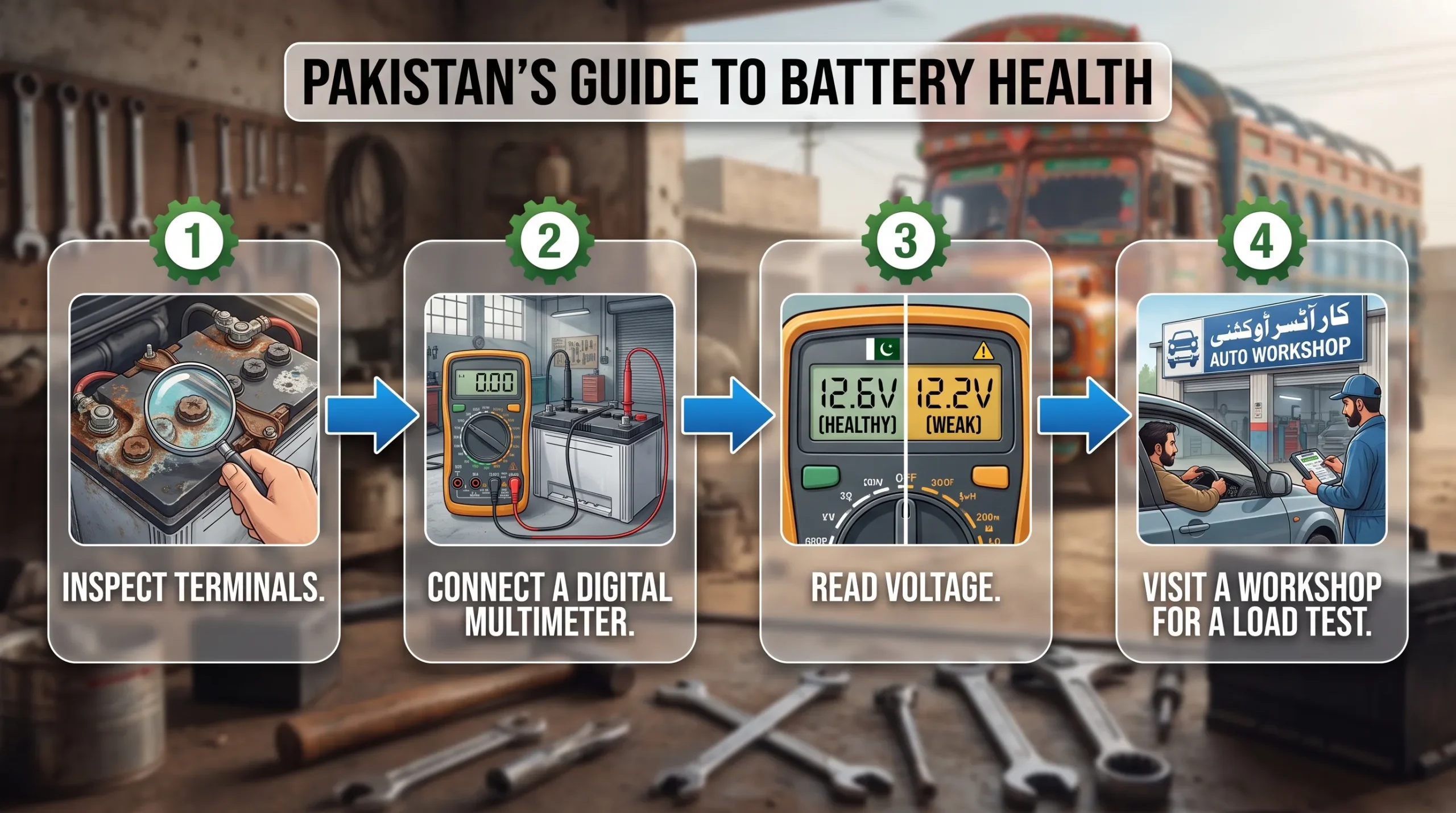
Perform a Visual Inspection
Begin by examining:
Battery terminals
Cable connections
Battery case
Signs of swelling
Acid leakage
Corrosion
Loose battery clamps
Physical damage often provides the first indication of battery deterioration.
Check Battery Voltage
Using a digital multimeter provides a quick overview of battery condition.
Typical readings are:
Voltage
Battery Condition
12.6V–12.8V
Fully charged
12.4V–12.5V
Good condition
12.2V–12.3V
Partially discharged
Below 12.0V
Weak or failing battery
Keep in mind that voltage alone doesn’t measure battery capacity, so additional testing may still be necessary.
Perform a Professional Load Test
A load test evaluates how the battery performs under real starting conditions by applying a controlled electrical load.
Most automotive workshops can complete this test within a few minutes.
If the battery cannot maintain adequate voltage under load, replacement is generally recommended.
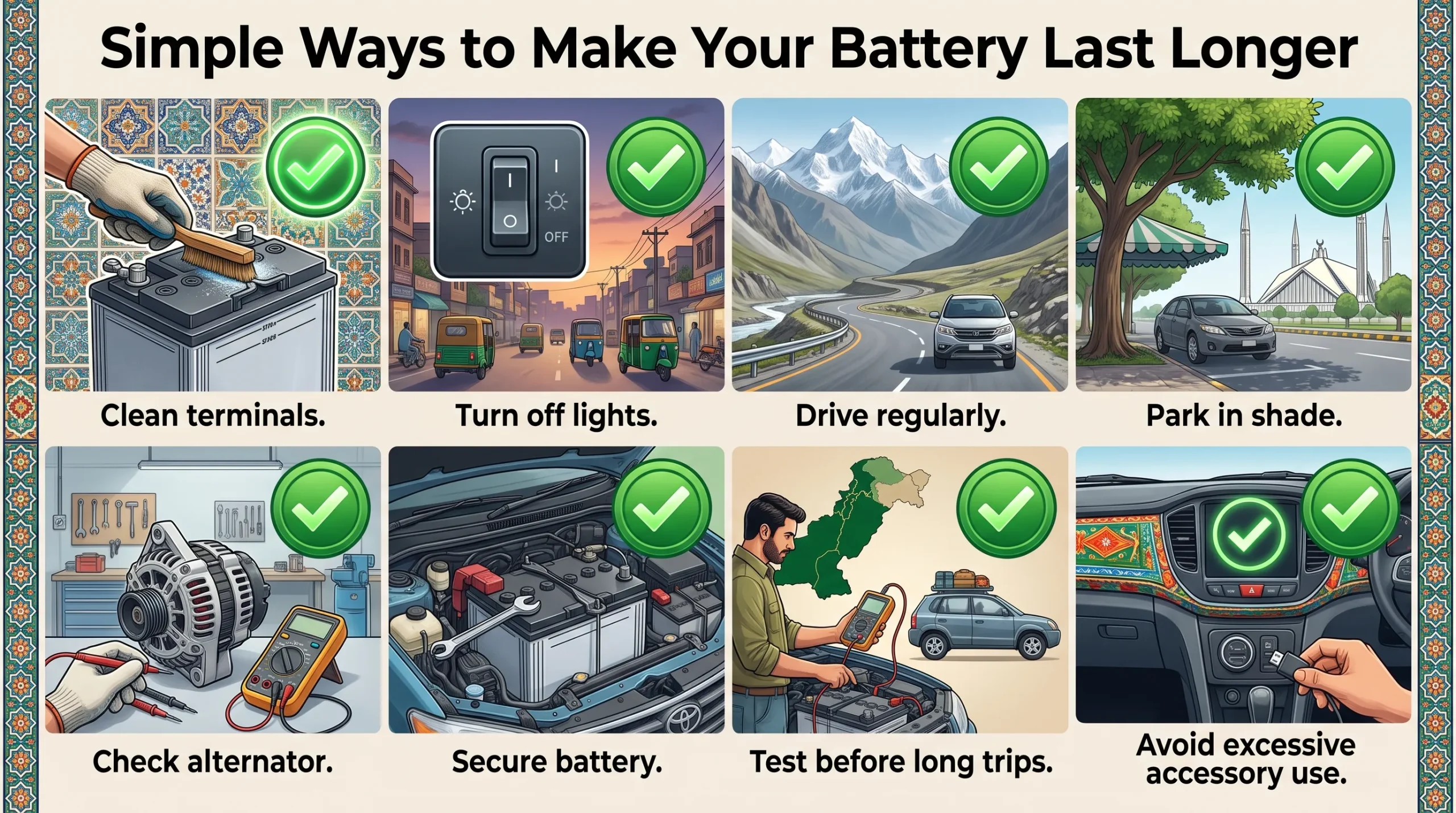
Tips to Extend Your Car Battery Life
Although every battery eventually wears out, good maintenance can significantly increase its lifespan.
Follow these simple practices:
Clean battery terminals every few months.
Tighten loose cable connections.
Switch off headlights and accessories before turning off the engine.
Drive regularly to keep the battery fully charged.
Avoid repeated short trips whenever possible.
Ensure the battery is securely mounted to reduce vibration damage.
Have the charging system inspected during routine servicing.
Park in shaded or covered areas during extreme summer heat.
Test the battery before long-distance travel.
Replace aging batteries before they fail unexpectedly.
These small preventive measures can help avoid costly roadside breakdowns and improve long-term reliability.
What to Do If Your Battery Shows These Signs
If your battery begins showing one or more of these warning signs, don’t ignore them.
Instead:
Inspect the battery for visible damage or corrosion.
Tighten any loose battery terminals.
Measure battery voltage using a multimeter.
Have the alternator and charging system professionally tested.
Replace the battery if it fails a load test or no longer holds sufficient charge.
Choose a high-quality replacement battery with the correct specifications for your vehicle.
Early diagnosis often prevents more serious electrical issues and reduces the risk of being stranded unexpectedly.
Why Regular Battery Maintenance Matters
Routine battery maintenance is one of the simplest and most cost-effective ways to improve vehicle reliability.
Regular inspections help:
Reduce unexpected breakdowns
Extend battery lifespan
Improve engine starting performance
Protect sensitive electronic systems
Lower long-term maintenance costs
Increase confidence during long journeys
Whether you drive daily in city traffic or frequently travel between cities, keeping your battery in good condition ensures your vehicle remains dependable throughout the year.
Conclusion
Your car battery may be out of sight, but it should never be out of mind. Since it powers everything from engine starting to essential electrical systems, even a small decline in battery performance can affect your vehicle’s reliability.
If you notice slow engine cranking, a dashboard battery warning light, dim headlights, clicking sounds, a swollen battery case, terminal corrosion, or your battery is more than three years old, it’s time to have it inspected.
Regular testing and preventive maintenance can help you avoid inconvenient breakdowns, reduce repair costs, and keep your vehicle ready for every journey. By paying attention to these early warning signs and taking action before complete failure occurs, you’ll enjoy greater peace of mind on the road—whether you’re navigating daily city traffic or preparing for a long-distance trip across Pakistan.
For more practical car care guides, maintenance tips, and expert automotive advice, explore the FuelX blog and keep your vehicle performing at its best in every season.