Your car battery is the heart of your vehicle’s electrical system. It supplies the power needed to start the engine and keeps essential components such as the ignition system, lights, infotainment system, power windows, security system, and electronic control units (ECUs) functioning properly. Without a healthy battery, even a well-maintained car won’t start.
For Pakistani drivers, battery maintenance is even more important because the country’s climate is particularly demanding. In cities like Karachi, Lahore, Multan, Bahawalpur, Sukkur, and Hyderabad, summer temperatures frequently exceed 40–45°C, while northern areas experience cold winters that reduce battery performance. Dust, humidity during the monsoon season, frequent traffic jams, and short city commutes further accelerate battery wear.
Many car owners only think about their battery when the vehicle refuses to start. However, with a few preventive maintenance habits, you can significantly extend battery life, improve fuel efficiency, reduce repair costs, and avoid the inconvenience of being stranded.
In this guide, you’ll learn how Pakistani weather affects your car battery, the warning signs of battery failure, practical maintenance tips, and simple habits that can help your battery perform reliably throughout the year.
Why Pakistani Weather Is Tough on Car Batteries
Pakistan’s diverse climate creates challenging conditions for automotive batteries. Whether you’re driving in the scorching heat of Sindh or Punjab, the humid coastal environment of Karachi, or the colder regions of Khyber Pakhtunkhwa and Gilgit-Baltistan, your battery is constantly exposed to environmental stress.
Extreme Summer Heat
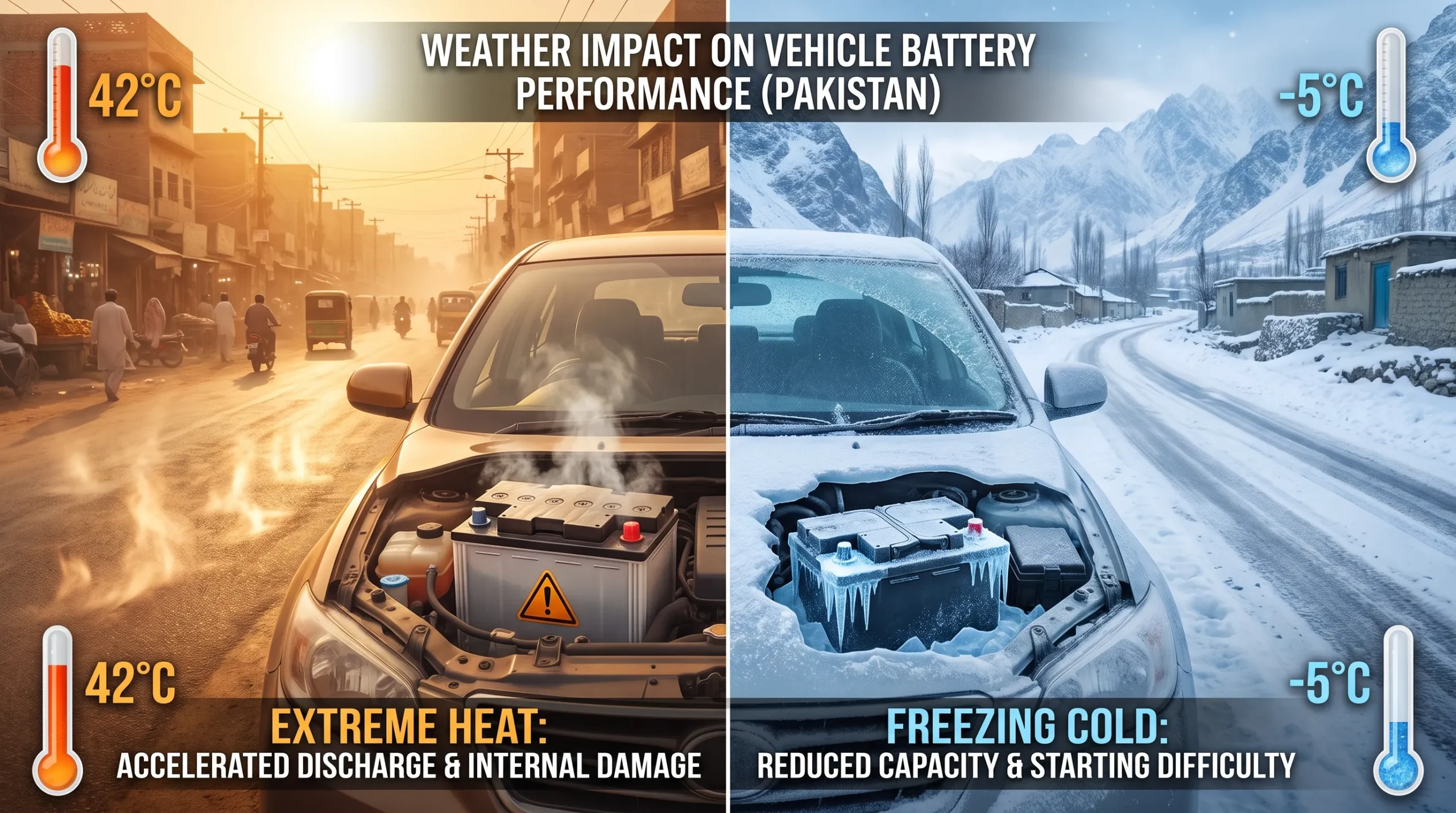
Contrary to popular belief, heat is often more damaging to car batteries than cold weather.
When temperatures rise above 35°C, the chemical reactions inside the battery accelerate. While this may temporarily improve battery output, prolonged exposure to excessive heat causes the battery’s electrolyte (battery fluid) to evaporate faster than normal. As electrolyte levels decrease, the internal lead plates become exposed, causing permanent damage and reducing the battery’s capacity to hold a charge.
Extreme heat also softens the lead plates inside the battery, increasing the risk of internal deterioration. Additionally, high temperatures accelerate corrosion around the battery terminals, creating resistance that makes it harder for electrical current to flow efficiently.
For drivers who regularly park outdoors in direct sunlight, engine bay temperatures can exceed 60°C, placing even greater stress on the battery.
Winter Challenges in Northern Pakistan
Although Pakistan is known for its hot climate, northern regions experience cold winters that also affect battery performance.
At lower temperatures, the chemical reactions inside the battery slow down, reducing its ability to deliver sufficient starting power. At the same time, the engine oil becomes thicker, requiring more energy to crank the engine.
This combination often causes weak batteries to fail during cold mornings, especially in diesel vehicles that naturally require more starting power than petrol engines.
Dust, Humidity, and Monsoon Conditions
Environmental conditions also play an important role in battery health.
Pakistan’s dusty roads allow dirt to accumulate around the battery, trapping heat and making inspections more difficult. During the monsoon season, moisture combines with battery acid vapors to create corrosion around the battery terminals.
Corroded terminals increase electrical resistance, resulting in slow engine cranking, dim headlights, poor alternator charging, and reduced battery efficiency.
Regular inspection and cleaning help prevent these issues before they become expensive repairs.
Signs Your Car Battery Needs Attention
Car batteries rarely fail without warning. In most cases, they provide several signs that indicate declining health.
Recognizing these symptoms early allows you to repair or replace the battery before it leaves you stranded.
Common warning signs include:
Slow engine cranking when starting the vehicle
Dim or flickering headlights
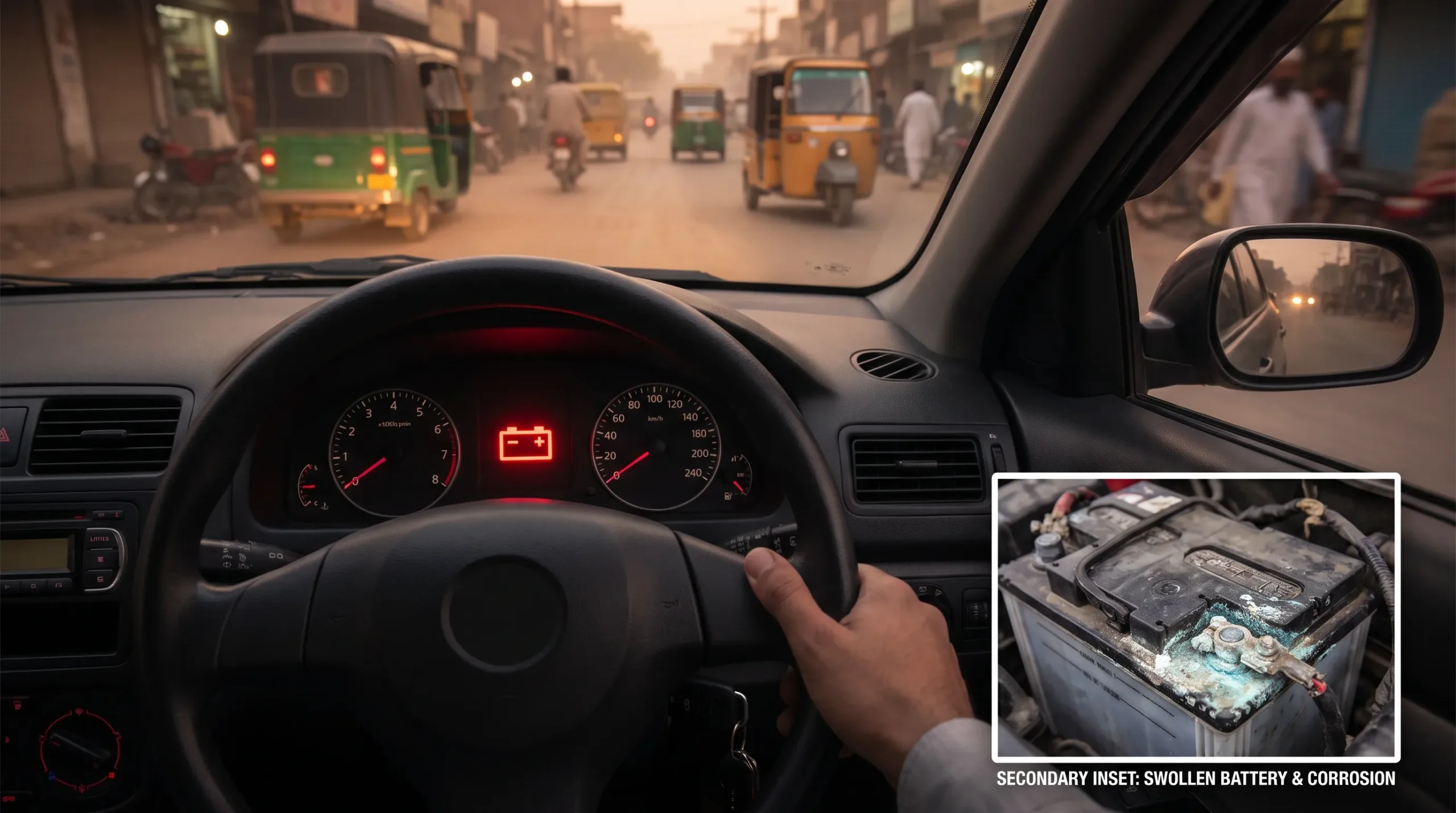
Battery warning light illuminated on the dashboard
Clicking sounds when turning the ignition key
Weak horn sound
Power windows moving slower than usual
Infotainment system restarting unexpectedly
Swollen or bloated battery casing
A sulfur or rotten egg smell caused by leaking battery acid
Frequent need for jump-starts
Pro Tip: If your battery is over three years old and you notice multiple symptoms at the same time, schedule a professional battery inspection immediately.
How Long Does a Car Battery Last in Pakistan?
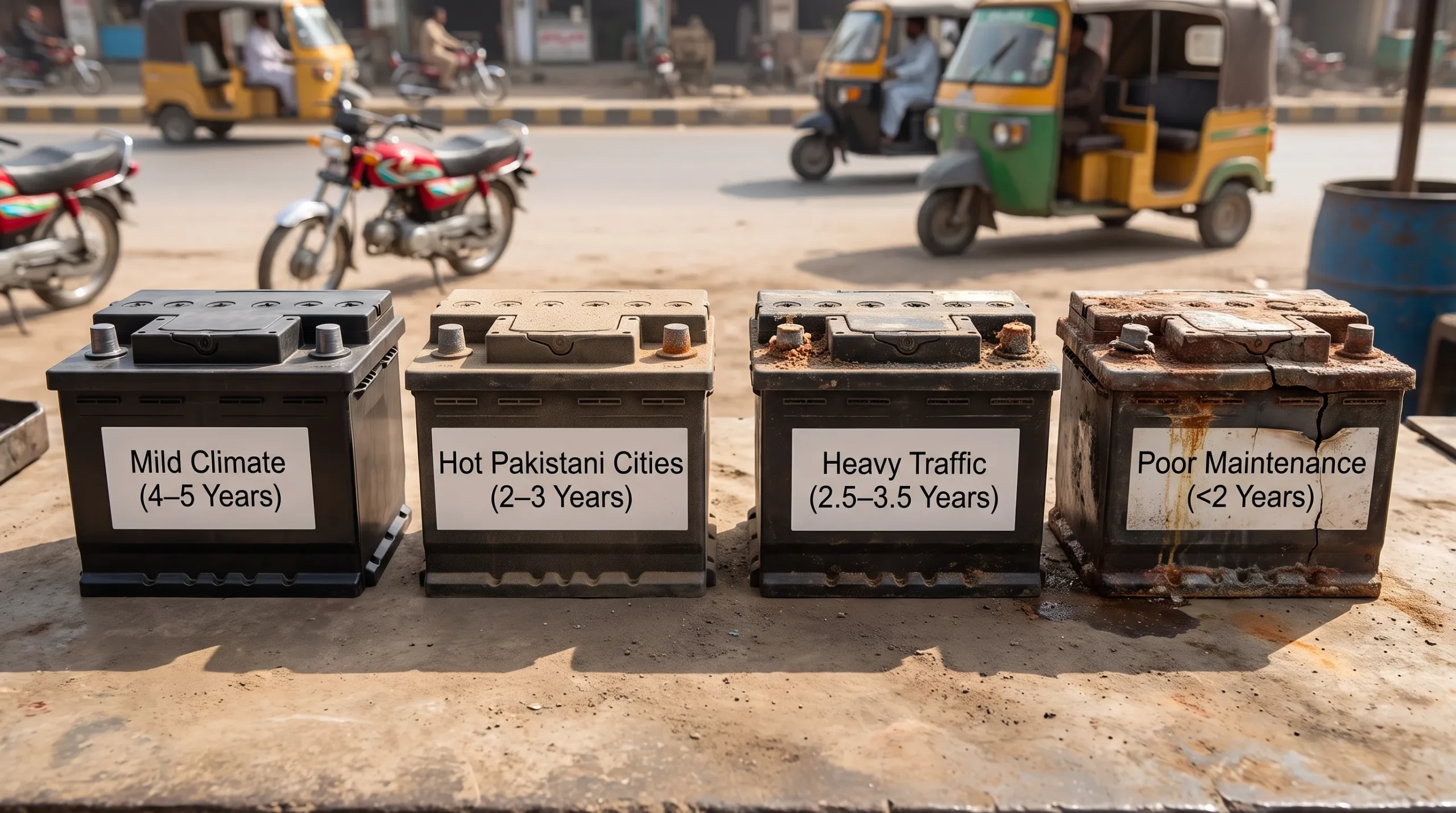
Most automotive battery manufacturers estimate a service life of four to five years under ideal conditions. However, real-world driving conditions in Pakistan often reduce this lifespan.
Factors such as high temperatures, heavy traffic, frequent short trips, poor road conditions, and inadequate maintenance all contribute to faster battery degradation.
Driving Conditions
Average Battery Life
Mild climate with regular maintenance
4–5 years
Hot Pakistani cities
2–3 years
Heavy stop-and-go traffic
2.5–3.5 years
Poor maintenance
Less than 2 years
If your vehicle is frequently driven in congested urban traffic with the air conditioner running continuously, expect your battery to wear faster than one used primarily for highway driving.
12 Car Battery Maintenance Tips for Pakistani Weather
1. Clean Battery Terminals Regularly
Battery terminal corrosion is one of the leading causes of poor battery performance.
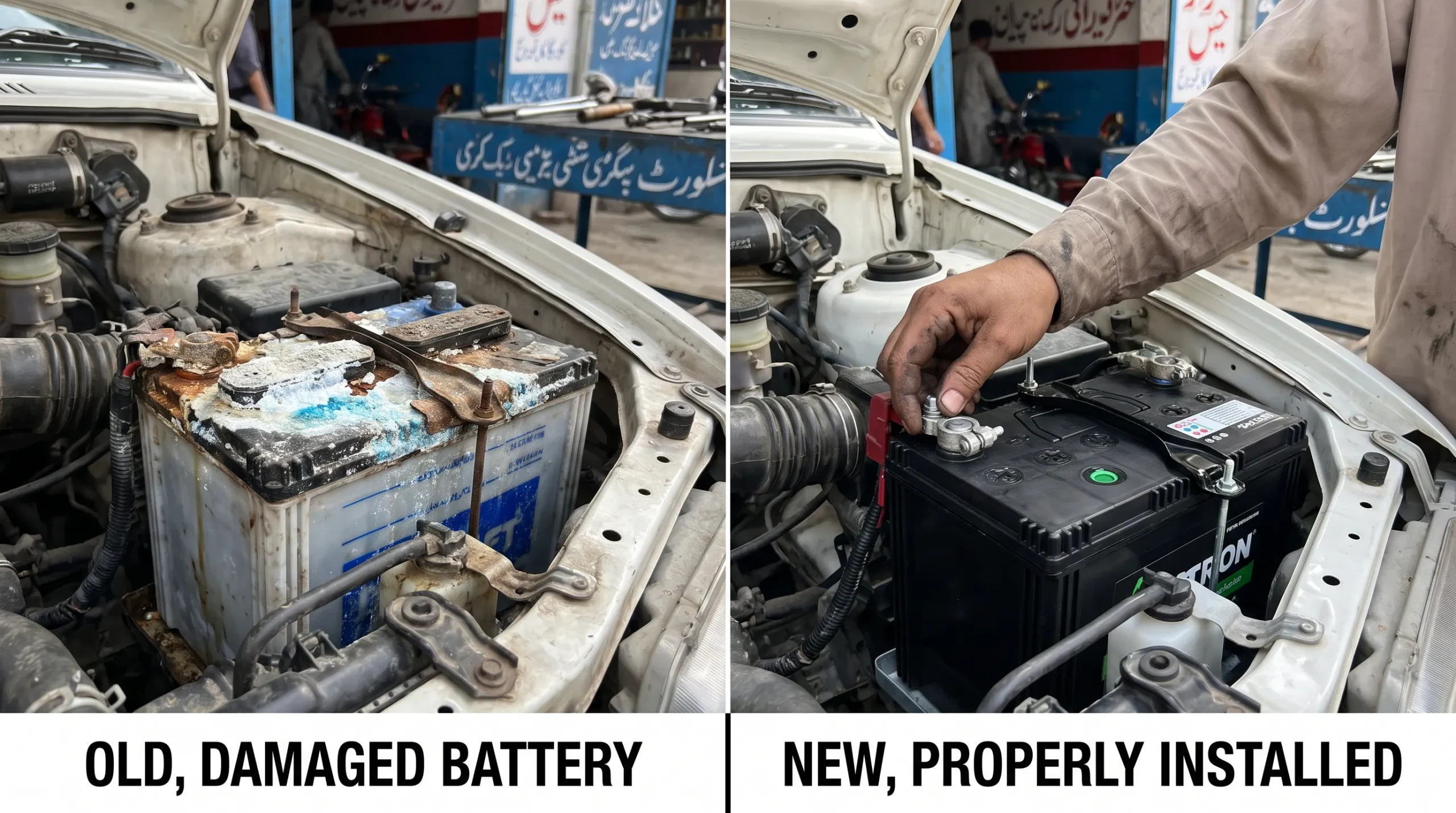
White, green, or bluish deposits gradually build up around the battery terminals due to chemical reactions between battery acid vapors and moisture. These deposits act as electrical insulators, reducing the amount of current reaching the starter motor.
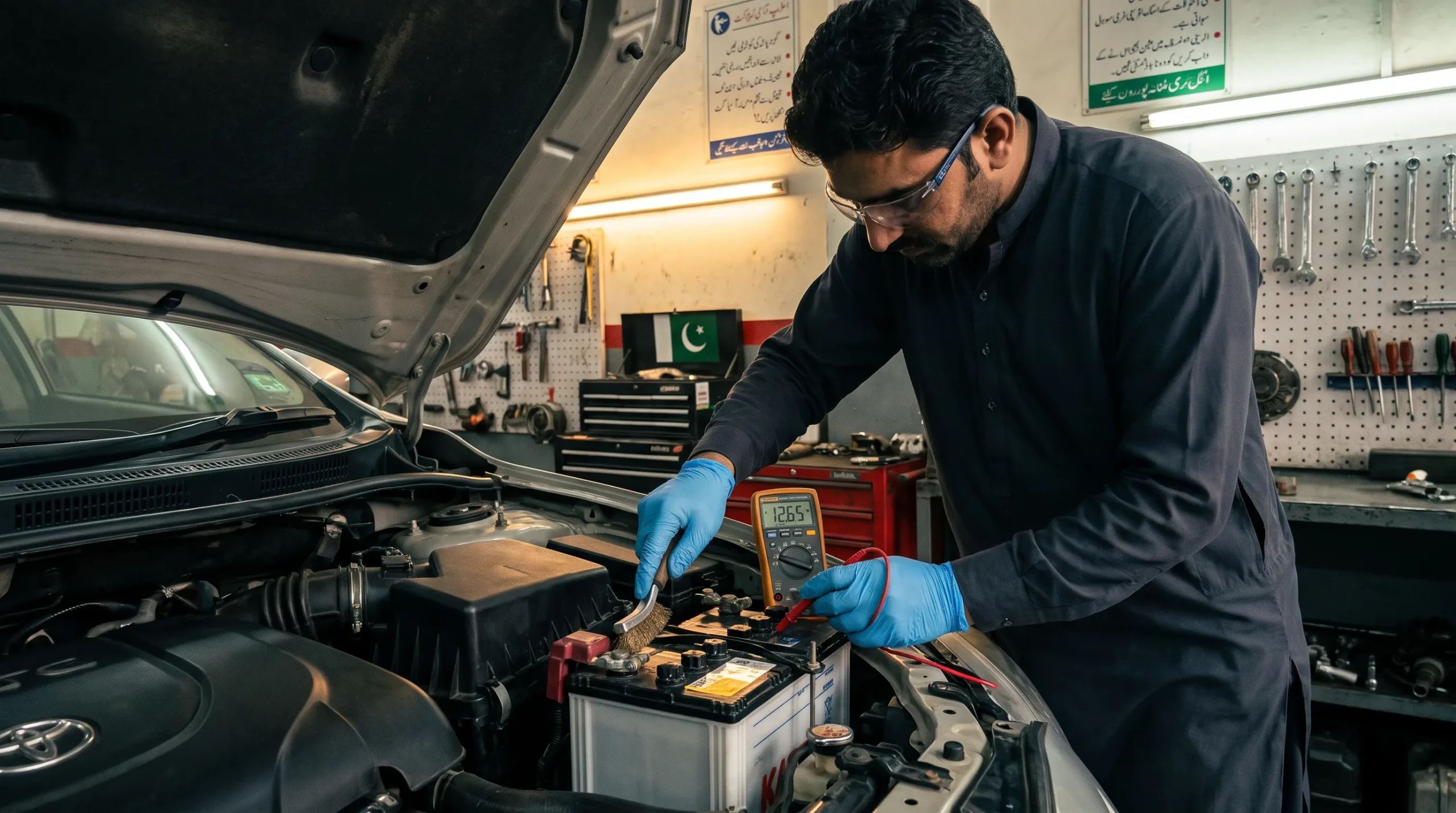
Inspect the battery terminals every two to three months. If corrosion is present, disconnect the negative terminal first, followed by the positive terminal. Clean the terminals using a battery cleaning brush or a mixture of baking soda and water, then dry them thoroughly before reconnecting.
Applying a thin layer of petroleum jelly or battery terminal protector after cleaning can help slow future corrosion.
2. Check Battery Voltage Every Month
Voltage testing is one of the simplest ways to monitor battery health.
A fully charged battery should measure approximately:
12.6–12.8 volts with the engine turned off
13.7–14.7 volts while the engine is running (indicating proper alternator charging)
Consistently low voltage readings may indicate:
A weak battery
Alternator charging issues
Loose battery connections
Electrical drain from accessories
Portable digital multimeters are inexpensive and allow vehicle owners to check battery voltage at home within minutes.
3. Inspect for Corrosion and Loose Connections
Even a healthy battery cannot perform efficiently if its electrical connections are compromised.
During your monthly inspection, check for:
White powder deposits
Green corrosion
Rust-colored stains
Loose battery clamps
Damaged cables
Loose terminals create intermittent electrical connections that may cause random starting problems and poor alternator charging.
4. Ensure the Battery Is Properly Secured
Pakistani roads often contain potholes, uneven surfaces, and speed breakers that generate constant vibration.
If the battery is not securely fastened, repeated movement can damage the internal lead plates and separators, permanently reducing battery capacity.
Always verify that the battery mounting bracket is tight and holding the battery firmly in place.
Traditional lead-acid batteries require periodic inspection of electrolyte levels.
If the electrolyte falls below the recommended level, the exposed lead plates begin deteriorating rapidly.
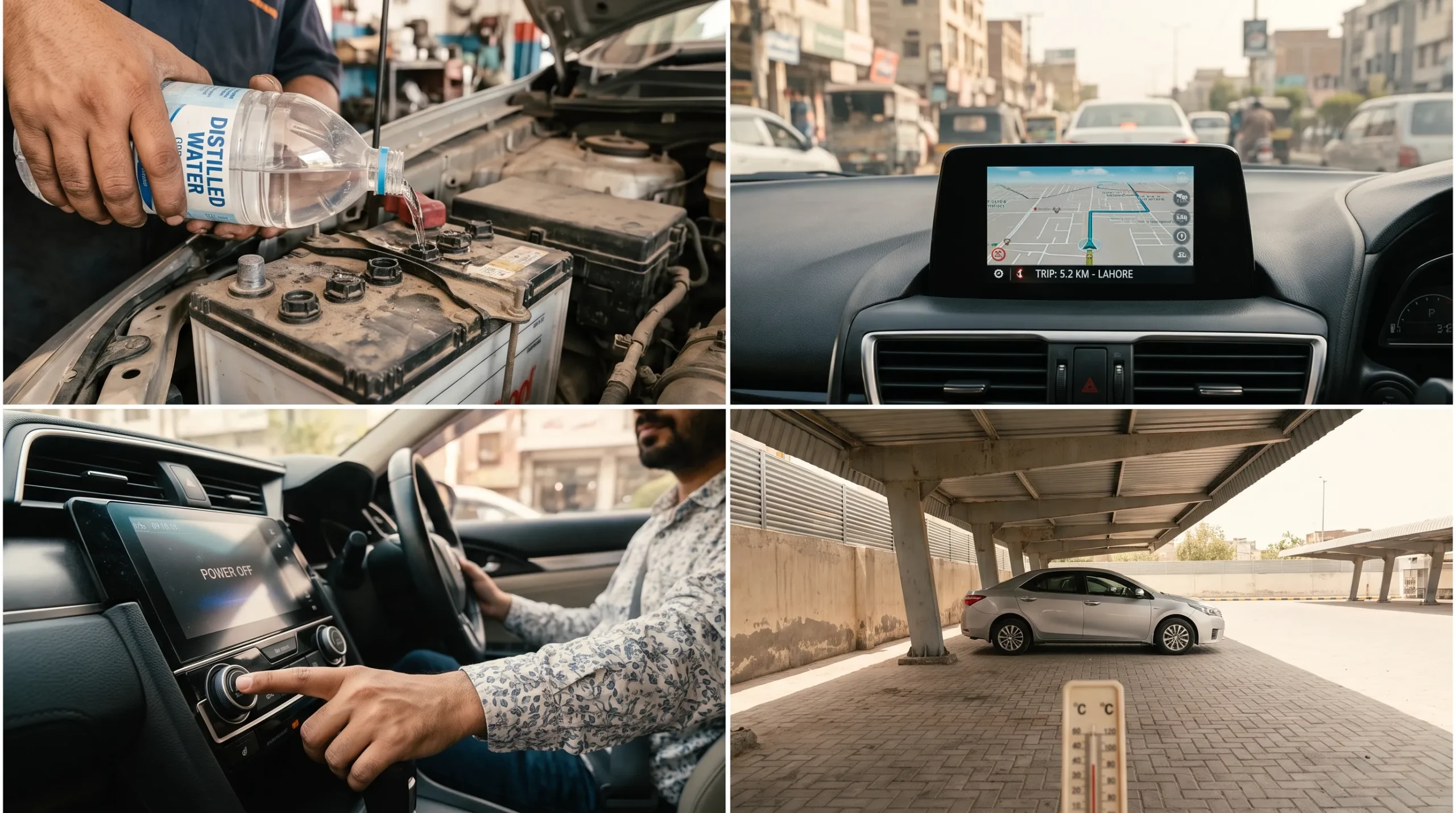
Always refill using distilled water only. Tap water contains minerals that interfere with the battery’s chemical reactions and reduce performance.
Maintenance-free batteries are sealed and do not require water refilling, but they should still be inspected for swelling, cracks, or leakage.
6. Avoid Driving Only Short Distances
Many Pakistani drivers use their vehicles only for short city trips.
Unfortunately, short drives often don’t give the alternator enough time to fully recharge the battery after engine startup.
Repeated short trips gradually reduce battery charge, increasing sulfation—a process that permanently reduces battery capacity.
If possible, take your vehicle on a longer drive of 20–30 minutes at least once a week to allow the alternator to restore the battery properly.
7. Turn Off All Electrical Accessories Before Leaving the Vehicle
Leaving electrical accessories on is one of the most common causes of battery discharge.
Before locking your car, check that you’ve switched off:
Headlights
Interior lights
Fog lamps
Infotainment system
Phone chargers
Dash cameras
Portable coolers
Air compressors
Even small electrical loads can gradually drain the battery if the vehicle remains parked for several days.
8. Park in the Shade During Summer
Whenever possible, park your vehicle in covered parking areas or shaded locations.
Reducing direct sunlight lowers engine bay temperatures, slows electrolyte evaporation, and minimizes heat-related battery deterioration.
Using windshield sunshades and car covers can also help reduce cabin temperatures and overall heat buildup.
9. Check the Alternator Regularly
The battery stores electrical energy, but the alternator replenishes it while the engine is running.
A failing alternator may undercharge or overcharge the battery, both of which shorten battery life.
Symptoms of alternator problems include:
Battery warning light
Flickering lights
Weak battery despite recent replacement
Electrical accessories behaving erratically
Whenever replacing a battery, it’s a good idea to have the charging system tested as well.
10. Drive Your Vehicle Regularly
Cars that remain parked for long periods naturally lose battery charge.
Modern vehicles contain multiple electronic modules that continue consuming small amounts of electricity even when the engine is turned off.
If you won’t be driving your car for several weeks, start it periodically and take it for a short drive. Alternatively, use a battery maintainer or disconnect the negative battery terminal after consulting your owner’s manual.
11. Keep the Battery and Engine Bay Clean
A clean engine bay makes it easier to identify oil leaks, damaged wiring, cracked hoses, and battery problems before they become serious.
Dust and grease can trap heat around the battery, while accumulated dirt hides corrosion and leaking electrolyte.
Regular engine bay cleaning should be done carefully, avoiding direct water pressure on electrical components. Using high-quality automotive cleaning products from FuelX to maintain your vehicle’s overall cleanliness also contributes to better long-term maintenance and makes inspections easier.
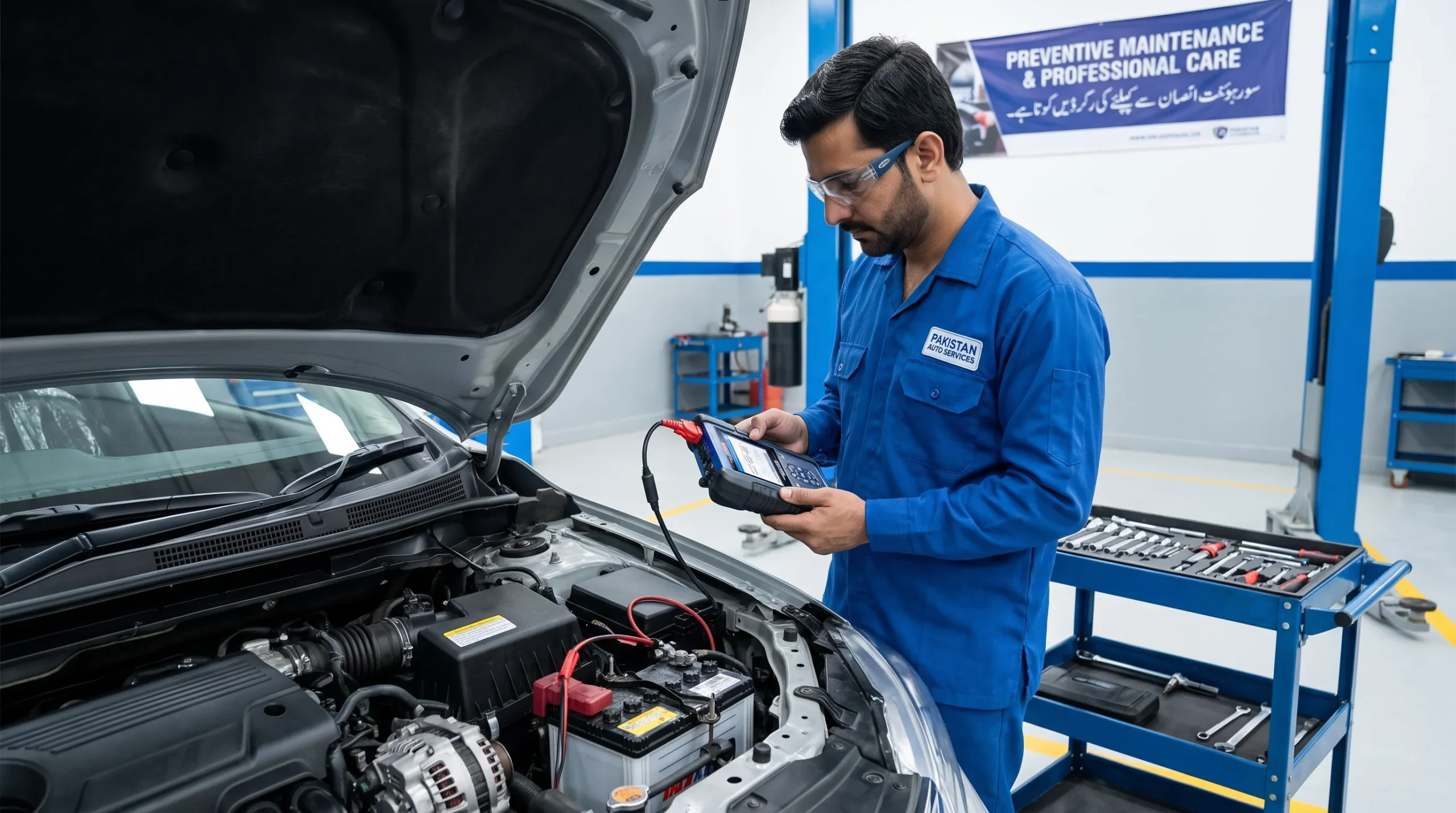
12. Schedule a Professional Battery Inspection Every Six Months
Even if your battery appears to be working normally, professional inspections can identify hidden problems before they cause failure.
A comprehensive battery inspection usually includes:
Voltage testing
Load testing
Charging system evaluation
Alternator performance check
Battery health assessment
Terminal cleaning
Cable inspection
Preventive maintenance is far less expensive than dealing with an unexpected roadside breakdown.
Common Mistakes That Reduce Battery Life
Many battery failures are preventable.
Avoid these common mistakes:
Ignoring dashboard battery warnings
Purchasing the wrong battery size or capacity
Leaving headlights or interior lights on overnight
Driving exclusively on short trips
Skipping routine inspections
Allowing corrosion to accumulate
Installing low-quality replacement batteries
Neglecting loose battery mounting brackets
Ignoring charging system problems
Simple preventive maintenance can add months—or even years—to your battery’s lifespan.
Essential Battery Care Checklist
Maintenance Task
Recommended Frequency
Inspect battery terminals
Monthly
Check battery voltage
Monthly
Clean corrosion
Every 2–3 months
Check battery mounting
Every oil change
Professional battery inspection
Every 6 months
Battery replacement (if needed)
Every 3–5 years
Following this schedule helps reduce unexpected failures and keeps your vehicle reliable throughout the year.
Battery Care Tips for Different Seasons
Summer
Park in shaded or covered areas whenever possible.
Check electrolyte levels more frequently.
Inspect terminals for corrosion.
Avoid unnecessary electrical loads when the engine is off.
Monsoon
Keep battery terminals clean and dry.
Inspect for moisture around electrical connections.
Clean mud and dirt from the engine bay after driving through flooded roads.
Winter
Test battery condition before cold weather arrives.
Replace weak batteries before winter.
Allow the engine to warm up briefly before long journeys.
When Should You Replace Your Car Battery?
Every battery eventually reaches the end of its service life.
Consider replacing your battery if:
It’s more than three to five years old.
It requires frequent jump-starts.
It repeatedly fails load tests.
The battery case is swollen or cracked.
The engine cranks slowly despite proper charging.
Battery voltage drops repeatedly after charging.
Replacing a weak battery before complete failure reduces the risk of breakdowns and protects other electrical components from unnecessary strain.
Conclusion
Pakistan’s climate presents unique challenges for vehicle batteries. Intense summer heat, seasonal humidity, dusty roads, heavy traffic, and colder winters in northern regions all contribute to faster battery wear. However, regular inspections and simple maintenance practices can dramatically improve battery performance and longevity.
Cleaning battery terminals, checking voltage, securing the battery properly, avoiding excessive short trips, and inspecting the charging system are all straightforward steps that help prevent unexpected breakdowns. Scheduling a professional battery inspection every six months allows potential issues to be identified before they become costly repairs.
Battery care is only one part of overall vehicle maintenance. Keeping your engine bay and vehicle clean with premium car care products from FuelX not only enhances your car’s appearance but also makes it easier to spot leaks, corrosion, and worn components during routine inspections. By combining good battery maintenance with regular vehicle care, you can enjoy more reliable starts, fewer roadside emergencies, and greater peace of mind on every journey.
FAQ’s
How often should I check my car battery in Pakistan?
Inspect your battery once every month and schedule a professional inspection every six months, particularly before the peak summer season.
Does hot weather damage car batteries?
Yes. High temperatures accelerate electrolyte evaporation, increase terminal corrosion, and speed up internal battery wear, making heat one of the leading causes of battery failure in Pakistan.
Can a car battery last more than five years in Pakistan?
While some premium batteries may last beyond five years with excellent maintenance, most batteries in Pakistan typically last between three and four years due to harsh weather and driving conditions.
Should I disconnect the battery if I won’t drive for several weeks?
If your vehicle will remain parked for several weeks, disconnecting the negative battery terminal or using a battery maintainer can help prevent battery discharge.
What causes battery terminal corrosion?
Battery acid vapors, moisture, humidity, and temperature fluctuations react with the battery terminals, creating corrosion that restricts electrical flow.
Is a maintenance-free battery better than a conventional battery?
Maintenance-free batteries require less routine servicing and are generally more convenient for everyday drivers. However, both battery types benefit from regular inspections and proper charging system maintenance.
Can frequent short trips damage my battery?
Yes. Short trips often prevent the alternator from fully recharging the battery, leading to gradual discharge and reduced battery life.
How do I know whether the battery or alternator is faulty?
A professional charging system test measures battery voltage and alternator output, helping determine whether the problem lies with the battery, alternator, or another electrical component.