Road-Trip Car Care Checklist: Prepare Your Car Before You Go
A road trip should start with a ready car, not a warning light.
Whether you’re driving from Lahore to Islamabad, heading towards Murree, travelling between major cities, or planning a longer family journey, your car may spend several hours continuously on the road. That means tyres, fluids, brakes, battery, cooling system and other components need to be in good condition before you leave.
You don’t need to be a professional mechanic to perform a useful pre-trip inspection. A careful 15–30 minute check can help you identify obvious problems before they become inconvenient or potentially unsafe on the road.
This road-trip car care checklist covers the key things to inspect, clean and pack before a long journey.
Quick Road-Trip Car Checklist
Before leaving, check:
☐ Tyre pressure
☐ Tyre tread and sidewalls
☐ Spare tyre
☐ Jack and wheel-changing tools
☐ Engine oil
☐ Coolant
☐ Brake fluid
☐ Windshield washer fluid
☐ Battery
☐ Brakes
☐ Headlights and other lights
☐ Wiper blades
☐ Belts and hoses
☐ Air conditioning
☐ Fuel level
☐ Emergency kit
☐ Vehicle documents
☐ Windshield and mirrors
☐ Weather and route conditions
If your vehicle is due for scheduled maintenance, don’t rely on this checklist as a substitute for servicing. A pre-trip inspection complements normal maintenance; it doesn’t replace it.
Check Your Tyres Before a Long Drive
Tyres deserve to be one of the first things you inspect because they carry the vehicle, passengers and luggage for the entire journey.
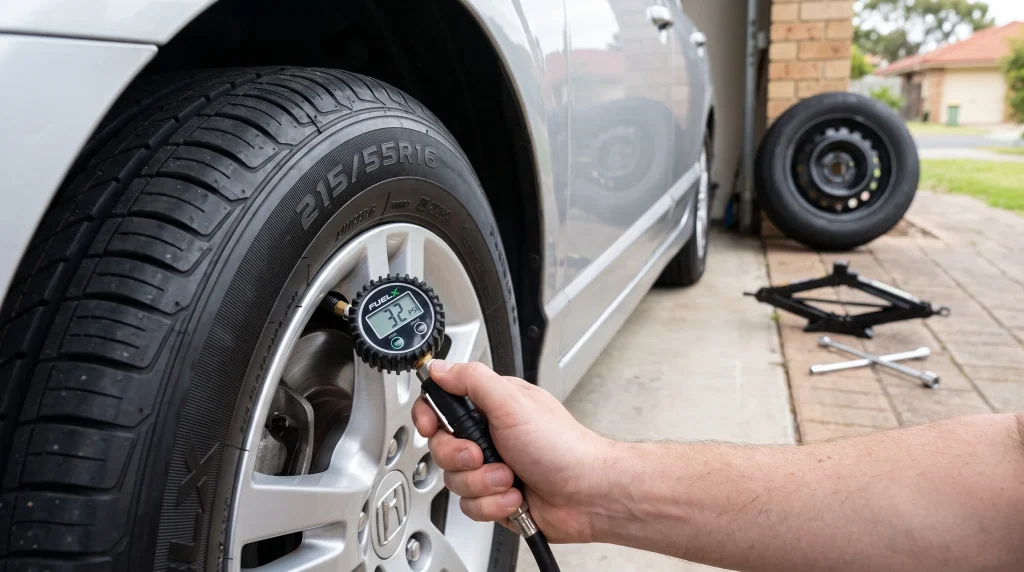
Check tyre pressure when the tyres are cold
Use a reliable pressure gauge and compare the reading with the pressure recommended by your vehicle manufacturer.
You will normally find the recommended pressure on the driver’s door-frame placard or in the owner’s manual.
Don’t use the maximum pressure printed on the tyre sidewall as your vehicle’s recommended pressure. These are different numbers.
For the most accurate reading, check the tyres when they are cold. NHTSA describes a cold tyre as one that has not been driven for at least three hours.
Inspect the tread
Look for:
- Uneven wear
- Excessively worn tread
- Cuts
- Cracks
- Bulges
- Punctures
- Objects embedded in the tread
Modern tyres have tread-wear indicators inside the grooves. When the tread reaches approximately 2/32 inch (1.6 mm), the tyre has reached the commonly specified replacement threshold.
Don’t wait until the tyre looks completely bald before replacing it.
Don’t forget the spare
A spare tyre is only useful if it is ready when you need it.
Check:
- Spare tyre pressure
- Sidewall condition
- Tread condition
- Jack
- Wheel wrench
- Locking-wheel-nut key, if applicable
A five-minute spare-tyre check can save considerable frustration after a puncture.
Check Engine Oil and Other Fluids
Long-distance driving means the engine and other systems may operate continuously for hours. Before leaving, check the fluids that your vehicle manufacturer recommends checking.
Engine oil
Check the oil level using the procedure described in your owner’s manual.
If the oil is due for replacement, consider servicing the vehicle before the trip rather than starting a long journey with overdue maintenance.
Don’t judge oil condition purely by its colour. Service interval, mileage, engine requirements and the manufacturer’s recommendation are more useful factors.
Brake fluid
Check the brake-fluid reservoir if your vehicle provides an accessible reservoir.
A repeatedly falling level should not simply be solved by adding more fluid. It can indicate brake wear or a leak that requires inspection.
Windshield washer fluid
Fill the washer-fluid reservoir before leaving.
A windshield can collect dust, insects, mud and road grime during a long drive. Having washer fluid available makes it easier to maintain visibility without stopping unnecessarily.
Other fluids
Depending on the vehicle, you may also need to check:
- Transmission fluid
- Clutch fluid
- Power-steering fluid
- Other manufacturer-specified fluids
Some modern vehicles have sealed systems that aren’t designed for routine owner-level checking, so follow the vehicle manufacturer’s instructions.
Pay Special Attention to the Cooling System
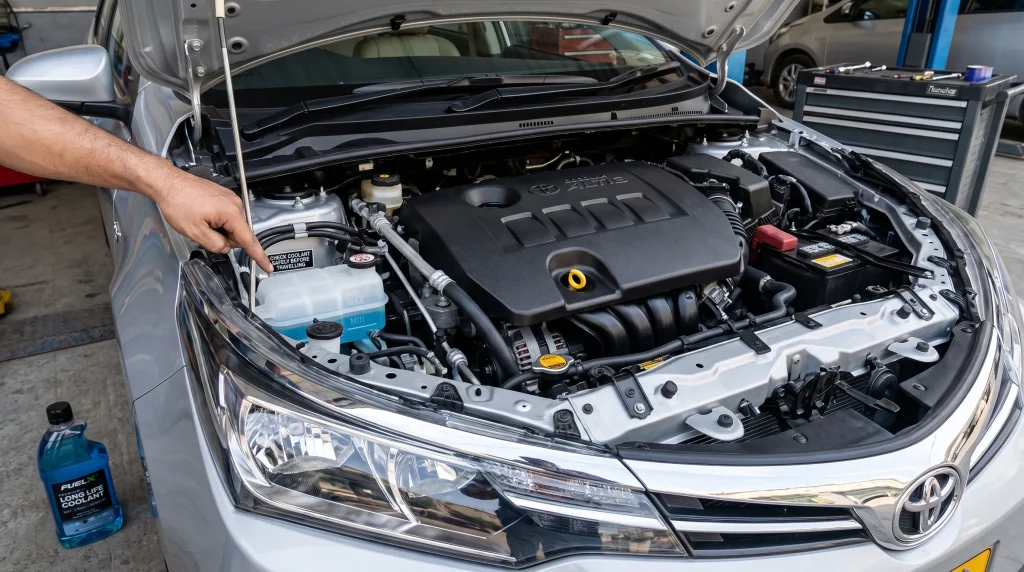
An overheating problem can turn a comfortable road trip into an unplanned roadside stop.
Before leaving, check the coolant reservoir only when the engine is fully cool.
Look for:
- Low coolant level
- Visible leaks
- Damaged hoses
- Cracked or deteriorated components
- Unusual coolant smell
- Repeated overheating
- Temperature gauge behaving differently from normal
Don’t choose coolant by colour alone
Green, blue, pink, red and other coolant colours are not a universal compatibility system.
Different manufacturers and coolant technologies can use different colours, and the same colour does not necessarily mean two products are chemically interchangeable.
Use the coolant specification recommended for your vehicle.
For example, if your vehicle requires a particular long-life coolant specification, choose a compatible product rather than selecting one simply because its bottle has the same colour as the coolant already in the reservoir.
Never open a hot cooling system
If the engine has overheated, don’t immediately remove the radiator or cooling-system cap.
Hot coolant can be under pressure and can cause serious burns.
If your temperature gauge is rising abnormally, safely stop the vehicle and allow the engine to cool before attempting any inspection.
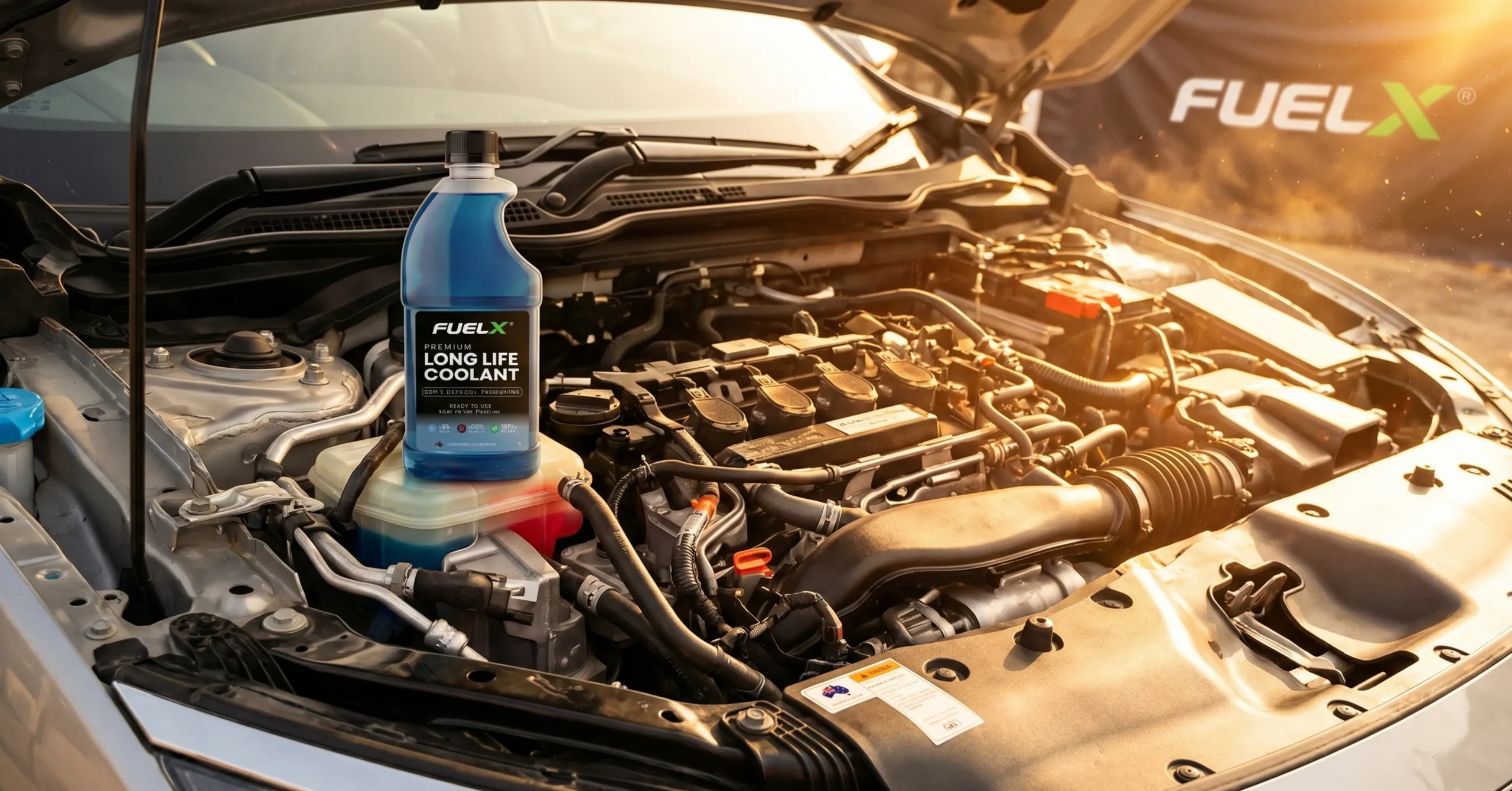
FuelX Long Life Coolant variants can be considered where the product specification matches the vehicle manufacturer’s requirements.
Test the Battery
A battery can appear fine one day and struggle to start the vehicle the next.
Before a long journey, inspect:
- Battery terminals
- Cable connections
- Signs of corrosion
- Battery mounting
- Visible cracks or swelling
- Starting performance
Pay attention if the engine has recently started cranking more slowly than usual.
AAA recommends battery testing before road trips, particularly for older batteries; its current road-trip checklist specifically flags batteries over three years old for testing.
A battery test is especially worthwhile if:
- The battery is several years old.
- The engine cranks slowly.
- Headlights appear unusually dim.
- You recently experienced a weak start.
- The vehicle has electrical problems.
A pre-trip battery test is much easier than dealing with a dead battery at an unfamiliar roadside location.
Check Your Brakes
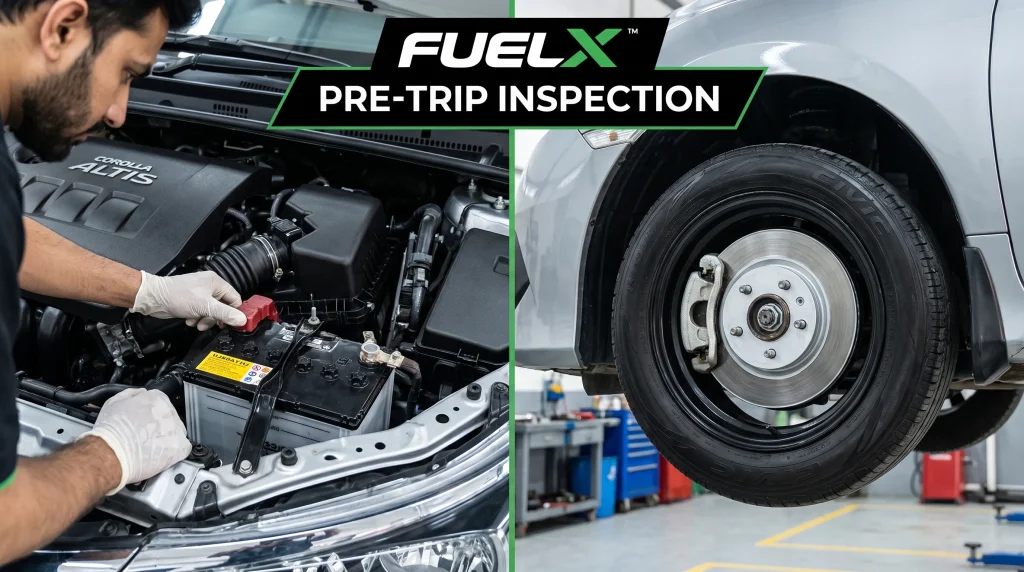
Your brakes deserve more than a quick glance.
During normal driving before the trip, pay attention to changes such as:
- Grinding noises
- Persistent squealing
- Steering-wheel or pedal vibration during braking
- Pulling to one side
- Unusual pedal feel
- Brake warning lights
- Longer-than-usual stopping response
If you notice these symptoms, have the braking system inspected before travelling.
A technician can check components such as brake pads, discs or rotors, drums, shoes, calipers and brake lines as applicable to your vehicle.
Don’t postpone a known brake problem
A long journey is not the time to “see how it goes.”
If your vehicle already needs brake work, have it inspected and repaired before departure.
Inspect Lights, Wipers and Windshield
Long-distance driving can involve bright sunlight, darkness, rain, dust and glare.
Make sure these lights work:
- Headlights
- Brake lights
- Turn signals
- Hazard lights
- Parking lights
- Reverse lights
- Fog lights, if fitted
Ask another person to stand outside the vehicle while you test the lights because you cannot see every exterior light from the driver’s seat.
Check your wiper blades
Replace wipers that:
- Leave heavy streaks
- Skip across the glass
- Make excessive noise
- Leave sections of the windshield uncleared
- Have cracked or damaged rubber
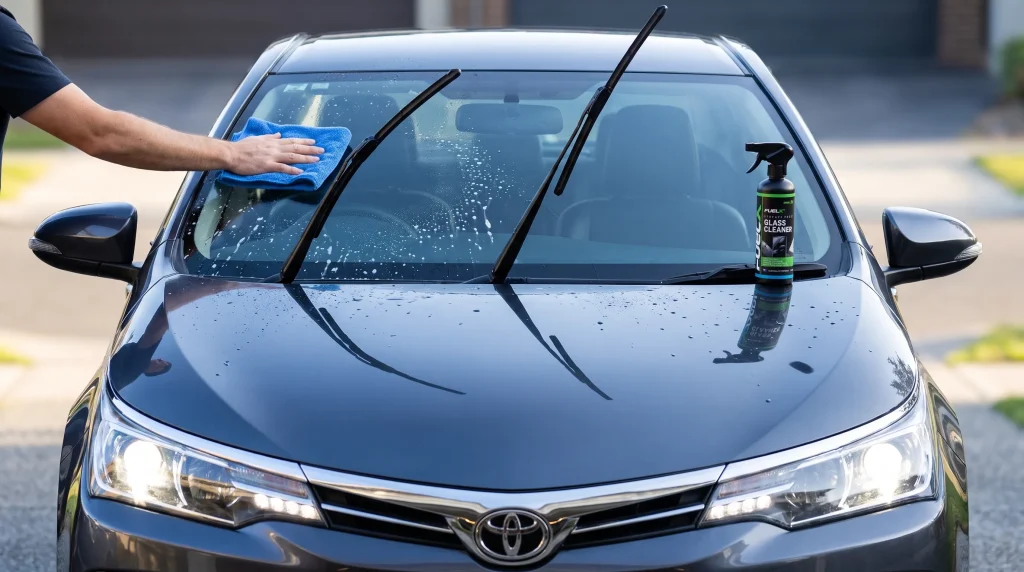
Clean the windshield
A thin layer of dust or oily residue can become much more noticeable when sunlight hits the windshield at an angle.
Clean both the inside and outside of the windshield before the journey.
FuelX Glass Cleaner can be used as part of your normal glass-cleaning routine, while a clean microfiber towel helps reduce lint and streaking when used appropriately.
Inspect Belts and Hoses
With the engine off and cool, perform a basic visual inspection under the bonnet.
Look for:
- Cracks
- Fraying
- Bulges
- Cuts
- Deterioration
- Loose connections
- Signs of fluid leakage
You don’t need to dismantle components or perform a complicated mechanical inspection.
If a belt or hose looks damaged, unusually soft, cracked or swollen, have it inspected by a qualified mechanic before the trip.
This is particularly important before travelling in hot conditions because heat can accelerate deterioration of rubber components.
Test the Air Conditioning
For a Pakistani road trip, working air conditioning can make a significant difference to cabin comfort.
Before leaving, turn on the AC and check:
- Does it produce cool air?
- Is airflow strong?
- Do all blower speeds work?
- Does the temperature remain reasonably consistent?
- Are there unusual smells?
- Are there unusual noises?
NHTSA specifically recommends checking AC performance before hot-weather travel because vehicles can place greater demands on the air-conditioning system as temperatures rise.
If your AC has become noticeably weaker, have it checked before the journey rather than waiting until you’re several hours away from home.
Give Your Car a Proper Clean
Mechanical preparation should come first, but cleaning the vehicle is also worthwhile before a long trip.
Wash the exterior
Remove:
- Dust
- Mud
- Road grime
- Bird droppings
- Water spots
Pay particular attention to:
- Windshield
- Mirrors
- Headlights
- Tail lights
- Number plates
A clean exterior also makes it easier to notice new scratches, dents, leaks or other abnormalities.
For routine washing, FuelX Car Wash Shampoo can be part of your pre-trip wash.
Clean the interior
Before loading luggage, clean:
- Dashboard
- Door panels
- Seats
- Floor mats
- Cup holders
- Interior glass
- Storage areas
Remove unnecessary objects from the cabin.
A clean, organized interior becomes much more comfortable when you’re spending four, six or even eight hours inside the vehicle.
FuelX Multi-Purpose Cleaner and Premium Microfiber Detailing Towel can be useful for appropriate interior-cleaning tasks.
Pack a Roadside Emergency Kit
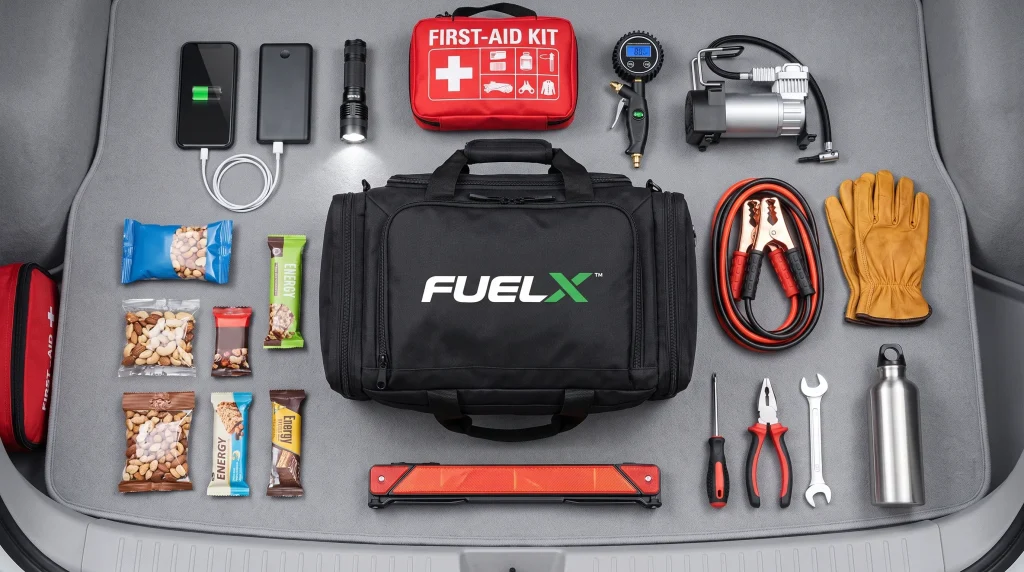
Even a properly maintained car can experience an unexpected problem.
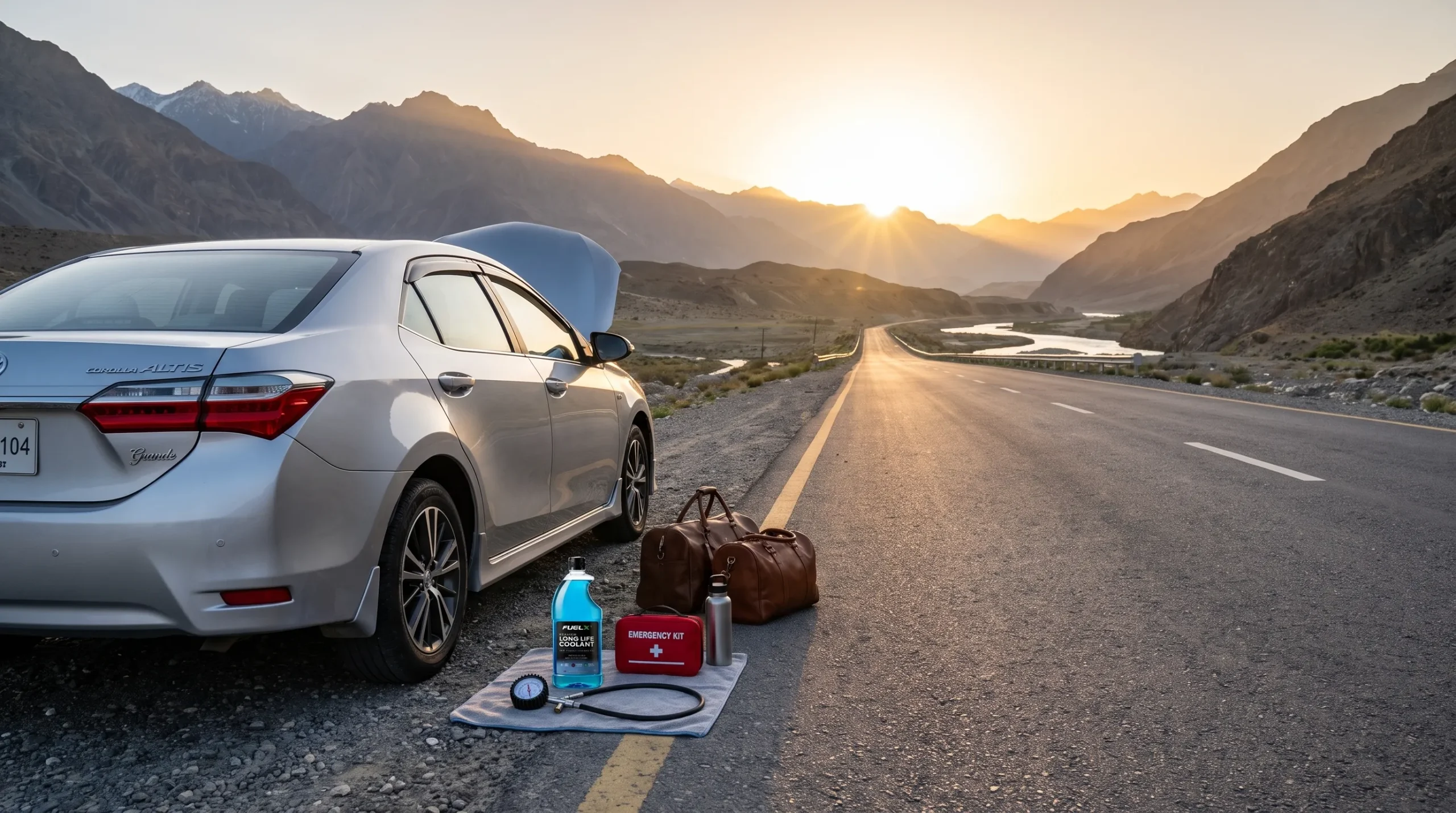
A basic emergency kit should include:
☐ Mobile phone
☐ Phone charger
☐ Power bank
☐ First-aid kit
☐ Flashlight
☐ Jumper cables or suitable jump starter
☐ Tyre-pressure gauge
☐ Tyre inflator
☐ Jack and wheel tools
☐ Work gloves
☐ Reflective warning triangle
☐ Basic tools
☐ Drinking water
☐ Non-perishable snacks
☐ Necessary medicines
☐ Extra windshield washer fluid
NHTSA’s current road-trip guidance also recommends items including a phone and charger, first-aid supplies, flashlight, jumper cables, tyre-pressure gauge, jack, basic tools, water, food, medicines and extra washer fluid.
You don’t need to turn your boot into a mobile workshop.
The purpose of an emergency kit is to help you handle a minor issue safely or remain prepared while waiting for professional assistance.
Check Your Documents
Before leaving, make sure the important documents and information you may need are accessible.
Depending on your circumstances, this can include:
- Driving licence
- Vehicle registration
- Insurance information
- Emergency contacts
- Owner’s manual
- Roadside-assistance information
Keep your phone charged.
If you’re travelling through areas where mobile coverage may be limited, download important maps in advance.
Check Fuel and Plan Your Route
A road trip becomes considerably less stressful when you know where you’re going to stop.
Before departure:
- Check your fuel level.
- Identify fuel stations along the route.
- Check the weather forecast.
- Check road conditions.
- Identify sensible rest stops.
- Allow extra time for traffic or delays.
- Download maps where useful.
For long routes, don’t plan the trip so tightly that one traffic jam or unexpected stop puts you under pressure.
NHTSA recommends checking weather, traffic and road conditions before travelling and allowing enough time to reach your destination safely.
Do a Final Walk-Around
Before getting into the driver’s seat, spend two minutes walking around the vehicle.
Front
Check:
- Headlights
- Windshield
- Front tyres
- Number plate
Driver and passenger sides
Check:
- Mirrors
- Windows
- Doors
- Tyres
Rear
Check:
- Brake lights
- Turn signals
- Number plate
- Rear tyres
Look underneath the vehicle for any fresh fluid leak.
This isn’t a substitute for professional inspection, but it can help you catch something obvious before you leave.
What to Check During the Road Trip
Your car doesn’t stop needing attention just because you’ve left home.
At a fuel or rest stop, take a quick look at the vehicle.
Check:
- Tyres
- Temperature gauge
- Warning lights
- Visible fluid leaks
- Windshield cleanliness
- Unusual smells
- Unusual sounds
- New vibrations
You don’t need to perform a complete inspection at every stop.
A quick visual check is enough to notice obvious changes.
Pay attention to new symptoms
If the car suddenly:
- vibrates,
- pulls to one side,
- overheats,
- smells unusual,
- makes a new noise,
- or displays a warning light,
don’t simply turn up the music and continue driving.
Find a safe place to stop and determine whether professional assistance is needed.
What If Something Goes Wrong?
Preparation reduces risk, but it cannot eliminate every possible breakdown.
If the engine overheats
Safely pull over.
Turn off the engine when appropriate and allow it to cool.
Never open a hot radiator or pressurized cooling-system cap.
If the cause isn’t obvious or the vehicle continues overheating, contact a qualified mechanic or roadside assistance.
If you get a flat tyre
If possible, move to a safe location away from moving traffic.
Turn on your hazard lights.
If you have the correct spare and the location is safe for a tyre change, follow the vehicle manufacturer’s instructions.
Otherwise, call for roadside assistance.
If the battery dies
If you are in a safe location, use an appropriate jump-start procedure or contact roadside assistance.
If you’re unsure about jump-starting your particular vehicle, don’t experiment beside a busy road.
The goal is not to become a roadside mechanic.
The goal is to stay safe, protect the vehicle and get appropriate help.
Your 10-Minute Road-Trip Departure Checklist
Before turning the key, run through this final list.
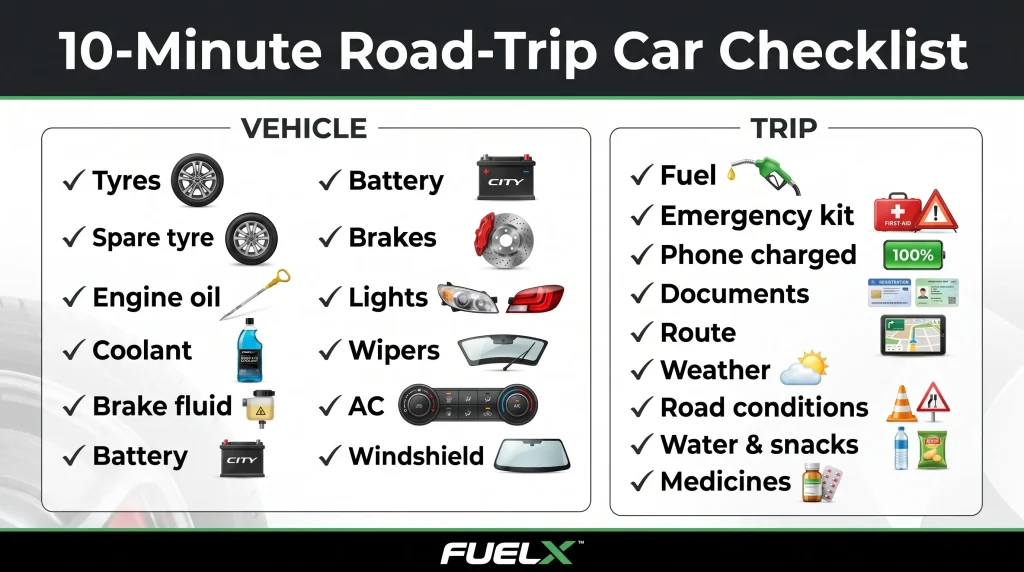
Vehicle
☐ Tyres checked
☐ Tyre pressure checked cold
☐ Spare tyre ready
☐ Jack and wheel tools available
☐ Engine oil checked
☐ Coolant checked while engine is cool
☐ Brake fluid checked
☐ Battery inspected
☐ Brakes feel normal
☐ Lights working
☐ Wipers working
☐ AC working
☐ Windshield clean
Trip
☐ Fuel sufficient
☐ Emergency kit packed
☐ Phone charged
☐ Documents available
☐ Route planned
☐ Weather checked
☐ Road conditions checked
☐ Water and snacks packed
☐ Necessary medicines packed
If all of these are checked, you’ve covered the major pre-trip basics.
Final Thoughts
A road trip doesn’t really begin when you leave the driveway.
It begins when you prepare the vehicle.
Check the tyres, fluids, coolant, brakes, battery, lights, wipers and emergency equipment before you go. Clean the car, organize the cabin and check your route and weather conditions.
A few minutes of preparation can help you identify obvious problems before they become inconvenient—and sometimes much more serious—on the road.
Remember that a checklist cannot replace scheduled maintenance. If your car has a known mechanical problem, warning light, overheating issue, brake problem or significant fluid leak, have it inspected before starting a long journey.
Prepare the car. Pack the essentials. Check the route. Then enjoy the drive.
FuelX Road-Trip Essentials
For the cleaning and detailing side of your preparation, FuelX products can help you get your vehicle ready for the journey:
- FuelX Car Wash Shampoo — for routine exterior washing
- FuelX Glass Cleaner — for cleaning interior and exterior glass
- FuelX Multi-Purpose Cleaner — for suitable general/interior cleaning
- FuelX Quick Detailer — for quick exterior touch-ups
- FuelX Premium Microfiber Detailing Towel — for drying and detailing
- FuelX Tyre Shiner — for finishing the tyres
- FuelX Long Life Coolant — where the selected specification is compatible with your vehicle
Important: Always follow your vehicle manufacturer’s recommendations for tyre pressure, fluid specifications, coolant type, maintenance intervals and replacement requirements.
About FuelX Research & Detailing Lab
FuelX engineers high-performance automotive cooling solutions and specialized car detailing products engineered for Pakistan's demanding driving conditions. All guides and tips are validated by our technical team to ensure engine longevity and lasting vehicle protection.
Keep Your Engine Cool & Your Ride Shining
Shop FuelX certified Long Life Coolants, high-gloss tyre shine, safe car wash shampoo, and lint-free microfiber accessories.