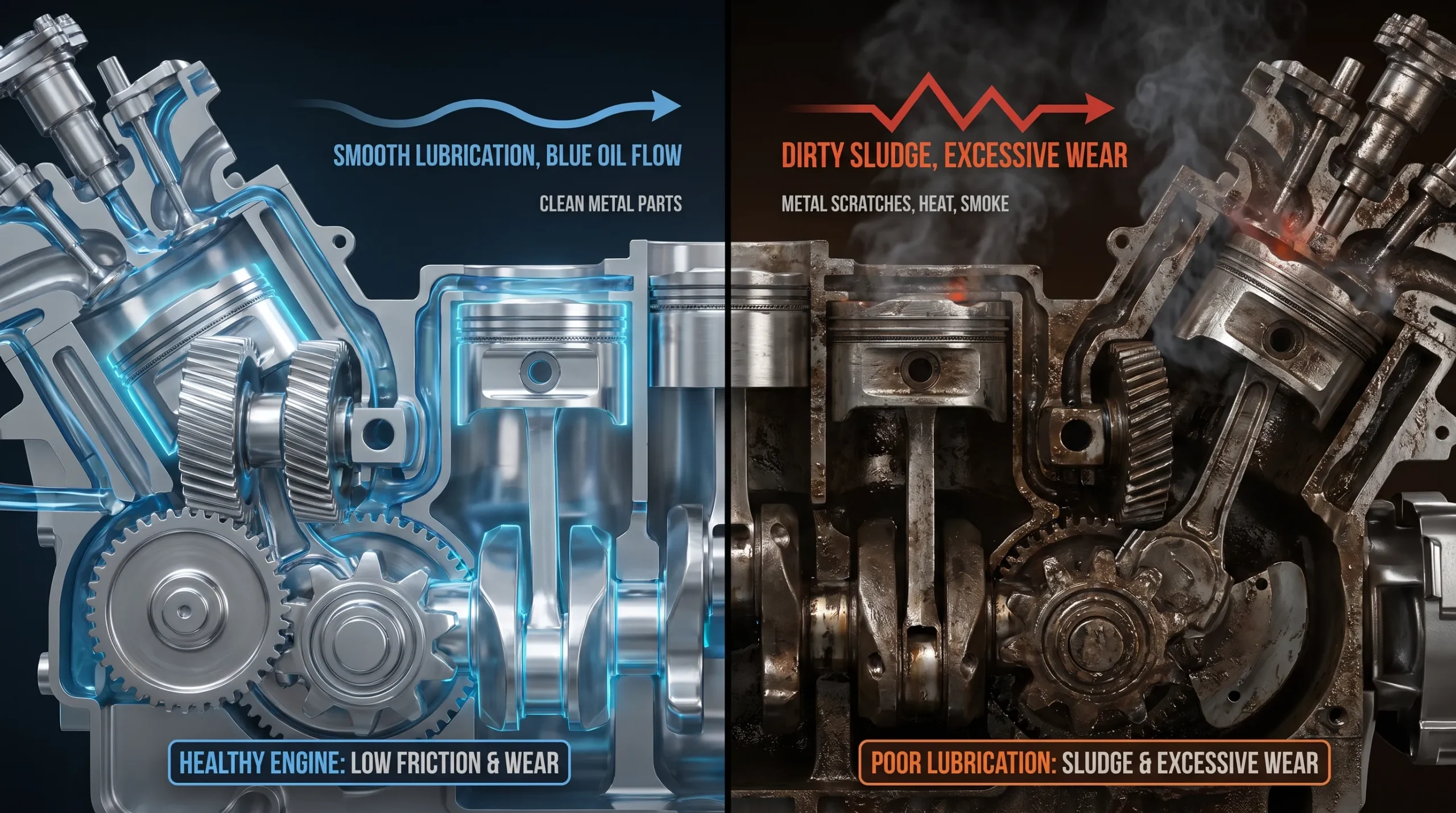
Your car’s engine is made up of hundreds of metal components that move at extremely high speeds. Pistons move up and down thousands of times every minute, the crankshaft rotates continuously, valves open and close in perfect synchronization, and bearings support constant movement. Without proper lubrication, these metal parts would create excessive friction, generate intense heat, and wear out quickly.
This is where engine oil comes in.
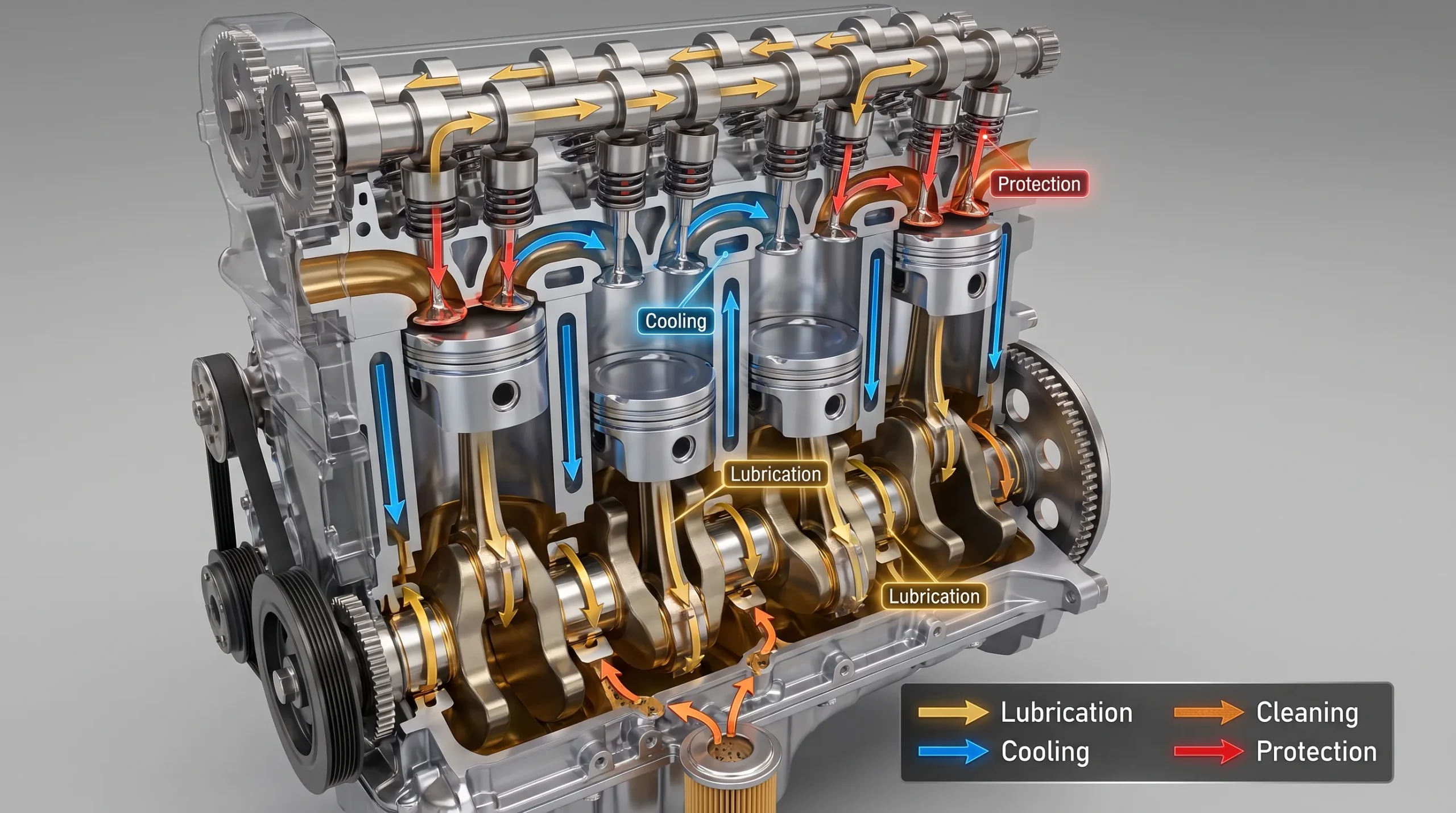
Engine oil is often called the lifeblood of an engine because it lubricates moving parts, reduces friction, controls heat, prevents corrosion, and keeps the engine clean by carrying away dirt and microscopic metal particles. Choosing the right engine oil is one of the simplest yet most effective ways to improve your vehicle’s performance, fuel efficiency, and long-term reliability.
Unfortunately, many car owners in Pakistan choose engine oil based on myths rather than facts. Some believe that a thicker oil is always better for hot weather, while others simply use whatever their local mechanic recommends without checking the manufacturer’s specifications. These practices may not always provide the best protection for modern engines.
Pakistan’s driving conditions make selecting the correct engine oil even more important. Long traffic jams in cities like Lahore and Karachi, dusty roads, high summer temperatures exceeding 45°C in some regions, frequent short trips, and occasional long-distance motorway travel all place additional stress on your engine and its lubricant.
Using the wrong engine oil can lead to several problems, including:
Reduced engine performance
Lower fuel economy
Increased engine wear
Difficult cold starts during winter
Engine sludge formation
Higher maintenance costs
Shorter engine life
On the other hand, using the correct engine oil helps your engine perform efficiently in every season while reducing unnecessary wear and improving reliability.
In this comprehensive guide, you’ll learn:
How engine oil protects your engine
How to read oil viscosity grades like 5W-30 and 10W-40
The differences between mineral, semi-synthetic, and fully synthetic oils
Which oil is suitable for Pakistan’s climate
How to match engine oil with your driving habits
Common myths about engine oil
Tips for buying genuine engine oil in Pakistan
Whether you own a Suzuki Alto, Toyota Corolla, Honda Civic, Honda City, Toyota Yaris, Kia Sportage, or any other vehicle, this guide will help you make an informed decision and keep your engine running smoothly for years.
Why Choosing the Right Engine Oil Matters
Many people think engine oil simply “reduces friction,” but modern engine oil performs several critical functions that directly affect your car’s performance and lifespan.
Let’s understand each one in simple terms.
1. Lubricates Moving Engine Parts
Inside every engine, dozens of metal components move against one another at extremely high speeds.
For example:
Pistons slide inside cylinders.
Camshafts rotate continuously.
Crankshafts spin thousands of times every minute.
Bearings support rotating components.
Without lubrication, these metal surfaces would rub directly against each other, causing severe wear.
Engine oil creates a thin protective film between these moving parts, allowing them to move smoothly without direct metal-to-metal contact. This reduces friction and significantly extends engine life.
Think of it like applying oil to a bicycle chain. Without lubrication, the chain becomes noisy, rough, and wears out quickly. The same principle applies inside your car’s engine.
2. Reduces Engine Heat
Many drivers assume that only the radiator cools the engine.
While the cooling system removes most of the heat, engine oil also plays an important role in temperature control.
As oil circulates through the engine, it absorbs heat generated by moving components and carries it away from critical areas before returning to the oil pan. This helps maintain stable operating temperatures, especially during heavy traffic, long highway drives, or hot summer days.
In Pakistan, where temperatures can soar above 40–45°C in many cities during summer, this additional cooling effect becomes even more important.
3. Keeps the Engine Clean
Every time your engine runs, tiny carbon deposits, combustion by-products, and microscopic metal particles are produced.
High-quality engine oils contain detergent and dispersant additives that help:
Prevent sludge formation
Keep contaminants suspended in the oil
Reduce varnish deposits
Keep internal engine components cleaner
Without these cleaning additives, contaminants would accumulate inside the engine, restricting oil flow and reducing efficiency.
This is one reason why regular oil changes are essential. Over time, the oil becomes saturated with contaminants and loses its cleaning ability.
4. Protects Against Rust and Corrosion
Moisture naturally forms inside engines due to temperature changes and combustion.
Engine oil contains anti-corrosion additives that coat metal surfaces, preventing rust and oxidation.
This protection is especially valuable for vehicles that:
Remain parked for extended periods
Operate in humid coastal cities
Frequently travel short distances where the engine doesn’t fully warm up
5. Improves Fuel Efficiency
A properly lubricated engine experiences less internal resistance.
Less friction means the engine requires less energy to operate, allowing more of the fuel’s energy to move the vehicle instead of overcoming internal mechanical resistance.
Modern low-viscosity oils recommended by manufacturers can help improve fuel economy while maintaining adequate engine protection.
Although the improvement may seem small on a single trip, it becomes significant over thousands of kilometres.
6. Extends Engine Life
Engine replacement is one of the most expensive automotive repairs.
Routine oil changes with the correct engine oil help reduce wear on critical engine components such as:
Pistons
Cylinder walls
Camshafts
Bearings
Timing components
Turbochargers (where equipped)
Over several years, proper lubrication can significantly extend engine life while reducing maintenance costs.
What Happens If You Use the Wrong Engine Oil?
Using an oil that doesn’t meet your vehicle manufacturer’s requirements can create several issues.
Possible consequences include:
Increased engine wear
Poor lubrication during cold starts
Excessive engine heat
Reduced fuel economy
Sludge formation
Higher oil consumption
Poor acceleration
Increased engine noise
Potential warranty concerns for newer vehicles
Modern engines are engineered with precise tolerances, so even small differences in oil viscosity or performance specifications can affect long-term reliability.
Example
Imagine two identical Toyota Corollas driven under similar conditions.
Uses an incorrect, thicker oil because “Pakistan is hot.”
Oil changes delayed.
Low-quality oil filter used.
After several years:
Car A is more likely to have cleaner engine internals, smoother performance, better fuel efficiency, and lower maintenance costs.
Car B may experience increased engine wear, sludge buildup, reduced performance, and more frequent repairs.
This example highlights why selecting the correct engine oil is an investment in your vehicle rather than just another maintenance expense.
Step 1: Always Check Your Car Owner’s Manual
If you ask ten different mechanics which engine oil you should use, you might receive ten different answers.
However, there is one source that matters more than anyone else’s opinion:
Your vehicle’s owner’s manual.
Every engine is designed with specific engineering tolerances, operating temperatures, and lubrication requirements. The manufacturer spends years testing different oil formulations before recommending the ideal engine oil for that particular engine.
For this reason, your owner’s manual should always be your primary reference when selecting engine oil.
What Information Does the Owner’s Manual Provide?
Most owner’s manuals include important details such as:
Recommended viscosity grade (e.g., 0W-20, 5W-30, or 10W-40)
Required API or ACEA performance standards
Oil capacity
Recommended oil type (mineral, semi-synthetic, or fully synthetic)
Oil change intervals under normal and severe driving conditions
Following these recommendations ensures that your engine receives the level of protection it was designed for.
Why Manufacturer Recommendations Matter
Many Pakistani drivers believe that switching to a thicker oil automatically provides better protection in hot weather.
In reality, modern engines are engineered to operate with specific oil viscosities. Using a thicker oil than recommended can reduce oil flow during startup, increase internal resistance, and even lower fuel efficiency. Likewise, using oil that is too thin may not provide sufficient protection under certain operating conditions. Vehicle manufacturers consistently advise using the specified viscosity and quality standards to ensure proper lubrication and engine durability.
Pro Tip: Never choose engine oil based solely on climate, price, or someone else’s recommendation. Always start with your owner’s manual and then select a reputable oil that meets or exceeds those specifications.
Step 2: Understand Engine Oil Viscosity
One of the first things you’ll notice on an engine oil bottle is a label like:
0W-20
5W-30
5W-40
10W-30
10W-40
15W-40
20W-50
These numbers may seem confusing at first, but they simply describe the oil’s viscosity—its resistance to flow at different temperatures. Lower-viscosity oils flow more easily during cold starts, while higher-viscosity oils maintain a thicker protective film at higher operating temperatures.
Imagine pouring water and honey from separate bottles. Water flows quickly because it has low viscosity, while honey pours more slowly because it has high viscosity. Engine oil behaves in a similar way, but it is specially formulated to perform across a wide temperature range.
What Does “5W-30” Mean?
The label 5W-30 contains two important numbers.
The First Number (5W)
The first number, followed by the letter W (which stands for Winter), indicates how easily the oil flows when the engine is cold.
A lower number means the oil reaches vital engine components more quickly during startup, reducing wear at the moment when engines experience the highest friction.
For example:
0W flows more easily in very cold temperatures.
5W provides excellent cold-start protection for most climates.
10W is slightly thicker when cold.
15W and 20W are thicker still and may not be suitable for many modern engines unless specified by the manufacturer.
The Second Number (30)
The second number represents the oil’s viscosity when the engine has reached normal operating temperature.
A 30-grade oil remains thick enough to maintain a protective film while still flowing efficiently through the engine.
Common operating-temperature grades include:
20
30
40
50
Higher numbers generally indicate a thicker oil at operating temperature, but thicker does not automatically mean better. The correct viscosity is the one recommended by the vehicle manufacturer.
Understanding Common Oil Grades
0W-20
This is one of the thinnest modern engine oils.
It provides:
Excellent cold-start protection
Outstanding fuel economy
Fast oil circulation
Ideal for many latest Japanese vehicles
Commonly recommended for:
New Toyota models
Honda models
Hybrid vehicles
5W-30
Probably the most widely recommended engine oil for modern passenger cars.
Benefits include:
Excellent year-round protection
Good fuel economy
Suitable for turbocharged engines
Performs well in Pakistan’s climate when specified by the manufacturer
Many newer vehicles from Toyota, Honda, Hyundai, Kia, MG, and Changan recommend this viscosity.
10W-40
This grade is slightly thicker than 5W-30.
It is often used in:
Older vehicles
Moderate mileage engines
Some naturally aspirated petrol engines
Many mechanics recommend 10W-40 because it has traditionally been common in Pakistan, but it should only be used if approved by the vehicle manufacturer.
20W-50
This is a much thicker engine oil.
It may be appropriate for:
Older high-mileage engines
Engines with noticeable wear (if recommended)
Certain commercial vehicles
It is generally not recommended for most modern passenger cars unless the owner’s manual specifically calls for it.
Which Engine Oil Grade Is Best for Pakistan’s Climate?
Pakistan experiences a wide variety of weather conditions.
Winter temperatures in Gilgit can drop below freezing, while summer temperatures in cities like Jacobabad, Multan, Bahawalpur, and Sukkur can exceed 45°C.
Because of this, many drivers believe they should automatically use thicker oil during summer.
This is one of the biggest misconceptions about engine oil.
Modern engine oils are specifically designed to operate across wide temperature ranges. If your owner’s manual recommends 5W-30, that recommendation usually remains valid even during Pakistan’s hot summers because the oil is engineered to maintain adequate protection at high operating temperatures.
Let’s look at different regions.
Northern Areas
Gilgit
Hunza
Skardu
Murree
Abbottabad
Winter temperatures are much lower.
Lower winter viscosity oils like 0W-20 or 5W-30 help the engine start more easily during cold mornings by flowing quickly to critical engine parts.
Moderate Climate
Cities such as:
Islamabad
Rawalpindi
Lahore
Faisalabad
Sialkot
experience both warm summers and cool winters.
For most modern vehicles in these regions, the manufacturer’s recommended viscosity provides year-round protection.
Hot Southern Regions
Cities such as:
Karachi
Hyderabad
Multan
Bahawalpur
Sukkur
Jacobabad
Although ambient temperatures are much higher, modern synthetic oils are designed to remain stable under these conditions.
Unless your vehicle manufacturer specifies otherwise, switching to a thicker oil solely because of the weather is usually unnecessary.
Climate Alone Shouldn’t Decide Your Oil
Many people ask:
“It’s 45°C in Pakistan. Shouldn’t I use 20W-50?”
The answer is not necessarily.
Your engine’s operating temperature is regulated by its cooling system and thermostat. Even in very hot weather, the engine is designed to run within a controlled temperature range.
That’s why vehicle manufacturers test engines in deserts, mountains, freezing winters, and tropical climates before recommending an engine oil.
Always trust the manufacturer’s specification over common myths.
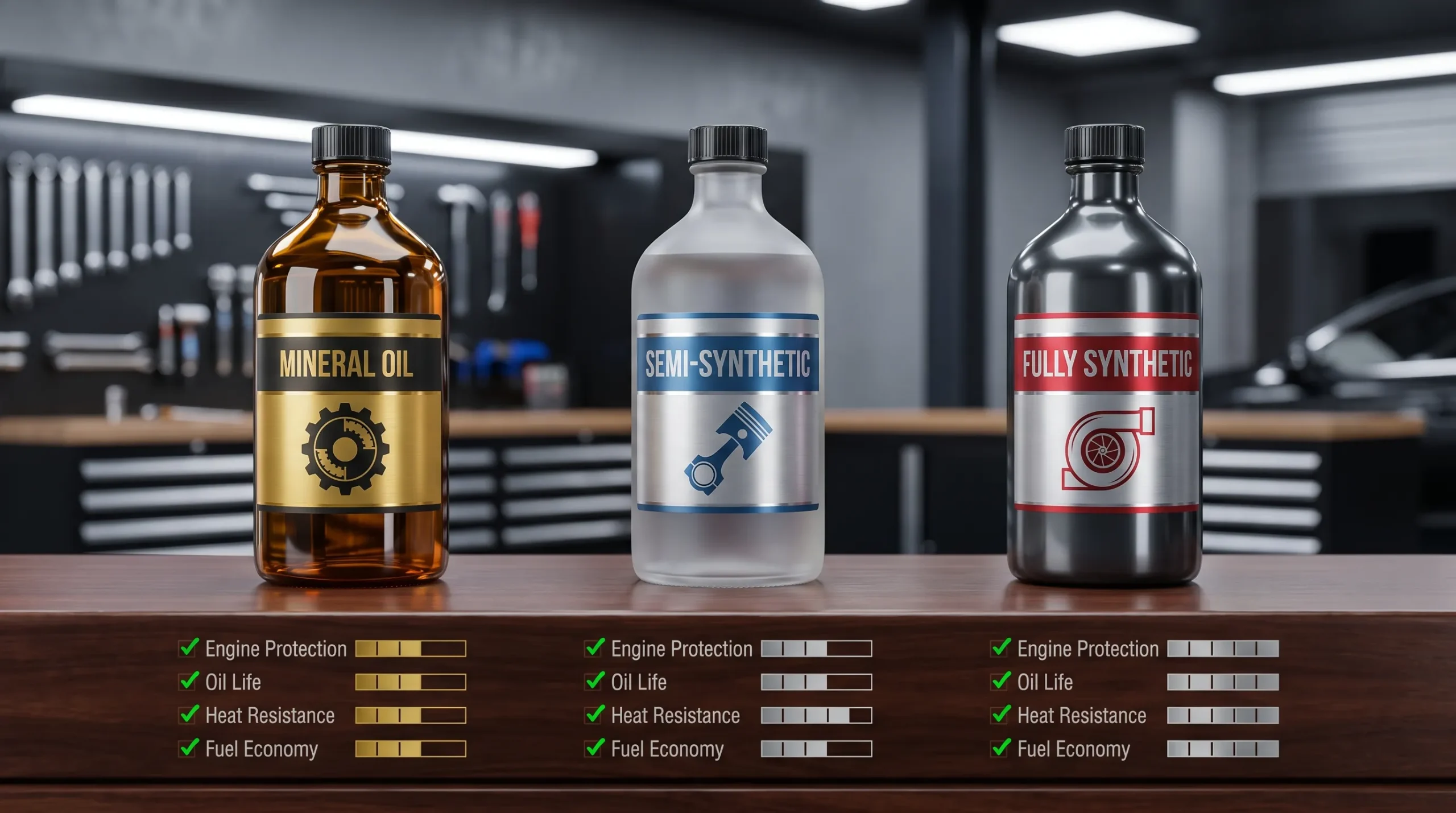
Step 3: Choose the Right Type of Engine Oil
Besides viscosity, you’ll also need to choose the type of engine oil.
There are three main categories available in Pakistan:
Mineral Oil
Semi-Synthetic Oil
Fully Synthetic Oil
Each has its own advantages, disadvantages, and ideal applications.
1. Mineral Engine Oil
Mineral oil is produced by refining crude petroleum.
It is the oldest and most affordable type of engine oil.
Although modern mineral oils contain performance-enhancing additives, their base oil molecules are less uniform than synthetic oils, making them more susceptible to breakdown under extreme heat and prolonged use.
Advantages
Lowest purchase cost
Easily available throughout Pakistan
Suitable for many older vehicles
Adequate protection under normal driving conditions
Disadvantages
Breaks down faster
Shorter oil change intervals
Lower resistance to oxidation
Less effective under extreme temperatures
Generates more deposits over time
Best For
Older vehicles
Low annual mileage
Budget-conscious owners
Vehicles with simple engine designs
2. Semi-Synthetic Engine Oil
Semi-synthetic oil combines mineral base oil with synthetic base oil and advanced additives.
It offers a balance between affordability and performance.
Many Pakistani drivers choose semi-synthetic oil because it provides noticeably better protection than mineral oil without the higher cost of full synthetic oil.
Advantages
Better engine protection
Improved resistance to heat
Cleaner engine operation
Longer service life
Better fuel economy than mineral oil
Disadvantages
More expensive than mineral oil
Doesn’t offer the maximum performance of fully synthetic oil
Best For
Daily commuters
Family cars
Moderate annual mileage
Mixed city and highway driving
3. Fully Synthetic Engine Oil
Fully synthetic engine oil is manufactured using advanced chemical engineering rather than simply refining crude oil.
Its molecules are designed to be more uniform, allowing the oil to perform better under both extreme heat and cold.
Because of this, fully synthetic oil provides superior protection for modern engines and is recommended by many vehicle manufacturers. It flows more quickly during cold starts, resists oxidation, maintains viscosity over longer intervals, and helps keep engines cleaner than conventional oils.
Advantages
Maximum engine protection
Excellent cold-start performance
Superior high-temperature stability
Improved fuel efficiency
Better engine cleanliness
Longer oil life
Lower engine wear
Excellent protection for turbocharged engines
Disadvantages
Higher initial purchase cost
However, because synthetic oils generally last longer and provide better protection, many drivers find that the higher upfront cost is offset by reduced maintenance and improved engine longevity.
Best For
Modern vehicles
Turbocharged engines
Long-distance drivers
Ride-hailing vehicles
Premium sedans and SUVs
High-performance cars
Mineral vs Semi-Synthetic vs Fully Synthetic
Feature
Mineral Oil
Semi-Synthetic
Fully Synthetic
Price
⭐⭐⭐⭐⭐ Lowest
⭐⭐⭐ Medium
⭐ Highest
Engine Protection
Good
Very Good
Excellent
Engine Cleanliness
Good
Very Good
Excellent
Heat Resistance
Moderate
High
Excellent
Cold Start Protection
Moderate
Very Good
Excellent
Fuel Economy
Average
Good
Excellent
Oil Life
Short
Medium
Long
Recommended For
Older Vehicles
Daily Drivers
Modern & Turbocharged Vehicles
Which Type Should You Choose?
If your vehicle is less than five years old or the manufacturer recommends fully synthetic oil, it’s usually best to continue using it.
For older vehicles that are well maintained, semi-synthetic oil often offers an excellent balance between protection and affordability.
Mineral oil still has its place, particularly in older engines designed for it, but many modern vehicles benefit from the improved performance of synthetic lubricants.
Ultimately, the best engine oil is not the most expensive one—it’s the one that matches your vehicle manufacturer’s recommended viscosity, quality specification, and driving conditions.
Step 4: Understand API Ratings and Industry Standards
Choosing the correct viscosity is only half the equation. The other half is making sure the engine oil meets the performance standards recommended by your vehicle manufacturer.
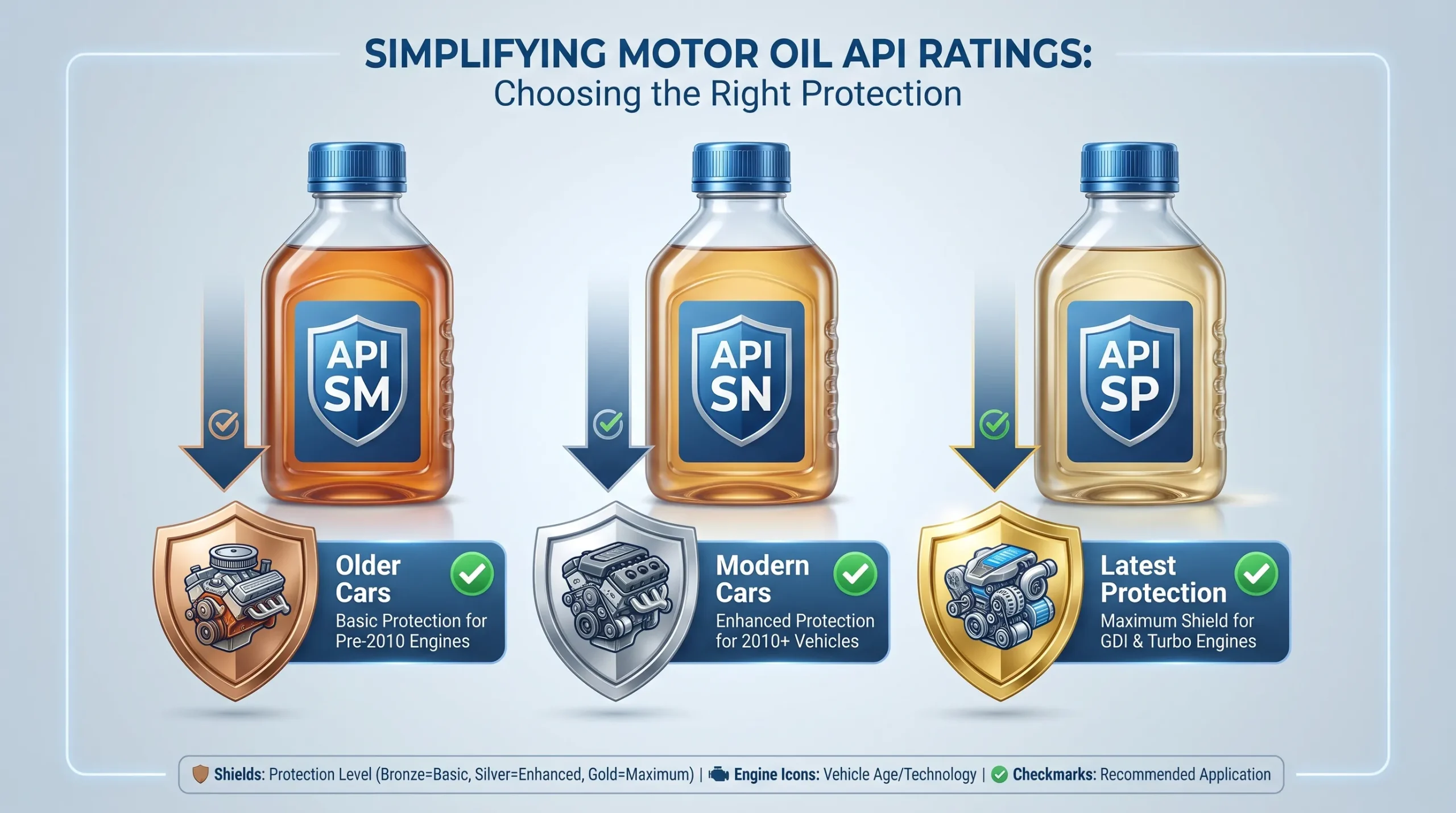
You may have noticed codes such as:
API SP
API SN
API SM
ACEA A3/B4
ILSAC GF-6
These aren’t marketing terms—they are internationally recognized standards that indicate how well an engine oil performs in laboratory and engine tests.
For most passenger cars in Pakistan, the API (American Petroleum Institute) rating is the easiest specification to identify on the oil bottle.
What Is an API Rating?
The American Petroleum Institute (API) tests engine oils against strict performance requirements before allowing manufacturers to display the familiar API “Donut” certification mark.
These tests evaluate how well an engine oil protects against:
Engine wear
Sludge formation
High-temperature deposits
Oxidation
Corrosion
Timing chain wear
Fuel economy
Turbocharger deposits
Higher API categories generally include the performance requirements of earlier gasoline-engine categories. For example, an oil meeting API SP can generally be used where API SN is specified for gasoline engines, unless the manufacturer states otherwise.
Understanding API Categories
API SM
Introduced for vehicles built around 2010 and earlier.
Offers:
Good wear protection
Basic sludge control
Suitable for many older engines
API SN
Introduced for newer gasoline engines.
Compared to API SM, it offers:
Better oxidation resistance
Improved piston cleanliness
Better turbocharger protection
Enhanced deposit control
Many vehicles manufactured between 2011 and 2020 recommend API SN.
API SP
API SP is the latest gasoline engine category introduced by the American Petroleum Institute.
It provides everything API SN offers, plus additional protection against:
Low-Speed Pre-Ignition (LSPI)
Timing chain wear
Turbocharger deposits
High-temperature oxidation
Engine sludge
If your owner’s manual recommends API SN, an API SP oil is generally acceptable because it meets or exceeds the earlier gasoline-engine performance requirements.
Petrol vs Diesel Engine Oils
One simple way to identify engine oil is by the first letter of the API rating.
“S” Series
Designed for Spark-Ignition engines.
These include petrol-powered cars.
Examples:
API SM
API SN
API SP
“C” Series
Designed for Compression-Ignition engines.
These are primarily diesel engines.
Examples include:
API CH-4
API CI-4
API CJ-4
API CK-4
Always use the oil specification recommended for your engine type.
Should You Always Buy the Latest API Oil?
In most cases, yes.
If your owner’s manual recommends API SN and you purchase API SP of the correct viscosity, you’re generally giving your engine an oil that meets newer performance requirements for gasoline engines.
However, viscosity is just as important.
An API SP 20W-50 is not automatically better than an API SN 5W-30 if your manufacturer recommends 5W-30.
Always match both:
Correct viscosity
Correct performance specification
Step 5: Match Engine Oil to Your Driving Style
Two people may drive the exact same car but require different maintenance schedules because their driving habits are completely different.
A person who drives 15 km daily in city traffic places very different demands on engine oil than someone who drives 400 km every weekend on motorways.
Let’s examine common driving situations in Pakistan.
Daily City Driving
If you drive mostly within cities such as:
Lahore
Karachi
Islamabad
Rawalpindi
Faisalabad
your engine experiences:
Frequent stop-and-go traffic
Long idling times
Short trips
Repeated engine starts
These conditions prevent the engine oil from reaching its ideal operating temperature consistently.
For city driving:
Follow manufacturer-recommended viscosity.
Change oil according to the severe-service schedule if your manual specifies one.
Fully synthetic oil can offer improved resistance to oxidation during repeated heat cycles.
Long Highway Driving
Motorway and highway driving is generally easier on engine oil.
Benefits include:
Stable engine temperatures
Fewer cold starts
Less idling
Consistent engine speed
If you frequently travel between cities such as:
Lahore to Islamabad
Karachi to Hyderabad
Multan to Bahawalpur
high-quality synthetic oils can provide excellent long-distance protection.
Heavy Traffic
Pakistan’s major cities often experience heavy congestion.
During prolonged traffic jams:
Engine temperature increases.
Cooling fans operate more frequently.
Oil experiences repeated heat cycles.
High-quality engine oil maintains viscosity more effectively under these demanding conditions.
Ride-Hailing Drivers
Drivers working with services such as ride-hailing or taxi fleets may cover several thousand kilometres each month.
Their engines experience:
Long operating hours
Continuous idling
Frequent acceleration and braking
High annual mileage
Premium engine oils can help reduce engine wear while maintaining performance over extended service intervals, provided oil changes are still performed according to manufacturer recommendations.
High-Mileage Vehicles
Older engines often have:
Larger internal clearances
Slightly higher oil consumption
More deposits
Increased wear
Some manufacturers produce oils specifically formulated for high-mileage engines, containing seal conditioners and additive packages designed for older vehicles.
However, don’t automatically switch to thicker oil simply because your vehicle has covered many kilometres.
Always consult the owner’s manual or a qualified technician.
Turbocharged Engines
Turbochargers rotate at extremely high speeds and operate under intense heat.
Because of this, turbocharged engines place greater demands on engine oil.
Fully synthetic oils generally provide:
Better heat resistance
Faster oil circulation
Improved deposit control
Better turbocharger protection
This is one reason many modern turbocharged vehicles specify fully synthetic oil from the factory.
Signs You’re Using the Wrong Engine Oil
The wrong engine oil doesn’t always cause immediate engine failure.
Instead, the symptoms usually develop gradually.
Watch for these warning signs:
Increased Engine Noise
If your engine sounds louder than usual, the oil may not be providing adequate lubrication.
Poor Fuel Economy
Higher internal friction forces the engine to work harder, increasing fuel consumption.
Hard Cold Starts
Oil that is too thick during startup circulates more slowly, especially in colder weather.
Oil Warning Light
A low oil level, incorrect viscosity, or oil pressure issue can trigger the dashboard warning light.
Although overheating is often linked to cooling system problems, incorrect engine oil can also contribute.
Burning Oil Smell
If you notice a burnt oil smell after driving, have the vehicle inspected promptly.
Reduced Engine Performance
Slower acceleration, rough engine operation, and reduced responsiveness can all indicate lubrication problems.
How Often Should You Change Engine Oil in Pakistan?
One of the most common questions among car owners is:
“How many kilometres can I drive before changing engine oil?”
There isn’t a single answer because several factors influence oil life.
These include:
Oil quality
Driving conditions
Climate
Dust
Traffic congestion
Engine age
Manufacturer recommendations
Typical Oil Change Guidelines
Although every manufacturer is different, a general guide is:
Oil Type
Typical Interval*
Mineral Oil
5,000–6,000 km
Semi-Synthetic
7,000–8,000 km
Fully Synthetic
8,000–12,000 km
*These are general ranges. Always follow the service interval specified in your owner’s manual, especially if your vehicle operates under severe driving conditions.
Pakistan’s Driving Conditions
Many vehicles in Pakistan operate under conditions considered severe service, including:
Heavy traffic
High temperatures
Dusty roads
Short daily trips
Frequent idling
Under these conditions, manufacturers may recommend shorter maintenance intervals.
Regularly checking your engine oil level between services is also a good habit.
Don’t Wait for the Oil to Turn Black
Many drivers believe they should only change engine oil once it becomes black.
This is a myth.
Engine oil naturally darkens because it suspends soot and contaminants while cleaning the engine.
Its condition—not just its colour—determines when it should be replaced.
The safest approach is simple:
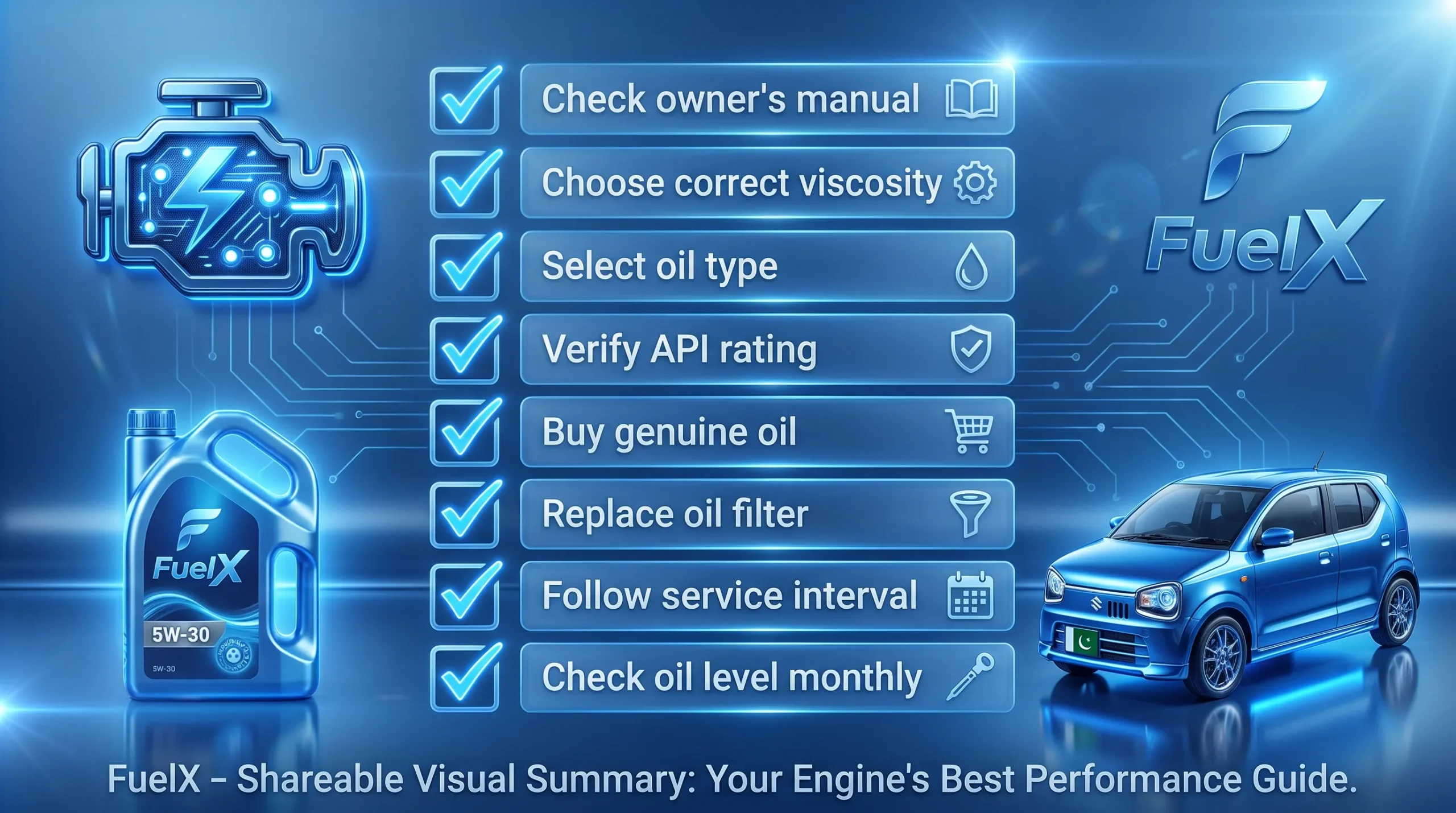
Follow your owner’s manual, use high-quality engine oil that meets the correct specifications, replace the oil filter during every oil change, and inspect the oil level at least once a month.
Recommended Engine Oil Grades for Popular Cars in Pakistan
One of the most common questions drivers ask is, “Which engine oil should I use for my car?” While the exact recommendation depends on your vehicle’s model year, engine type, and owner’s manual, the table below provides the commonly recommended viscosity grades for some of Pakistan’s most popular passenger vehicles.
Important: Always verify the recommended viscosity and API specification in your owner’s manual before purchasing engine oil.
Car Model
Common Engine Oil Grade
Oil Type
Suzuki Alto (660cc)
0W-20 or 5W-30
Fully Synthetic
Suzuki Wagon R
5W-30
Fully Synthetic
Suzuki Cultus
5W-30
Fully Synthetic
Suzuki Swift
5W-30
Fully Synthetic
Toyota Corolla
0W-20 or 5W-30
Fully Synthetic
Toyota Yaris
0W-20
Fully Synthetic
Honda City
0W-20 or 5W-30
Fully Synthetic
Honda Civic
0W-20 or 5W-30
Fully Synthetic
Kia Sportage
5W-30
Fully Synthetic
Hyundai Tucson
5W-30
Fully Synthetic
MG HS
5W-30
Fully Synthetic
Changan Alsvin
5W-30
Fully Synthetic
Note: Older vehicles with higher mileage may require different oil grades depending on engine condition and manufacturer recommendations. Never switch to a thicker oil without consulting your owner’s manual or a qualified technician.
Common Engine Oil Myths
There is no shortage of advice about engine oil, but not all of it is accurate. Let’s separate fact from fiction.
Myth 1: Thicker Oil Is Always Better
This is perhaps the most common misconception among Pakistani drivers.
Many people assume that using a thicker oil such as 20W-50 automatically provides better protection during hot summers.
Reality:
Modern engines are designed with extremely precise internal clearances. Using oil that is thicker than recommended can reduce oil flow during startup, decrease fuel efficiency, and even increase engine wear.
Always use the viscosity recommended by your vehicle manufacturer.
Myth 2: Synthetic Oil Causes Leaks in Old Engines
Some people believe that switching to synthetic oil will damage seals or cause oil leaks.
Reality:
Synthetic oil does not create leaks. However, if an older engine already has worn seals or existing damage, synthetic oil may reveal those problems because it flows more efficiently.
Healthy engines can safely use synthetic oil if it meets the manufacturer’s specifications.
Myth 3: You Should Change Engine Oil Every 3,000 Kilometres
Years ago, this advice was common.
Today’s modern engine oils and engines are far more advanced.
Reality:
Many vehicles can safely operate for much longer intervals, depending on:
Oil quality
Manufacturer recommendations
Driving conditions
Always follow your owner’s manual instead of relying on outdated mileage rules.
Myth 4: Black Engine Oil Means It Needs Changing
Many drivers panic when they see dark engine oil.
Reality:
Engine oil naturally turns darker as it cleans the engine by suspending soot and contaminants.
Dark oil doesn’t automatically mean it has lost its protective properties.
Mileage, service interval, and oil condition are much better indicators than colour alone.
Myth 5: Mixing Different Brands Will Damage the Engine
Sometimes drivers need to top up their engine oil while travelling.
Reality:
Mixing reputable brands that have the same viscosity and performance specifications is generally acceptable in emergencies.
However, for routine maintenance, it’s best to use one brand and one specification consistently.
Tips to Buy Genuine Engine Oil in Pakistan
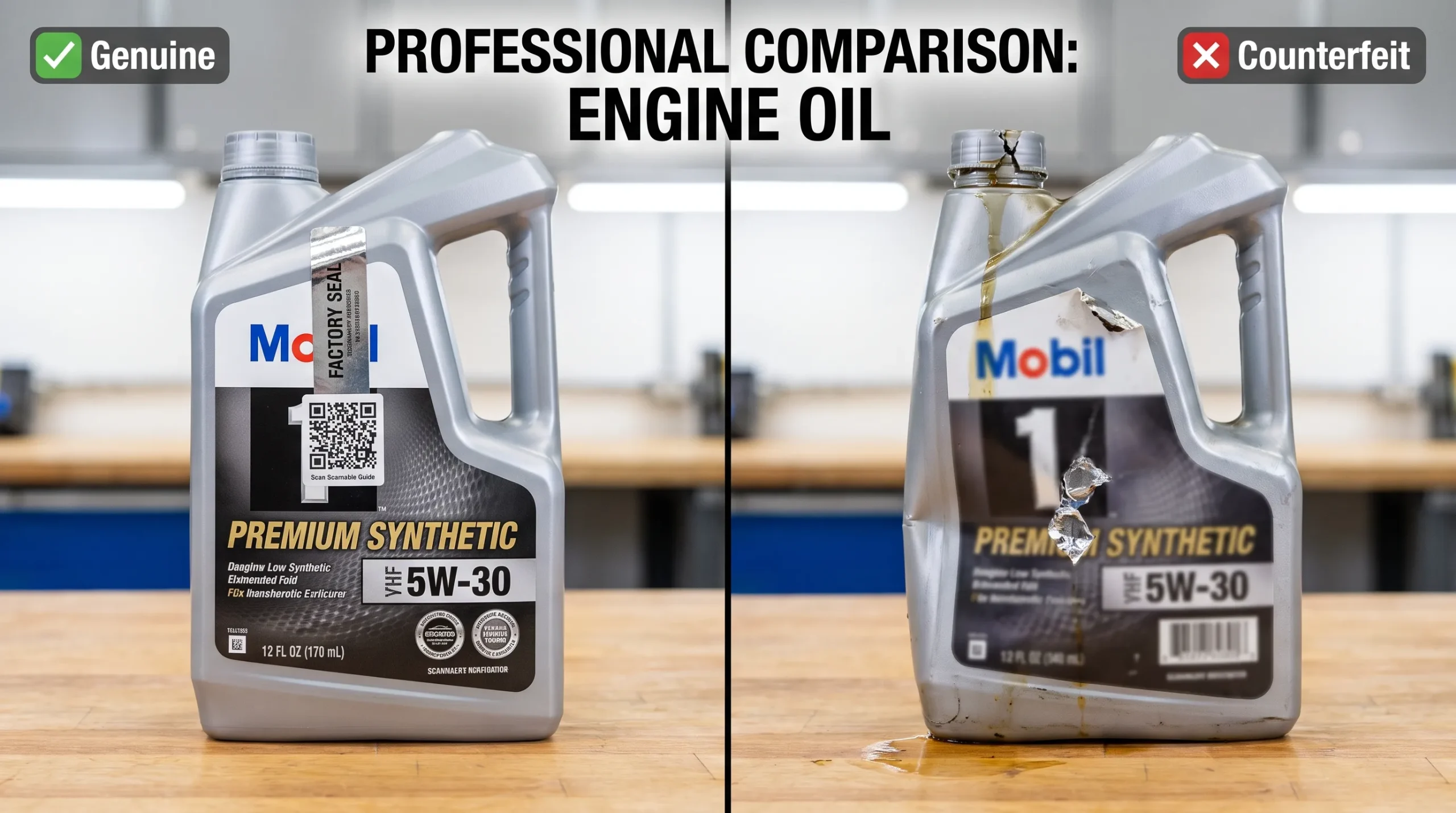
Counterfeit engine oil has become a growing concern in Pakistan. Fake lubricants often use low-quality base oils and poor additive packages, which can lead to increased engine wear and reduced performance.
To avoid counterfeit products, follow these simple tips:
Purchase engine oil from authorized dealers or reputable automotive stores.
Check the bottle for proper seals and tamper-proof packaging.
Inspect the label for printing quality and spelling mistakes.
Verify the manufacturing and expiry dates.
Avoid products being sold at unusually low prices.
Ask for a purchase receipt or invoice.
If available, scan the QR code or verify the product through the manufacturer’s authentication system.
Buy from trusted online marketplaces or official brand stores rather than unknown sellers.
Spending a little more on genuine engine oil can save you from expensive engine repairs in the future.
Final Thoughts
Choosing the right engine oil isn’t just about buying the most expensive product on the shelf—it’s about selecting the oil that best matches your vehicle’s engineering requirements. By following your owner’s manual, understanding viscosity grades, selecting the appropriate oil type, and considering Pakistan’s driving conditions, you can significantly improve your engine’s performance, fuel efficiency, and lifespan.
Regular oil changes, genuine engine oil, and timely maintenance are small investments that can prevent costly engine repairs in the future.
Whether you drive a compact hatchback, a family sedan, an SUV, or a turbocharged vehicle, using the correct engine oil is one of the smartest decisions you can make for long-term reliability.
If you’re looking for more expert automotive maintenance tips, don’t miss our related guides on:
These guides will help you keep your vehicle in excellent condition throughout the year.
FAQ’s
Which engine oil is best for cars in Pakistan?
There is no universal “best” engine oil. The right choice depends on your car’s manufacturer recommendations, engine type, driving habits, and operating conditions. Always use the viscosity and API specification recommended in your owner’s manual.
Is fully synthetic oil worth the extra cost?
Yes. Although fully synthetic oil costs more upfront, it provides better engine protection, improved fuel economy, longer oil change intervals, and superior performance in Pakistan’s hot climate. For many modern vehicles, it offers excellent long-term value.
Can I switch from 10W-40 to 5W-30?
Only if your vehicle manufacturer approves both viscosity grades. Never change oil viscosity based solely on recommendations from friends or mechanics.
Can I mix different engine oil grades?
Mixing different viscosities is not recommended unless it’s an emergency. Even then, you should replace the oil with the correct specification as soon as possible.
How do I check my engine oil level?
– Park the vehicle on level ground. – Turn off the engine and wait 5–10 minutes. – Remove the dipstick and wipe it clean. – Reinsert the dipstick fully. – Pull it out again and check the oil level. The oil should be between the MIN and MAX marks.
Does engine oil improve fuel economy?
Yes. Using the manufacturer-recommended viscosity reduces internal engine friction, helping improve fuel efficiency while maintaining proper engine protection.
Is 20W-50 suitable for modern cars?
Most modern petrol cars are designed for lower-viscosity oils such as 0W-20 or 5W-30. Using 20W-50 without manufacturer approval may reduce performance and fuel economy.
How often should I check my engine oil?
You should inspect your engine oil at least once a month and always before a long road trip. Regular checks can help detect leaks, excessive oil consumption, or low oil levels before they become serious problems.