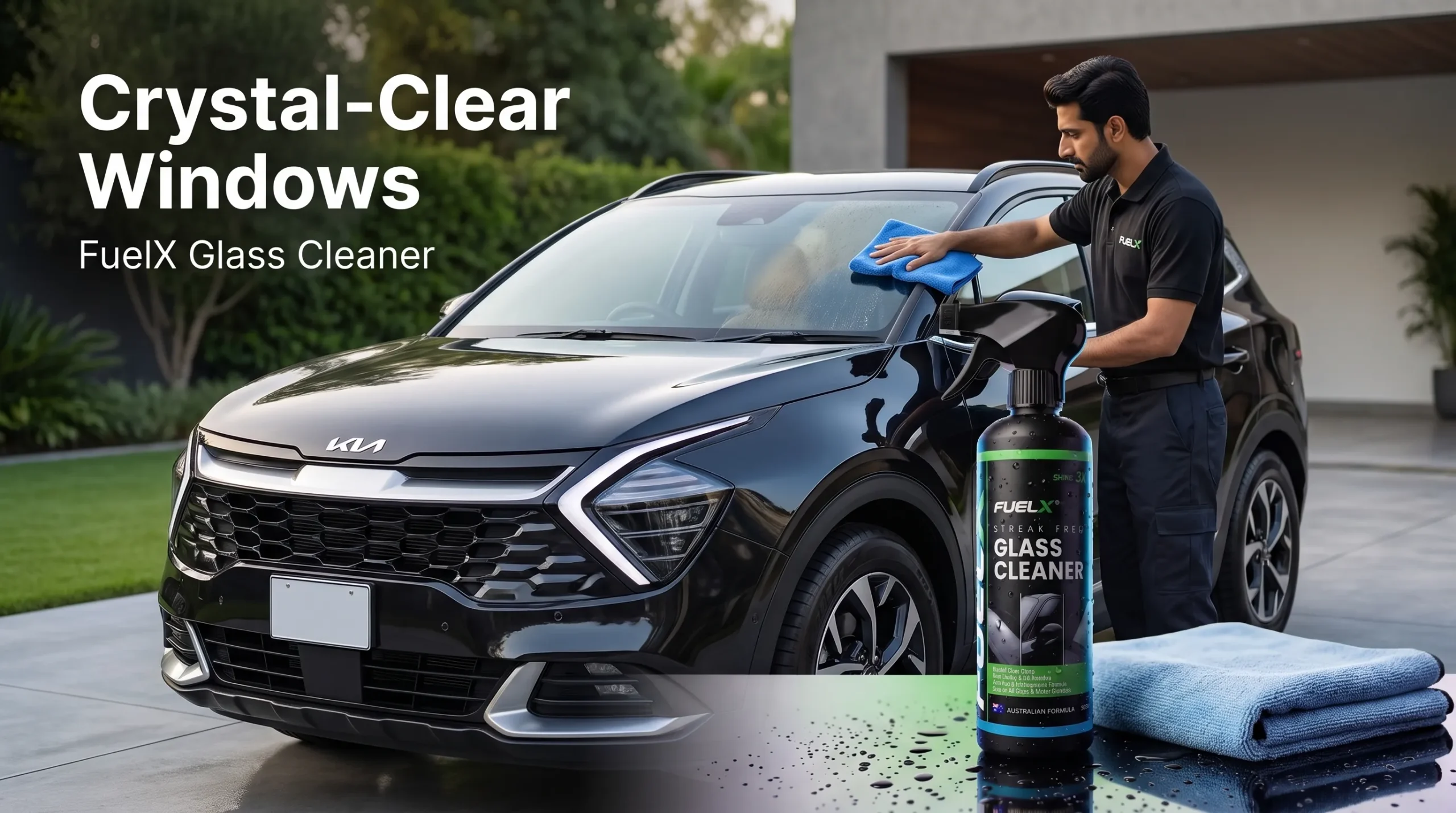
Crystal-Clear Windows: FuelX Glass Cleaner
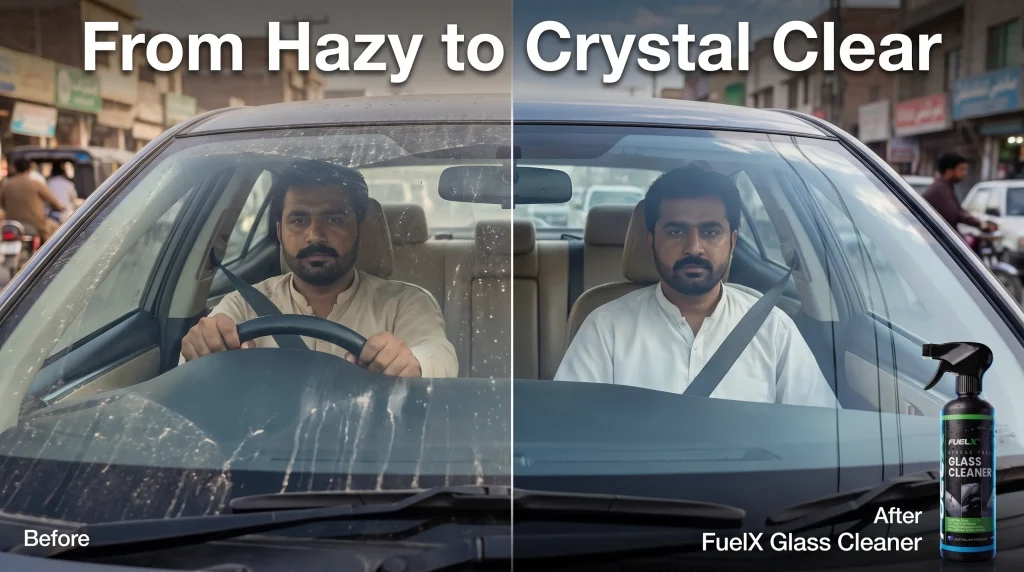
A freshly washed car can still look unfinished when its windows and windshield are covered with fingerprints, dust, water spots or streaks. More importantly, a hazy windshield can make driving more uncomfortable when sunlight, rain or headlights hit the glass.
This is especially relevant in Pakistan, where everyday driving can expose a car to dust, pollution, road grime, heat and seasonal rain. A windshield that looks reasonably clean from outside during the afternoon can reveal streaks and haze when headlights hit it at night or when rain starts.
The good news is that keeping automotive glass clean doesn’t require professional detailing equipment. With a suitable glass cleaner, a few clean microfiber towels and the right technique, most routine glass cleaning can be completed at home in around 5–10 minutes, depending on the vehicle and how heavily contaminated the glass is.
FuelX Glass Cleaner is designed for routine automotive glass care. FuelX currently positions it for surfaces such as windshields, side windows, mirrors and rear glass, with a spray-and-wipe approach designed to leave the glass clean and clear.
Let’s look at why clean glass matters, what makes car windows dirty and how to get better results from every cleaning session.
Why Clean Car Windows Matter
Many car owners spend most of their cleaning time on the paintwork, wheels and tyres. Glass often becomes an afterthought.
But your windshield and windows aren’t simply decorative surfaces. They are directly involved in your view of the road.
Better Visibility
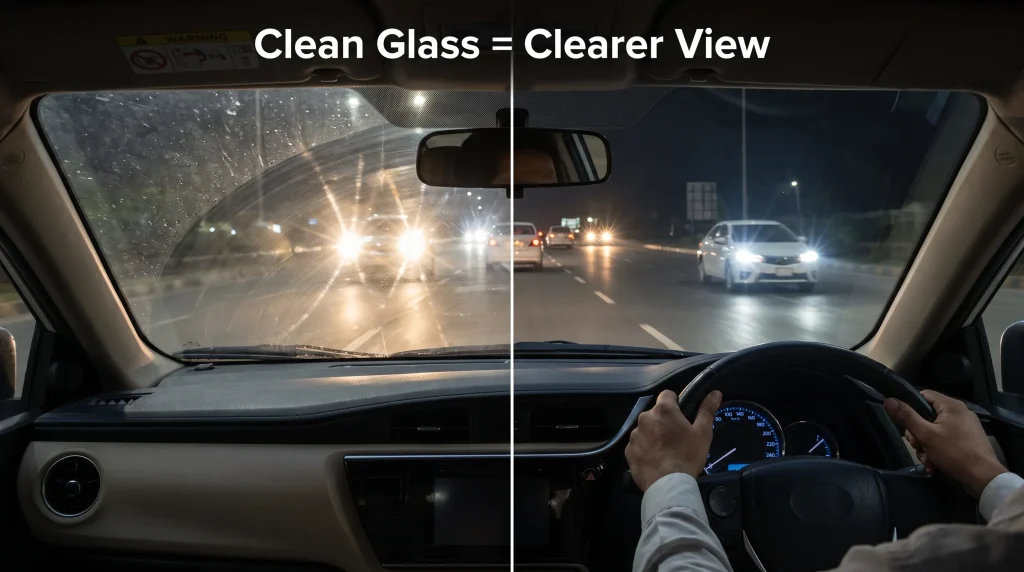
A thin layer of dust, oily residue or fingerprints may not look serious when you’re standing beside the car. However, the same contamination can become much more noticeable when sunlight or headlights hit the glass.
Rain can make the problem even more obvious. When water spreads across contaminated glass, the combination of moisture and existing residue can create streaks and patches that are particularly distracting at night.
FuelX’s existing guidance explains that dust, oil, road grime, water deposits and interior residue can become more noticeable when rain and headlights interact with the windshield.
A clean windshield cannot eliminate every visibility challenge caused by weather, darkness or traffic, but it removes one avoidable source of haze and glare.
Less Haze and Glare
Imagine driving at night with a completely clean windshield.
Now imagine the same windshield with a thin oily film.
When an approaching vehicle’s headlights hit the second windshield, the light can appear more scattered and distracting. This is one reason a windshield can look “fine” during the day but suddenly appear dirty at night.
Keeping both sides of the glass clean helps reduce this avoidable layer of contamination.
A Cleaner-Looking Car
Think of your car like an outfit.
You can have perfectly clean clothes, but dirty shoes can still make the overall appearance look unfinished.
Your car’s glass works in a similar way.
Clean paint combined with streaky windows, fingerprints and dusty mirrors can make an otherwise well-maintained vehicle look neglected.
Better Overall Detailing Results
Glass is often one of the last surfaces people notice after a car wash.
Once the body is clean and dry, spending another few minutes on the windshield, side windows, rear glass and mirrors can make the whole vehicle look much more finished.
What Makes Car Glass Dirty?
Your vehicle’s glass is exposed to different types of contamination depending on where and how you drive.
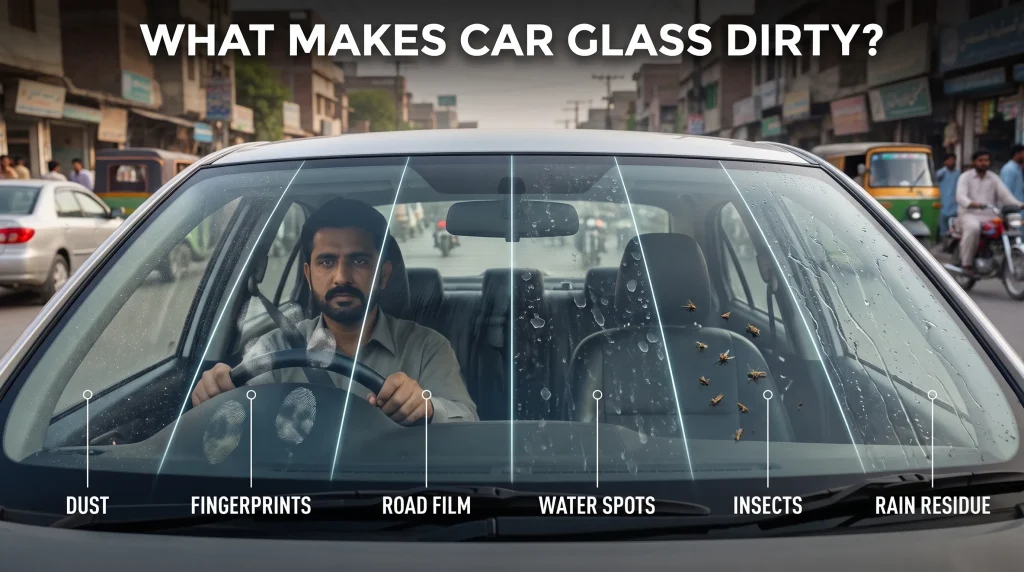
For Pakistani drivers, common sources include dust, traffic pollution, road grime, rain, water deposits and outdoor parking. FuelX’s existing glass-care content also identifies contaminants such as fingerprints, road film, insects and water spots as common problems.
Road Dust
Dust settles quickly on vehicles, especially when they’re parked outdoors or driven through busy, dusty areas.
A car that travels through dusty traffic every day can develop a visible layer of contamination much faster than a vehicle that is mostly parked under cover.
Fingerprints and Smudges
Side windows and mirrors are frequently touched.
Passengers may rest their hands against windows, children may touch the glass, and drivers can leave fingerprints while adjusting mirrors or opening doors.
These marks may look minor individually, but several fingerprints across a window can make it noticeably hazy.
Road Film
Traffic can leave a thin layer of grime and oily residue on exterior glass.
Road film is particularly annoying because it may not be obvious when the glass is dry. Sunlight or headlights can reveal it much more clearly.
Insects and Bird Droppings
Highway driving and outdoor parking can leave organic contamination on windows and mirrors.
The longer these deposits remain on the glass, the more difficult they may become to remove.
Water Spots
Water that dries on automotive glass can leave behind mineral deposits.
This is particularly common after washing a vehicle and allowing it to air-dry in strong sunlight.
If your car is washed with hard water, repeated drying without proper wiping can make these marks increasingly noticeable.
Interior Haze
The inside of your windshield can become dirty too.
Dust, fingerprints, smoke residue, interior vapours and oily films can gradually build up on the inside surface.
This contamination is particularly important because it sits directly in the driver’s field of view.
Why Plain Water Isn’t Always Enough
Water is useful for removing loose dirt, but it isn’t always enough for proper glass maintenance.
Think about cleaning a greasy kitchen surface with water alone. You might remove some dust, but the oily residue can remain.
Automotive glass can have the same problem.
Loose Dust vs Sticky Residue
A rinse can remove loose particles, but fingerprints, road film and other residues may require a dedicated cleaner.
This is why a simple rinse may make a dusty windshield look better without actually giving you a clear, residue-free finish.
Water Spots
When water evaporates, minerals can remain behind.
Adding more water doesn’t necessarily remove those deposits. Proper cleaning and drying are needed to prevent water from repeatedly drying on the glass.
Streaking
Even when glass is technically clean, poor technique can leave streaks.
Common causes include:
- Too much cleaning product
- Dirty microfiber towels
- Excess moisture
- Cleaning very hot glass
- Using the same dirty side of a towel repeatedly
- Skipping the final buffing step
So getting crystal-clear glass is not just about choosing a product.
Product + towel + technique = better results.
Meet FuelX Glass Cleaner
FuelX Glass Cleaner is designed for routine automotive glass care.
FuelX currently lists it within its exterior car-care range and also includes it in its interior category. The product is positioned for cleaning automotive glass such as windshields, side windows, mirrors and rear glass.
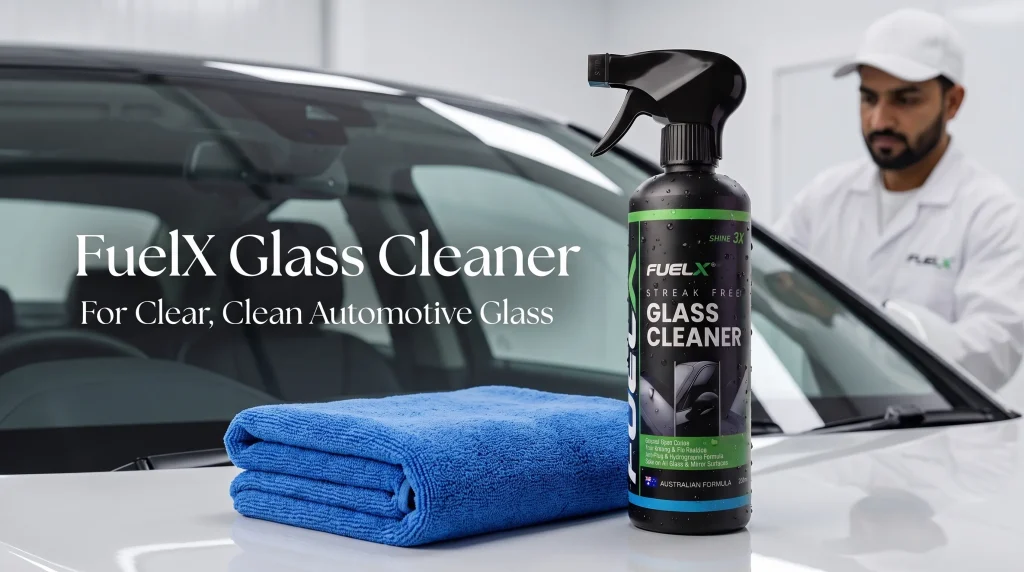
The purpose is straightforward: make regular glass maintenance easier and help remove everyday contamination such as:
- Dust
- Fingerprints
- Smudges
- Light road film
- Water residue
- General surface grime
FuelX’s current product-related content recommends using the cleaner with a microfiber towel and finishing with a dry buffing pass.
The goal isn’t to make the glass look artificially shiny.
The goal is clean, clear glass without unnecessary residue.
How FuelX Glass Cleaner Helps Keep Your Windows Clear
Helps Remove Everyday Grime
Daily driving exposes your windows to dust, fingerprints and road contamination.
A dedicated glass cleaner gives you a practical way to deal with this buildup instead of repeatedly wiping the surface with plain water.
For normal maintenance, the objective is to remove contamination before it becomes a thick layer that requires aggressive cleaning.
Helps You Achieve a Clear Finish
Streaks are one of the biggest frustrations after cleaning car windows.
A common mistake is assuming that more cleaner will produce a cleaner window.
In reality, excessive product can leave more moisture and residue to remove.
A controlled amount of cleaner, followed by a clean microfiber towel and final buffing, is a much more practical approach. FuelX’s current guidance follows this spray, wipe and buff process.
Makes Regular Glass Maintenance Simple
A good car-care routine should be easy enough that you actually follow it.
For most vehicles, cleaning the windshield and windows doesn’t need to become a one-hour detailing project.
If the glass is only lightly contaminated, a few minutes can be enough.
For example:
2–3 minutes: Windshield
2–3 minutes: Side windows and mirrors
1–2 minutes: Rear glass
1–2 minutes: Final inspection and touch-ups
Actual time will vary depending on vehicle size and contamination.
Works as Part of a Complete Car-Care Routine
Glass cleaning doesn’t need to be a separate project.
It can simply become one stage of your normal wash:
Wash → Dry → Clean Glass → Detail → Inspect
FuelX’s broader product range supports this approach with Car Wash Shampoo, Quick Detailer, Tyre Shiner, Multi-Purpose Cleaner and microfiber accessories.
How to Use FuelX Glass Cleaner for a Streak-Free Finish
Correct technique is just as important as the cleaner.
Follow this simple process.
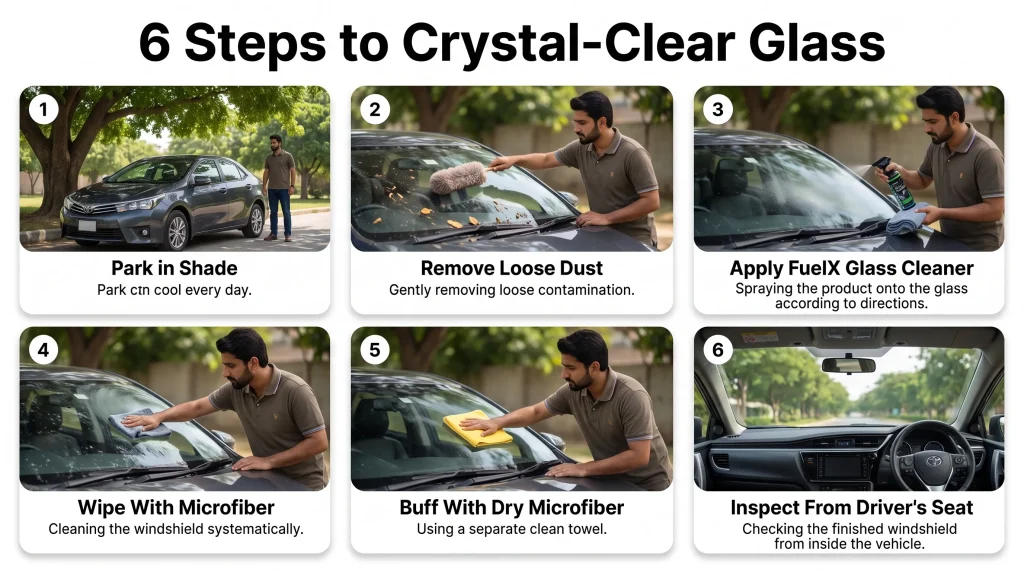
Step 1: Park in the Shade
Whenever possible, park the vehicle in a shaded area before cleaning the glass.
This is especially useful in Pakistan’s hot weather.
A windshield sitting under direct sunlight can become very hot. When a cleaner is sprayed onto a hot surface, it can evaporate faster and become more difficult to wipe evenly.
FuelX’s current glass-care guidance specifically recommends working on cool glass and avoiding direct sunlight.
You don’t need to measure the glass temperature.
If the windshield feels extremely hot, allow the vehicle to cool before beginning.
Step 2: Remove Loose Dust and Dirt
If the glass has heavy dust, mud or sandy particles, don’t immediately start rubbing it with a dry towel.
You could simply drag those particles across the surface.
For heavier contamination, gently rinse the glass first.
Think of it this way:
Remove dirt → then clean residue.
Don’t use aggressive rubbing as a substitute for removing loose contamination.
Step 3: Shake and Apply the Cleaner
Follow the product’s instructions before application.
FuelX’s current glass-care guidance recommends shaking the product before use.
Work in manageable sections rather than covering every window at once.
For example, divide a windshield into four areas:
- Upper left
- Upper right
- Lower left
- Lower right
This makes it easier to clean evenly and prevents the product from drying before you finish wiping.
Remember:
More cleaner does not automatically mean better cleaning.
Step 4: Wipe With a Clean Microfiber Towel
Use a clean microfiber towel and work systematically.
Straight, overlapping passes are useful because they help you keep track of the area you’ve already cleaned.
Pay extra attention to:
- Lower windshield
- Corners
- Edges
- Areas near the wiper sweep
The lower portion of the windshield can collect considerable grime because of its position near the wiper mechanism and dashboard.
Use moderate pressure.
You don’t need to scrub aggressively to clean normal glass contamination.
Step 5: Buff With a Dry Microfiber Towel
After the initial cleaning pass, use a second clean, dry microfiber towel.
Lightly buff the glass to remove remaining moisture and residue.
A simple two-towel system is usually enough for routine cleaning:
Towel 1: Cleaning
Towel 2: Final buffing
For heavily contaminated glass, keeping a third towel available is useful because the first towel can become dirty or damp.
FuelX’s existing windshield-cleaning guidance also recommends a separate dry microfiber towel for final buffing.
Step 6: Clean the Interior Glass
Don’t stop after cleaning the outside.
The inside of the windshield can accumulate:
- Dust
- Fingerprints
- Oily residue
- Smoke residue
- Interior vapour
- Cleaning-product residue
This layer can become particularly noticeable at night when headlights hit the windshield.
Clean the interior in sections, using the same controlled approach.
Be careful around dashboard electronics, screens, vents and switches. Don’t allow excess liquid to run into electrical components.
Step 7: Inspect From the Driver’s Seat
This is one of the most useful steps.
Don’t inspect the windshield only by standing outside the car.
Sit in the driver’s seat and look through the glass.
Change your viewing angle slightly.
A streak that is difficult to see from outside may become obvious when sunlight or artificial light hits it from another direction.
If you find a streak, use a clean, dry microfiber towel to touch up that specific area.
How to Clean Your Car Windows Without Leaving Streaks
If your windows regularly look worse after cleaning, the problem may be technique rather than the product.
Use the Right Amount of Cleaner
More product doesn’t automatically mean more cleaning power.
Excess liquid can leave more residue and require additional buffing.
Use a controlled amount and follow the product instructions.
Use a Dedicated Clean Microfiber
A microfiber towel that has been used on tyres, wheels or greasy lower panels shouldn’t be your final glass towel.
Keep at least two clean microfiber towels specifically for glass:
- One for cleaning
- One for final buffing
Don’t Clean Hot Glass
If the glass is hot enough that the cleaner dries almost immediately, move into shade and allow it to cool.
This simple change can make streak prevention much easier.
Work in Small Sections
Instead of spraying the entire car and then returning to wipe it, clean one section at a time.
This gives you much better control.
Use a Separate Finishing Towel
If your first towel becomes damp or dirty, change to a clean side or a second towel.
The final towel should be as clean and dry as possible.
Interior vs Exterior Car Glass Cleaning
Both sides of your automotive glass require attention, but the contamination is different.
| Exterior Glass | Interior Glass |
| Road dust | Fingerprints |
| Road film | Interior dust |
| Insects | Oily residue |
| Water spots | Smoke residue |
| Rain residue | Interior haze |
| Environmental contamination | Vapour deposits |
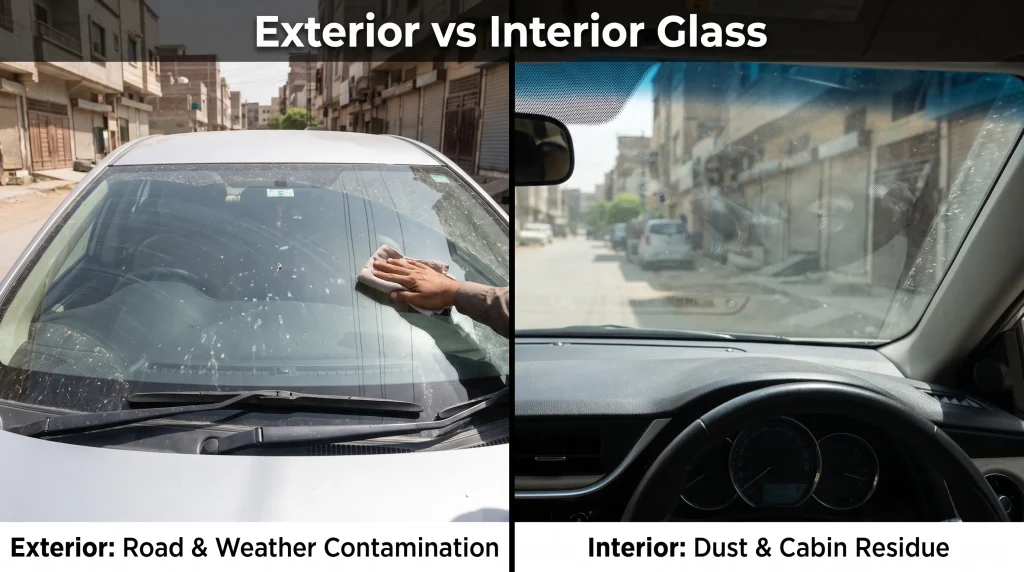
This explains why washing the exterior of your windshield perfectly may still leave it looking hazy.
The contamination may be on the inside.
A useful habit is to clean both sides whenever you notice reduced clarity.
Don’t Forget Your Mirrors
Mirrors are small, but they are important.
Exterior mirrors collect dust, fingerprints, road spray and water spots just like windows do.
When cleaning your glass, give the mirrors a quick inspection as well.
The same basic method works:
Cleaner → clean microfiber → dry buff.
FuelX’s current product information specifically includes mirrors among the surfaces for its glass-care routine.
What About the Rear Windshield?
The rear windshield is easy to ignore because it isn’t directly in front of you.
But a dirty rear glass can make it more difficult to see vehicles behind you, especially in bright sunlight or rain.
When cleaning it, work gently and pay attention to any electrical defroster lines.
Avoid aggressive scrubbing.
Instead, use light, controlled microfiber passes.
Common Car Glass Cleaning Mistakes
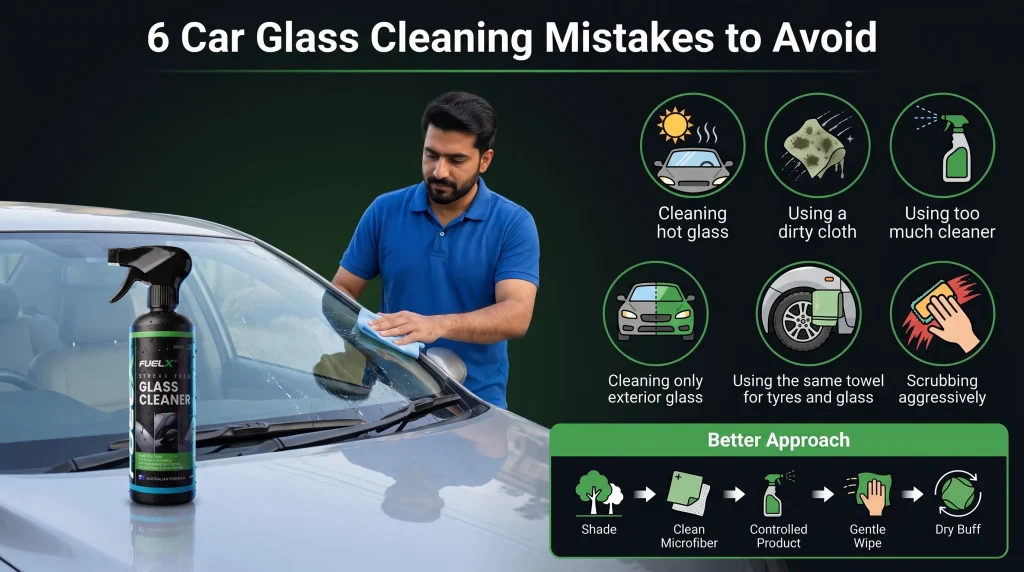
1. Cleaning in Direct Sunlight
Hot glass can cause the product to dry rapidly and make streaking more likely.
Better approach: Work in shade.
2. Using a Dirty Cloth
A dirty towel can simply move contamination around.
Better approach: Use clean, dedicated microfiber towels.
3. Using Too Much Cleaner
Excess product can leave more residue.
Better approach: Use a controlled amount.
4. Cleaning Only the Outside
Interior haze can remain even when exterior glass is spotless.
Better approach: Clean both sides.
5. Rubbing Dry, Gritty Glass
Loose dirt can be dragged across the surface.
Better approach: Remove loose contamination first.
6. Using One Towel for Everything
A towel used on tyres or dirty bodywork can transfer contamination to glass.
Better approach: Keep dedicated glass towels.
7. Ignoring the Wipers
Dirty wiper blades can immediately put grime back onto clean glass.
Better approach: Inspect and clean the wiper blades regularly.
8. Expecting Glass Cleaner to Fix Scratches
A glass cleaner removes surface contamination.
It cannot repair:
- Deep scratches
- Chips
- Cracks
- Severe pitting
- Damaged glass
If the glass itself is damaged, professional inspection or replacement may be necessary.
How to Clean Your Wiper Blades
Your windshield can be perfectly clean, but dirty wiper blades can put residue straight back onto it.
Lift the wiper carefully and inspect the rubber edge.
Look for:
- Cracks
- Splits
- Hardened rubber
- Uneven edges
- Excessive dirt
- Areas that don’t contact the glass properly
If the blades are simply dirty, wipe the rubber edge with a clean, damp microfiber towel.
If the rubber is cracked, hardened or damaged, cleaning may not solve the problem. Replacement is usually the appropriate solution.
A simple test is to run the wipers with suitable washer fluid after cleaning the windshield.
If they continue to leave multiple streaks or skip across the glass, inspect the blades more closely.
How Often Should You Clean Car Windows?
There is no universal “every X days” rule.
Your ideal cleaning frequency depends on:
- How much you drive
- Where you drive
- Where you park
- Weather
- Dust levels
- Rain
- Pollution
- How quickly fingerprints and residue accumulate
For example, a car driven every day through dusty city traffic and parked outside may need glass cleaning several times during a week.
A vehicle driven only occasionally and parked under cover may stay clean considerably longer.
A practical routine is:
Weekly
Inspect the windshield and windows.
After heavy rain
Check for road grime, mud and water spots.
Before a long trip
Clean the windshield, side windows, mirrors and rear glass.
Before frequent night driving
Pay particular attention to haze and streaks.
Whenever visibility becomes noticeably worse
Clean the glass rather than waiting for your normal wash day.
The important point is that condition matters more than the calendar.
A Simple 10-Minute Glass-Care Routine
If you want something practical, try this:
Minute 1–2: Preparation
Park in shade, gather two or three clean microfiber towels and inspect the glass.
Minute 3–4: Windshield
Remove loose dust and clean the exterior windshield.
Minute 5–6: Interior
Clean the inside of the windshield, especially the driver’s viewing area.
Minute 7–8: Side Windows and Mirrors
Clean the front side windows, rear windows and mirrors.
Minute 9: Rear Glass
Clean the rear windshield.
Minute 10: Inspection
Sit in the driver’s seat and look for streaks or haze.
For a heavily contaminated vehicle, don’t force everything into ten minutes. Take the additional time needed to remove the contamination properly.
FuelX Glass Cleaner as Part of Your Complete Car-Care Routine
Glass cleaning works best when it becomes part of your normal vehicle-care routine rather than something you remember only when visibility becomes poor.
A simple FuelX routine could look like this:
1. Wash
Use FuelX Car Wash Shampoo for the main exterior wash.
2. Dry
Use a clean FuelX Premium Microfiber Detailing Towel.
3. Clean Glass
Use FuelX Glass Cleaner for the windshield, windows and appropriate mirrors.
4. Refresh the Exterior
Use FuelX Quick Detailer when the vehicle is already clean and needs a light finishing touch.
5. Finish the Tyres
Use FuelX Tyre Shiner for the tyre sidewalls.
6. Maintain the Interior
Use FuelX Multi-Purpose Cleaner on suitable interior surfaces.
This surface-by-surface approach is much easier for beginners than trying to use one product for everything.
FuelX currently offers these different products as part of its wider car-care range.
For customers who want a dedicated glass-care setup, FuelX also offers a Glass Care Combo, combining Glass Cleaner with a microfiber cloth.
Who Should Use FuelX Glass Cleaner?
Daily Commuters
If you spend hours in traffic every week, your car is constantly exposed to dust, road grime and pollution.
Regular glass cleaning can help prevent that contamination from building up.
Outdoor Parkers
Cars parked outside are exposed to dust, pollution, rain and environmental contamination throughout the day.
Highway Drivers
Long-distance driving can expose windshields and mirrors to insects, road dust and road spray.
Family Cars
Frequent touching of windows and mirrors can quickly create fingerprints and smudges.
DIY Car Detailers
If you maintain your vehicle at home, dedicated glass care is an important part of a complete detailing routine.
Beginners
You don’t need professional equipment.
A suitable glass cleaner, 2–3 clean microfiber towels, and a consistent technique are enough for most routine home glass maintenance.
Final Thoughts
A clean windshield is more than a cosmetic feature.
When rain, darkness, traffic and headlights combine, even a thin layer of contamination can make automotive glass appear streaky, hazy or more reflective.
The solution doesn’t need to be complicated.
Remove loose dirt first. Work on cool glass. Use an appropriate automotive glass cleaner. Clean in manageable sections. Finish with a clean, dry microfiber towel. And don’t forget the inside of the windshield, mirrors, side windows and wiper blades.
For Pakistani drivers dealing with dust, pollution, outdoor parking and seasonal rain, making glass cleaning part of a regular car-care routine is a practical habit.
You don’t need to spend an hour detailing your windows every time.
For routine maintenance, 5–10 minutes can make a noticeable difference in how clean and clear the glass looks, provided the contamination isn’t heavy.
FuelX Glass Cleaner gives you a straightforward way to include dedicated glass care in your regular vehicle-maintenance routine. FuelX currently lists the product at ₨749, while its wider glass-care offering includes a Glass Care Combo for customers who want the cleaner and microfiber cloth together.
So the next time you wash your car, don’t stop when the paint shines.
Clean the glass, check the windshield from the driver’s seat, and finish the job with a clearer view.
FAQ’s
Can I use FuelX Glass Cleaner on my car windshield?
Yes. FuelX’s current product information specifically positions its Glass Cleaner for automotive glass, including windshields.
Always follow the product’s current label directions when applying it.
Can FuelX Glass Cleaner be used on side windows?
Yes. FuelX lists automotive windows among the intended glass-care surfaces.
Can I use it on mirrors?
Yes. FuelX’s current glass-care guidance includes mirrors as an appropriate surface.
How often should I clean my car windows?
Clean them whenever you notice visible dust, fingerprints, haze, water marks or streaking.
If you drive daily through dusty or polluted areas, you may need to clean them several times during a week.
Why do my car windows become streaky after cleaning?
Common causes include:
- Too much product
- Hot glass
- Dirty microfiber towels
- Excess moisture
- Skipping the final buffing stage
Try cleaning in smaller sections and using a separate dry microfiber towel for final buffing.
How many microfiber towels do I need?
For routine glass cleaning, two clean towels are a practical minimum:
- One for initial cleaning
- One for final buffing
Keep a third towel available if the glass is heavily contaminated.
Should I clean car glass before or after washing?
For a normal full car wash, clean the glass after the main exterior washing and drying stages.
This allows you to finish the vehicle with clean, clear windows.
Can glass cleaner remove water spots?
It can help with ordinary surface residue and water marks, but stubborn mineral deposits may require a more specialized treatment.
Don’t aggressively scrub the glass simply because a mark doesn’t disappear immediately.
Can I use glass cleaner on tinted windows?
Check the product’s confirmed compatibility and the tint manufacturer’s care instructions before use.
Do not assume that every glass-cleaning product is suitable for every aftermarket tint.
About FuelX Research & Detailing Lab
FuelX engineers high-performance automotive cooling solutions and specialized car detailing products engineered for Pakistan's demanding driving conditions. All guides and tips are validated by our technical team to ensure engine longevity and lasting vehicle protection.
Keep Your Engine Cool & Your Ride Shining
Shop FuelX certified Long Life Coolants, high-gloss tyre shine, safe car wash shampoo, and lint-free microfiber accessories.