A properly functioning air conditioning (AC) system is more than just a comfort feature—it’s essential for safe and enjoyable driving, especially in Pakistan’s scorching summers when temperatures often climb above 40°C. Whether you’re stuck in city traffic or traveling on a long highway journey, a car AC that suddenly starts blowing warm air can quickly turn an enjoyable drive into an uncomfortable experience.
Warm air from your car’s AC is one of the most common automotive problems, and the causes can range from a simple maintenance issue, like a clogged cabin air filter, to more serious problems such as a failing compressor or refrigerant leak.
In this guide, we’ll explain how your car’s AC system works, explore the most common reasons why it blows warm air, discuss possible repair solutions, provide estimated repair costs in Pakistan, and share practical maintenance tips to help keep your AC performing efficiently all year round.
How Does a Car Air Conditioning System Work?
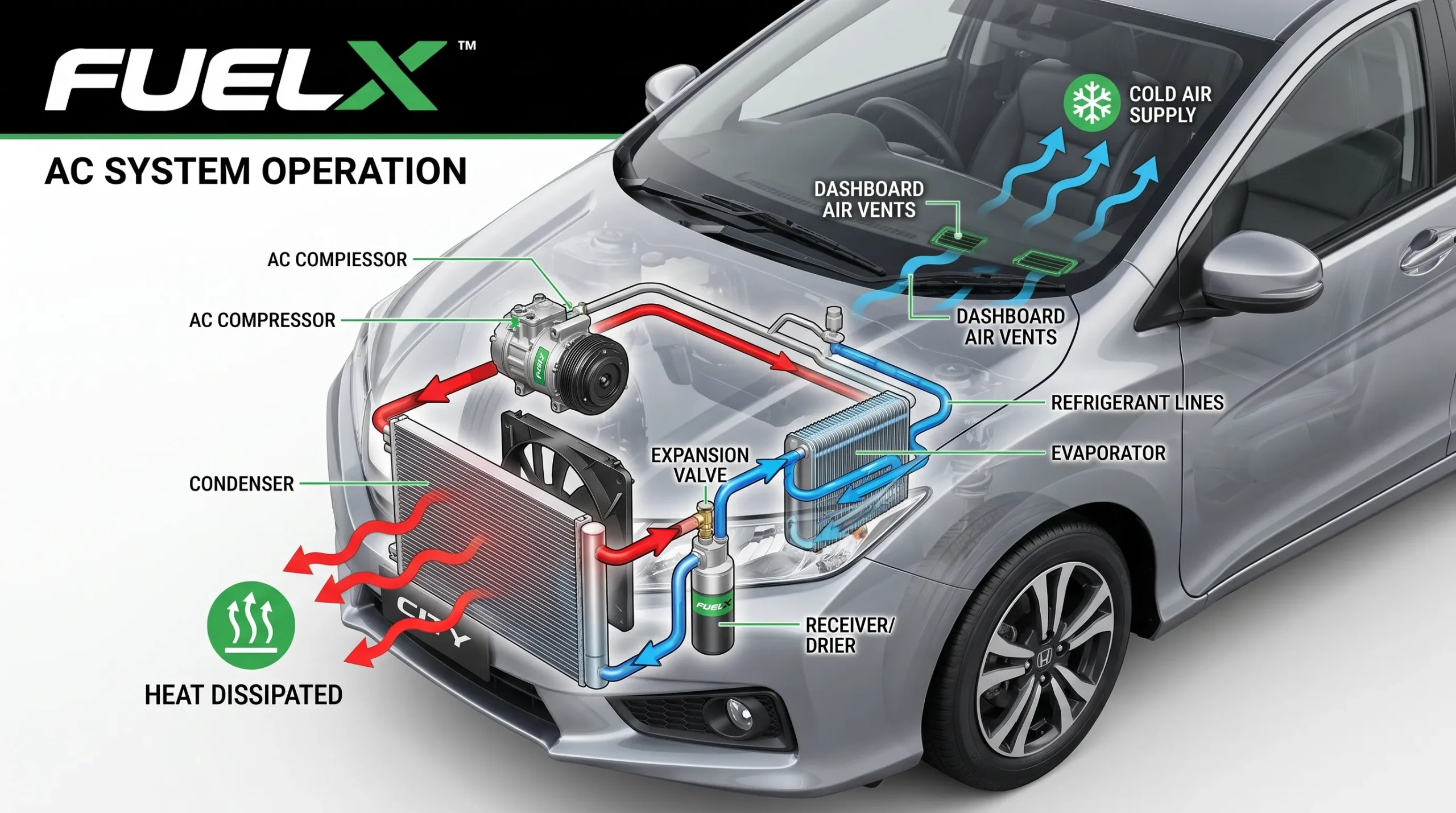
Before diagnosing the problem, it helps to understand how a vehicle’s AC system produces cold air.
Main Components of the AC System
A typical automotive air conditioning system consists of several important components:
Compressor: Compresses and circulates refrigerant throughout the system.
Condenser: Releases heat from the refrigerant.
Receiver/Drier: Removes moisture and contaminants from the refrigerant.
Expansion Valve: Controls refrigerant flow into the evaporator.
Evaporator: Absorbs heat from cabin air, creating cool air.
Refrigerant: The cooling fluid that transfers heat.
Cabin Air Filter: Cleans incoming air before it enters the cabin.
Cooling Fan: Maintains airflow through the condenser, especially when the vehicle is stationary.
How Cold Air Is Produced
Think of your car’s AC like a household refrigerator. The refrigerant continuously changes between liquid and gas, absorbing heat from inside the cabin and releasing it outside the vehicle. As the blower pushes air across the cold evaporator, cool air flows through the dashboard vents into the cabin.
If any component in this cooling cycle fails, your AC may begin blowing warm air.
Signs Your Car AC Has a Problem
Warm air isn’t always the only warning sign. You may also notice:
AC blows warm or hot air instead of cold air.
Cooling feels weak, even at maximum settings.
AC cools only while driving but becomes warm when idling.
Unpleasant or musty smell from the air vents.
Clicking, squealing, or grinding noises when the AC is switched on.
Water leaking inside the passenger compartment.
Compressor repeatedly turns on and off.
Cabin takes much longer than usual to cool.
Recognizing these symptoms early can prevent more expensive repairs later.
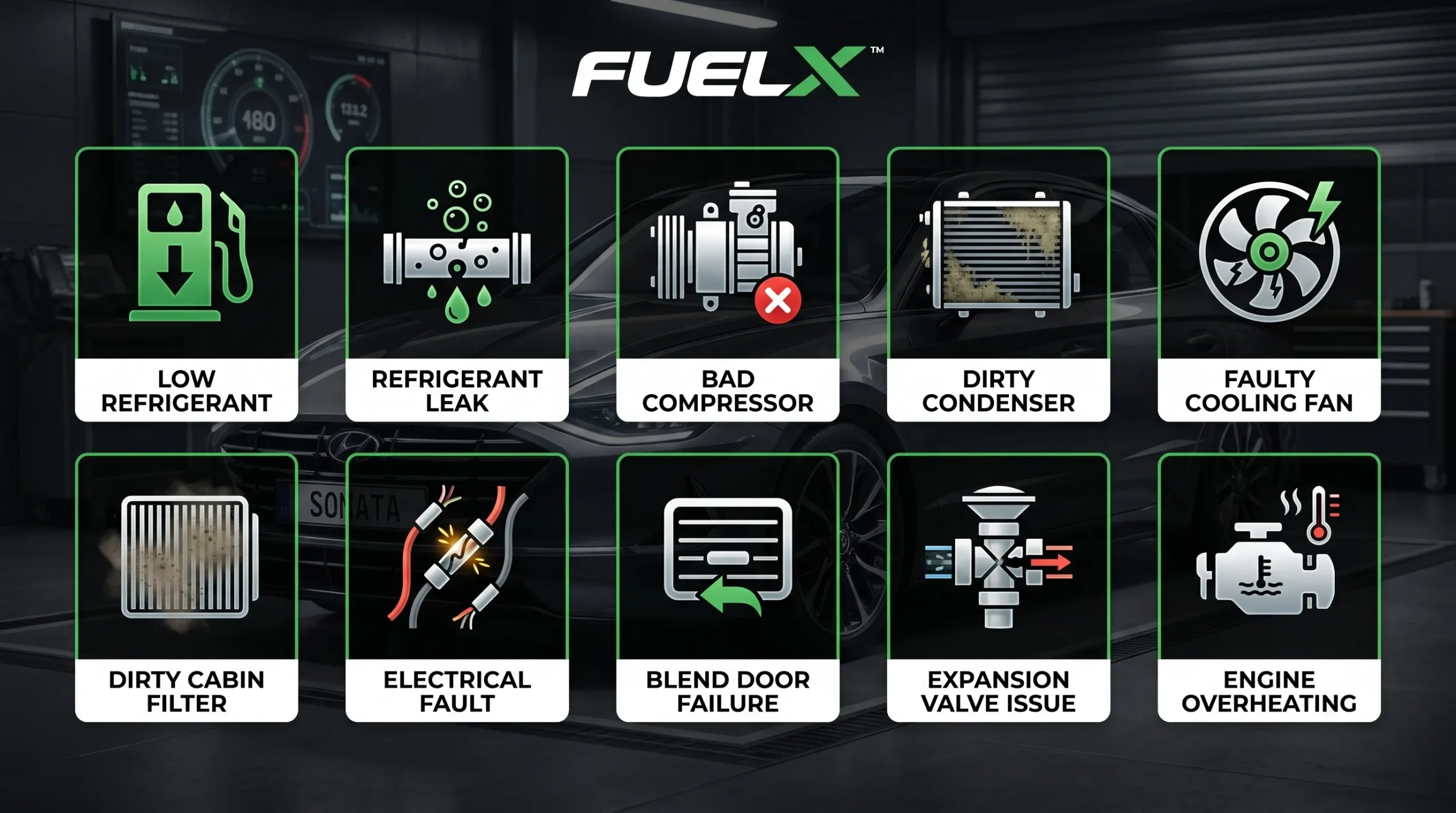
10 Common Reasons Why Your Car AC Blows Warm Air
1. Low Refrigerant (AC Gas)
One of the most common causes is low refrigerant.
Refrigerant doesn’t normally get “used up.” If levels are low, there’s usually a leak somewhere in the system.
Symptoms
Cooling gradually becomes weaker.
AC blows cool air briefly before becoming warm.
Compressor cycles frequently.
Solution
A technician should first locate and repair any leaks before refilling the refrigerant. Simply topping up the gas without fixing the leak often provides only temporary relief.
2. Refrigerant Leak
Leaks may develop due to:
Damaged rubber hoses
Worn O-rings
Corroded condenser
Leaking evaporator
Loose service valves
Even a tiny leak can significantly reduce cooling performance.
Professional workshops often use UV dye or electronic leak detectors to locate hidden refrigerant leaks.
3. Faulty AC Compressor
The compressor is often called the heart of the AC system. Without it, refrigerant cannot circulate properly.
Common compressor problems include:
Worn clutch
Internal mechanical failure
Seized bearings
Electrical faults preventing engagement
Symptoms
Warm air only
Loud grinding or rattling sounds
Compressor clutch doesn’t engage
Refrigerant pressure remains incorrect
Depending on the damage, the compressor may be repaired or replaced.
4. Dirty or Blocked Condenser
The condenser sits near the front grille and relies on airflow to release heat.
Over time, it can become clogged with:
Dust
Mud
Leaves
Insects
Road debris
When airflow is restricted, refrigerant cannot cool effectively, resulting in warm cabin air.
Cleaning the condenser carefully with compressed air or low-pressure water often restores proper airflow.
5. Faulty Cooling Fan
Your condenser fan plays a crucial role when the vehicle is stationary.
If the fan fails:
AC works while driving.
AC becomes warm at traffic lights.
Engine temperature may increase.
Faulty fan motors, relays, wiring, or blown fuses can all prevent the cooling fan from operating correctly.
6. Clogged Cabin Air Filter
Many drivers forget about the cabin air filter, yet it directly affects airflow.
A dirty filter restricts the amount of air passing through the evaporator.
Common Symptoms
Weak airflow
Dusty cabin
Unpleasant odor
Longer cooling time
Replacing the cabin air filter according to the manufacturer’s maintenance schedule is a simple and inexpensive way to improve AC performance.
7. Electrical Problems
Modern vehicles rely on various sensors and electronic controls to operate the air conditioning system.
Potential electrical issues include:
Blown fuse
Faulty relay
Damaged wiring
Pressure switch failure
AC control module malfunction
Because electrical faults can be difficult to diagnose, professional diagnostic equipment is often required.
8. Faulty Blend Door Actuator
Inside the dashboard, a blend door controls the mix of hot and cold air entering the cabin.
If the actuator fails:
Warm air mixes with cold air.
Cabin temperature becomes inconsistent.
One side of the vehicle may feel colder than the other.
Fortunately, many blend door actuator problems can be repaired without replacing the entire AC system.
9. Expansion Valve or Orifice Tube Failure
The expansion valve regulates refrigerant entering the evaporator.
If it becomes clogged or sticks open:
Refrigerant flow becomes incorrect.
Cooling performance drops significantly.
Evaporator may freeze.
Replacing the faulty valve usually restores proper refrigerant flow.
10. Engine Overheating
Many drivers don’t realize that engine temperature directly affects AC performance.
If the engine overheats:
The AC system may automatically reduce cooling.
Compressor efficiency decreases.
Cabin air becomes noticeably warmer.
Low engine coolant, radiator issues, or thermostat problems should be addressed immediately to prevent severe engine damage.
Can You Continue Driving If the AC Blows Warm Air?
In most cases, yes—you can continue driving if your AC is only blowing warm air. However, the underlying cause should not be ignored.
If the problem is simply a clogged cabin air filter or low refrigerant, driving is usually safe, although uncomfortable. On the other hand, if the warm air is accompanied by engine overheating, unusual noises, or warning lights, it’s important to have the vehicle inspected as soon as possible. Continuing to drive with these symptoms could lead to more serious and expensive repairs.
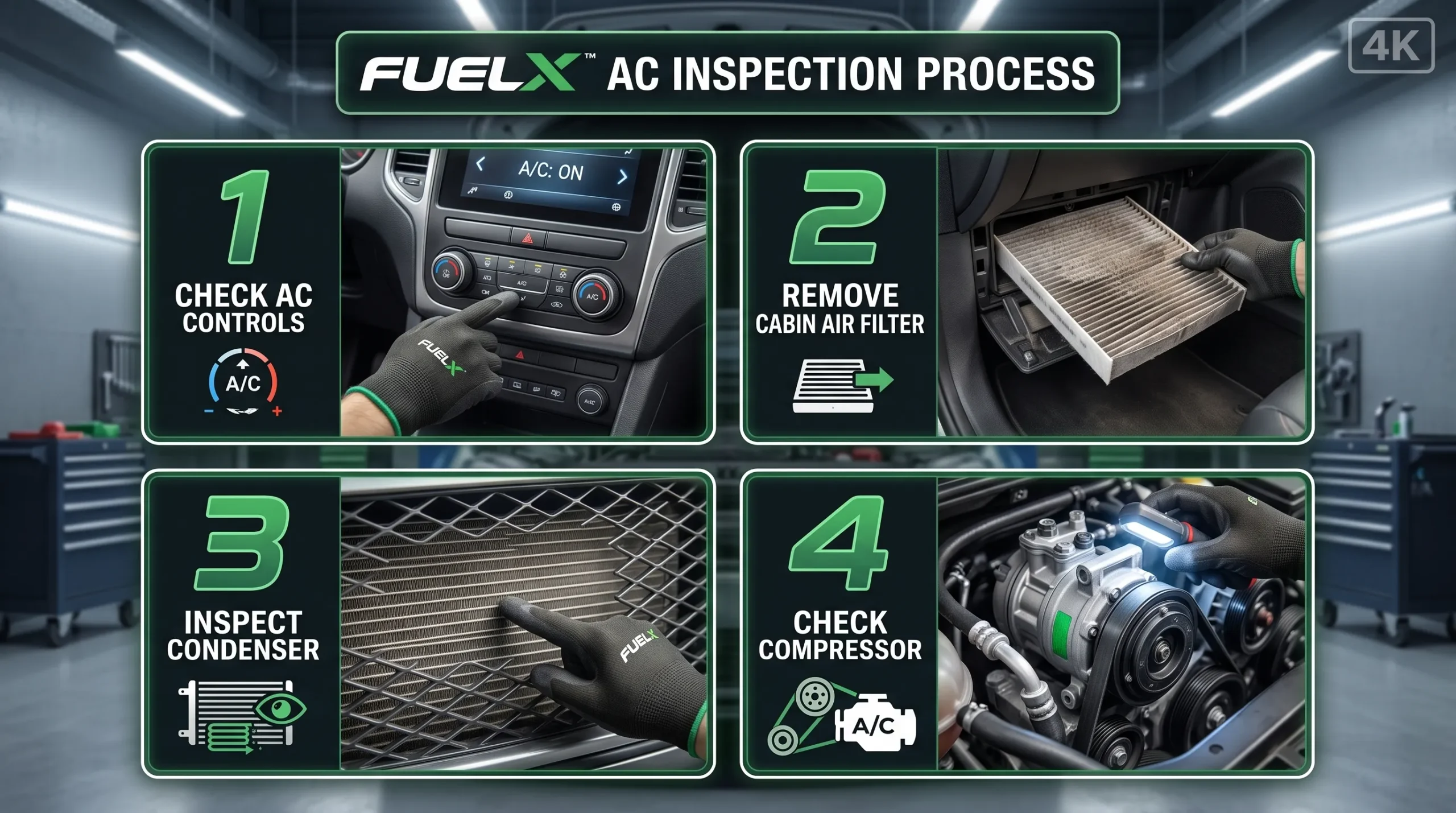
Step-by-Step Troubleshooting Checklist
Before visiting a repair workshop, perform these basic checks:
Step 1: Verify AC Settings
Ensure the AC button is switched on, the temperature is set to the coldest setting, and air recirculation mode is enabled.
Step 2: Inspect the Cabin Air Filter
Remove the filter and check whether it’s dirty or blocked. Replace it if necessary.
Step 3: Check the Cooling Fan
With the AC running, verify that the condenser fan operates correctly, especially while the vehicle is stationary.
Step 4: Look for Refrigerant Leaks
Inspect visible AC pipes and fittings for oily residue, which may indicate a refrigerant leak.
Step 5: Listen to the Compressor
Turn the AC on and listen for the compressor clutch engaging. Unusual noises may indicate internal damage.
Step 6: Monitor Engine Temperature
If the temperature gauge is higher than normal, investigate possible cooling system issues before focusing on the AC.
Step 7: Visit a Qualified Technician
If these basic inspections don’t identify the problem, professional diagnosis using refrigerant pressure gauges and electronic testing equipment is recommended.
Estimated Car AC Repair Costs in Pakistan
Repair costs vary depending on your vehicle model, replacement parts, and the workshop you choose.
Problem
Estimated Cost (PKR)
AC Gas Refill
4,000–8,000
Cabin Air Filter Replacement
1,500–5,000
Condenser Cleaning
1,500–4,000
Refrigerant Leak Repair
3,000–15,000
Cooling Fan Repair
4,000–15,000
Compressor Repair
10,000–25,000
Compressor Replacement
25,000–70,000+
Luxury and imported vehicles may require significantly higher repair costs.
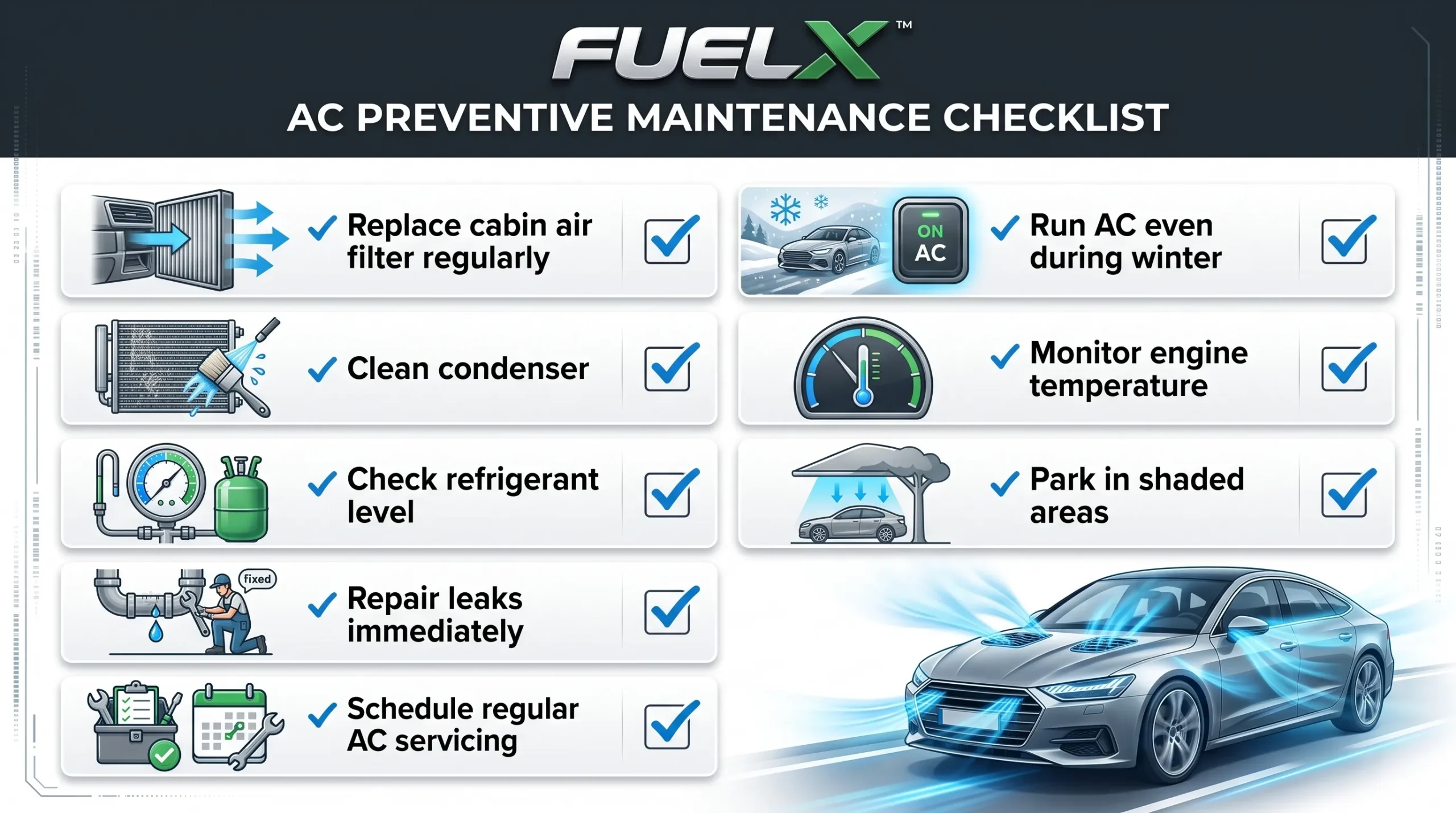
How to Prevent Your Car AC from Blowing Warm Air
Regular maintenance is the best way to avoid unexpected AC failures.
Here are a few practical tips:
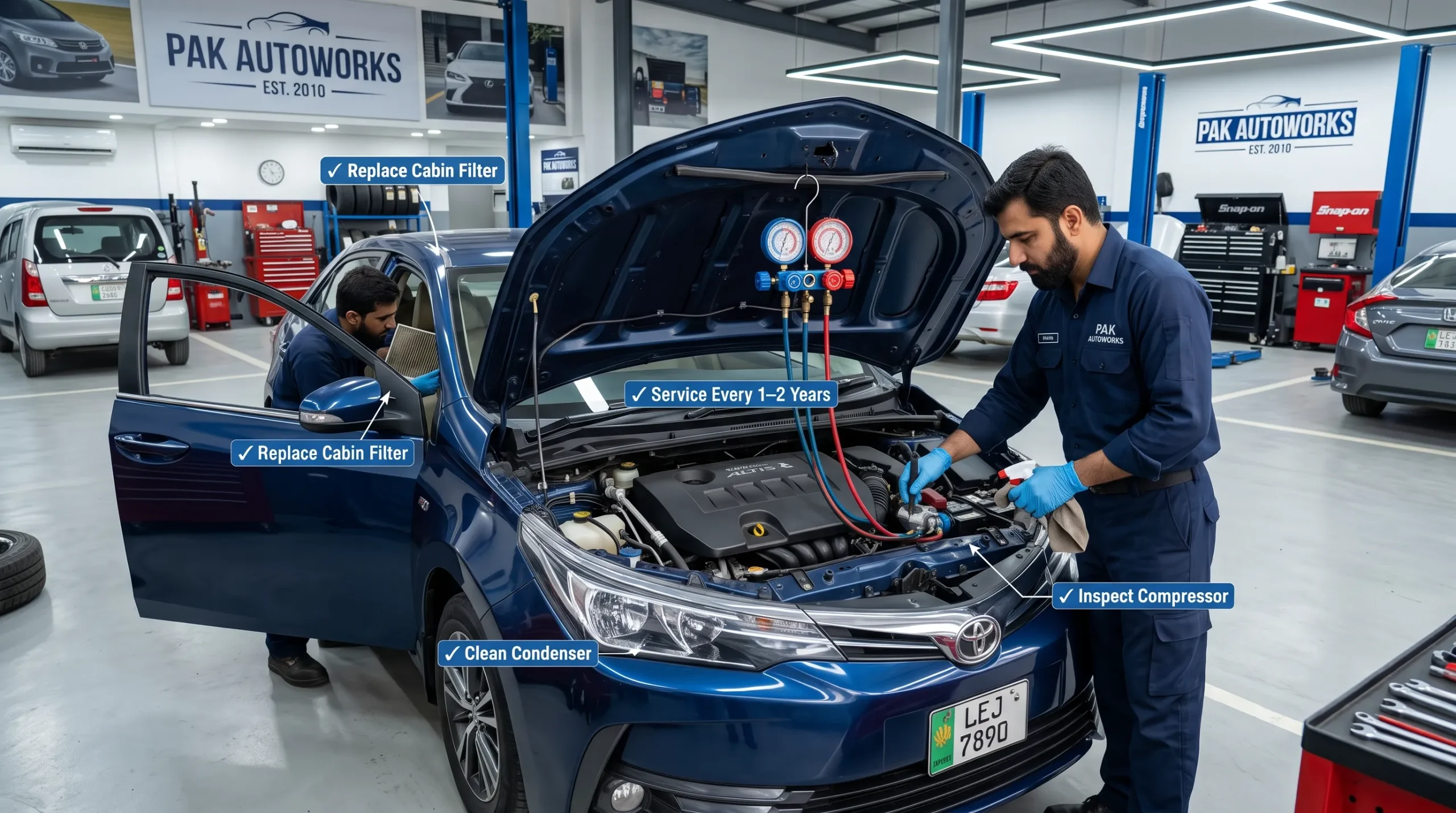
Service the AC Regularly
Schedule a professional AC inspection every one to two years to check refrigerant levels, system pressure, and component condition.
Replace the Cabin Air Filter
A clean filter improves airflow, cooling efficiency, and cabin air quality.
Clean the Condenser
Remove dirt and debris from the condenser periodically to maintain proper heat dissipation.
Use the AC Throughout the Year
Running the AC for 10–15 minutes every couple of weeks—even during winter—helps lubricate compressor seals and keeps the system in good working order.
Repair Leaks Promptly
Small refrigerant leaks can become larger over time, reducing cooling performance and increasing repair costs.
Monitor Engine Cooling System
Maintaining proper engine coolant levels and keeping the radiator in good condition supports overall AC performance.
Park in the Shade
Whenever possible, park in shaded areas or use a windshield sunshade to reduce cabin temperatures and lessen the load on your AC system.
Conclusion
A car AC that blows warm air is more than just an inconvenience—it often signals an underlying issue that deserves attention. Problems such as low refrigerant, refrigerant leaks, a failing compressor, clogged filters, electrical faults, or an overheating engine can all reduce your AC’s ability to keep the cabin cool.
The good news is that many of these issues can be identified early through routine inspections and regular maintenance. Replacing a dirty cabin air filter, keeping the condenser clean, servicing the AC system on schedule, and addressing small leaks promptly can help prevent costly repairs and ensure reliable cooling, even during Pakistan’s hottest months.
If your car’s AC continues to blow warm air despite basic troubleshooting, consult a qualified technician for a proper diagnosis. Timely repairs not only restore comfort but also protect the entire air conditioning system from further damage.
FAQ’s
Why is my car AC cold while driving but warm when stopped?
This usually indicates poor airflow through the condenser, often caused by a faulty cooling fan or a blocked condenser.
How often should car AC gas be refilled?
Under normal conditions, refrigerant shouldn’t require regular refilling. If it’s low, the system likely has a leak that should be repaired.
Can low engine coolant affect the AC?
Yes. An overheating engine can reduce AC efficiency and may cause the system to blow warmer air.
Is it safe to drive with a broken AC compressor?
The vehicle may still be drivable, but compressor failure should be repaired promptly to prevent damage to other AC components.
Can a dirty cabin air filter cause warm air?
A clogged filter mainly restricts airflow, making the AC feel less effective. While it may not directly create warm air, it can significantly reduce cooling performance.
Why does my AC work sometimes and not others?
Intermittent cooling may result from low refrigerant, electrical faults, sensor problems, or a failing compressor clutch.
Does extremely hot weather reduce AC performance?
Yes. During very high ambient temperatures, the AC system has to work harder, and cooling performance may decrease slightly, especially if the system isn’t well maintained.
How long does a car AC compressor typically last?
With proper maintenance, most compressors can last 8 to 12 years or well over 150,000 kilometers, though lifespan varies depending on driving conditions and servicing.