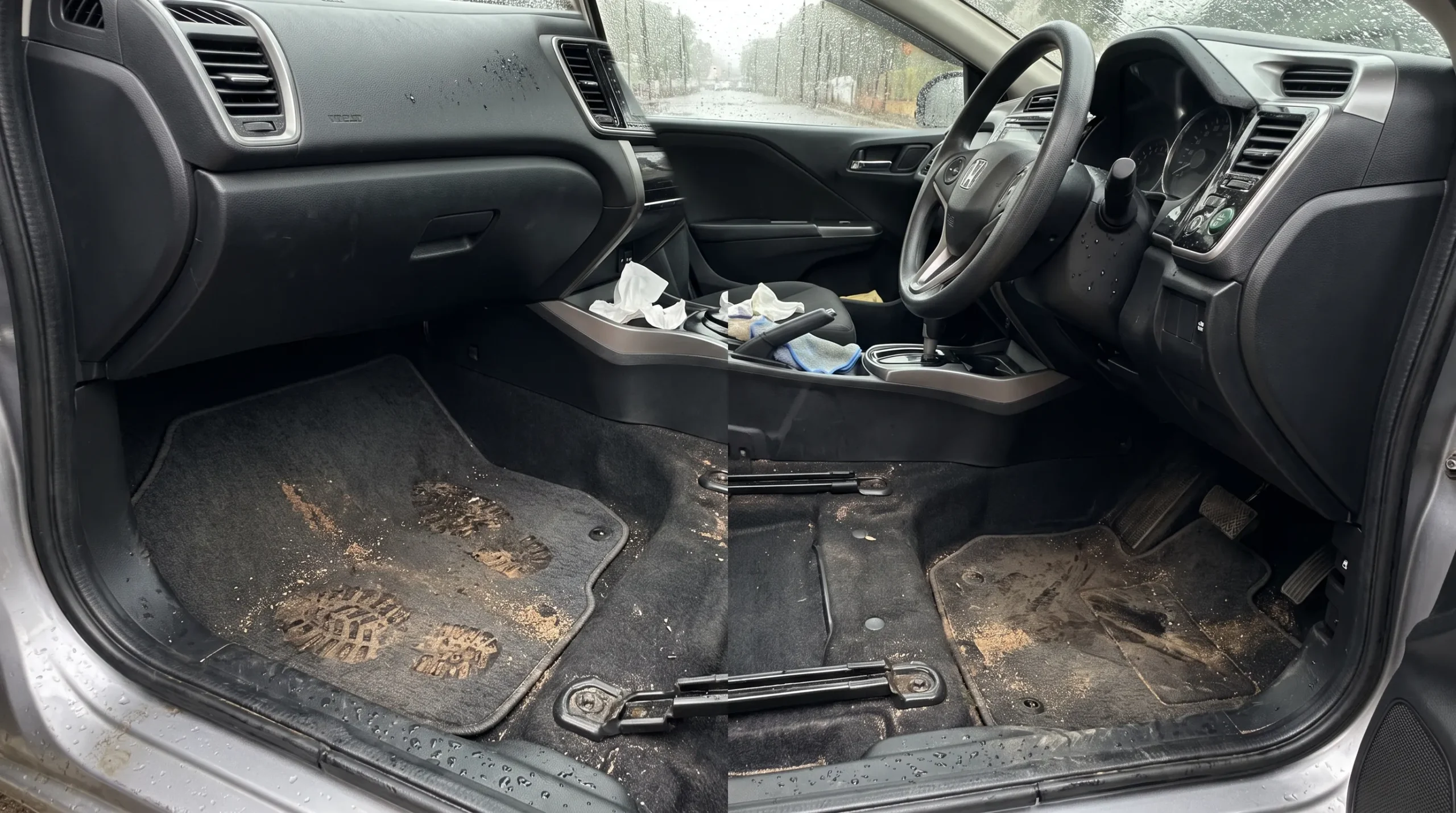
Heavy rain can make a clean car interior dirty surprisingly quickly. During Pakistan’s monsoon season, water on the roads often mixes with mud, dust, sand, oil residue and other road grime. Every time you enter the vehicle, some of that mixture can be carried inside on your shoes and deposited directly onto the floor mats.
Floor mats are designed to take this abuse, but they still need proper cleaning and drying. A wet mat left inside the vehicle can keep the carpet underneath damp for hours or even longer, especially when the weather remains humid. Dirt trapped in the mat can also become harder to remove once it dries.
The good news is that cleaning floor mats after heavy rain is straightforward. The basic process is to remove loose dirt, clean according to the mat material, rinse or wipe away residue, and dry everything completely before reinstalling it.
Here’s a practical guide you can follow after a particularly wet or muddy drive.
Why Should You Clean Wet Car Floor Mats Quickly?
A wet floor mat is not automatically a problem. The issue is prolonged moisture combined with dirt and poor ventilation.
Imagine driving through heavy rain and then parking your car with a saturated mat sitting on top of the carpet. Even if the rain stops, the moisture trapped in the mat has nowhere to go quickly. The carpet underneath may remain damp, and repeated wetting can make it increasingly difficult for the interior to dry.
A typical car floor mat may only hold a relatively small amount of water, but repeated exposure can add up. A heavily saturated mat can carry several hundred millilitres of water, depending on its material and size. If that moisture is repeatedly transferred to the carpet underneath, drying becomes much more difficult.
Wet, dirty mats can also contribute to:
Musty or unpleasant smells
Mud and grime becoming embedded in the surface
Persistent dampness underneath the mat
Dirt transfer to the vehicle’s carpet
A generally less hygienic-feeling cabin
During monsoon season, this matters because your car may encounter rain several times within the same week. If the interior does not get enough time to dry between drives, moisture can accumulate.
That’s why it is better to clean and dry heavily wet mats promptly rather than waiting several days.
Step 1: Remove the Floor Mats From the Car
Start by removing all the floor mats.
Lift them carefully rather than dragging them across the carpet. This is particularly important if the mats are covered in wet mud because dragging them can spread dirt and moisture across areas that were previously clean.
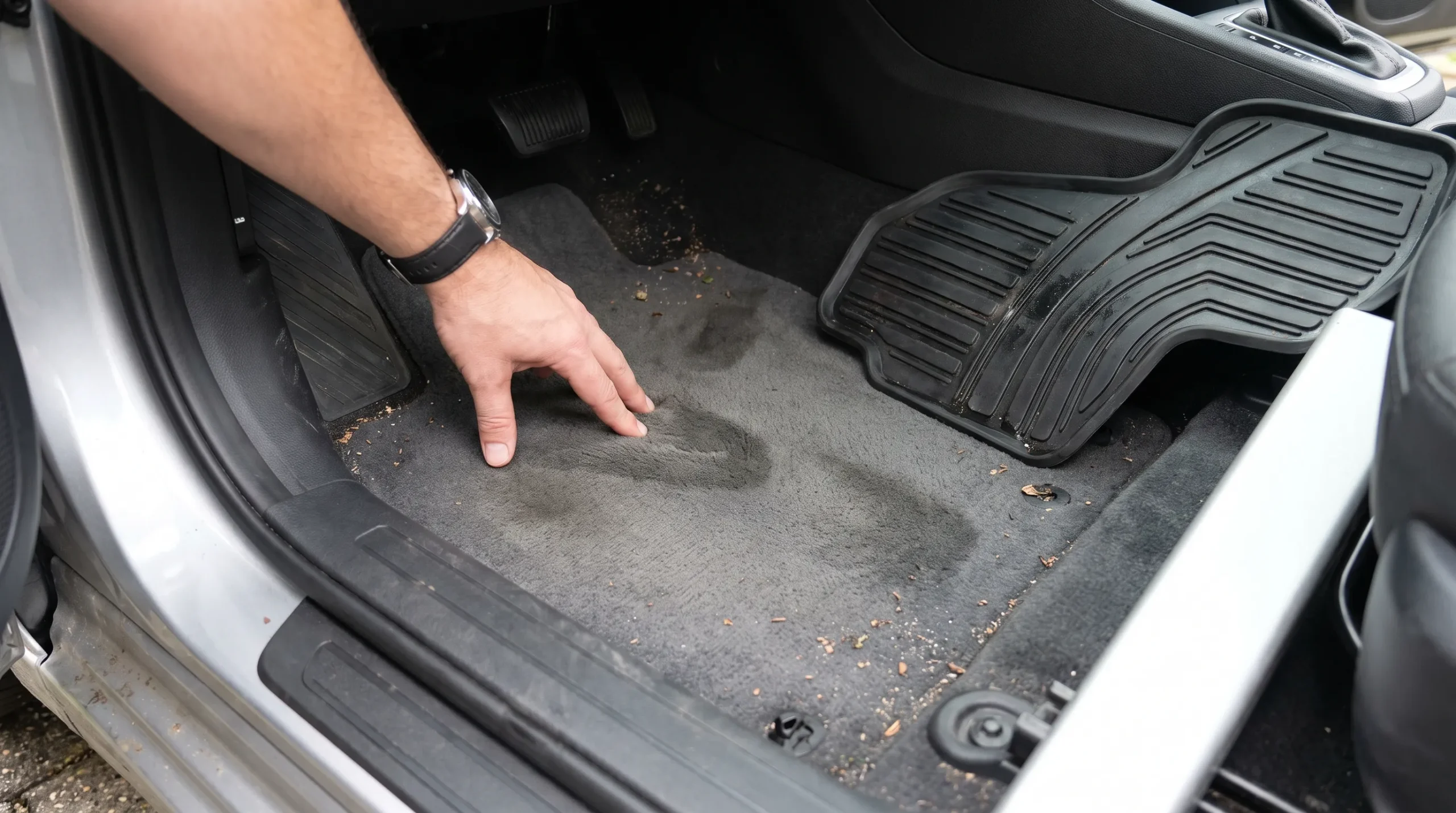
Once the mats are removed, inspect the floor underneath.
Look for:
Standing water
Wet or damp carpet
Mud around the edges
Dirt underneath the pedals
Moisture near the door sill
If you find standing water, deal with it separately. Cleaning the mats alone will not solve a wet-carpet problem.
Take the mats somewhere suitable for cleaning, such as a driveway, garage entrance or another washable area.
Step 2: Remove Loose Mud and Dirt First
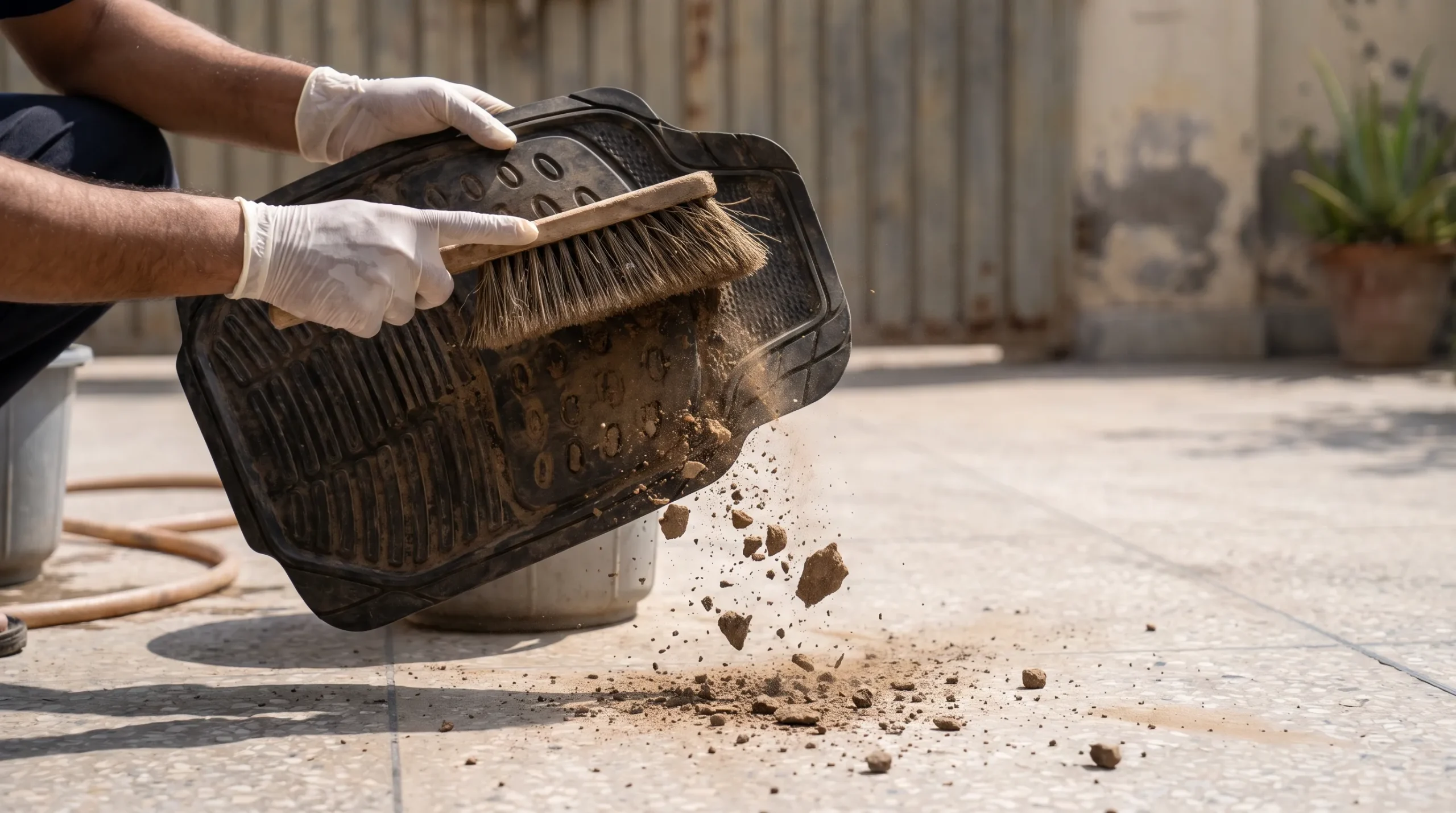
One of the most common mistakes is immediately soaking a heavily muddy mat.
If a mat contains a thick layer of mud, first remove as much loose material as possible. Shake the mat outdoors and use a suitable brush to loosen dried or semi-dried dirt.
This matters because mud contains soil particles and fine grit. If you immediately add water, the loose material can turn into a slurry that spreads across the entire mat.
Spend extra time around:
Deep grooves
Corners
Edges
Heel-rest areas
Textured sections
For carpet mats, use a gentler brushing action so you do not unnecessarily damage the fibres.
Once the loose dirt has been removed, the deeper cleaning stage becomes much easier.
Step 3: How to Clean Rubber Floor Mats
Rubber and similar waterproof-style mats are generally easier to clean because water and dirt remain mostly on the surface rather than penetrating deeply into fibres.
1. Rinse the Mat
Start with clean water to remove loose mud and road grime.
Work systematically across the mat rather than simply spraying one area repeatedly. Pay particular attention to grooves where mud can become trapped.
Avoid excessive water pressure if the mat is cracked, damaged or already deteriorated.
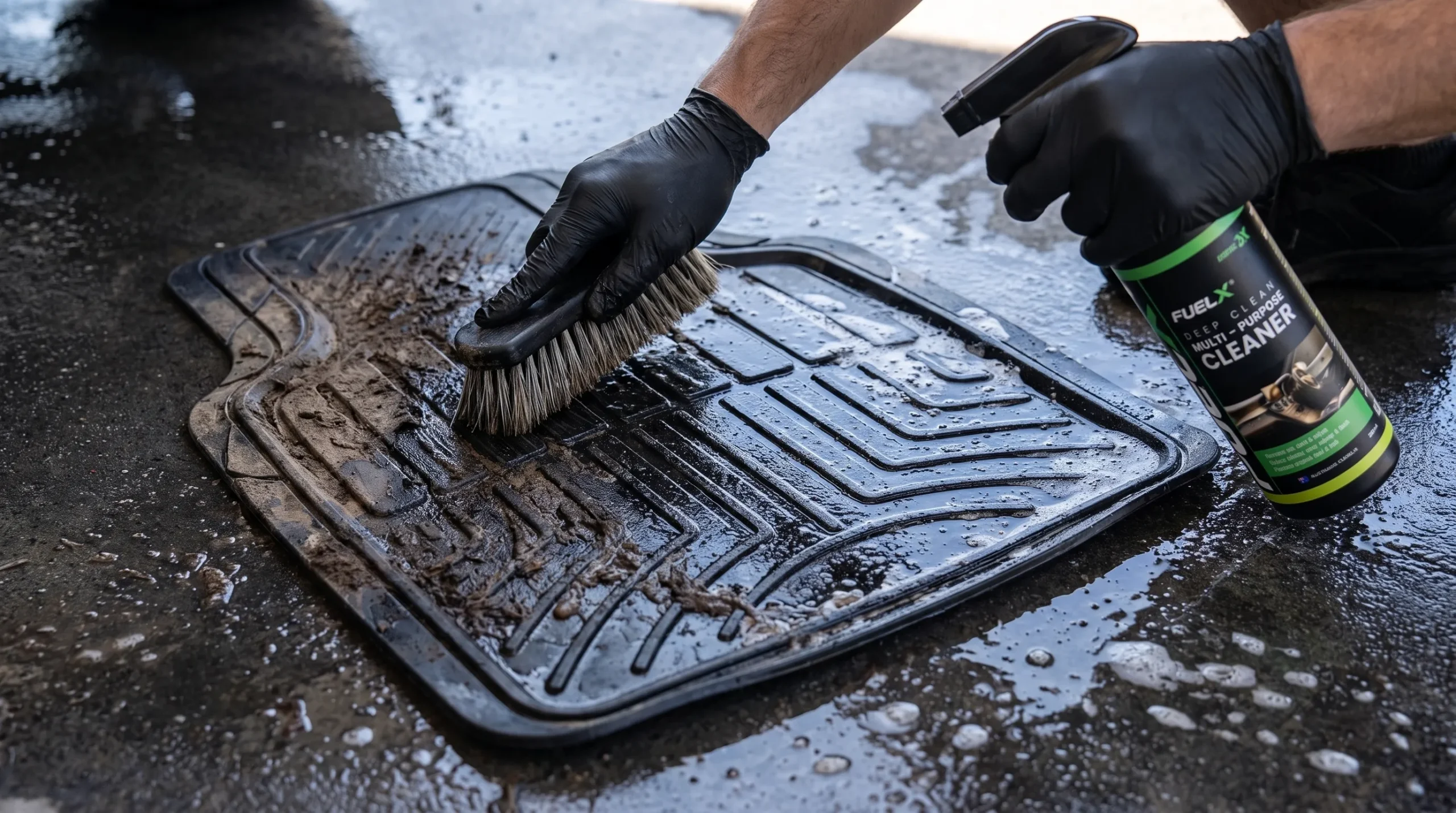
2. Apply an Appropriate Cleaner
After removing the loose dirt, apply a suitable automotive cleaner according to its instructions.
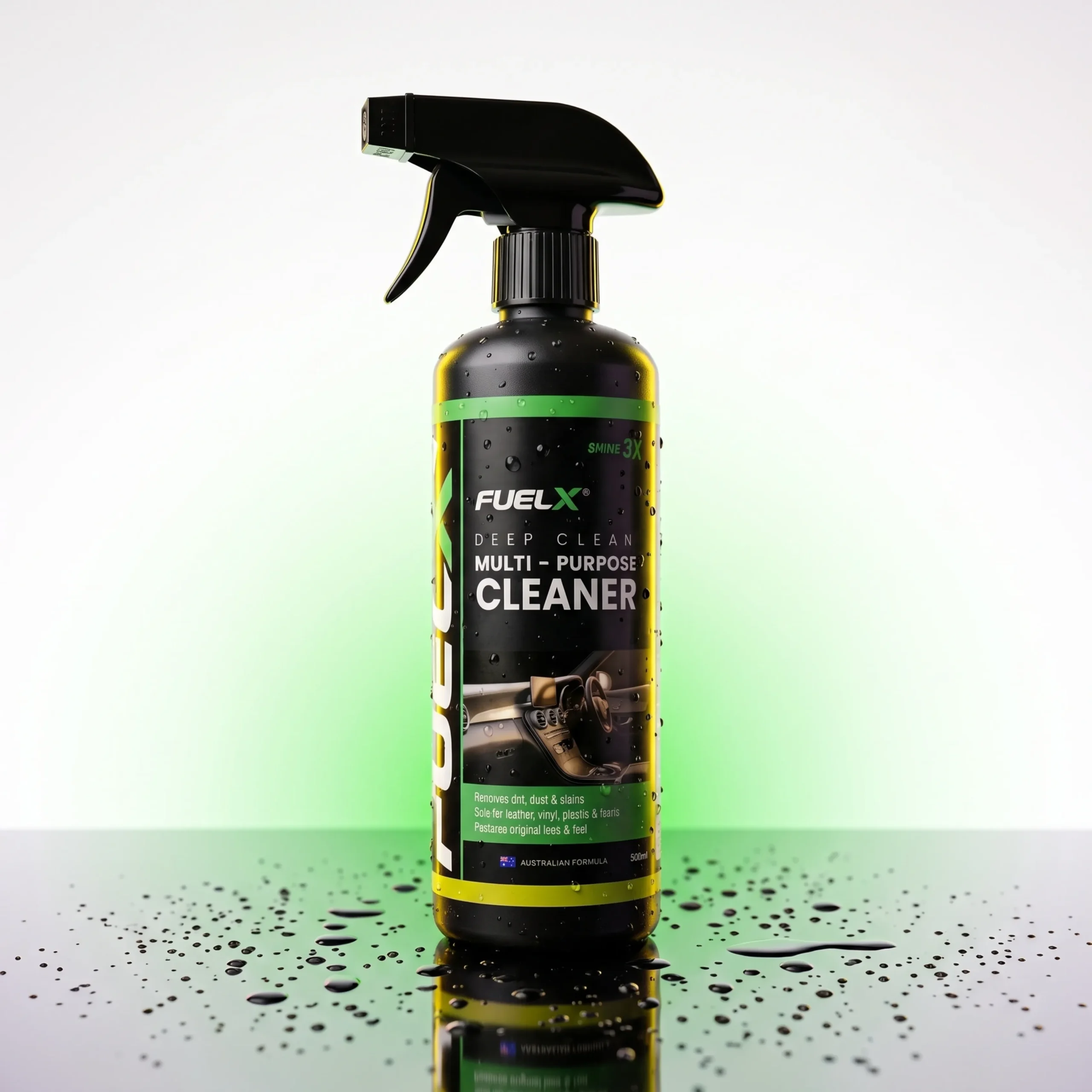
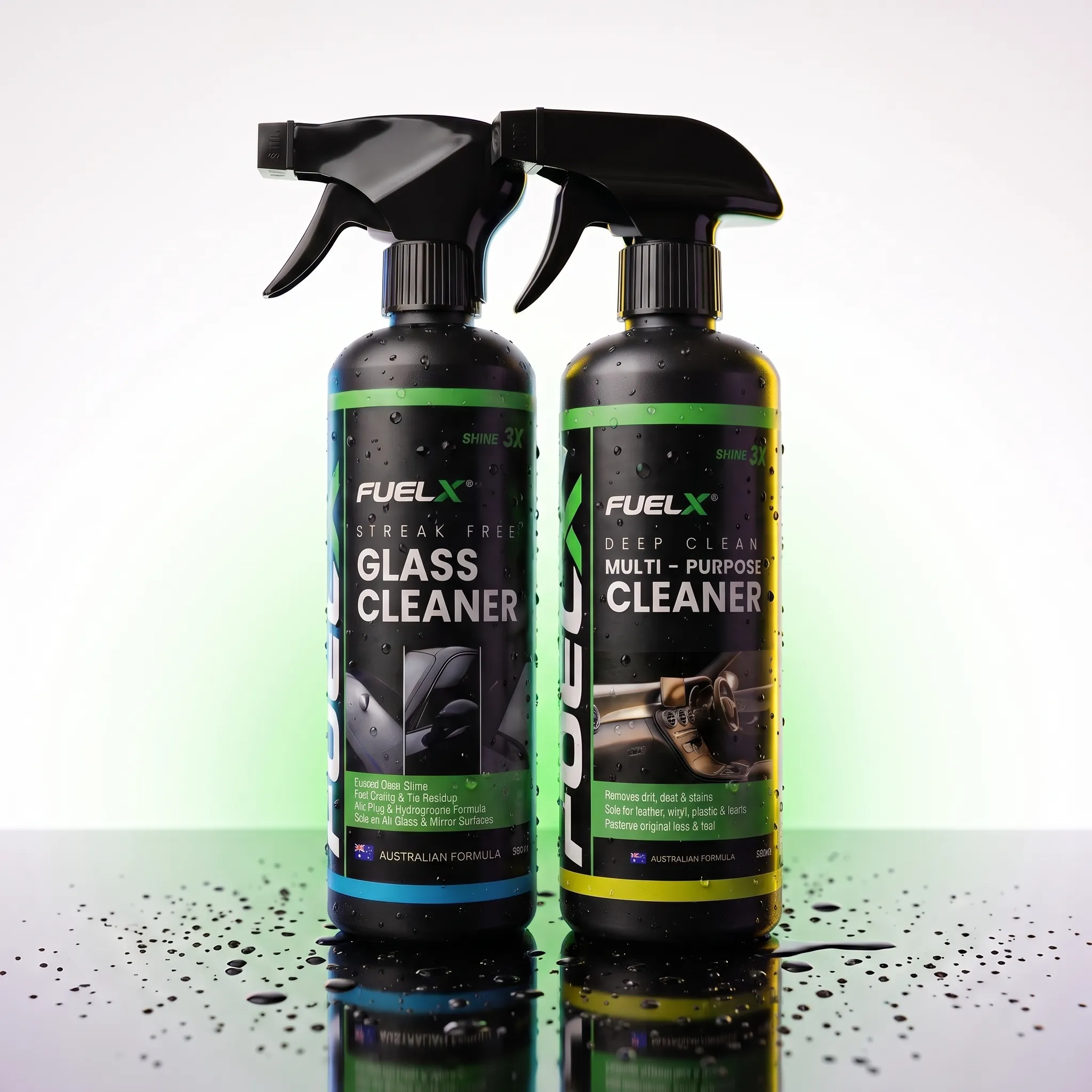
For appropriate automotive cleaning applications, a product such as FuelX Multi-Purpose Cleaner can be useful for dealing with everyday dirt and grime.
The important point is to use the right amount. More cleaner does not necessarily mean better cleaning. Excess product can create additional residue and require more rinsing.
If you are using a cleaner on a material or surface for the first time, testing it on a small, less visible area is a sensible precaution.
3. Scrub the Grooves
Use a suitable detailing or cleaning brush to work the cleaner into the mat.
Rubber mats often have raised sections and grooves designed to contain water, mud and debris. These areas can remain dirty even when the flat portions of the mat look clean.
Use moderate pressure rather than aggressively attacking the surface.
4. Rinse Thoroughly
Rinse the mat until visible dirt and cleaning residue are gone.
Pay attention to the edges and underside as well. Leftover cleaner can attract dirt and leave an uneven-looking surface.
5. Dry Completely
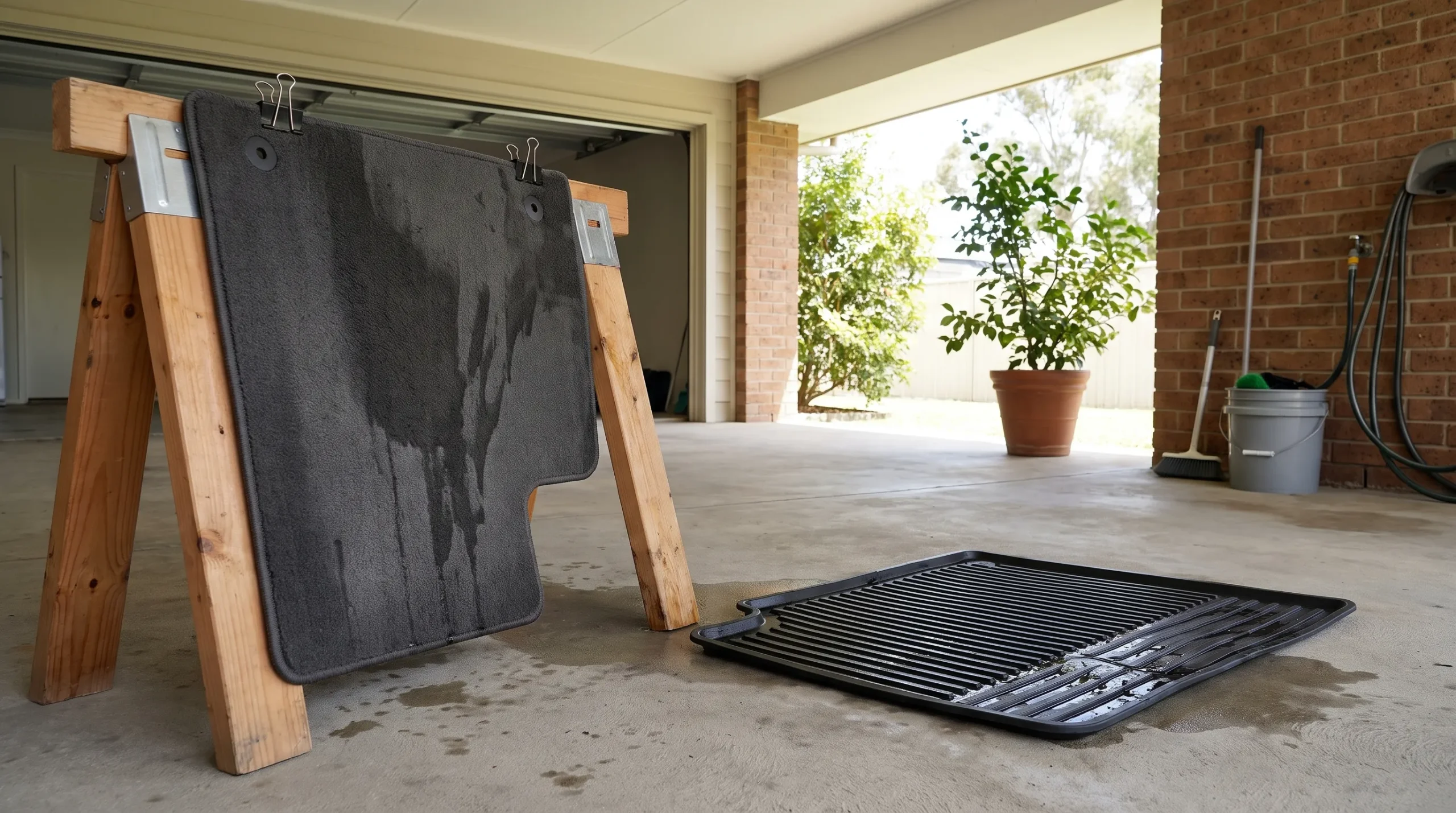
Shake off excess water and place the mat somewhere with good airflow.
Do not reinstall it simply because the upper surface appears dry. Check the underside and deeper grooves as well.
Step 4: How to Clean Carpet Floor Mats
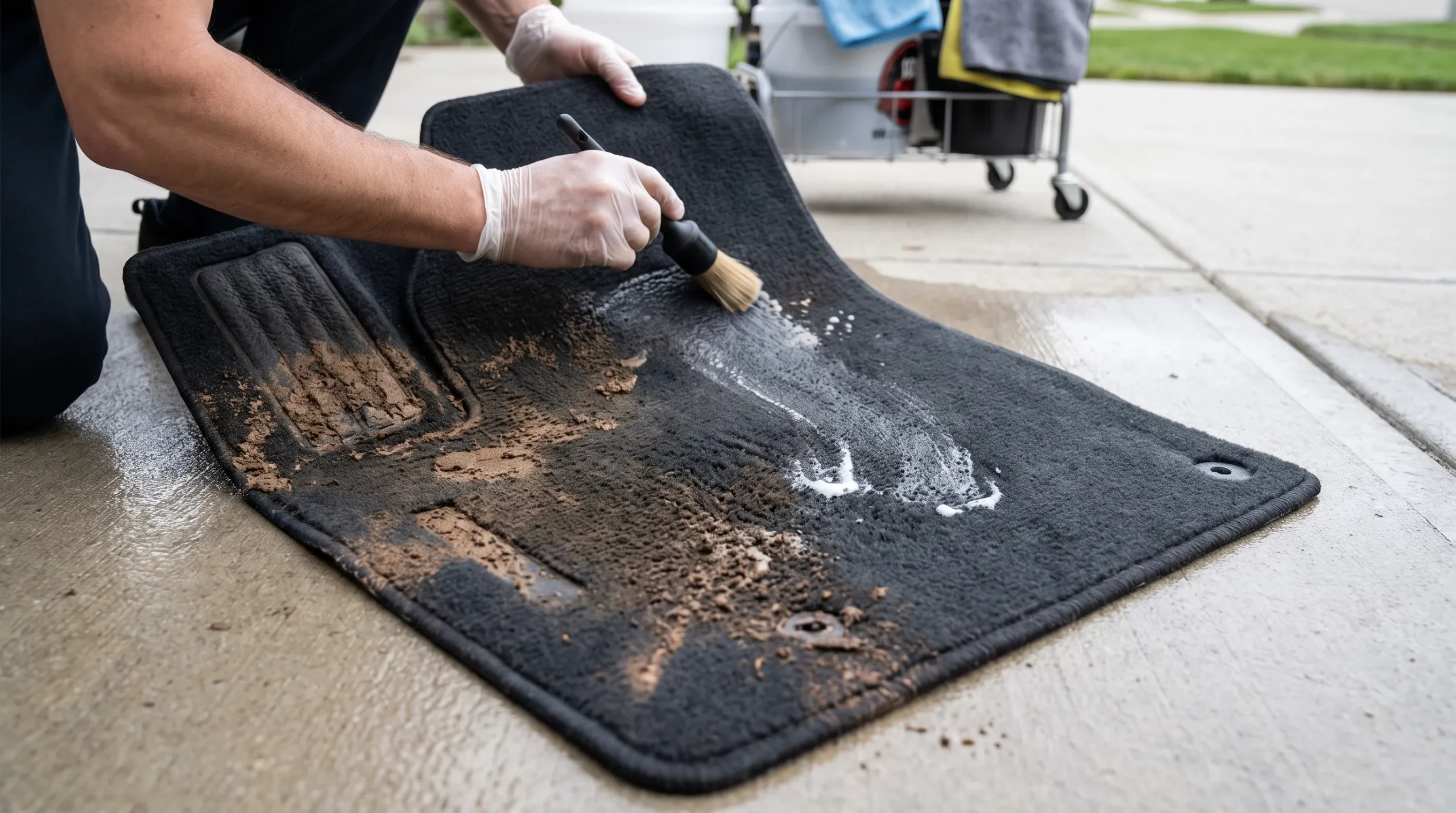
Carpet mats require more care because their fibres can absorb and retain water.
Begin by shaking and gently brushing off loose dirt. If the mat is heavily muddy, remove as much surface mud as possible before introducing additional moisture.
Next, use a cleaner that is appropriate for the material and follow its directions.
Avoid completely saturating the mat unless the product and cleaning method specifically call for it. The more water you introduce into a thick carpet mat, the longer it may take to dry.
Work gently on stained areas using a suitable brush. Focus on places that receive the most traffic, such as the driver’s heel area and sections near the pedals.
After cleaning, remove excess moisture as effectively as the material and cleaning method allow. You can blot suitable mats with a clean towel and then place them in a well-ventilated area.
The objective is not simply to remove visible dirt.
A carpet mat is not properly cleaned until it has also been allowed to dry thoroughly.
Step 5: How to Remove Mud and Road Grime From Floor Mats
Heavy rain can produce particularly stubborn grime because road dirt becomes mixed with water and mud.
Instead of trying to remove everything with aggressive scrubbing, use a staged approach:
Remove loose mud.
Brush away dry particles.
Apply the appropriate cleaner.
Gently agitate the dirty areas.
Rinse or wipe according to the material and product instructions.
Inspect the grooves and corners.
Repeat the process if necessary.
Dry completely.
For particularly dirty mats, two gentle cleaning passes are usually better than one extremely aggressive pass.
Avoid using knives, screwdrivers or other sharp objects to dig dirt from grooves. They can damage rubber surfaces and create cuts where dirt and moisture can collect later.
Step 6: Dry the Mats Properly
Drying is arguably the most important part of post-rain floor-mat care.
A mat that looks clean but remains damp can still transfer moisture back into the car.
Place the mats somewhere with good ventilation. Ideally, air should be able to reach both sides.
For thicker carpet mats, turn them periodically so the underside does not remain damp while the upper surface dries.
In warm conditions, airflow can significantly speed up evaporation. However, simply placing a wet mat in direct sunlight for a short time does not guarantee that the inside of a thick mat is dry.
Use a simple test:
Feel the thickest sections and the underside. If they still feel damp or unusually cool, allow more drying time.
If the mat has a musty smell after drying, investigate further rather than masking the smell with an air freshener. Persistent odour can indicate that moisture or dirt remains trapped in the mat or carpet.
Don’t Forget the Carpet Underneath
The floor mat is only the first layer of your car’s interior.
Once you remove it, inspect the carpet underneath. This is especially important after driving through standing water or heavy rain.
If the carpet is wet:
Remove standing water promptly
Blot excess moisture where appropriate
Remove visible mud
Improve cabin ventilation
Allow the affected area to dry thoroughly
If the carpet remains wet for an extended period, or if a persistent musty smell develops, further cleaning or professional drying may be necessary.
Also investigate unexplained water entry. If the carpet repeatedly becomes wet even when the floor mats are dry, there may be a problem with a door seal, drainage system or another part of the vehicle.
Common Mistakes to Avoid
Putting Wet Mats Back Immediately
This traps moisture inside the vehicle and can keep the carpet underneath damp.
Leaving Mud for Several Days
Mud is generally easier to deal with before it becomes deeply embedded or repeatedly contaminated.
Using Too Much Cleaning Product
Excess cleaner can increase residue and make rinsing and drying more difficult.
Scrubbing Too Hard
Aggressive scrubbing can wear carpet fibres and may unnecessarily damage rubber surfaces.
Cleaning Only the Visible Surface
Dirt and moisture can remain underneath the mat and inside deep grooves.
Ignoring the Carpet
A clean mat cannot solve a wet carpet underneath it.
Using Random Household Chemicals
Not every household cleaner is appropriate for automotive materials. Use products according to their intended application and instructions.
How Often Should You Clean Floor Mats During Monsoon?
There is no universal cleaning schedule because driving conditions vary considerably.
A driver who mainly travels on paved city roads may only need to clean the mats after particularly heavy rain or visible contamination.
Someone who drives daily through muddy streets, construction areas or standing water may need to clean them much more frequently.
A practical approach during monsoon season is to inspect the mats after heavy rain and perform a deeper cleaning whenever they become visibly muddy or heavily wet.
For vehicles exposed to frequent muddy conditions, a weekly cleaning routine can be a reasonable starting point. If the mats become dirty sooner, clean them sooner rather than waiting for the weekly schedule.
How to Keep Car Floor Mats Cleaner During Rainy Season
Prevention can reduce both cleaning time and interior moisture.
Before getting into the car, remove as much mud and standing water from your shoes as practical. A small towel or microfiber cloth can also be useful for dealing with unexpected moisture.
You can build a simple rainy-season routine:
Remove excess mud from shoes before entering.
Inspect floor mats after heavy rain.
Remove heavily contaminated mats.
Clean them before dirt becomes deeply embedded.
Dry them completely.
Check the carpet underneath.
Improve cabin ventilation when possible.
These small habits can make a noticeable difference over an entire monsoon season.
When Should You Replace a Floor Mat?
Cleaning can restore a dirty floor mat, but it cannot fix serious physical damage.
Consider replacing a mat when you notice:
Large cracks
Tears or holes
Severe wear-through
Damaged anti-slip backing
Permanent deformation
A mat that no longer stays securely positioned
Areas where water can easily bypass the mat and reach the carpet
A floor mat has two jobs: keeping the interior cleaner and helping protect the underlying carpet. Once it can no longer perform those functions reliably, replacement becomes more practical than repeated cleaning.
Can FuelX Multi-Purpose Cleaner Help?
A suitable automotive multi-purpose cleaner can be a useful addition to your rainy-season cleaning routine.
FuelX Multi-Purpose Cleaner is designed for appropriate automotive cleaning applications and can help with everyday dirt and grime when used according to its product directions.
When using any cleaner, remember three basic rules:
Use the recommended amount.
Follow the product’s application instructions.
Test an inconspicuous area first if you are uncertain about surface compatibility.
The objective is not to use as much product as possible. Good car care is about using the right product, the right amount and the right cleaning method for the surface.
A Simple Post-Rain Floor-Mat Routine
If you have just returned from a heavy downpour and your floor mats are muddy and wet, remember this five-step process:
1. Remove: Take the mats out of the car carefully.
2. Brush: Shake and brush away loose mud, sand and road debris.
3. Clean: Use the appropriate cleaning method for rubber or carpet mats.
4. Dry: Remove excess moisture and allow the mats to dry completely.
5. Check: Inspect and dry the carpet underneath before reinstalling the mats.
This routine may only take a little extra effort after each major rain event, but it can prevent moisture and road grime from becoming a much bigger interior-cleaning problem.
Final Thoughts
Heavy rain is part of normal driving during Pakistan’s monsoon season, but your car’s interior does not have to suffer every time the roads become wet and muddy.
The most important lesson is simple: don’t just clean the dirt—deal with the moisture too.
Remove the mats, get rid of loose mud, use an appropriate cleaner, rinse or wipe properly, and give the mats enough time to dry. Then check the carpet underneath before putting everything back.
With this routine, your floor mats can continue protecting the interior while helping you keep your car cleaner, fresher and more comfortable throughout the rainy season.
FAQ’s
Can I wash car floor mats with water after heavy rain?
Yes, many rubber floor mats can be rinsed with water. Carpet mats require more careful moisture management because they absorb water. Always consider the mat material and follow the cleaner’s instructions.
How do I dry wet car floor mats quickly?
Remove excess water, place the mats in a well-ventilated location and allow airflow to reach both sides. Turn thicker mats during drying and check the underside before reinstalling them.
How do you clean muddy rubber car mats?
Remove loose mud first, rinse the mat, apply an appropriate automotive cleaner, gently scrub the grooves, rinse thoroughly and allow the mat to dry completely.
How do you clean carpet car mats?
Remove loose dirt, apply a suitable carpet-safe automotive cleaner, gently work on stained areas, remove excess moisture and allow the mat to dry completely before returning it to the vehicle.
Can wet floor mats cause a bad smell?
Yes. Persistent moisture combined with dirt and limited ventilation can contribute to musty smells. Thorough cleaning and drying can help prevent this.
Should I clean the carpet underneath wet floor mats?
Yes. Always check underneath after heavy rain. If water or mud has reached the carpet, remove the moisture and clean the affected area rather than simply reinstalling the mat.
How often should I clean car mats during monsoon?
Inspect them after heavy rain and clean them whenever they become visibly muddy or excessively wet. Drivers who regularly encounter muddy roads may need to clean their mats weekly or even more frequently.
Can I use a multi-purpose cleaner on car floor mats?
A suitable automotive multi-purpose cleaner may be appropriate for certain floor mats and interior surfaces. Check the product directions and surface compatibility before use, particularly with carpet materials.