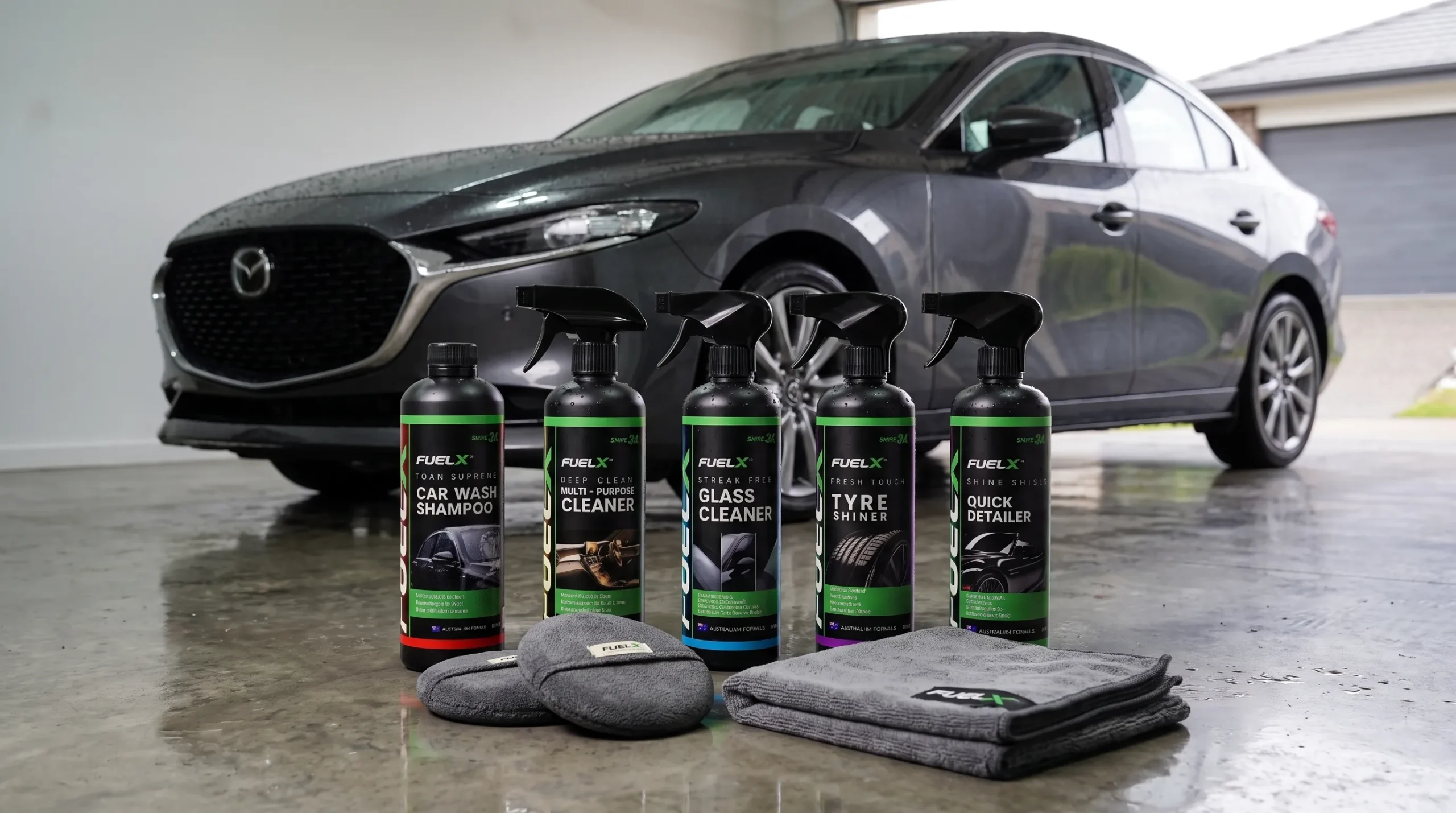
Keeping your car clean doesn’t always require a trip to a professional detailing center. With the right car cleaning products, a bucket, a reliable water source, and around 60–90 minutes, most car owners can perform a thorough home wash and basic interior cleaning themselves.
This is particularly useful in Pakistan, where cars regularly face dust, road grime, traffic pollution, intense summer heat, muddy roads, and monsoon rain. A vehicle that looks clean in the morning can collect a visible layer of dust by evening, especially when parked outdoors or driven through busy urban areas.
The important thing is to use the right product for the right surface. Car shampoo is designed for exterior washing, glass cleaner is made for automotive glass, tyre shiner is intended for the tyre sidewalls, and an interior cleaner is better suited to cabin surfaces.
You don’t need 15 different bottles to get started. A practical home car wash can be built around five to seven essential products.
What Products Do You Need for a Complete Home Car Wash?
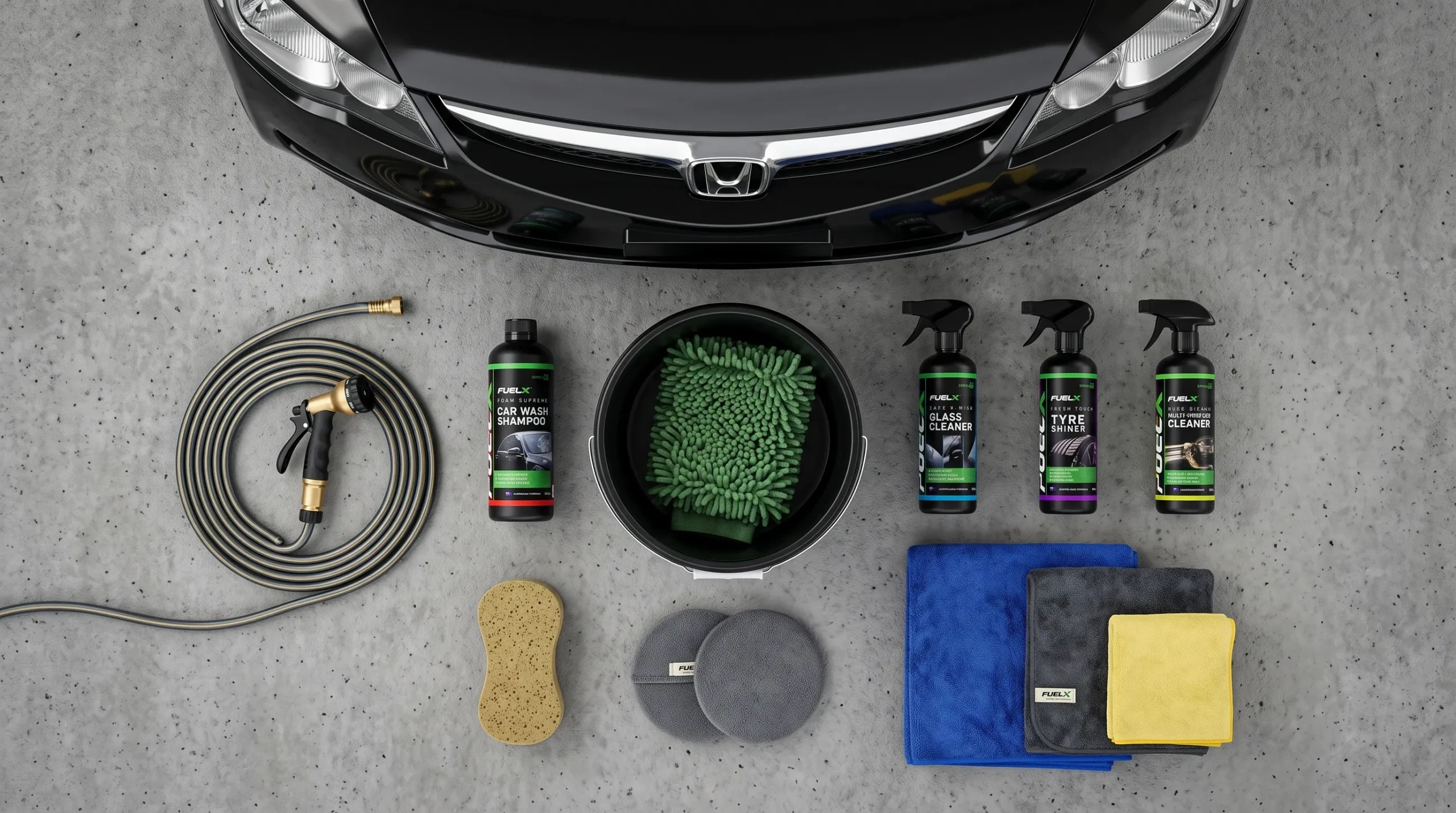
A basic home car wash requires:
Car wash shampoo
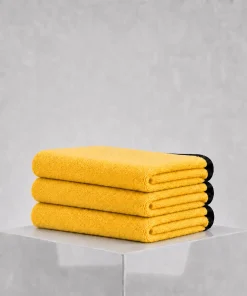
Microfiber detailing towels
Glass cleaner
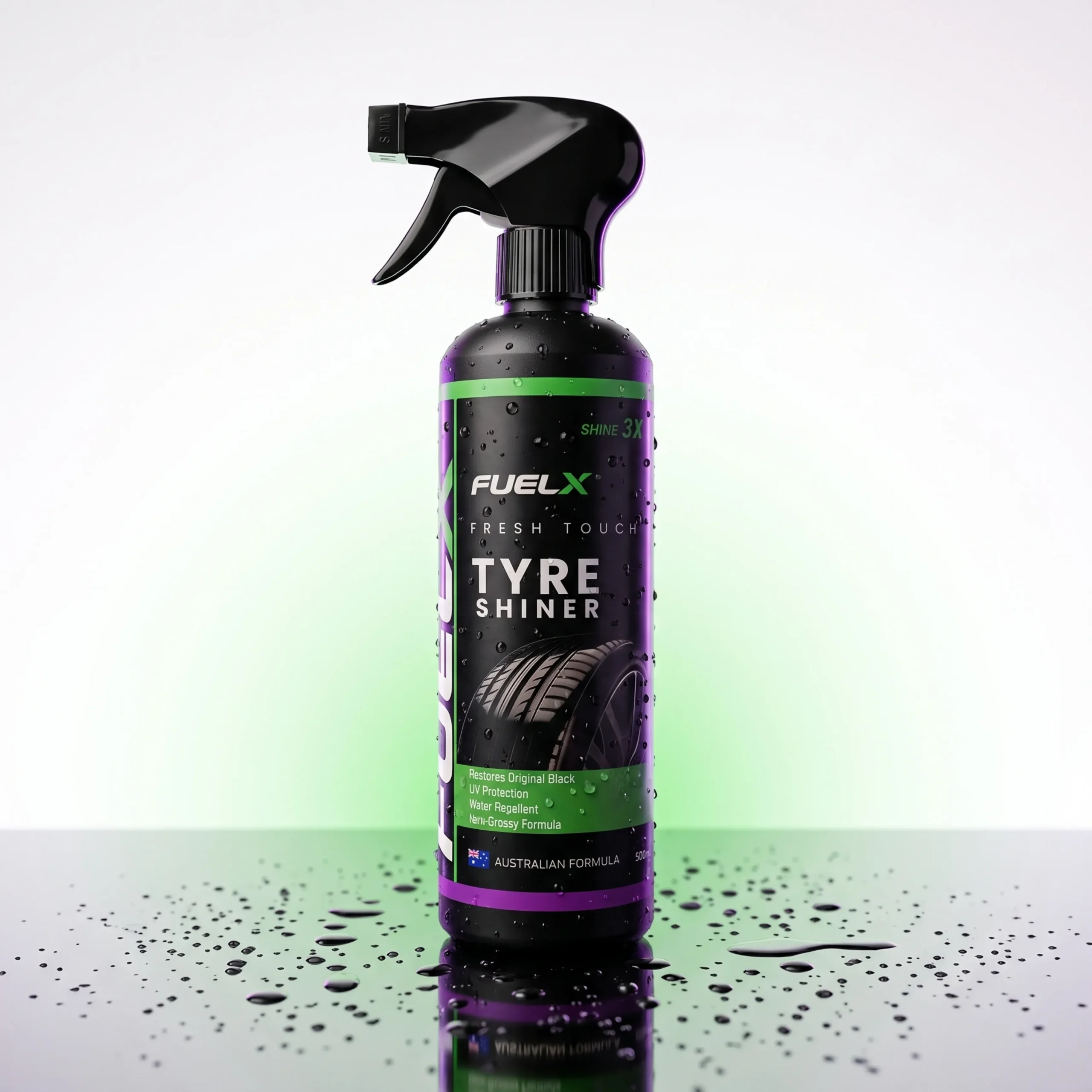
Tyre shiner
Multi-purpose or interior cleaner
Bucket and water source
Applicator pads
For more advanced maintenance, you can add a quick detailer for light dust, fingerprints, and minor touch-ups between full washes.
A useful way to think about your car-care products is to divide the vehicle into different zones:
Vehicle Area
Suitable Product
Paint and exterior panels
Car wash shampoo
Drying and wiping
Microfiber towel
Windows and windshield
Glass cleaner
Tyre sidewalls
Tyre shiner
Dashboard and interior
Multi-purpose cleaner
Light exterior touch-ups
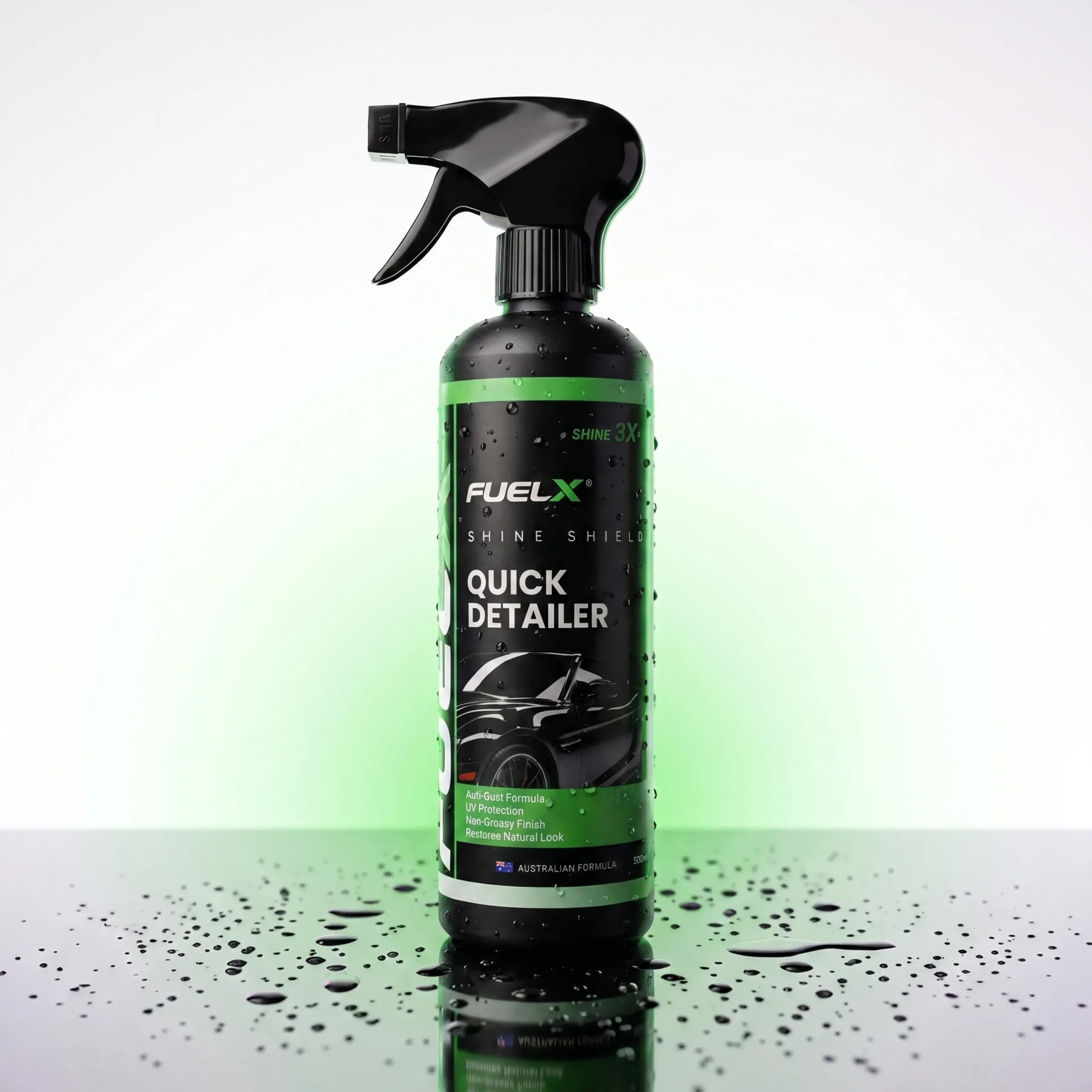
Quick detailer
Product application
Applicator pad
This approach prevents a common beginner mistake: trying to use one chemical or one cloth for every part of the vehicle.
1. Car Wash Shampoo – The Foundation of Exterior Cleaning
A dedicated car wash shampoo should be the foundation of your home car-washing routine.
During normal driving, your vehicle collects dust, mud, brake dust, insects, oily road residue, and other contaminants. If you simply wipe a dusty car with a dry cloth, those particles can be dragged across the paint.
A proper wash first uses water to loosen and remove loose contamination and then uses a suitable shampoo to clean the remaining dirt.
Why Use Dedicated Car Shampoo?
Household dishwashing liquid might appear to be a cheap alternative, but it isn’t specifically formulated for routine automotive washing. A dedicated car shampoo is designed for the requirements of vehicle surfaces and is therefore a more appropriate choice.
When selecting a shampoo, look for:
Effective everyday cleaning
Suitability for regular vehicle washing
Easy rinsing
Minimal residue
Clear dilution instructions
Compatibility with automotive surfaces
For example, if you wash your car once every one or two weeks, a 500 ml or 1-litre bottle can potentially provide many washes depending on the manufacturer’s recommended dilution and how much product you use per wash.
The key lesson is simple: more shampoo does not automatically mean a cleaner car. Follow the recommended dilution rather than creating an excessively concentrated solution.
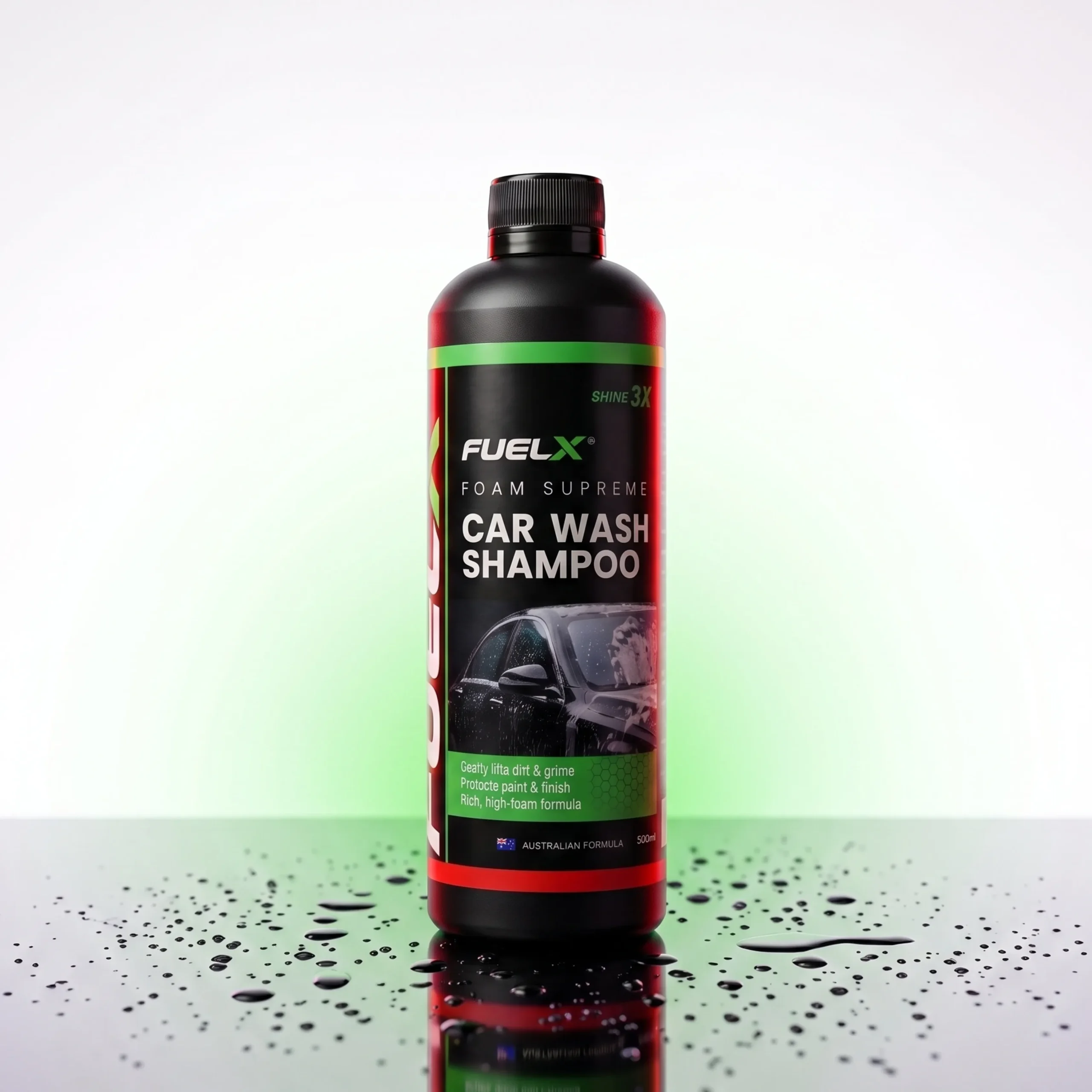
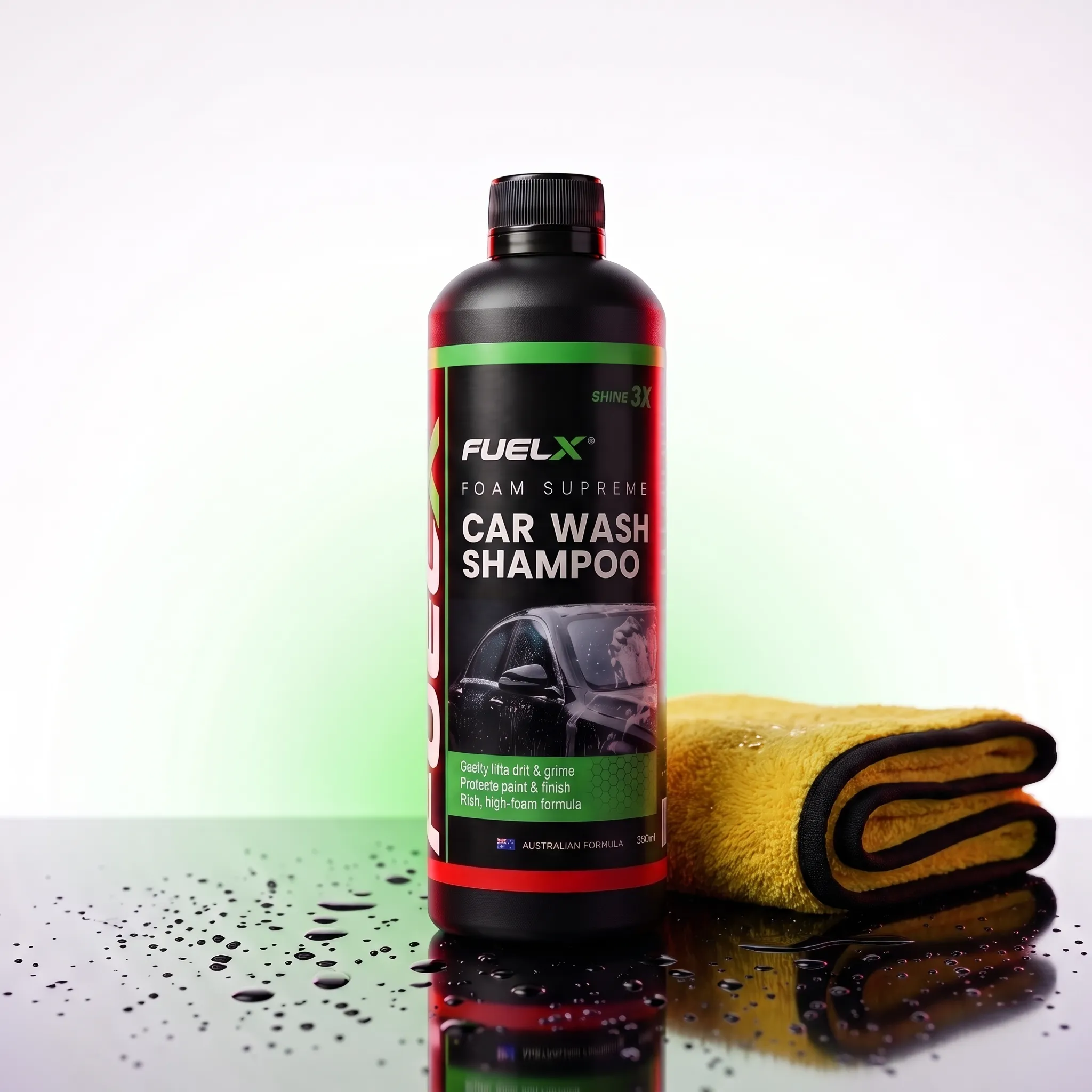
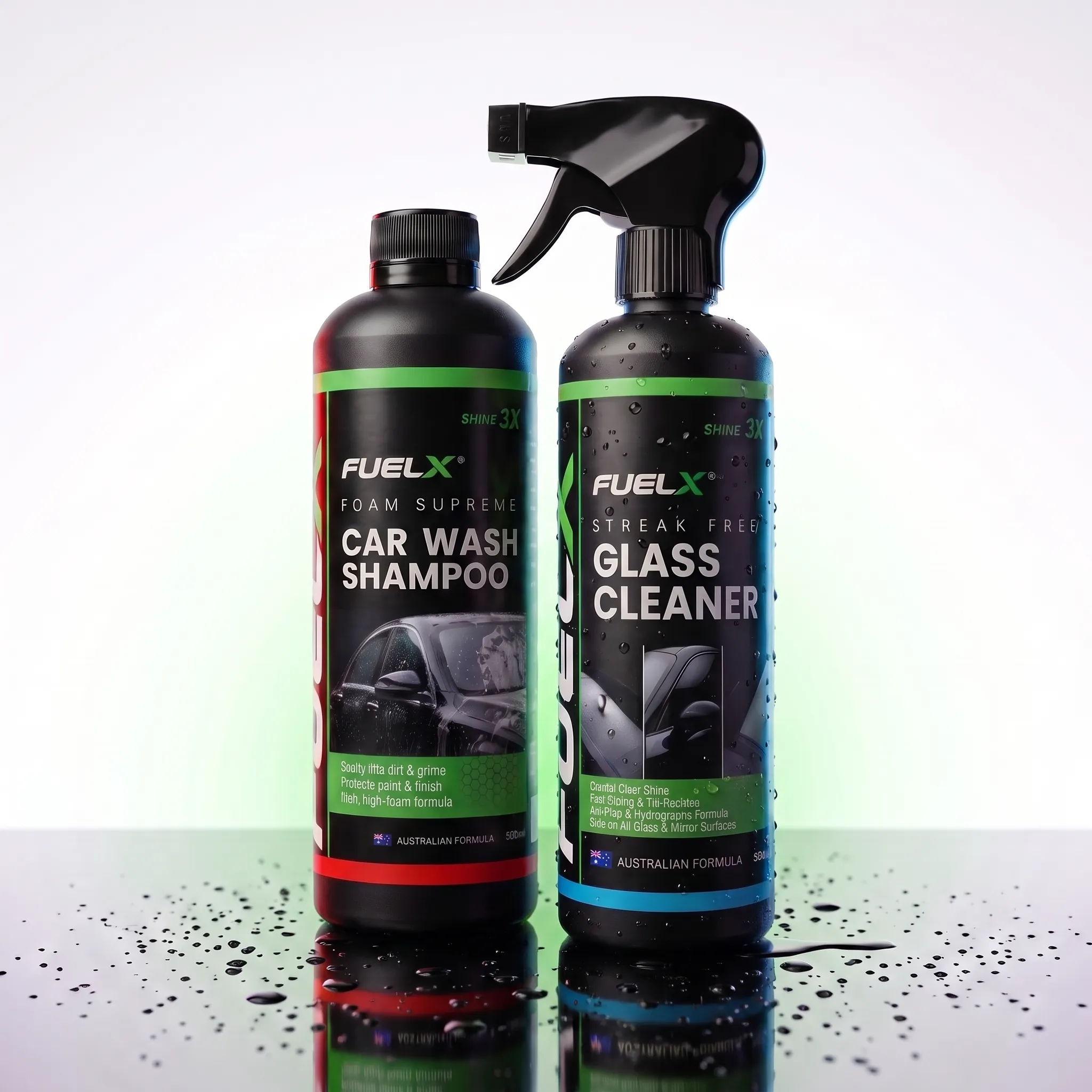
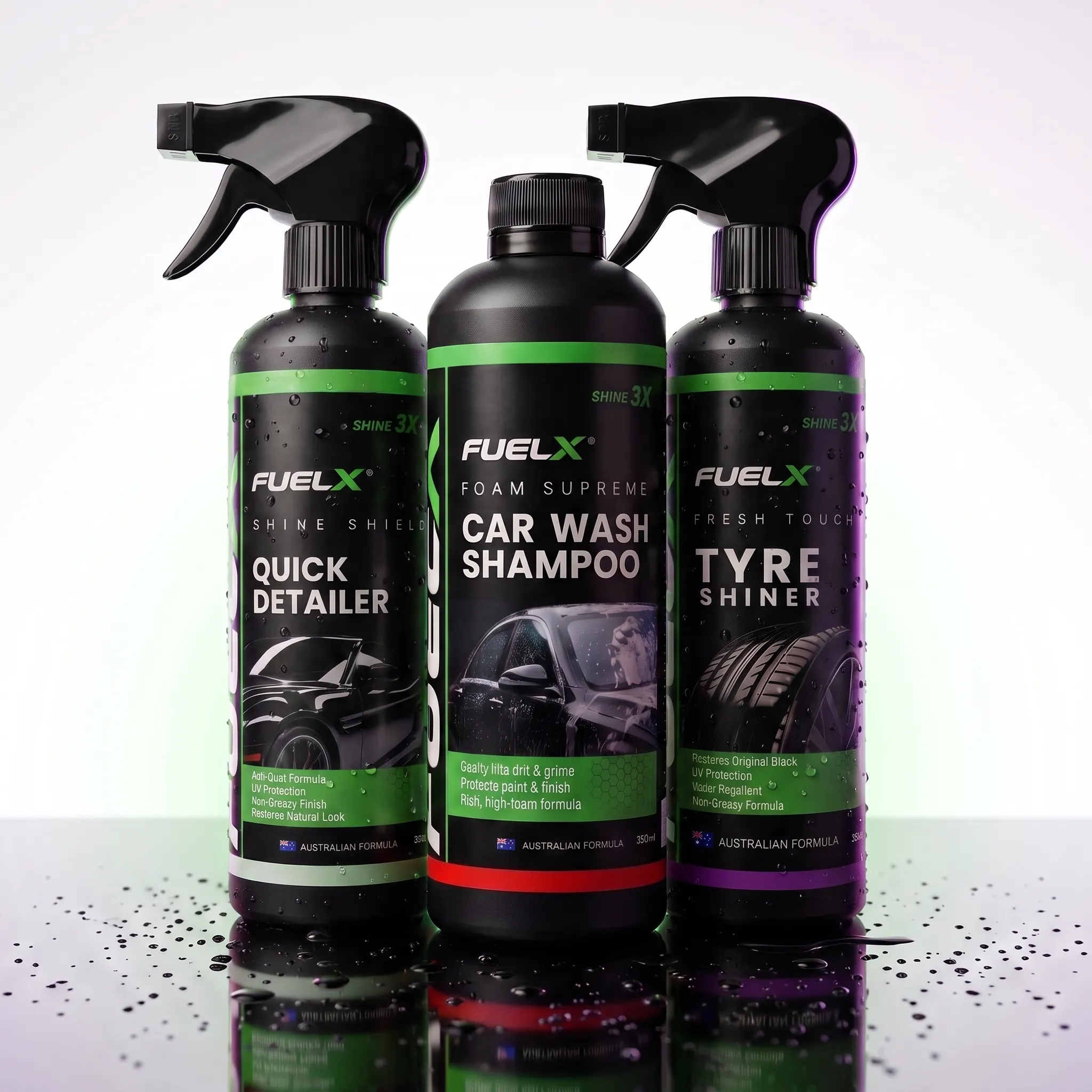
FuelX Car Wash Shampoo
FuelX Car Wash Shampoo can serve as the primary cleaning product for a regular home exterior wash.
It is particularly relevant for Pakistani driving conditions where dust and road grime can accumulate quickly. During dusty weather or after travelling on muddy roads, you may need to clean the vehicle sooner rather than waiting for your normal washing day.
2. Microfiber Towels – Essential for Drying and Detailing
A good wash can still be compromised if you use a dirty or rough cloth afterward.
Microfiber towels are useful because their fine fibres can pick up water and surface contaminants without requiring aggressive rubbing. However, even a good microfiber towel can cause problems if it has already collected grit.
For that reason, cleanliness matters as much as the towel material itself.
What Makes a Good Microfiber Towel?
A useful automotive microfiber towel should be:
Soft and suitable for automotive surfaces
Absorbent
Clean and free of trapped grit
Dedicated to vehicle care
Properly washed and stored
For a typical home wash, having several towels is better than trying to complete the entire vehicle with one towel.
For example, you might use:
One or two towels for drying paint
One towel for glass
One or more towels for interior surfaces
Separate, older towels for particularly dirty areas
The FuelX Premium Microfiber Detailing Towel can be incorporated into this process for drying and appropriate detailing tasks.
Don’t throw microfiber towels onto the garage floor while working. A towel that picks up sand, mud, or small stones can become a source of scratches when reused.
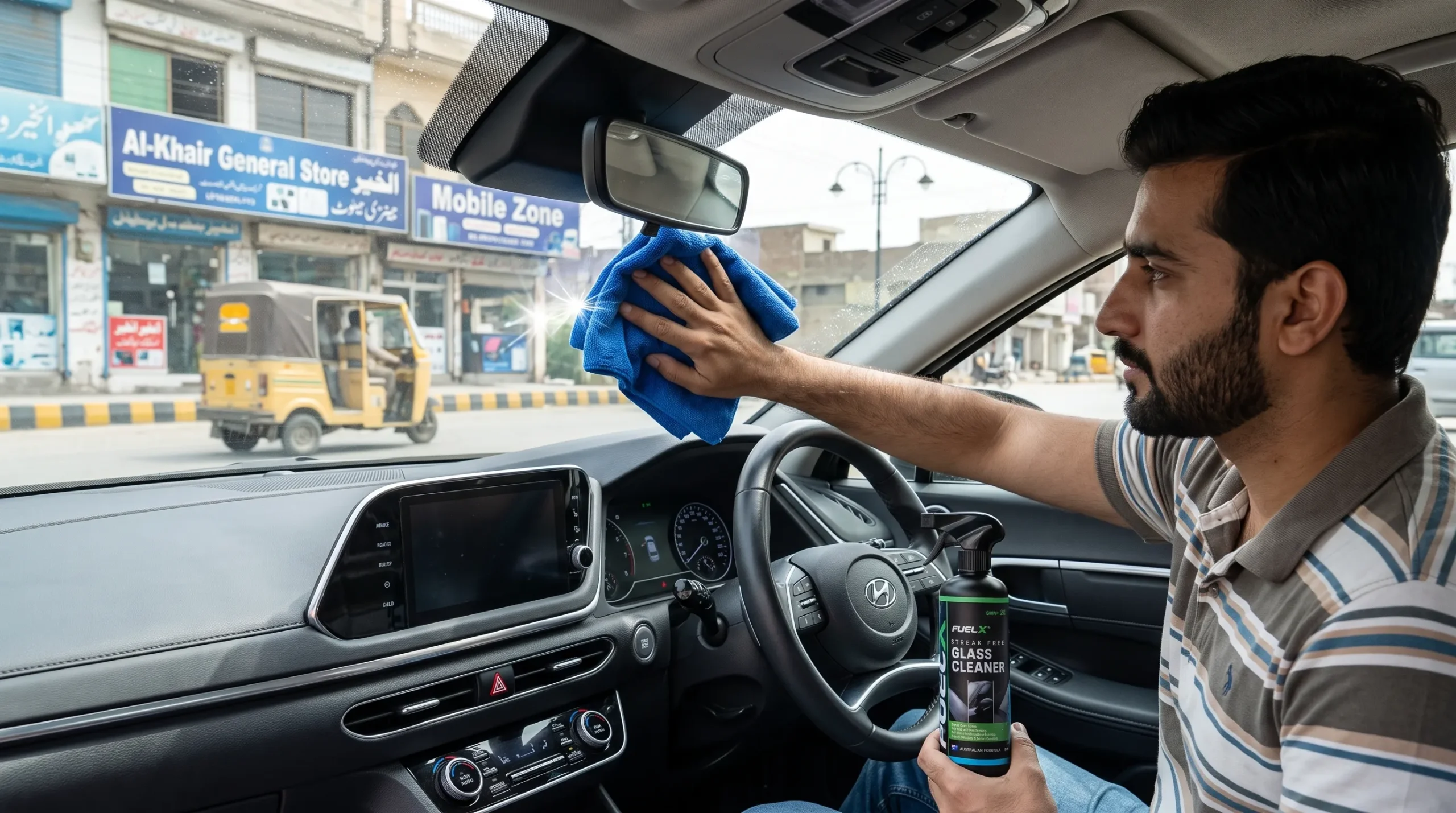
3. Glass Cleaner – Keep Your Windows Clear
Clean glass is about more than appearance. Your windshield and windows affect your visibility, particularly during night driving, rain, and direct sunlight.
Interior glass can accumulate fingerprints, dust, oily residue, and vapour deposits. Exterior glass can collect road film, water spots, dust, and insects.
A quick wipe with plain water may remove loose dirt, but it may also leave streaks or mineral residue.
Turn to a clean side of the towel for the final buff.
Inspect the glass from different angles.
If you are cleaning the inside of the windshield, pay particular attention to oily residue. A windshield can look clean from one angle but show significant streaking when hit by headlights at night.
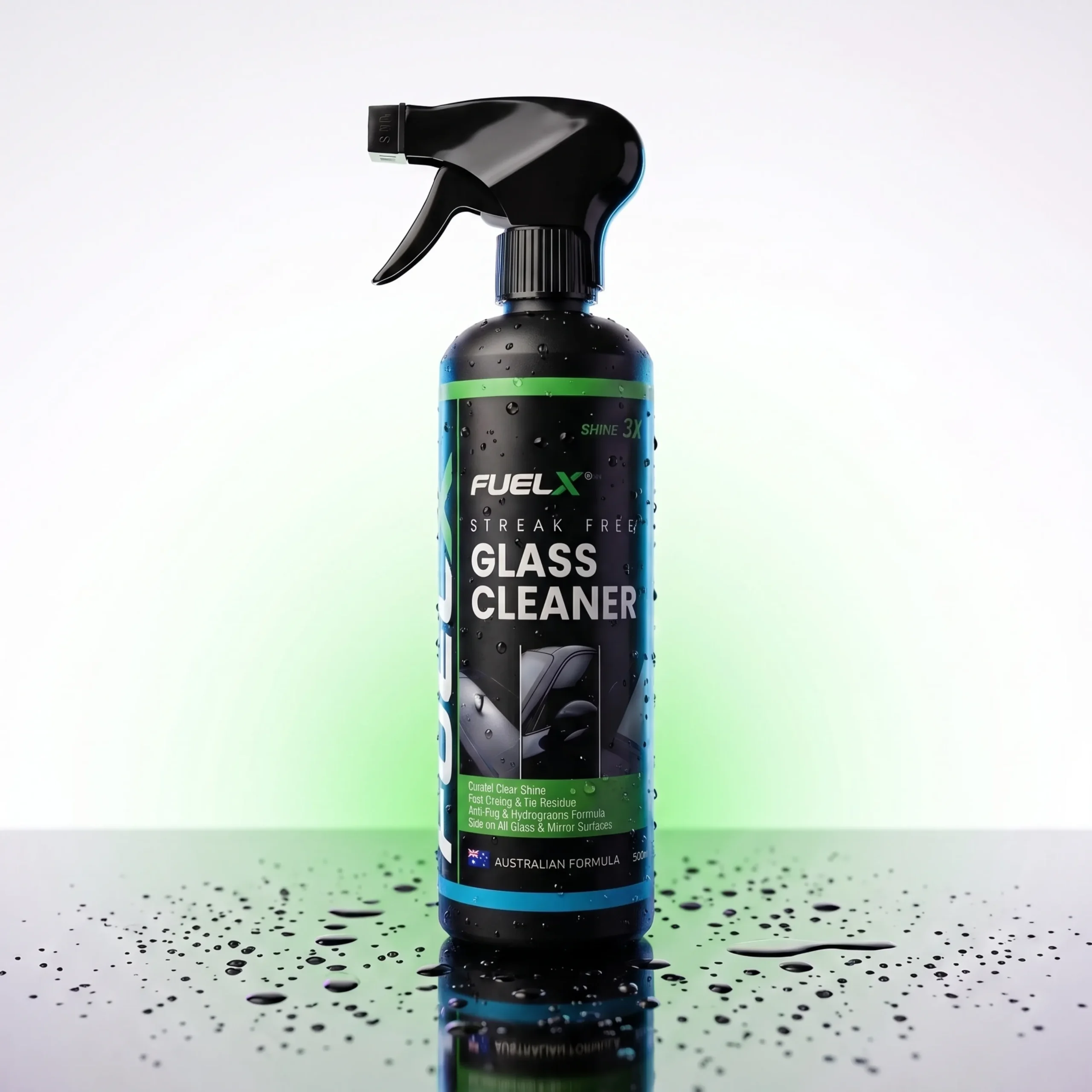
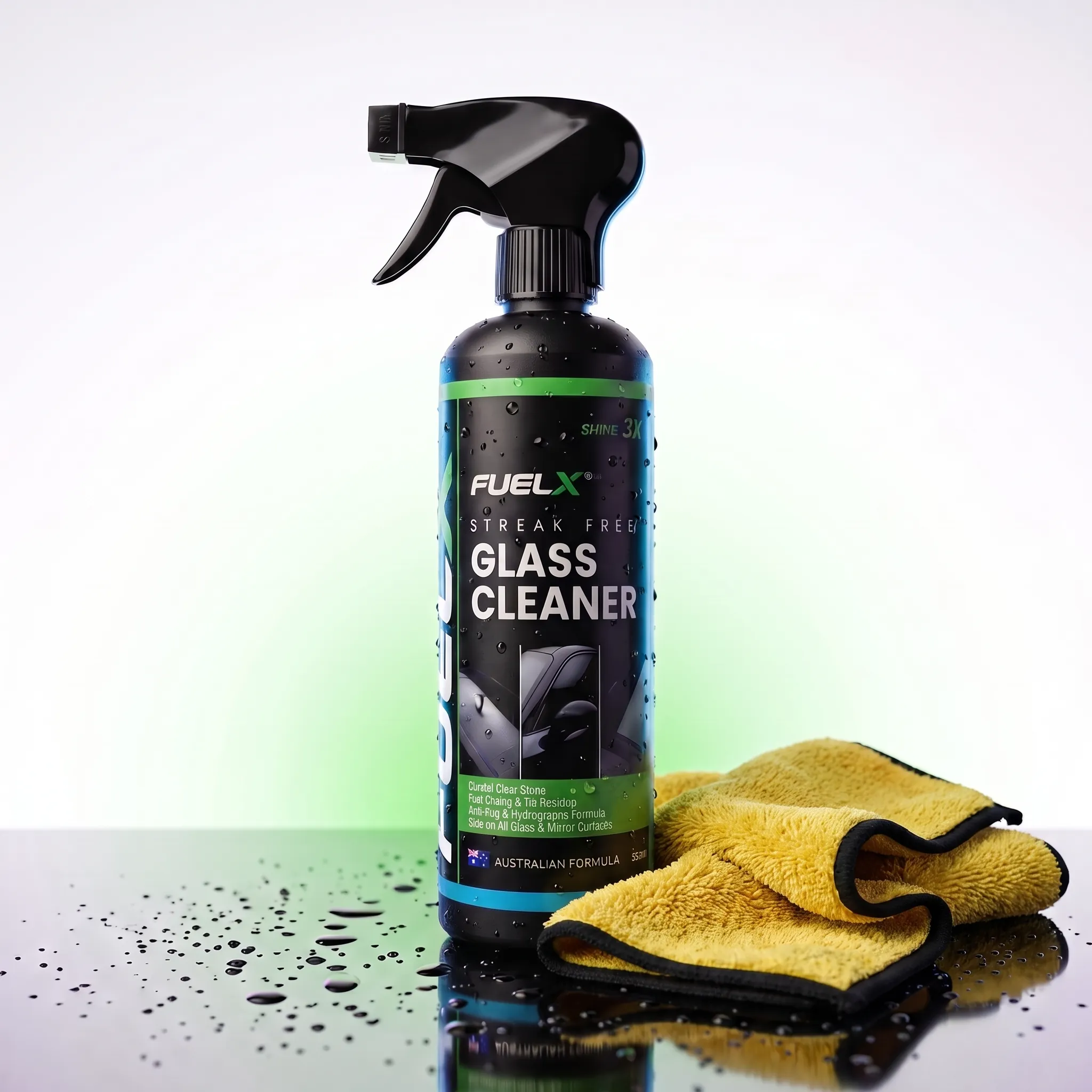
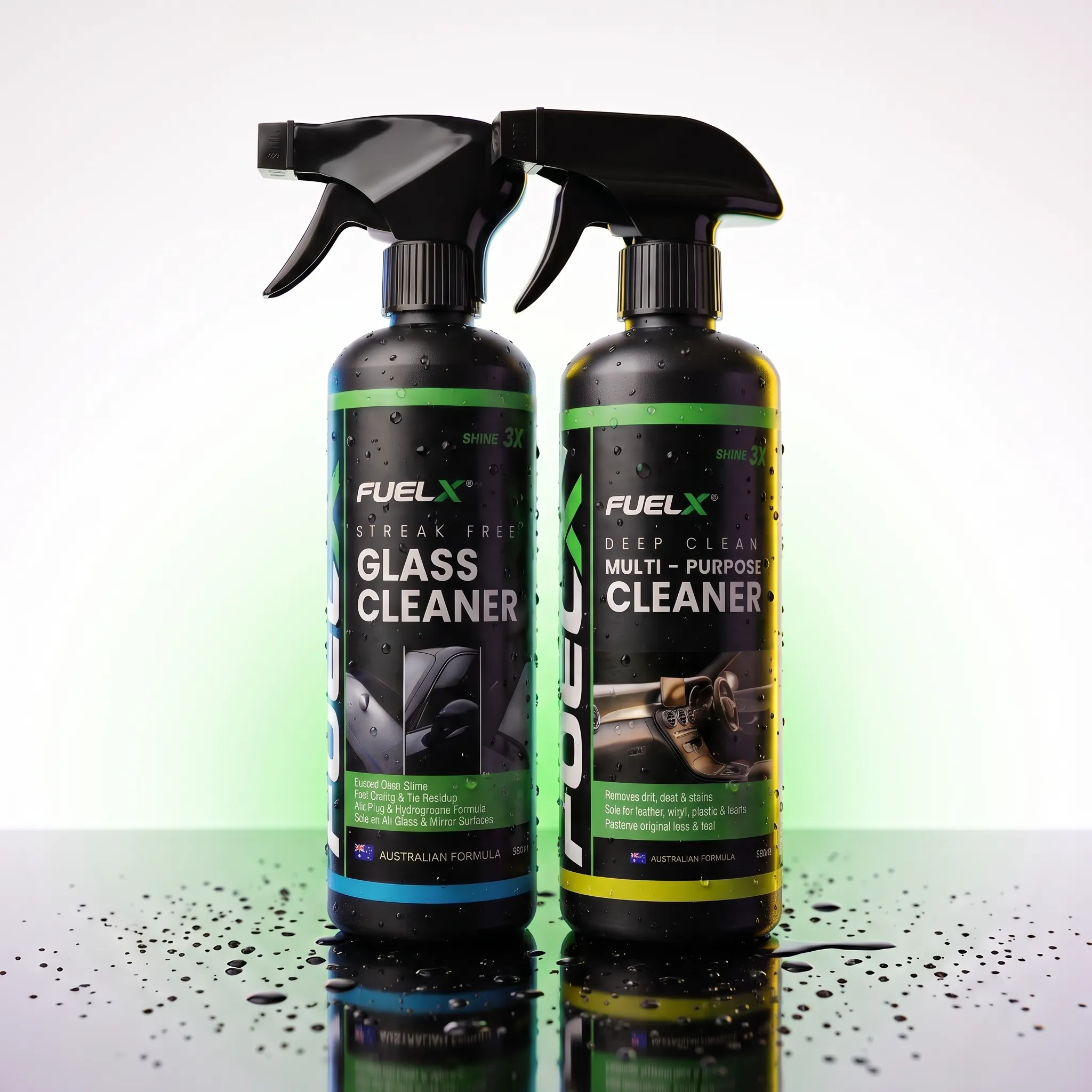
FuelX Glass Cleaner
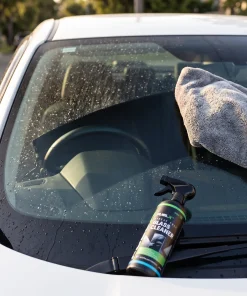
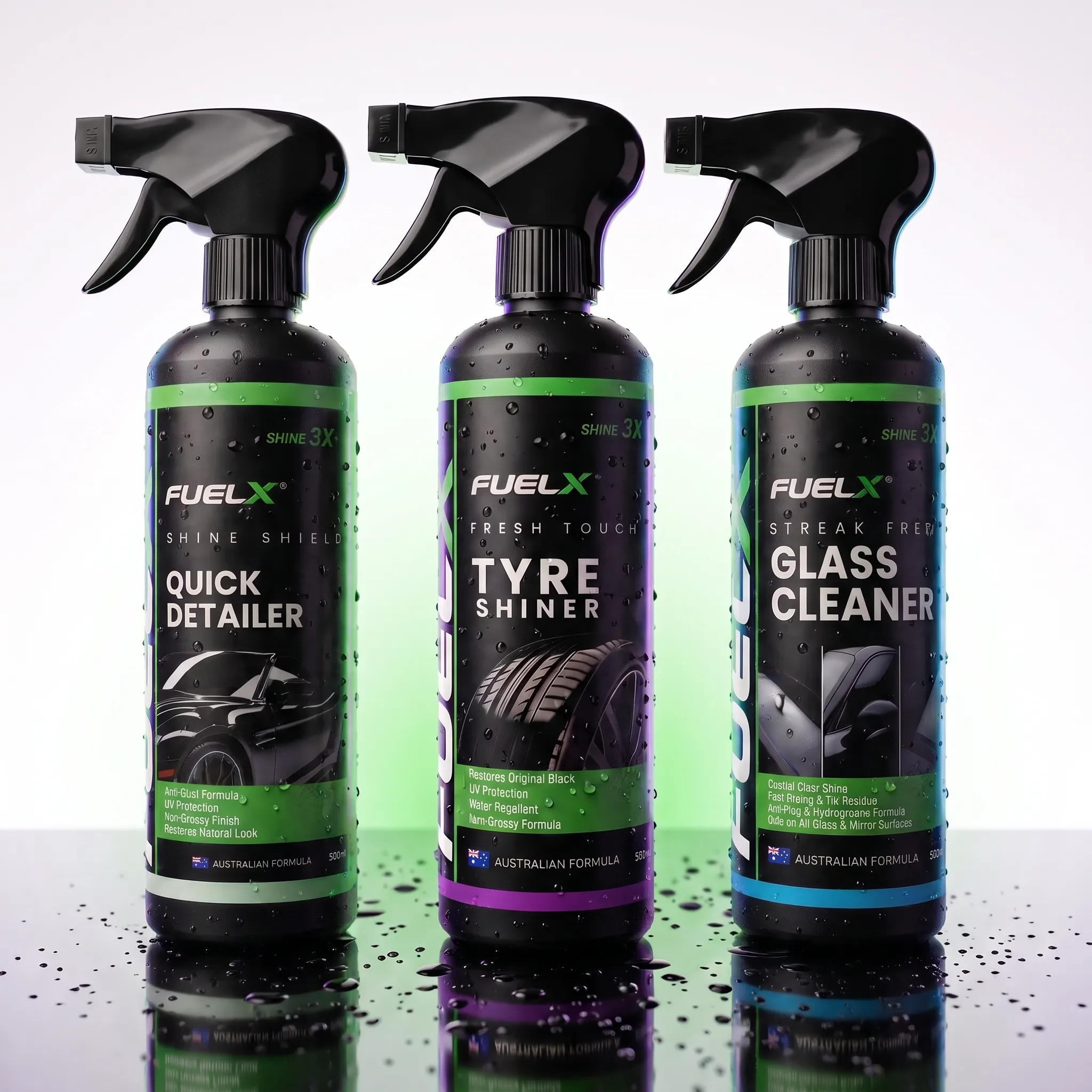
FuelX Glass Cleaner is designed for automotive glass and can be used as part of your regular home-cleaning routine.
For best results, don’t use the same heavily contaminated towel on your glass that you just used on tyres or dirty exterior panels.
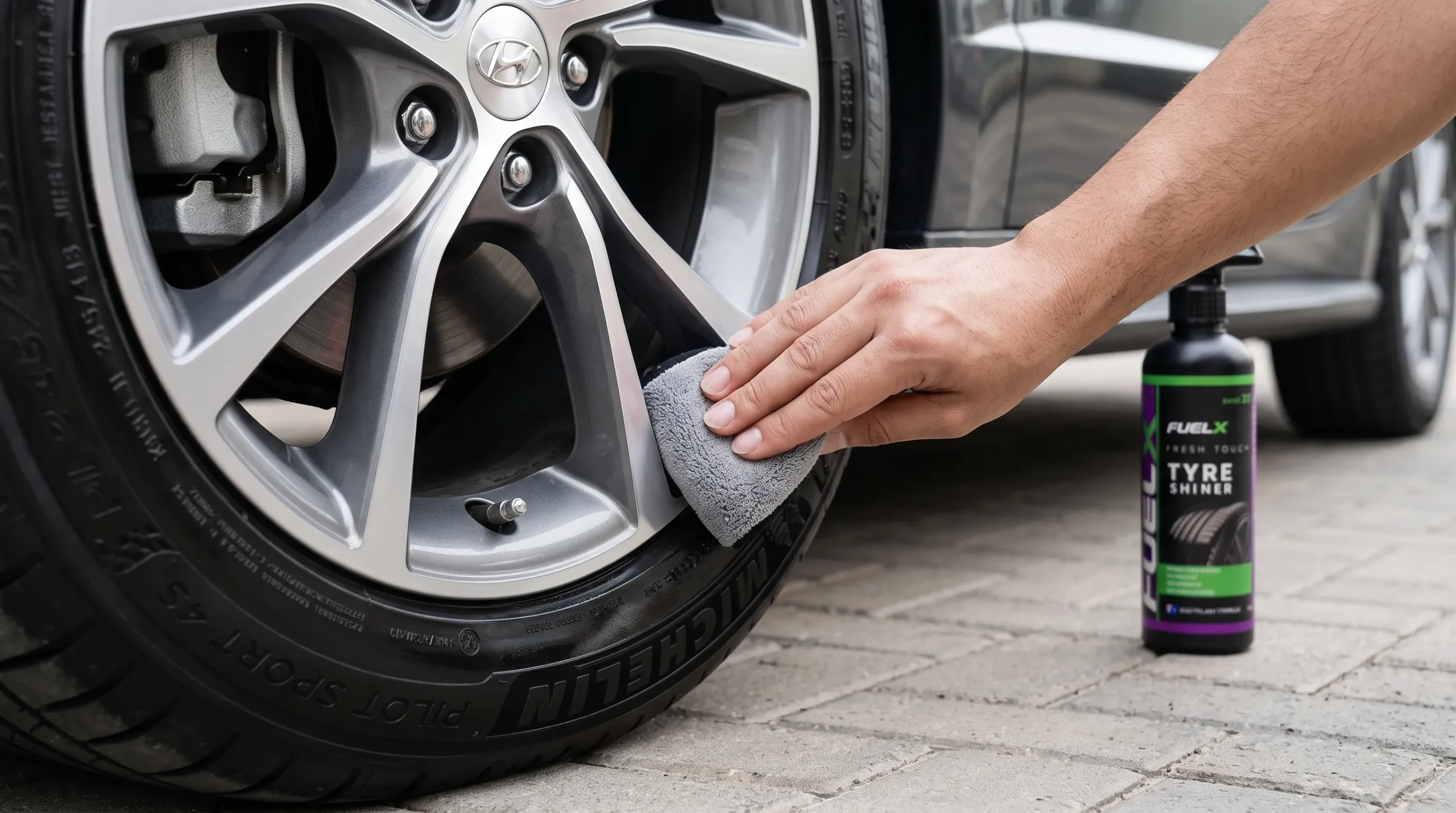
4. Tyre Shiner – The Finishing Touch
Tyres occupy a relatively small portion of a vehicle’s total surface area, but clean tyres can make a surprisingly noticeable difference to the finished appearance.
After a wash, freshly cleaned paint combined with dull, dusty tyres can make the car look unfinished.
Tyre sidewalls collect road dust, mud and grime, which can make them look faded or brownish over time.
How to Apply Tyre Shiner Properly
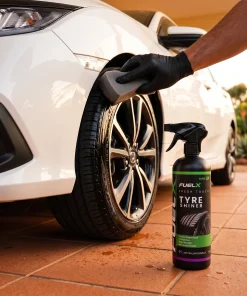
Start by cleaning the tyre thoroughly. Remove mud and loose dirt first. Allow excess water to drain, then apply the tyre product according to its instructions.
With FuelX Tyre Shiner, concentrate on the appropriate tyre sidewall area.
Avoid applying cosmetic tyre products to the tread or braking components. The tread is the part that contacts the road and should remain suitable for maintaining traction.
Also avoid applying excessive amounts of product. More product doesn’t necessarily produce a better finish; it can instead increase sling or leave an unnecessarily greasy appearance.
5. Multi-Purpose Cleaner – For the Interior
A complete car wash shouldn’t stop at the exterior.
Consider a car you use every day. Over a week, the dashboard can collect dust, the door panels can accumulate fingerprints, and seats and floor areas can collect food particles, dirt, or spills.
Even a relatively clean cabin can benefit from 10–15 minutes of routine interior cleaning during a normal car-washing session.
What Can You Clean?
Depending on the surface and product instructions, a suitable interior cleaner may be used for areas such as:
Dashboard
Door panels
Interior plastics
Suitable seat surfaces
Other compatible cabin surfaces
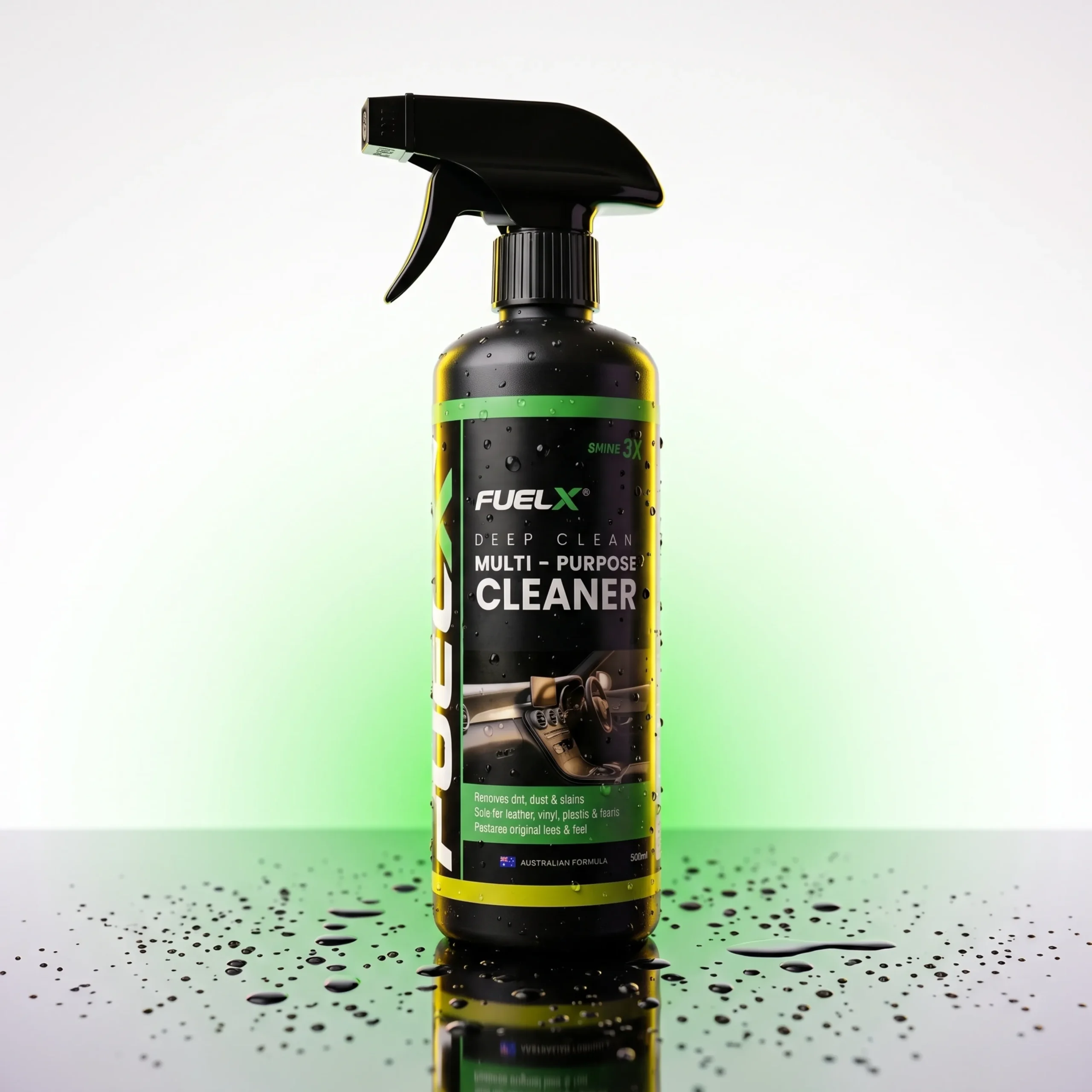
FuelX Multi-Purpose Cleaner is designed for everyday cleaning tasks involving dust, stains, spills, and sticky residue.
Before using any cleaner on an unfamiliar material, test it on a small, hidden area first. Different vehicles use different materials, finishes, coatings, leather types, and plastics, so one product should never automatically be assumed to be suitable for every surface.
6. Quick Detailer – Maintain the Finish Between Washes
Not every vehicle needs a complete wash every time it gets a few fingerprints or a light layer of dust.
That’s where a quick detailer can be useful.
For example, imagine you washed your car on Sunday and drove it for 20–30 kilometres during the week. By Friday, there may be light dust on the exterior, but the vehicle may not have heavy mud or road grime.
A quick detailer can be useful for appropriate light-maintenance situations.
When Should You Use a Quick Detailer?
Typical situations include:
Light dust
Fingerprints
Minor surface marks
Quick exterior touch-ups
Maintaining appearance between washes
FuelX Quick Detailer can complement your normal washing routine.
However, don’t use a quick detailer as a substitute for washing a heavily dirty car. If the vehicle has mud, thick road grime, or substantial contamination, washing is the safer approach because wiping heavy dirt across the surface can increase the chance of scratching.
Applicator pads are a relatively inexpensive addition to a home car-care kit, but they can make product application more controlled.
Instead of applying a product with whatever cloth happens to be nearby, an applicator pad can help distribute an appropriate product evenly over a suitable surface.
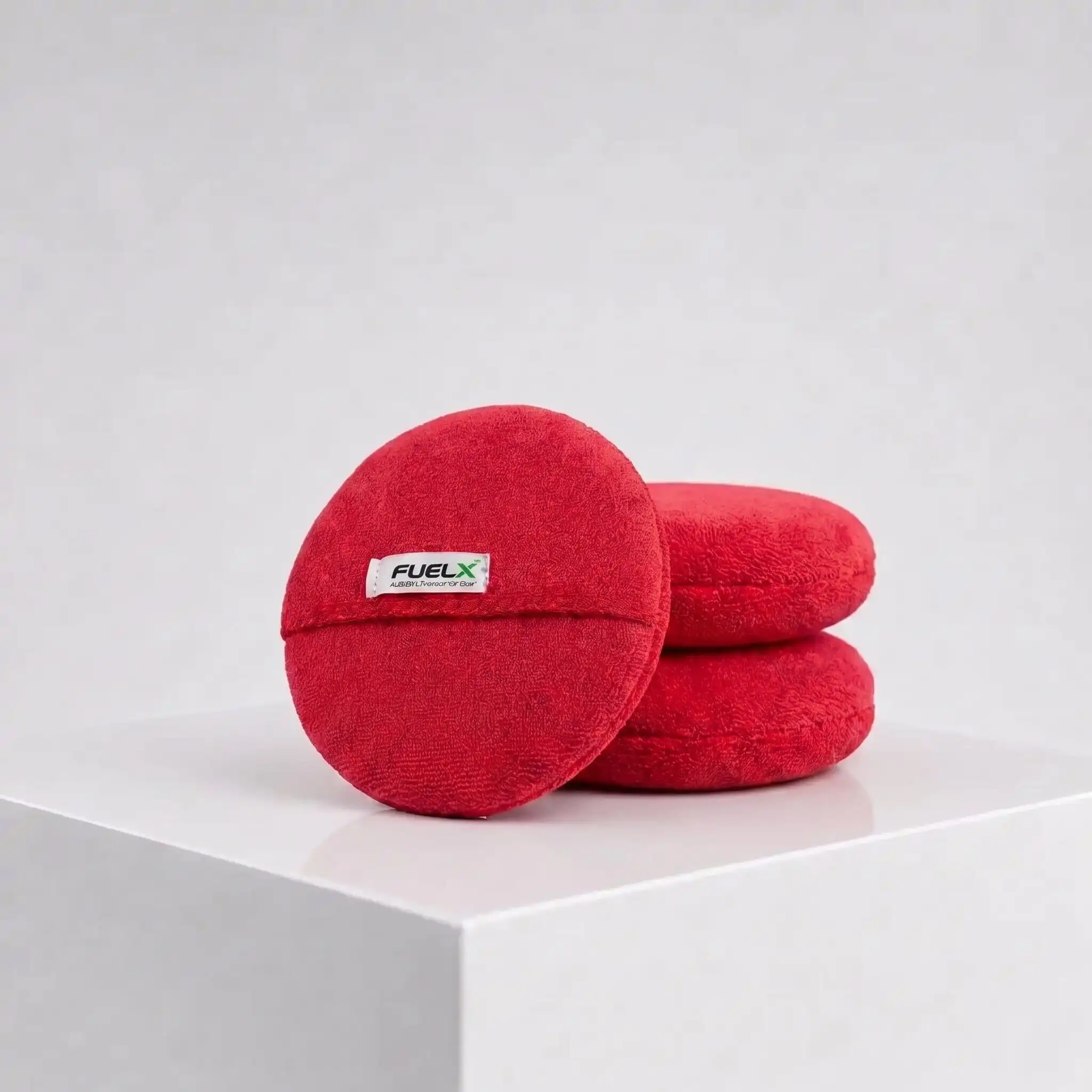
FuelX Premium Applicator Pads can be useful for selected detailing and application jobs.
A pack of three also gives you the option of assigning different pads to different products rather than constantly reusing one contaminated applicator.
After use, clean them according to the product requirements and store them somewhere dry and dust-free.
How to Build a Complete Home Car Wash Kit
You don’t need to purchase every detailing product available. Build your kit gradually.
Basic Kit for Beginners
A beginner can start with:
Car wash shampoo
2–3 clean microfiber towels
Glass cleaner
Tyre shiner
Bucket
Hose or suitable water source
This covers the major exterior cleaning tasks.
Complete Kit for Regular Car Owners
For more regular maintenance, add:
Multi-purpose cleaner
Quick detailer
Applicator pads
Additional microfiber towels
This gives you a more complete system for exterior washing, drying, glass cleaning, tyre finishing, interior cleaning, and between-wash maintenance.
Complete Detailing Setup
If you enjoy detailing your vehicle, you can gradually add dedicated towels for different surfaces and other accessories.
But remember: a bigger collection isn’t necessarily a better car-care system.
A well-organized set of six or seven appropriate products can be more useful than 20 products you don’t know how to use.
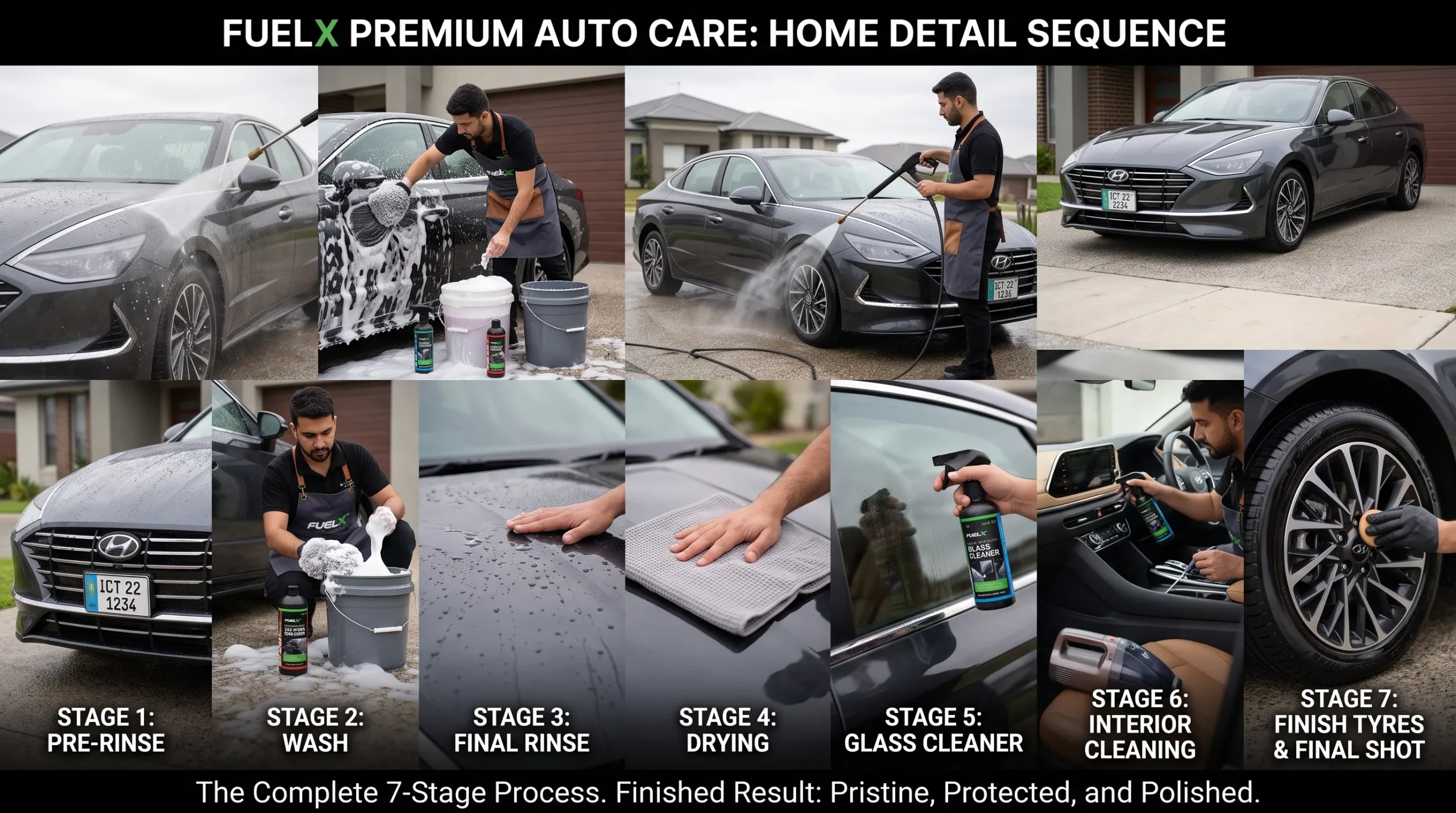
Step-by-Step: How to Wash Your Car at Home
Once you have your products, the order of operations matters.
Step 1: Park in a Shaded Area
Whenever possible, wash your vehicle away from strong direct sunlight.
Pakistan’s summer temperatures can become extremely high, and a hot exterior surface can cause water and cleaning products to evaporate quickly. This makes washing more difficult and can contribute to water spots or dried product residue.
A shaded area gives you more working time.
Step 2: Rinse Away Loose Dirt
Start with a thorough rinse.
Spend extra attention on lower doors, wheel arches, bumpers, and other areas that collect more road grime.
The goal is to remove as much loose contamination as possible before touching the paint with a wash mitt or cloth.
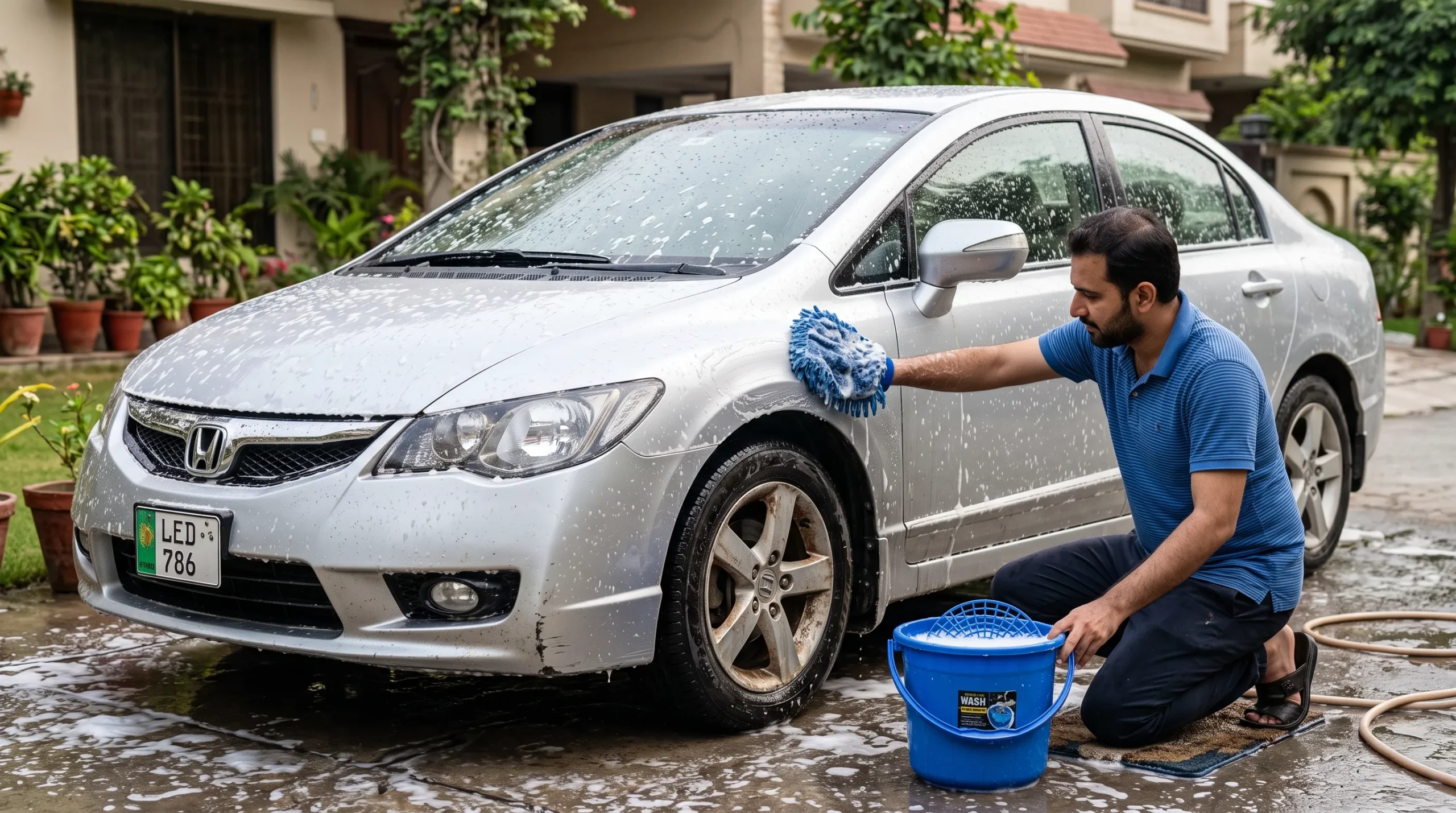
Step 3: Wash With Car Shampoo
Prepare your shampoo according to the manufacturer’s instructions.
Work systematically from the cleaner upper sections toward the dirtier lower sections.
Don’t scrub aggressively. Let the cleaning solution and your washing technique do the work.
If your vehicle is particularly dirty, rinse your washing tool regularly rather than continuously dragging the same contaminated surface across the car.
Step 4: Rinse Thoroughly
After washing, rinse the entire vehicle thoroughly.
Don’t allow shampoo to dry on the paint, especially during hot weather.
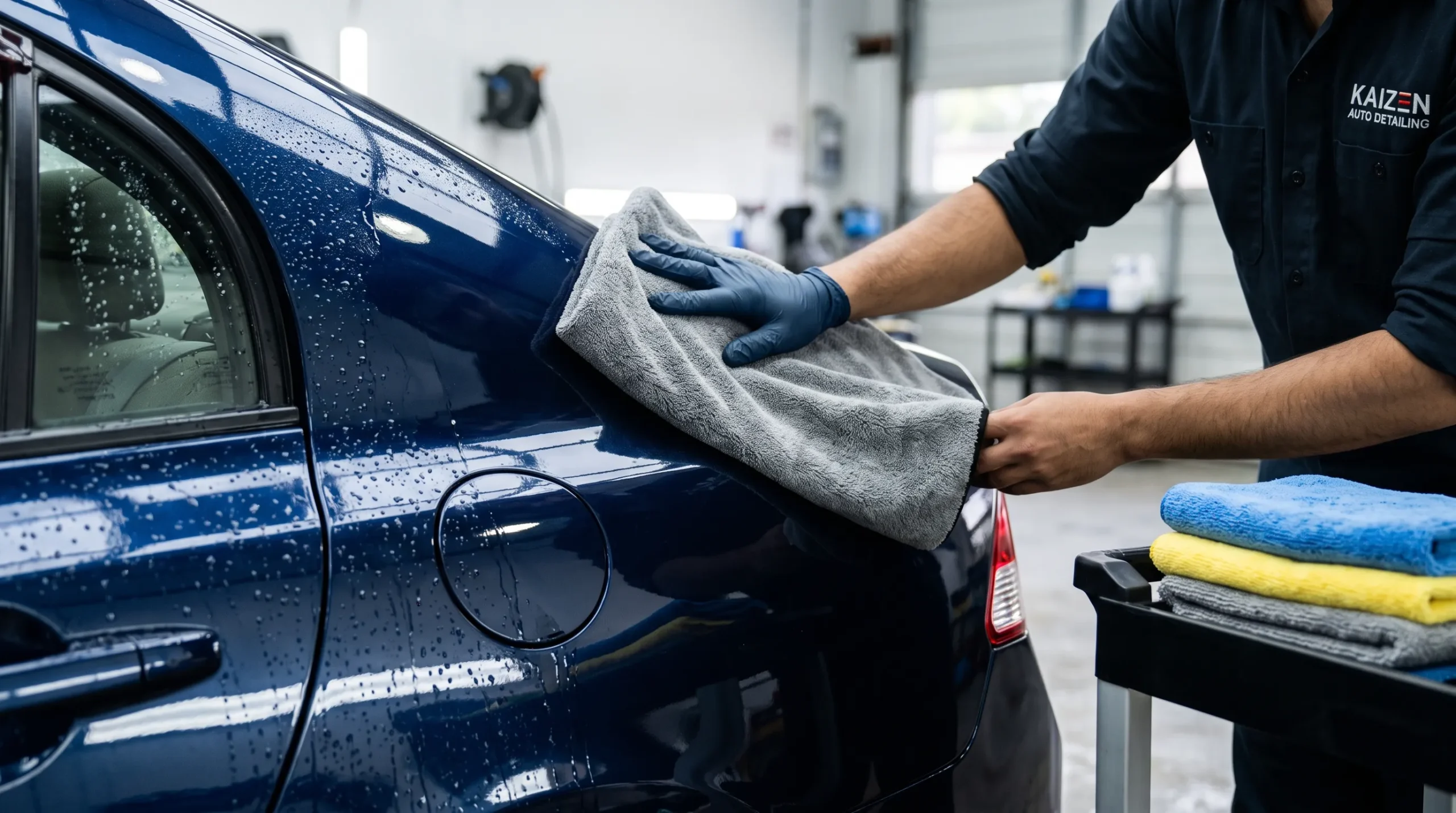
Step 5: Dry With Microfiber
Use clean microfiber towels to remove remaining water.
Instead of aggressively rubbing the paint, work gently and replace or flip the towel as it becomes saturated.
If you have several towels available, drying a medium-sized car becomes considerably easier.
Step 6: Clean the Glass
Use your dedicated glass cleaner and clean microfiber towel on the windshield, windows, and appropriate glass surfaces.
Take a few extra seconds to inspect the windshield from inside the car because streaks are often easier to see from certain angles.
Step 7: Clean the Interior
Remove rubbish and loose debris first.
Then clean the dashboard, door panels, and other compatible surfaces using your interior/multi-purpose cleaner.
A simple 10-minute interior wipe during every second wash can prevent dust and grime from becoming a much bigger cleaning job later.
Step 8: Finish the Tyres
Clean the tyre sidewalls and apply tyre shiner according to the product instructions.
Check for excess product and make sure the tread remains free from cosmetic dressing.
Step 9: Use a Quick Detailer if Needed
If the car is already clean and only needs a light finishing touch, a quick detailer can help maintain its appearance between full washes.
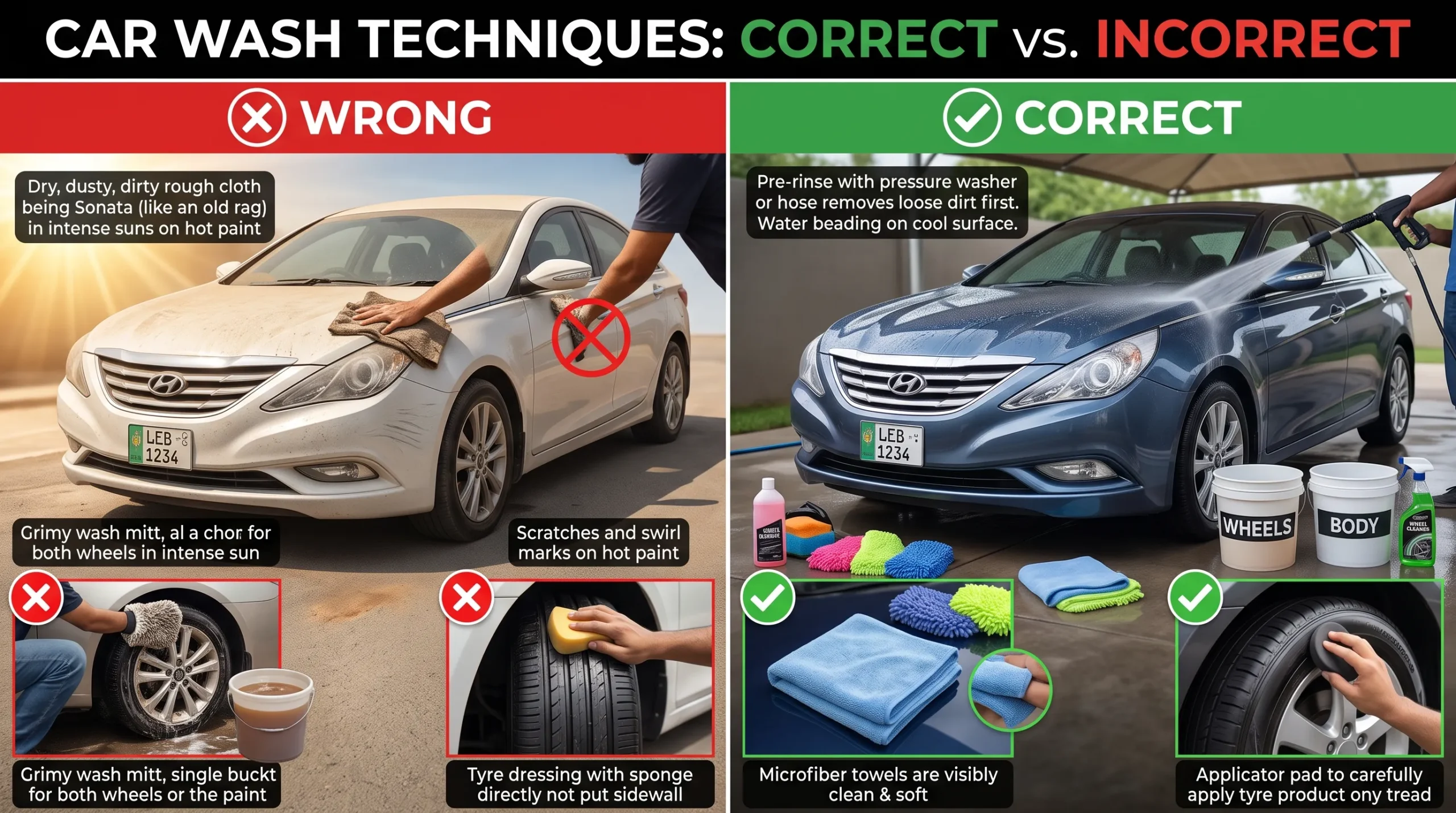
Common Mistakes to Avoid When Washing Your Car
Even high-quality products can produce poor results when used incorrectly.
Avoid these common mistakes:
Using dish soap as your regular car shampoo
Washing under intense direct sunlight
Rubbing dry, gritty surfaces
Using one dirty towel everywhere
Using the same cloth for tyres and paint
Allowing shampoo to dry on the vehicle
Applying excessive amounts of product
Applying tyre dressing to the tread
Ignoring the interior
Using chemicals without checking surface compatibility
One particularly important rule is don’t clean a heavily dirty car by simply wiping it. Remove loose contamination with water first and then wash it properly.
How Often Should You Wash Your Car?
The ideal washing frequency depends on how and where you drive.
As a practical starting point, a regularly driven car may benefit from a full exterior wash approximately every 1–2 weeks.
However, this isn’t a strict rule.
If your car is parked outdoors in a dusty area, you may need to clean it more frequently. If you’ve driven through muddy roads, construction areas, or heavy rain, waiting two weeks may not be appropriate.
During Pakistan’s monsoon season, rain doesn’t necessarily mean your car has been cleaned. Rainwater can mix with dust and road grime and leave a muddy film on the paint.
After a particularly dirty journey, cleaning the vehicle sooner can prevent contaminants from remaining on the surface for days.
Best Car Cleaning Products for Different Needs
Cleaning Need
Product Type
Exterior washing
Car Wash Shampoo
Drying and wiping
Microfiber Detailing Towel
Windows and windshield
Glass Cleaner
Tyre appearance
Tyre Shiner
Interior cleaning
Multi-Purpose Cleaner
Light exterior touch-ups
Quick Detailer
Controlled application
Applicator Pads
This simple system is enough for most beginners to establish a reliable home car-care routine.
Is a Car Cleaning Kit Better Than Buying Products Separately?
For beginners, a complete kit can be convenient because several complementary products are packaged together.
It can also reduce the problem of buying individual products without understanding how they fit into your routine.
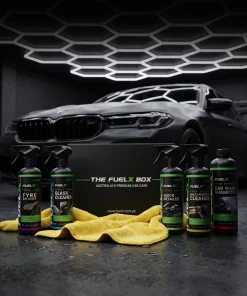
FuelX offers different combinations for different requirements, including the Starter Wash Kit, Car Wash Combo, Exterior Shine Kit, Premium Detailer Kit, and The FuelX Box.
If you’re starting your car-care collection from zero, a kit may be a convenient option. If you already own some essentials, buying individual products can be more economical because you only replace what you actually need.
The right choice ultimately depends on your vehicle, washing frequency, and how much detailing you want to do yourself.
Final Thoughts
A complete home car wash doesn’t require a professional detailing studio or a shelf full of chemicals.
Start with the essentials:
Car wash shampoo + microfiber towels + glass cleaner + tyre shiner
For many Pakistani car owners, spending around 60–90 minutes every one or two weeks on a proper cleaning routine can be a practical way to keep the vehicle looking presentable and prevent dirt and grime from building up.
The most important thing isn’t how many products you own. It’s using the right product, on the right surface, with the right technique.
With a simple, consistent routine and suitable car cleaning products, you can handle most everyday exterior and interior cleaning jobs at home while keeping your vehicle looking cleaner between professional detailing sessions.
FAQ’s
What are the best car cleaning products for washing a car at home?
The basic essentials are car wash shampoo, microfiber towels, glass cleaner, tyre shiner, and an appropriate interior or multi-purpose cleaner. A quick detailer and applicator pads are useful additions for more complete maintenance.
Can I use dish soap to wash my car?
It’s better to use a dedicated car wash shampoo for regular washing. Automotive shampoos are specifically intended for vehicle-cleaning applications, while household dishwashing products are designed for a different purpose.
How often should I wash my car?
For many regularly driven vehicles, approximately every 1–2 weeks is a practical starting point. Dust, rain, mud, parking conditions, and driving frequency can make more frequent washing necessary.
What should I use to dry my car after washing?
Use a clean, soft microfiber detailing towel. Avoid rough, dirty, or contaminated cloths that can drag particles across the paint.
What is the best product for cleaning car windows?
A dedicated automotive glass cleaner combined with a clean microfiber towel is a practical choice for removing dust, fingerprints, residue, and streaks.
Do I need tyre shiner after every wash?
Not necessarily. Tyre shiner is primarily an appearance product, so its use depends on the finish you want and the manufacturer’s directions. Clean the tyres first and apply the product appropriately.
Can I use a quick detailer instead of washing my car?
No, not when the vehicle has heavy dirt, mud, or road grime. Quick detailers are better suited to light dust and minor touch-ups between proper washes.
How many microfiber towels do I need for a home car wash?
There is no fixed number, but having at least 2–3 clean towels is a useful starting point. A larger supply allows you to dedicate separate towels to paint, glass, interior surfaces, and dirtier areas.
What should I include in a beginner car cleaning kit?
A practical beginner kit includes car wash shampoo, microfiber towels, glass cleaner, tyre shiner, an interior/multi-purpose cleaner, a bucket, and a suitable water source. You can add a quick detailer and applicator pads as you become more comfortable with home detailing.