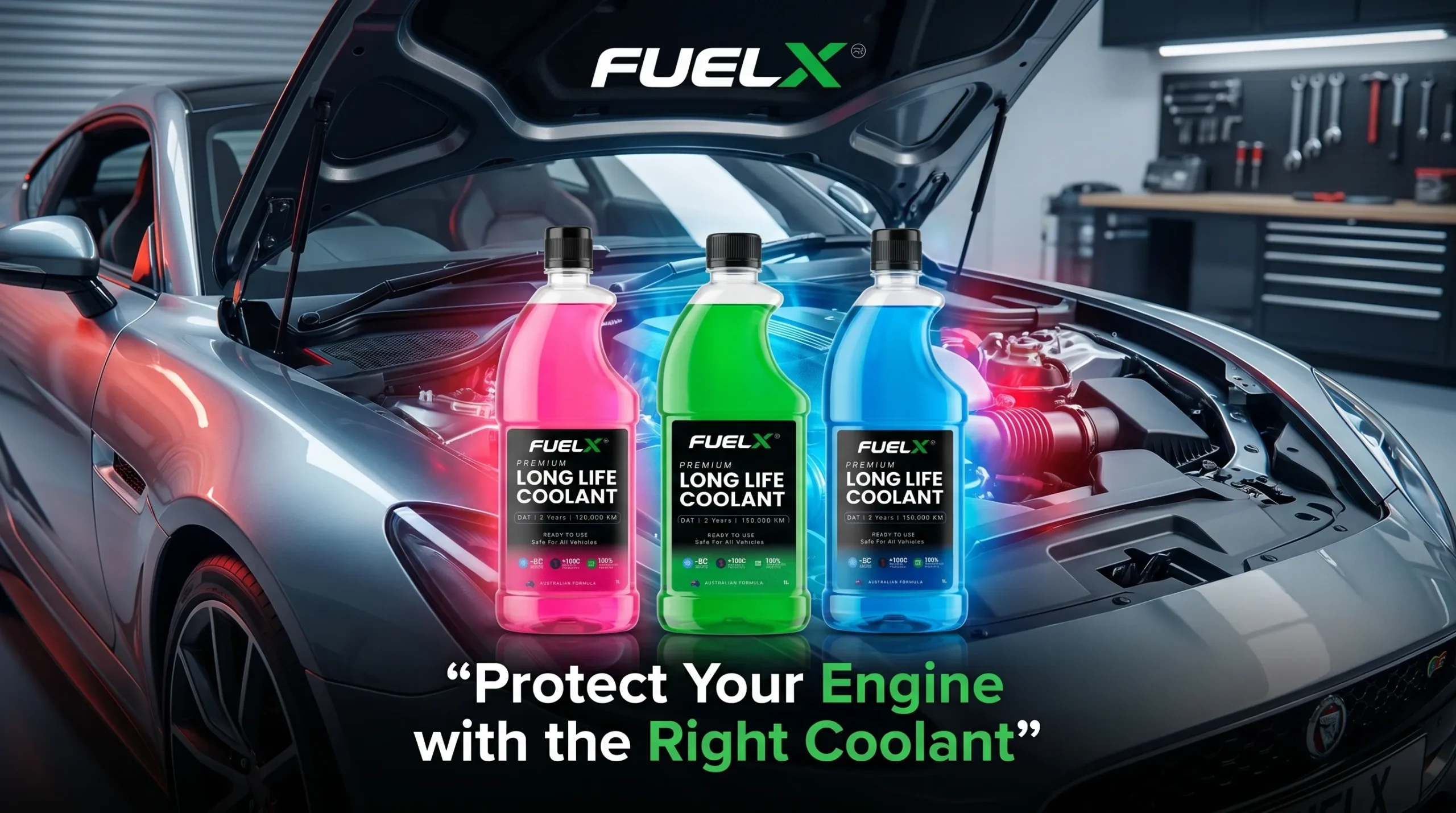
When buying coolant for a car, many drivers in Pakistan become confused by the different colors available in the market. Some think green, red or blue coolant are only different in appearance, while others believe one color is automatically better than the other.
In fact, the colors of the coolants often represent different coolant technologies, chemical formulas and engine compatibility. If you are using the wrong coolant, then it can result in less efficient cooling, radiator parts getting damaged, rusting in the engine and overheating problems.
This is even more so in Pakistan where in many cities the summer temperatures regularly go above 40-45°C. Your cooling system is what protects your engine in stop-and-go traffic and in extreme heat.
That is why knowing the difference between green, red and blue coolant helps you make a safer and smarter decision for your vehicle.
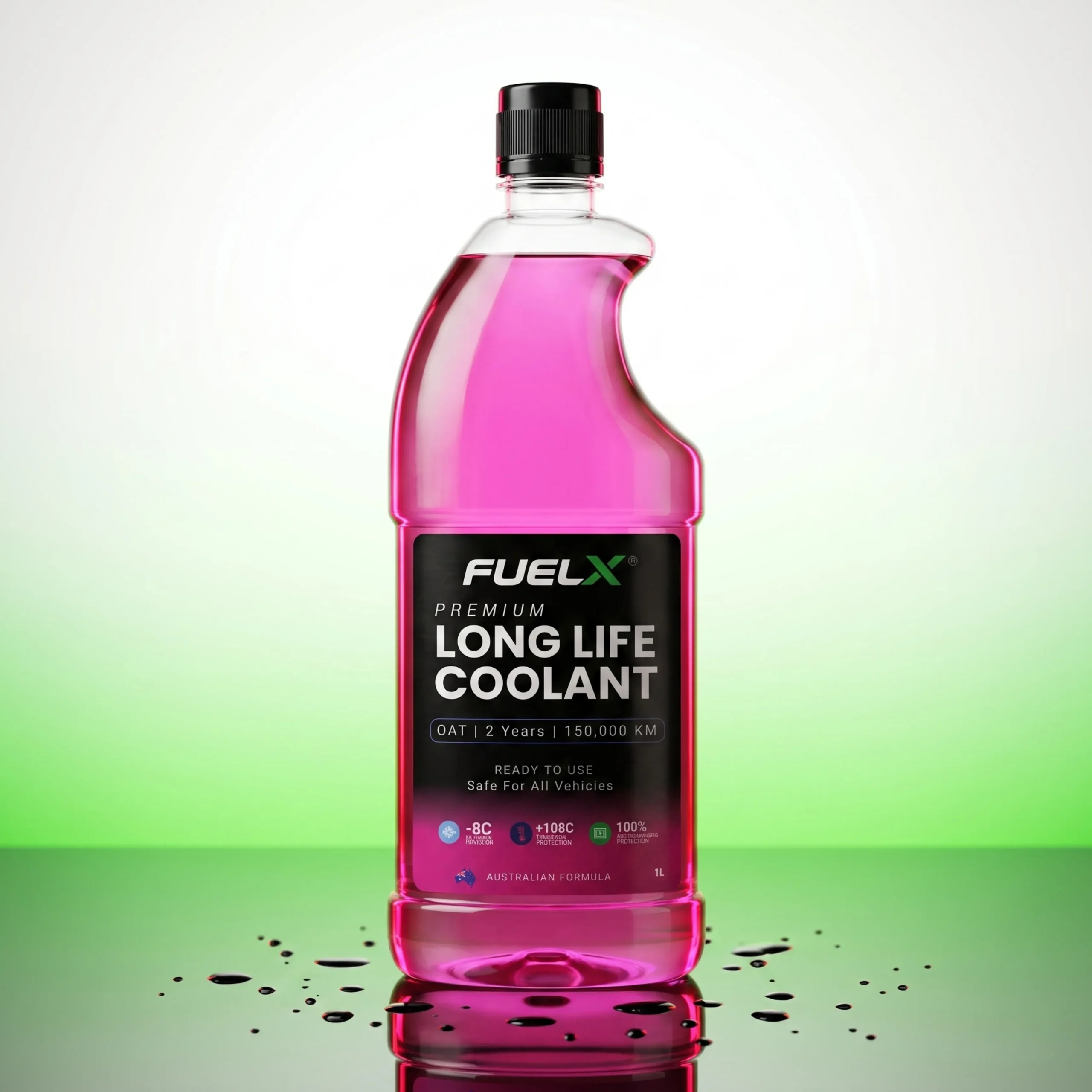
Specially designed to cope with Pakistan’s heat and traffic conditions, FuelX coolants feature long-life formulations that help enhance heat transfer efficiency, whilst protecting the radiator and engine from rust and scale build-up.
What Does Car Coolant Actually Do?
Coolant protects the engine from overheating problems. Engines become very hot because fuel is constantly burning inside them. In many engines, combustion temperatures can exceed 2,000°C internally, while normal engine operating temperature usually stays around 90°C to 105°C because of the cooling system.
Without coolant:
the engine overheats quickly
metal parts expand excessively
engine oil breaks down faster
head gasket failure can occur
radiator damage becomes more likely
Coolant does much more than simply “cool” the engine.
A quality coolant helps:
absorb and transfer heat
prevent rust and corrosion
stop mineral deposits
lubricate water pump components
reduce overheating risk
prevent freezing in colder regions
You can think of coolant like the blood circulation system of the engine. It removes extra heat so the engine does not get damaged.
These coolants are made to reduce rust and buildup inside the cooling system.
Why Are Coolants Different Colors?
Coolant companies use different colors to help identify coolant types.
However, one important thing many car owners do not know is:
Coolant Color Alone Does NOT Guarantee Compatibility
For example:
Some red coolants use OAT technology
Some blue coolants use HOAT technology
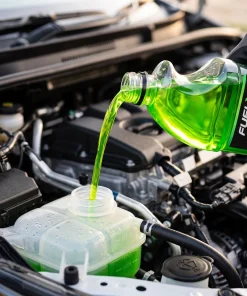
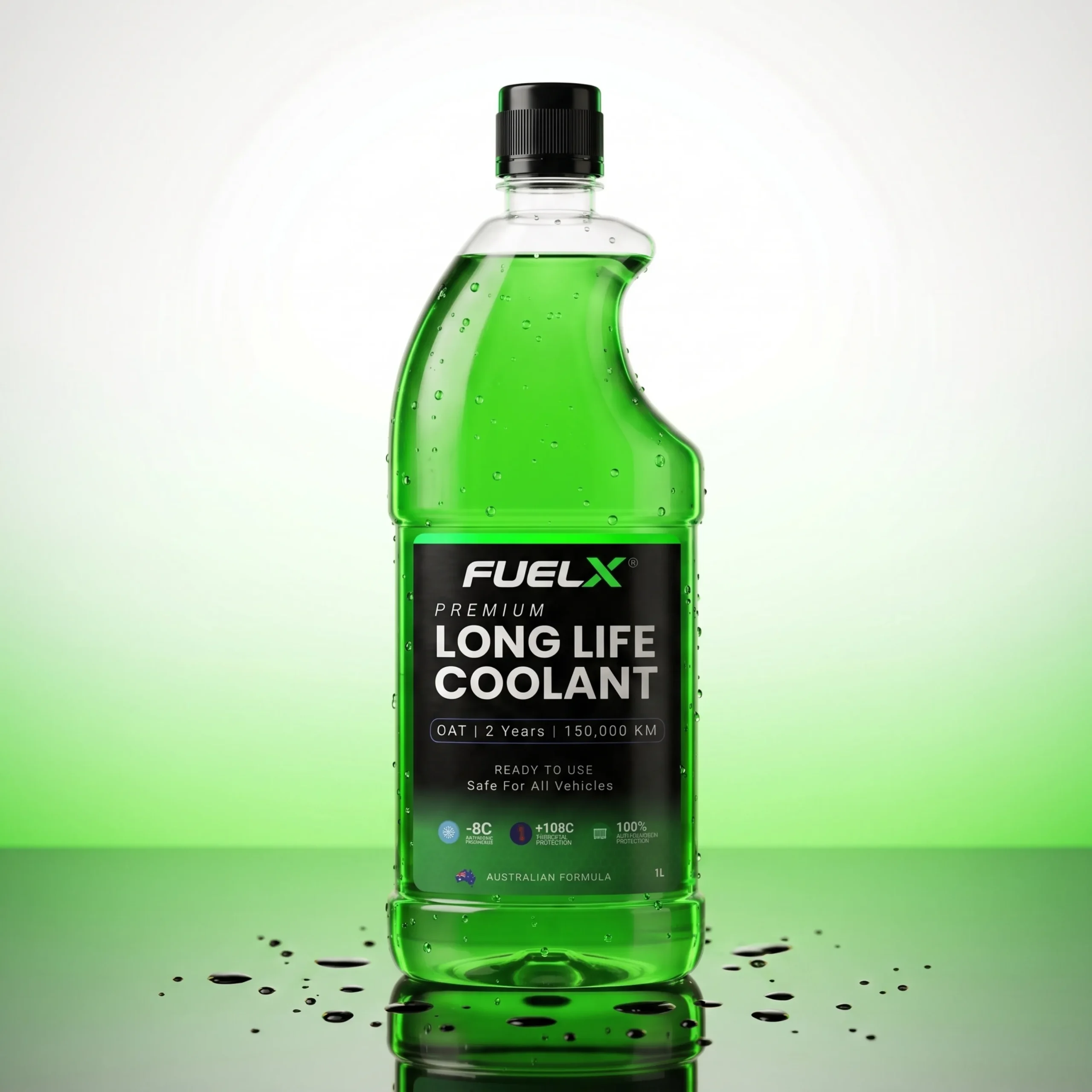
Some green coolants are traditional IAT formulas
Different brands may use different dye systems
That means two coolants with the same color may still have different chemical compositions.
This is why mechanics always recommend checking:
vehicle owner’s manual
coolant specification
coolant technology type
manufacturer recommendations
instead of depending only on color.
Green Coolant Explained
What Is Green Coolant?
Green coolant is one of the oldest and most commonly used coolant types. It usually uses IAT (Inorganic Additive Technology).
Traditional green coolant contains additives such as:
silicates
phosphates
These chemicals provide quick corrosion protection for engine metals.
Green coolant is commonly used in:
older vehicles
older radiator systems
traditional copper/brass radiators
older Japanese and local cars
Lifespan of Green Coolant
Green coolant normally lasts:
around 2 years
or
40,000–50,000 kilometers
After this period, the protective additives begin to weaken, which increases the risk of:
rust formation
scale buildup
radiator blockage
Advantages of Green Coolant
Affordable Option
Green coolant is usually cheaper than advanced long-life coolants.
Good Basic Protection
It gives basic protection against rust inside older engines.
Easily Available
It is easily available in most cities and local markets.
Disadvantages of Green Coolant
Shorter Lifespan
Its cooling protection lasts for a shorter time.
Deposit Formation
Over time, it can leave buildup inside the radiator and cooling system.
Less Suitable for Modern Engines
Modern aluminum engines usually require more advanced coolant technology.
Red Coolant Explained
What Is Red Coolant?
Red coolant is usually based on OAT (Organic Acid Technology). It is considered a long-life coolant and is widely used in modern vehicles.
Traditional coolant and OAT coolant use different protection methods.
This technology allows:
greater durability of protection
more efficient cooling technologies .
more suitable for aluminum engines
Aluminum is light-weight and improves fuel efficiency . This means modern cars have more aluminum parts. However, aluminum also requires better corrosion protection.
That is why many modern manufacturers prefer OAT-based coolants.
Wikipedia’s antifreeze documentation also explains that many modern long-life coolants use OAT technology for extended protection and modern engine compatibility.
Lifespan of Red Coolant
Red coolant can usually last:
around 5 years
or
100,000 km to 150,000 km
depending on manufacturer recommendations and driving conditions.
This longer service life reduces maintenance frequency and long-term costs.
Advantages of Red Coolant
Better Heat Resistance
Ideal for high-temperature conditions like Pakistan
Longer Service Life
You do not need to replace it very often.
Reduced Corrosion
Keeps engine parts in better condition.
Cleaner Cooling System
Keeps the cooling system cleaner and more efficient.
FuelX Long Life Coolants use advanced OAT technology for better cooling and longer engine protection.
The system should be cleaned properly before switching coolant types.
Blue Coolant Explained
What Is Blue Coolant?
Blue coolant is commonly used in Japanese vehicles and often belongs to HOAT (Hybrid Organic Acid Technology) or manufacturer-specific coolant formulas.
HOAT coolant combines:
organic acid technology
with
selected traditional additives
This provides balanced protection and long service life.
Blue coolant is especially common in:
Honda
Nissan
Subaru
Toyota
Suzuki hybrid systems
PakWheels also describes HOAT coolant as a long-life technology suitable for many modern vehicles and aluminum radiators.
Lifespan of Blue Coolant
Blue coolant generally lasts:
around 5 years
or more
depending on the vehicle manufacturer.
Some factory-filled Japanese coolants can last even longer under ideal conditions.
Advantages of Blue Coolant
Excellent Aluminum Protection
Very effective for modern engines and radiators.
Long Service Life
Requires less frequent maintenance.
Better Stability
Performs well in hot traffic and long-distance driving.
Cleaner Cooling System
Reduces sludge and scale formation.
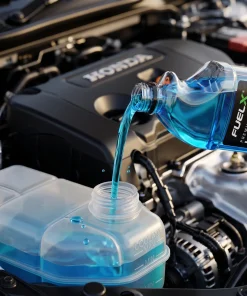
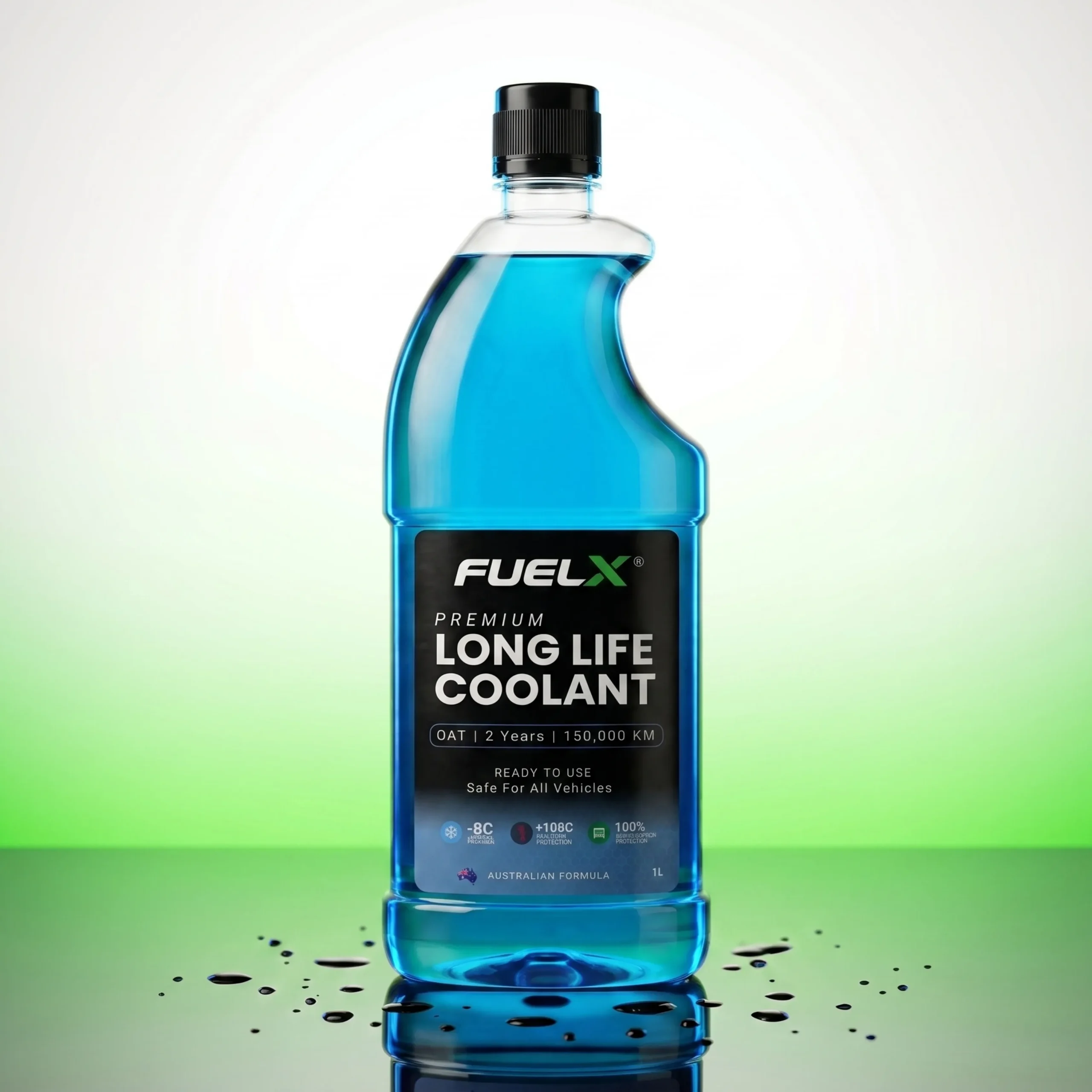
FuelX Long Life Coolant Blue is specifically designed to maintain optimal engine temperature while preventing overheating, rust and corrosion.
Disadvantages of Blue Coolant
Compatibility Issues
Some blue coolants are manufacturer-specific.
Higher Price
Usually more expensive than conventional coolant.
Not Always Ideal for Older Vehicles
Older radiator systems may not require advanced HOAT formulas.
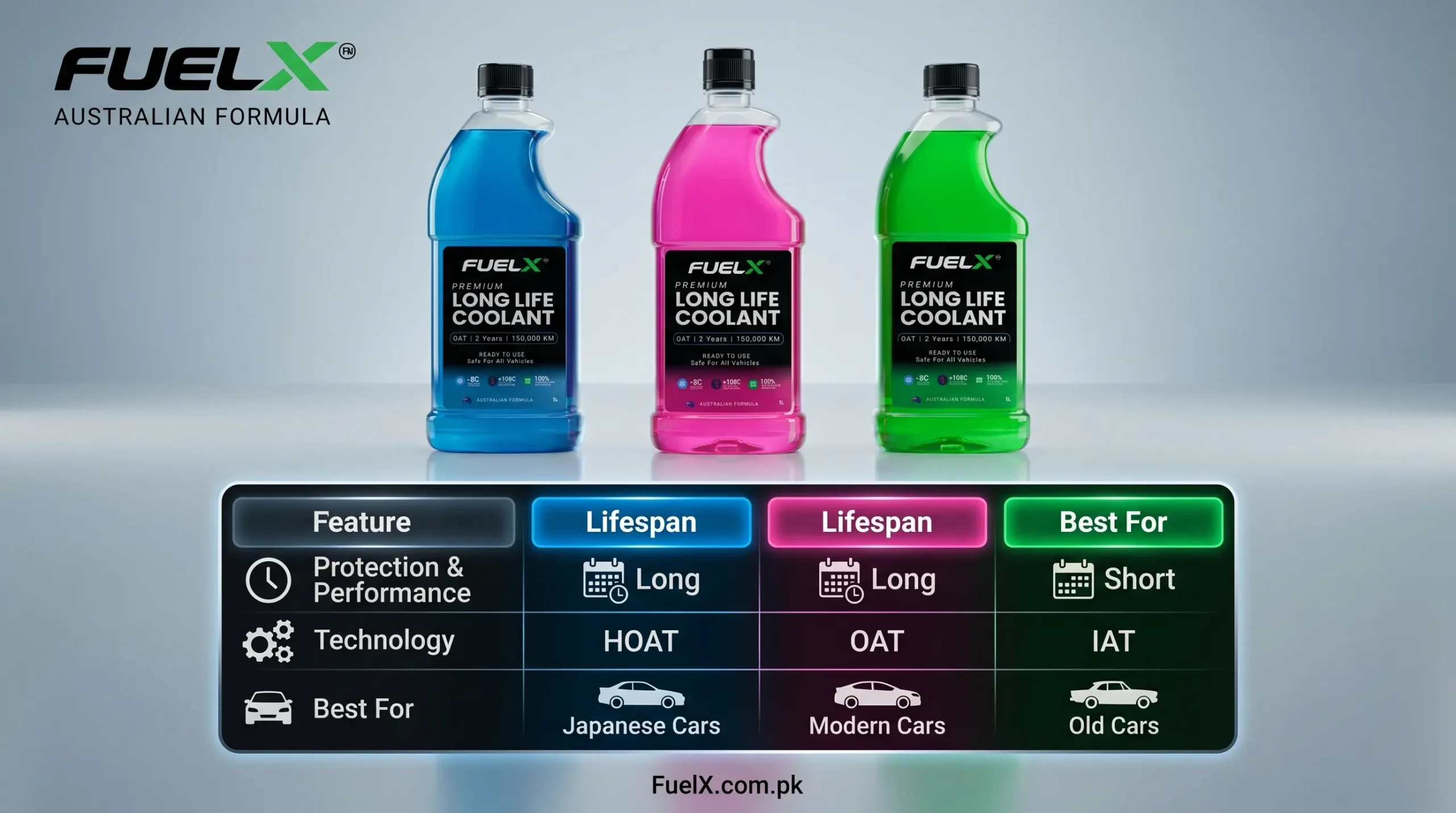
Green vs Red vs Blue Coolant Comparison
Feature
Green Coolant
Red Coolant
Blue Coolant
Technology
IAT
OAT
HOAT / Hybrid
Lifespan
2 Years
5 Years
5+ Years
Best For
Older Cars
Modern Cars
Japanese Cars
Corrosion Protection
Basic
Excellent
Excellent
Heat Resistance
Moderate
High
High
Maintenance Frequency
Higher
Lower
Lower
Deposit Formation
More Likely
Lower
Lower
Cost
Lower
Medium
Medium to High
Can You Mix Red Green And Blue Coolants?
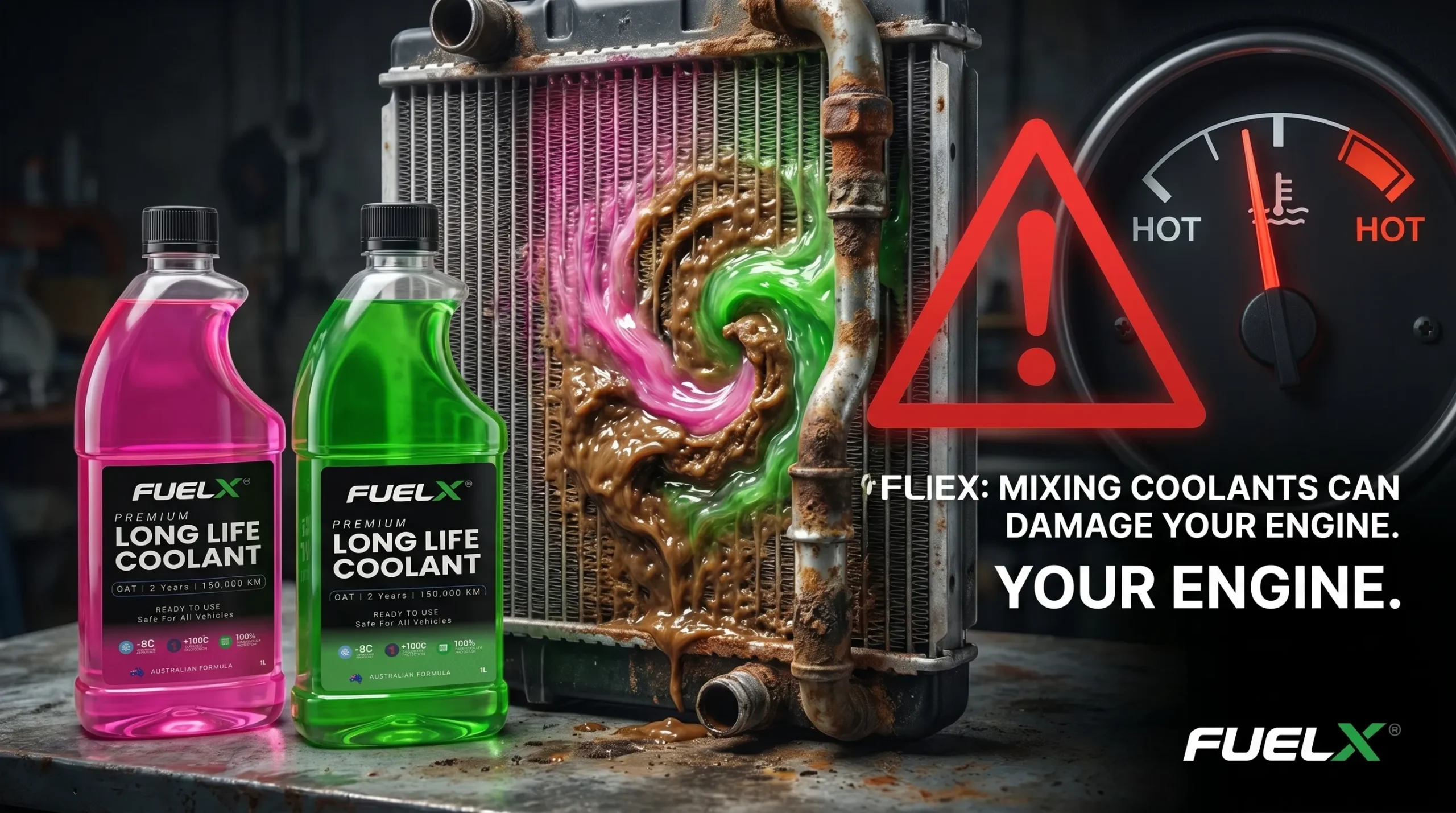
In most cases, it is not recommended to mix different types of coolant.
Different chemical additives are used in different coolant recipes. Mixing incompatible coolants can lead to chemical reactions inside the radiator and engine.
This may lead to:
thick sludge
gel formation
rust accumulation
plugged coolant channels
Many mechanics in Pakistan observe overheating problems by mixing long-life imported coolant with cheap local coolant.
We strongly recommend a complete flush of the system before changing over to a different type of coolant for best performance of your cooling system.
Problems Caused by Mixing Different Coolants
1. Sludge Formation
Sludge can reduce cooling system performance.
2. Reduced Heat Transfer
Coolant may not flow properly through the system.
3. Water Pump Damage
Dirty coolant can affect moving components.
4. Corrosion Risk
Rust protection may stop working properly.
5. Engine Overheating
Poor circulation increases engine temperature.
Which Coolant Is Best for Pakistani Weather?
Pakistan’s driving conditions are extremely demanding for cooling systems because of:
45°C+ summer temperatures
long traffic jams
dusty environments
long highway travel
stop-and-go city driving
In these conditions, high-quality long-life coolant becomes very important.
Using plain water instead of coolant is a common mistake in Pakistan. Water can temporarily reduce heat but does not offer:
rust protection
anti corrosion protection
cooling component lubrication
anti-boil protection
Water also deposits minerals within the radiator over time.
Therefore, it is recommended to use modern long life coolants for better engine safety and performance.
FuelX coolants are designed specifically for the climate and traffic conditions of Pakistan, the engine temperature remains stable even in extreme heat.
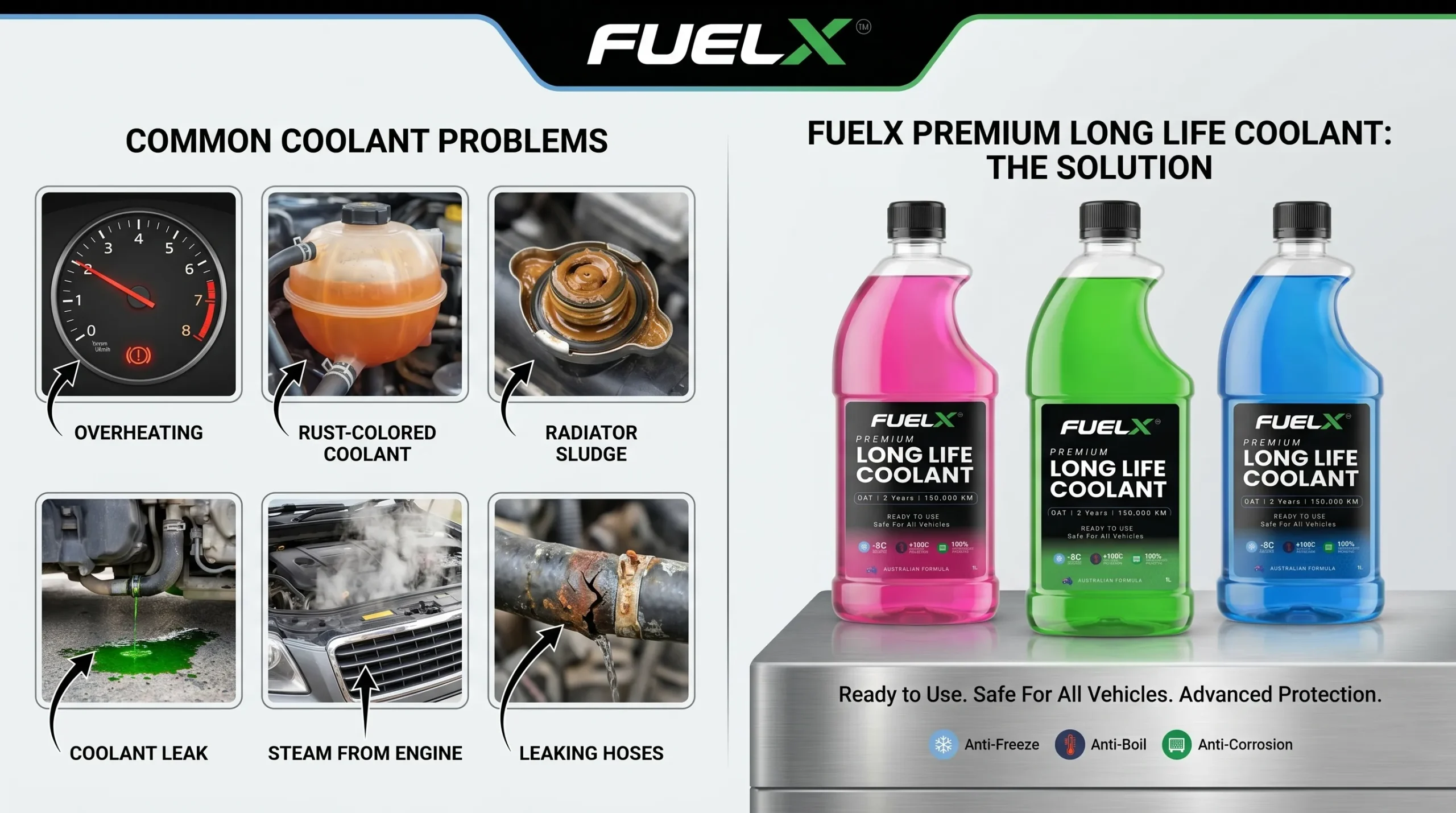
Signs You May Be Using the Wrong Coolant
If your vehicle uses incompatible or old coolant, you may notice several warning signs.
Common Symptoms
Engine Overheating
The temperature gauge rises unusually high.
Rust Colored Coolant
Indicates corrosion inside the system.
Sludge Inside Radiator
Sludge can block coolant flow inside the system.
Sweet Smell from Engine Bay
A sweet smell can be a sign of coolant leakage.
Frequent Coolant Top-Ups
Frequent refilling is usually a warning sign.
Heater Performance Issues
The heater may stop working properly.
Ignoring These Signs May Cause:
Radiator failure
Water pump damage
Head gasket failure
Serious engine overheating
Tips for Choosing the Right Coolant
1. Check Your Owner’s Manual
Always follow manufacturer recommendations first.
2. Use Trusted Brands
Low quality coolant may damage radiator components.
3. Avoid Mixing Coolants
Flush the system before switching coolant types.
4. Replace Coolant on Time
Even long-life coolant eventually loses effectiveness.
Green, red and blue coolants are more than just different colors. They stand for different coolant technologies for different engines and cooling systems.
Green coolant is common in older vehicles.
Red Coolant – Advanced long life protection for modern engines
Blue coolant is the preferred option for most modern Japanese vehicles
Selecting the correct coolant helps improve:
engine life
cooling efficiency
radiator protection
fuel economy
full reliability
One of the smartest ways to protect your engine from overheating and costly repairs in Pakistan’s extreme weather conditions is to use a high-quality long-life coolant.
FuelX long life coolants provide stable cooling performance, corrosion protection and reliable engine safety, customized for Pakistani driving conditions.
FAQ’s
Which coolant color is best for cars?
Coolant color alone does not decide if it is correct for your vehicle.
Can I use red coolant instead of green coolant?
Only use it if it matches your engine and the cooling system is cleaned properly.
Is blue coolant better than green coolant?
Many modern Japanese vehicles use blue coolant for better long-term protection.
How often should coolant be changed?
Traditional coolant needs changing sooner than long-life coolant.
Can coolant color alone identify coolant type?
No. Check the coolant type and specifications before using it.