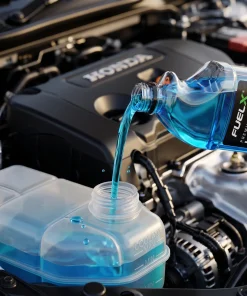
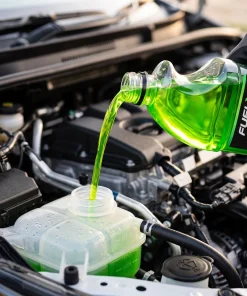
Honda Civic has remained one of Pakistan’s most popular sedans for over two decades. Whether you own a Civic Reborn, Rebirth, Civic X Turbo, or the latest 11th Generation Civic, maintaining the cooling system is essential for reliability, performance, and engine longevity.
One of the most overlooked maintenance items is coolant. Many drivers only think about coolant when the temperature gauge starts rising or the car overheats. Unfortunately, by that point, damage may already be occurring inside the cooling system.
Pakistan’s climate can be particularly demanding on vehicles. During peak summer months, temperatures in cities such as Lahore, Multan, Bahawalpur, and Dera Ghazi Khan frequently exceed 40°C. Combined with heavy traffic, long idle times, and motorway travel, these conditions place significant stress on the engine cooling system.
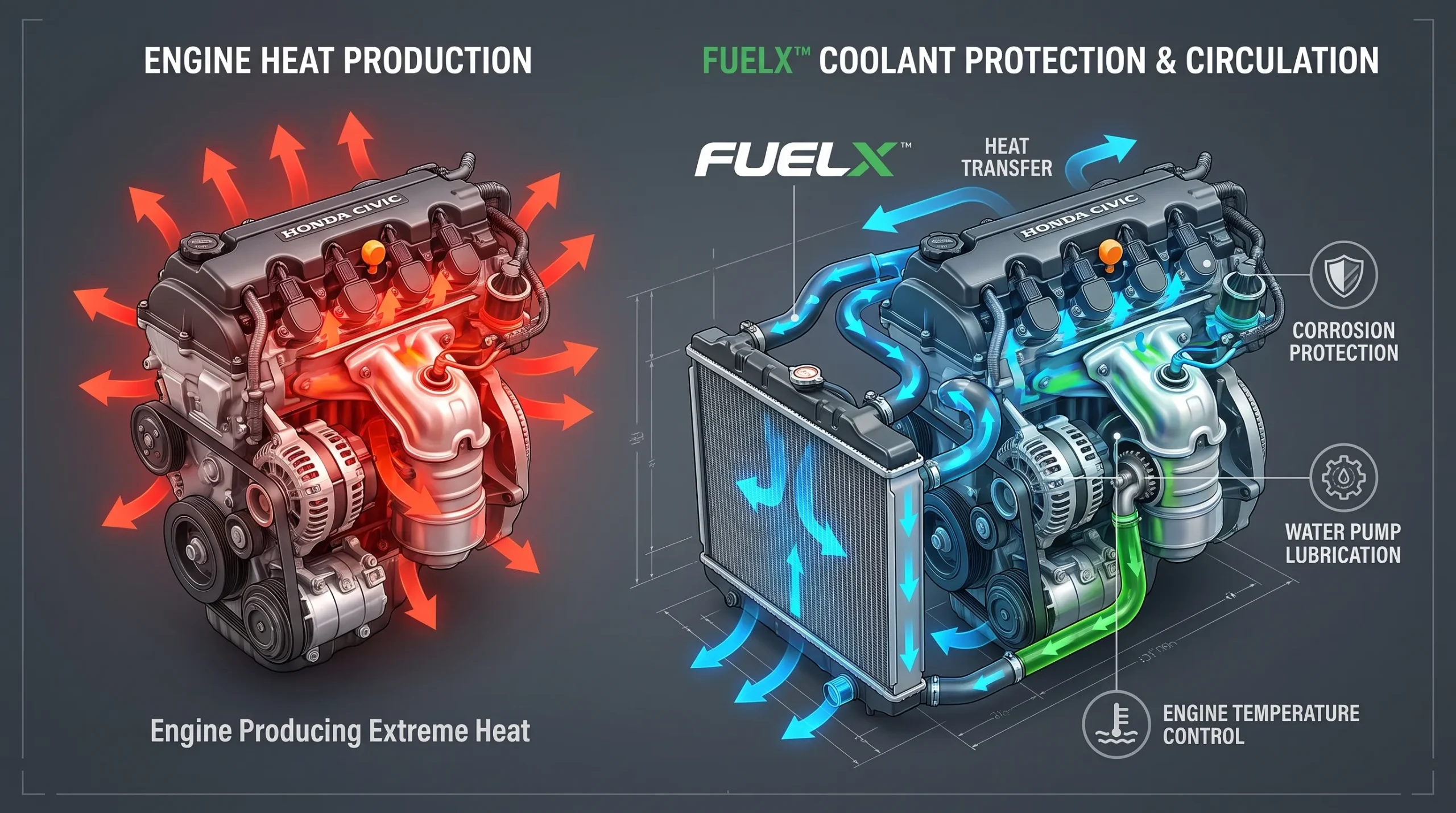
Using the right coolant helps your Honda Civic maintain proper operating temperature, prevents corrosion, protects the radiator and water pump, and reduces the risk of costly overheating repairs.
In this guide, we’ll explain which coolant is best for Honda Civic in Pakistan, what specifications matter, and how to keep your cooling system performing efficiently throughout the year.
Why Choosing the Right Coolant Matters for Honda Civic
Many drivers believe coolant is simply colored water. In reality, modern coolants are specially engineered fluids that perform several important functions simultaneously.
A quality coolant:
Transfers heat away from the engine
Raises the boiling point of the cooling system
Prevents freezing in cold weather
Protects against rust and corrosion
Lubricates water pump components
Prevents scale buildup inside the radiator
Without proper coolant, even a well-maintained Honda Civic can develop cooling system problems over time.
Protects Against Overheating
A typical Honda Civic engine operates around 85°C to 105°C under normal conditions.
When driving in summer traffic, engine bay temperatures can increase significantly. If coolant quality is poor or coolant levels are low, heat cannot be removed efficiently, causing engine temperatures to rise.
This is especially important for turbocharged Civic X models because turbochargers generate additional heat during acceleration and highway driving.
Prevents Rust and Corrosion
Modern Honda engines contain aluminum components that require special corrosion protection.
Plain water may initially cool the engine, but over time it can cause:
Rust formation
Radiator blockage
Scale deposits
Water pump wear
Heater core damage
Premium coolant contains corrosion inhibitors that create a protective layer inside the cooling system.
Extends Cooling System Life
A radiator replacement can cost tens of thousands of rupees, while a damaged head gasket can result in significantly higher repair expenses.
Spending a small amount on quality coolant is one of the most cost-effective ways to avoid major cooling system repairs.
Maintains Fuel Efficiency and Performance
When an engine operates at the correct temperature, fuel combustion becomes more efficient.
An overheating engine may experience:
Reduced performance
Poor fuel economy
Increased engine wear
Premature component failure
What Type of Coolant Does Honda Civic Require?
Honda generally recommends a long-life coolant designed specifically for aluminum engines.
Modern Honda cooling systems are engineered around high-quality ethylene glycol-based coolants that provide both cooling and corrosion protection.
Honda Type 2 Coolant
Honda Type 2 coolant is the factory-recommended coolant used in many Honda vehicles worldwide.
Key characteristics include:
Pre-mixed 50/50 formula
Long-life protection
Aluminum-engine compatibility
Corrosion-resistant additives
Ready-to-use formulation
For Civic owners in Pakistan, choosing a coolant with similar specifications helps ensure proper cooling system protection.
Different formulations can react with one another and reduce the effectiveness of corrosion inhibitors.
Potential consequences include:
Reduced cooling performance
Sludge formation
Internal deposits
Premature cooling system wear
If you’re switching brands or coolant technologies, a complete radiator flush is usually the safest option.
Best Coolants for Honda Civic in Pakistan
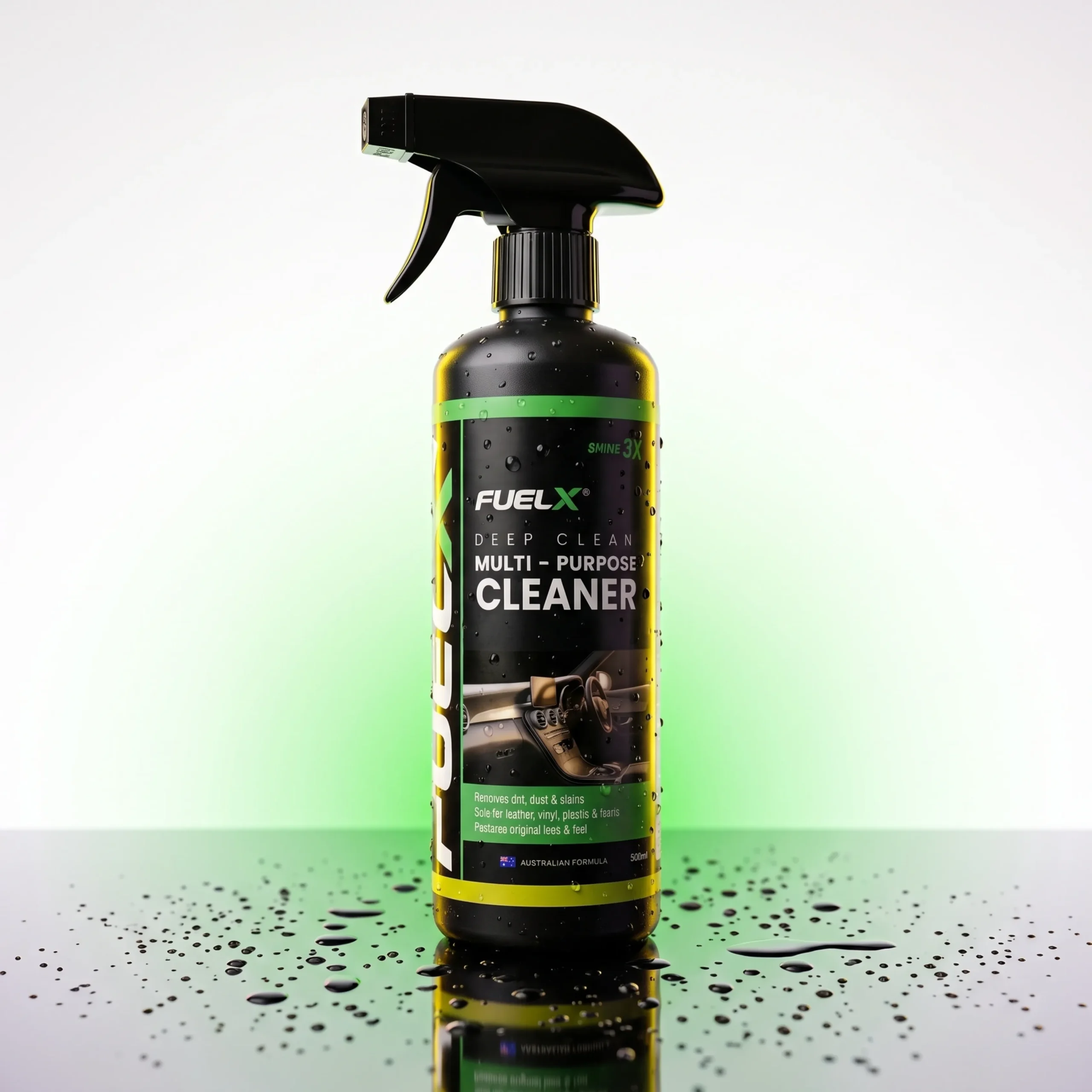
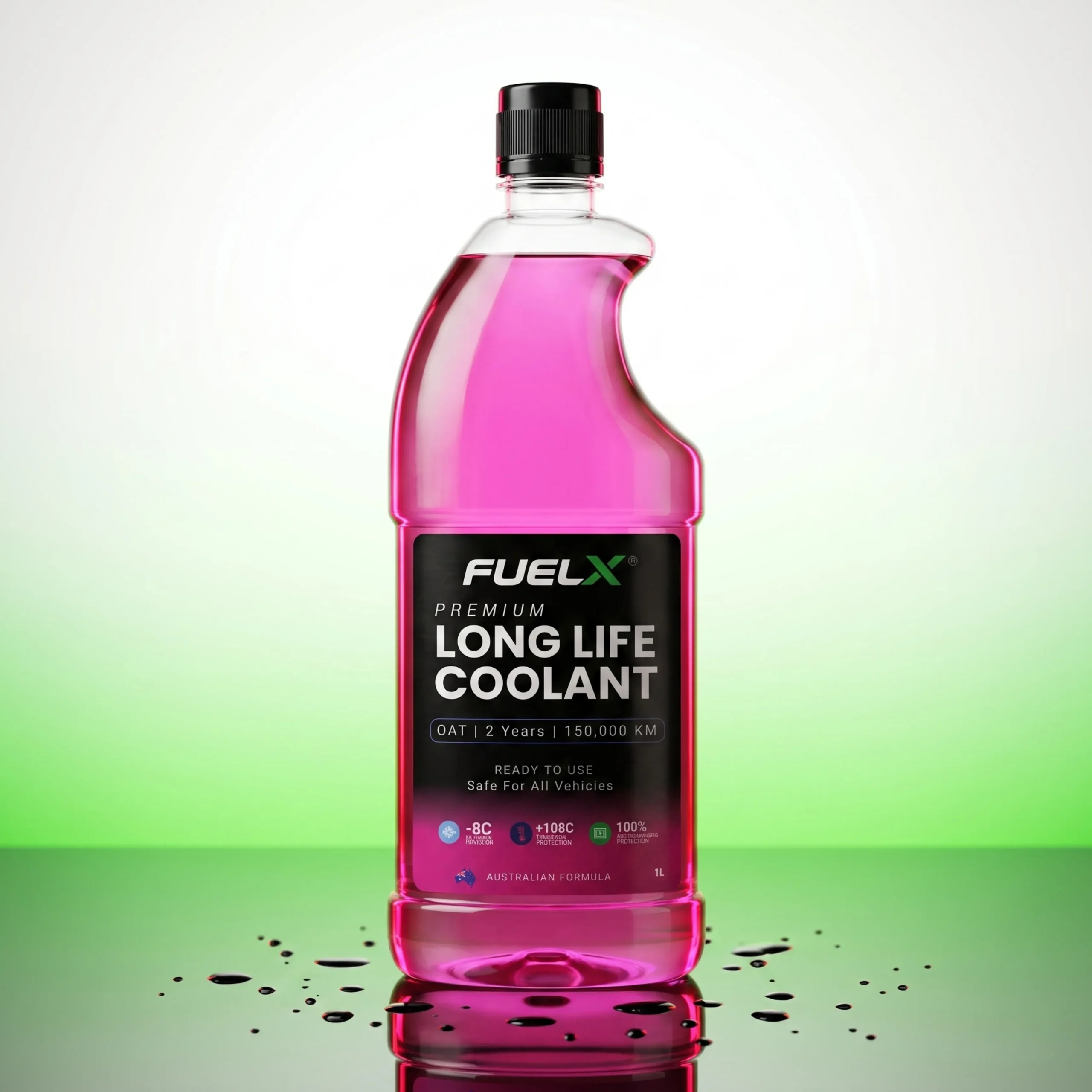
FuelX Premium Coolant (Recommended Choice)
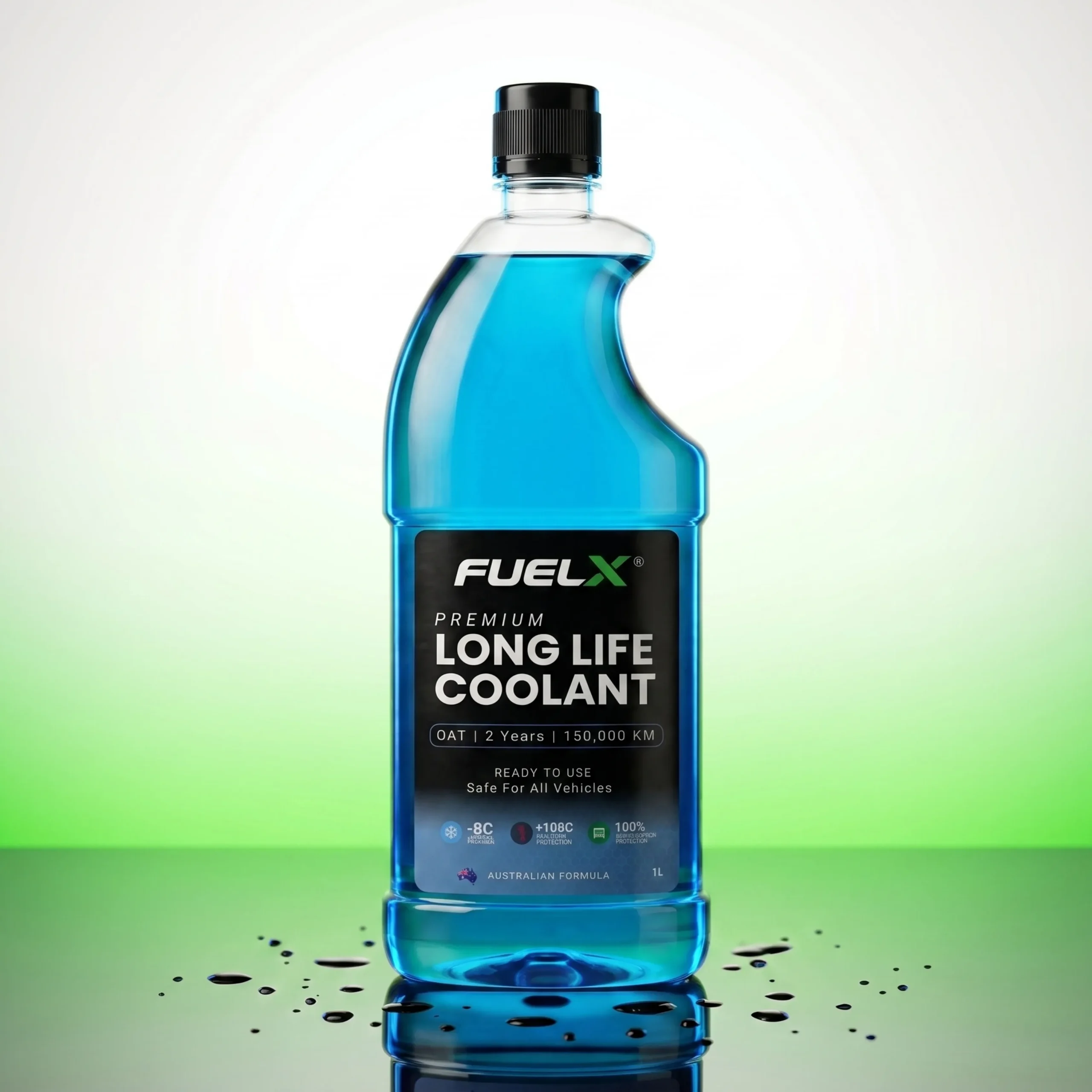
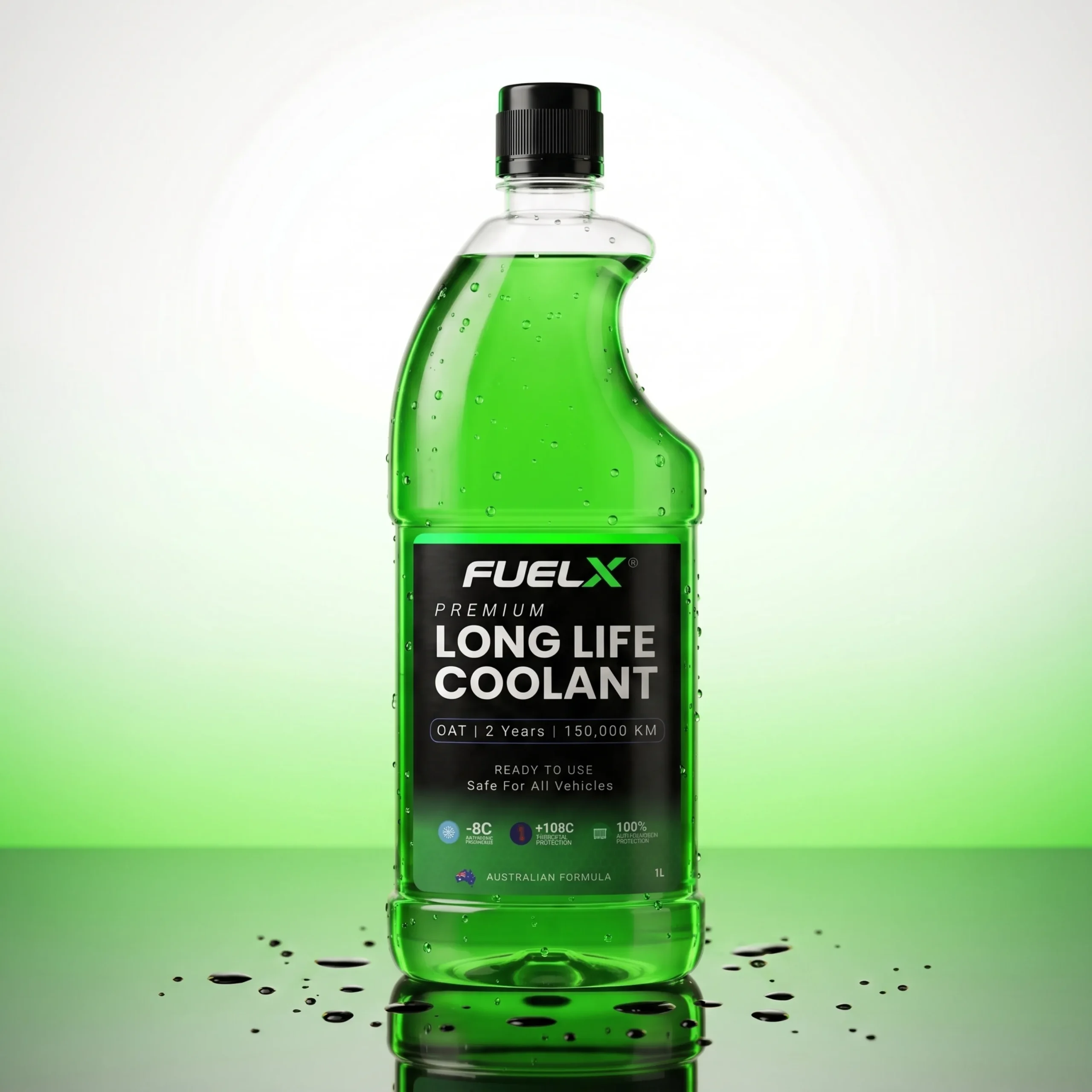
For most Honda Civic owners in Pakistan, FuelX Premium Coolant provides an excellent balance between protection, performance, and value.
It is designed to handle the conditions commonly experienced by Pakistani drivers, including:
Temperatures above 40°C
Long motorway journeys
Heavy urban traffic
Daily commuting
Key Benefits
Excellent heat transfer properties
Corrosion protection for aluminum engines
Rust prevention
Water pump protection
Long-lasting performance
Suitable for year-round use
Whether you drive a Civic in Karachi’s humidity, Lahore’s traffic, or Multan’s extreme summer temperatures, a quality coolant helps maintain stable operating temperatures.
Genuine Honda Coolant
Honda’s factory coolant remains one of the safest choices for Civic owners.
Benefits include:
OEM compatibility
Designed specifically for Honda cooling systems
Long service life
Excellent corrosion resistance
However, genuine coolant can be more expensive and harder to find in some areas of Pakistan.
Other Quality Long-Life Coolants
Several reputable long-life coolants are available locally.
When evaluating alternatives, look for:
Ethylene glycol base
Long-life technology
Aluminum-engine compatibility
Corrosion protection package
Manufacturer approval or compatibility claims
Avoid extremely cheap, unbranded products that provide little information about their formulation.
Best Coolant for Different Honda Civic Generations
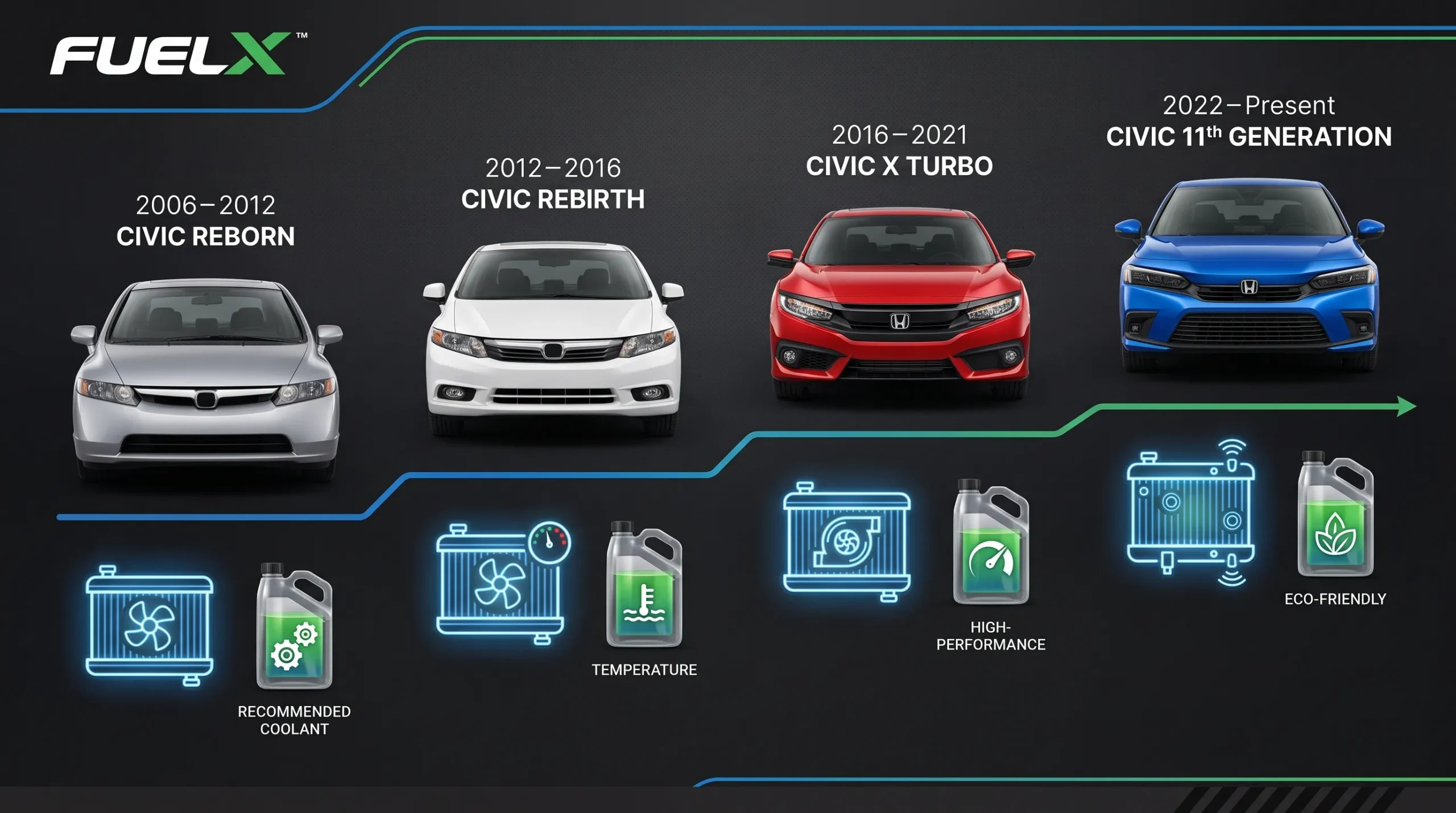
Honda Civic Reborn (2006–2012)
Many Reborn models are now over 15 years old.
Common cooling system concerns include:
Aging radiator hoses
Worn water pumps
Dirty radiators
Corrosion from previous coolant neglect
A high-quality long-life coolant helps reduce further deterioration.
Honda Civic Rebirth (2012–2016)
The Rebirth introduced a more refined cooling system design but still benefits from regular coolant maintenance.
Owners should inspect coolant condition at least twice per year.
Honda Civic X Turbo (2016–2021)
Turbocharged engines generate substantially more heat than naturally aspirated engines.
This makes coolant quality even more important.
Using poor-quality coolant in a turbocharged engine increases the risk of:
Excessive operating temperatures
Turbo stress
Cooling inefficiency
Honda Civic 11th Generation (2022–Present)
Modern Civic models use advanced engine technology and tighter engineering tolerances.
Following manufacturer-recommended coolant specifications is strongly advised.
Honda Civic Coolant Capacity Guide
The exact coolant capacity varies slightly by engine and model year.
Approximate capacities are:
Civic Generation
Approximate Coolant Capacity
Civic Reborn
4.5 – 5.5 Liters
Civic Rebirth
5 – 6 Liters
Civic X Turbo
5 – 6 Liters
Civic 11th Generation
5 – 6 Liters
If performing a complete flush, always keep extra coolant available because trapped air may require additional topping up after bleeding the system.
Signs Your Honda Civic Needs Coolant Replacement
Coolant does not last forever.
Over time, its protective additives become depleted.
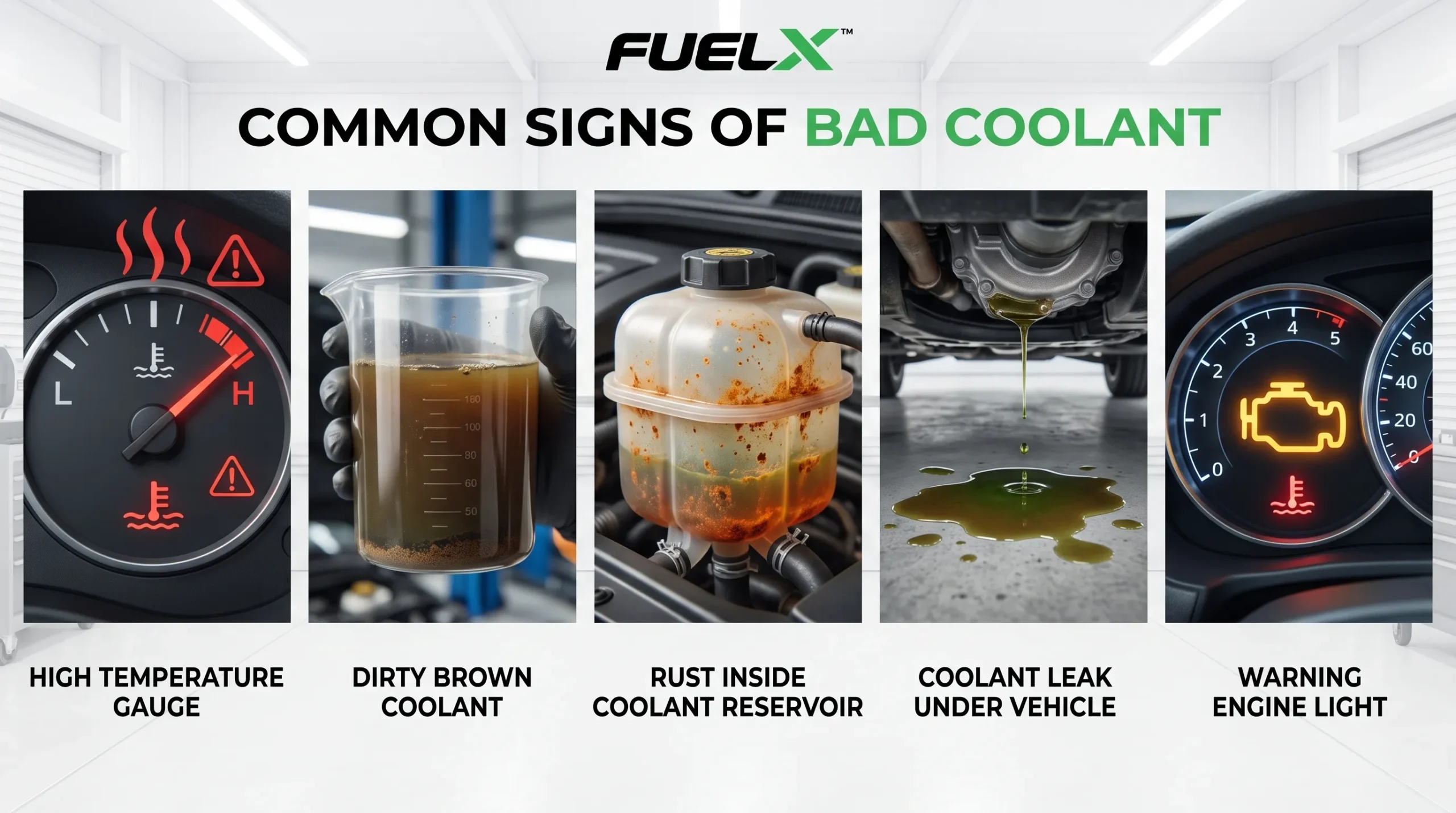
Rising Temperature Gauge
If your temperature gauge begins climbing higher than usual, coolant deterioration may be contributing to the problem.
Coolant Looks Brown or Dirty
Healthy coolant should appear clean and bright.
Brown, muddy, or rusty coolant indicates contamination.
Rust Deposits in Reservoir
Visible rust suggests corrosion inside the cooling system.
Sweet Smell Around the Engine
A sweet smell often indicates a coolant leak.
Even small leaks should be addressed quickly.
Frequent Coolant Top-Ups
A properly functioning cooling system should not require constant topping up.
Repeated coolant loss usually indicates:
Hose leaks
Radiator leaks
Reservoir issues
Water pump leaks
How Often Should You Change Coolant in a Honda Civic?
The exact interval depends on:
Coolant quality
Driving conditions
Vehicle age
Climate
For Pakistani conditions, many automotive experts recommend inspecting coolant annually and replacing it according to the coolant manufacturer’s maintenance schedule.
Vehicles exposed to:
Extreme heat
Heavy traffic
Frequent long-distance travel
may require closer monitoring.
Regular coolant maintenance is significantly cheaper than repairing overheating-related engine damage.
Common Coolant Mistakes Honda Civic Owners Make
Using Plain Water
Water may cool the engine temporarily but provides almost no long-term corrosion protection.
Mixing Different Coolants
Different coolant chemistries may reduce effectiveness when combined.
Ignoring Minor Leaks
Small coolant leaks often become major repairs if left unresolved.
Choosing Cheap Coolants
Low-cost coolants may lack proper corrosion inhibitors and long-life additives.
Delaying Radiator Service
Old coolant eventually loses its protective properties.
Replacing coolant on time helps preserve the entire cooling system.
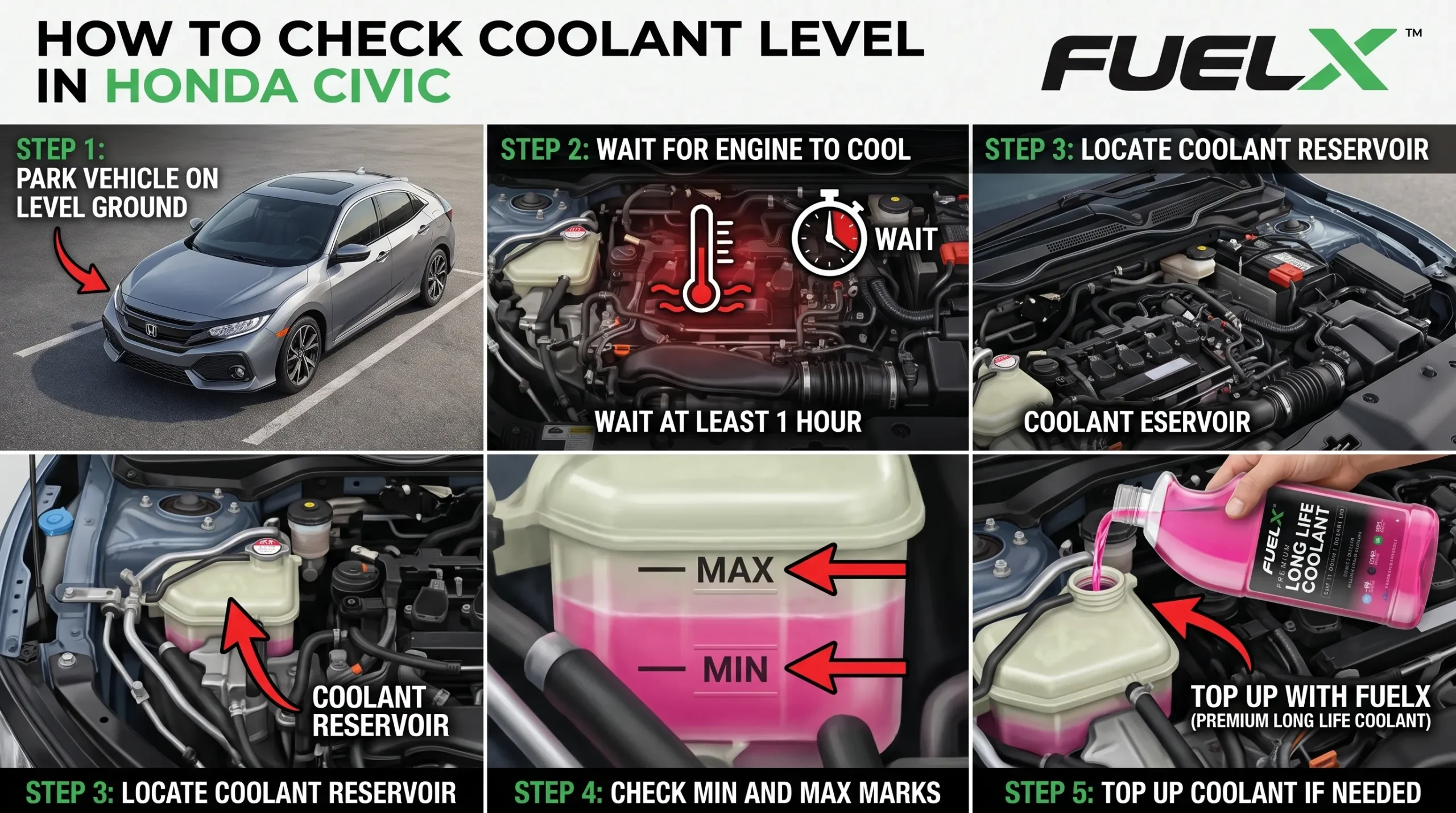
How to Check Coolant Level in a Honda Civic
Checking coolant takes less than two minutes.
Step 1: Park on a Flat Surface
Ensure the vehicle is parked safely.
Step 2: Let the Engine Cool Completely
Never remove the radiator cap while the engine is hot.
Pressurized coolant can cause serious burns.
Step 3: Check the Reservoir
Locate the coolant reservoir and inspect the level.
It should remain between the MIN and MAX marks.
Step 4: Top Up if Required
Use the same coolant type already present in the system whenever possible.
Why FuelX Coolant Is a Smart Choice for Honda Civic Owners
Honda Civic owners in Pakistan often face some of the harshest driving conditions in the region.
Daily commuting may involve:
45°C summer temperatures
Stop-and-go traffic
Long idling periods
Motorway driving
Dust and environmental contaminants
FuelX Premium Coolant is designed to help protect against these challenges by providing dependable cooling system protection and corrosion resistance.
Whether you’re driving a Civic Reborn, Rebirth, Civic X Turbo, or the latest Civic model, using a quality coolant can help maintain engine reliability and reduce the risk of overheating.
Conclusion
Choosing the best coolant for your Honda Civic is one of the simplest ways to protect your engine from overheating, corrosion, and premature wear.
With summer temperatures in Pakistan regularly exceeding 40°C and traffic conditions placing additional stress on cooling systems, relying on plain water or low-quality coolant can be a costly mistake.
Whether you own a Civic Reborn, Rebirth, Civic X Turbo, or the latest 11th Generation Civic, investing in a high-quality long-life coolant helps maintain stable engine temperatures, improve cooling system reliability, and reduce the risk of unexpected breakdowns.
For Civic owners looking for dependable protection in Pakistani driving conditions, FuelX Premium Coolant offers a practical solution designed to help keep your engine running smoothly throughout the year.
FAQ’s
Which coolant is best for Honda Civic in Pakistan?
A high-quality long-life coolant designed for aluminum engines is recommended. FuelX Premium Coolant is a suitable option for Pakistan’s climate and driving conditions.
Can I use water instead of coolant?
No. Water alone does not provide corrosion protection, lubrication, or adequate boiling-point protection.
How much coolant does a Honda Civic need?
Most Honda Civic models require approximately 5–6 liters, depending on the generation and engine type.
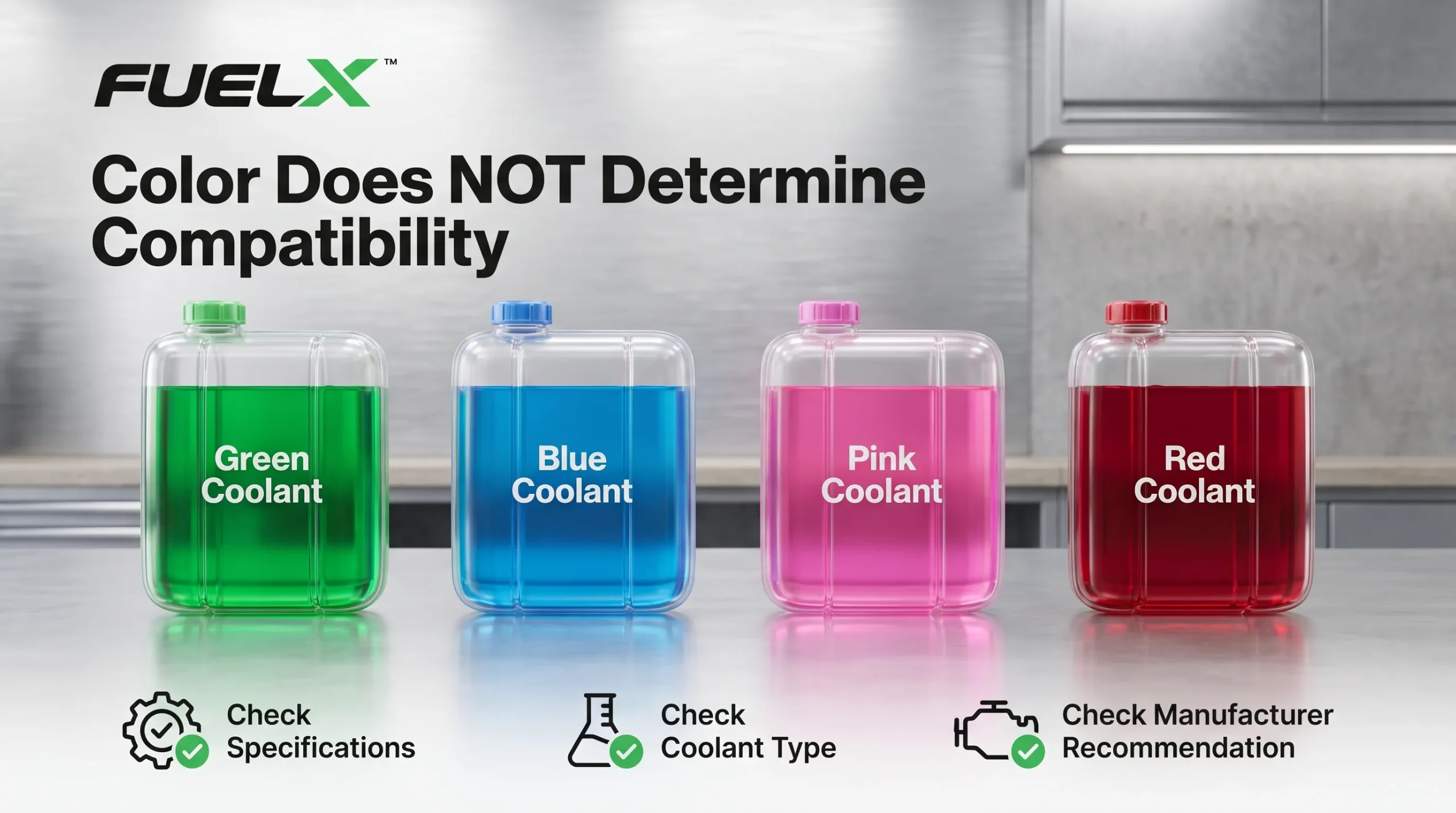
Is green coolant safe for Honda Civic?
Only if it meets the required specifications. Coolant chemistry matters more than color.
Can I mix Honda coolant with another coolant brand?
Mixing coolants is generally not recommended unless compatibility is specifically stated by the manufacturer.
What happens if coolant level becomes low?
Low coolant levels can lead to overheating, poor engine performance, cooling system damage, and potentially expensive repairs.