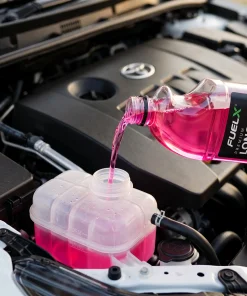
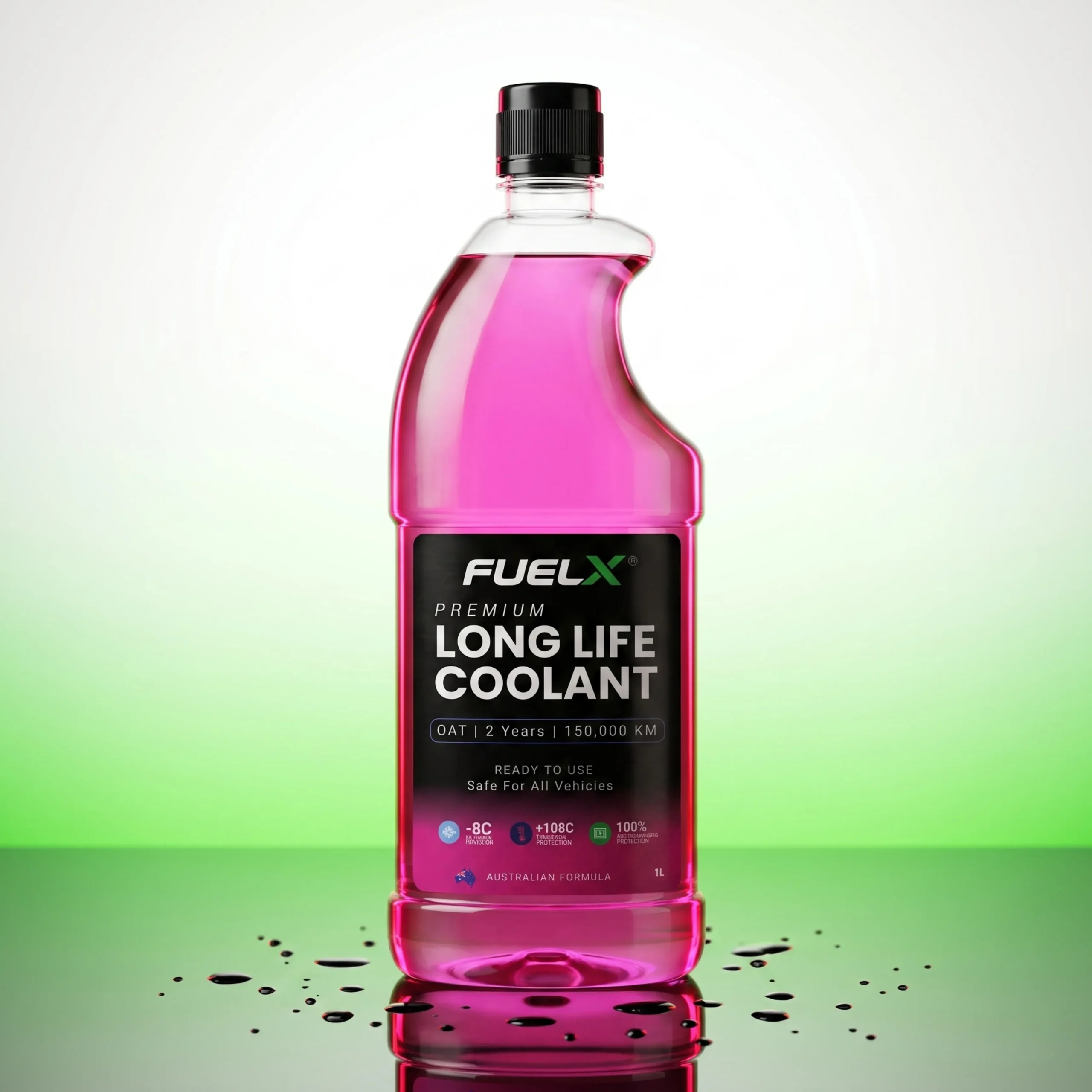
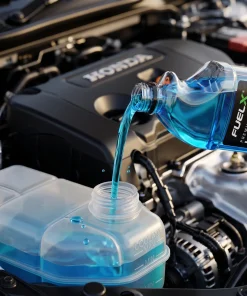
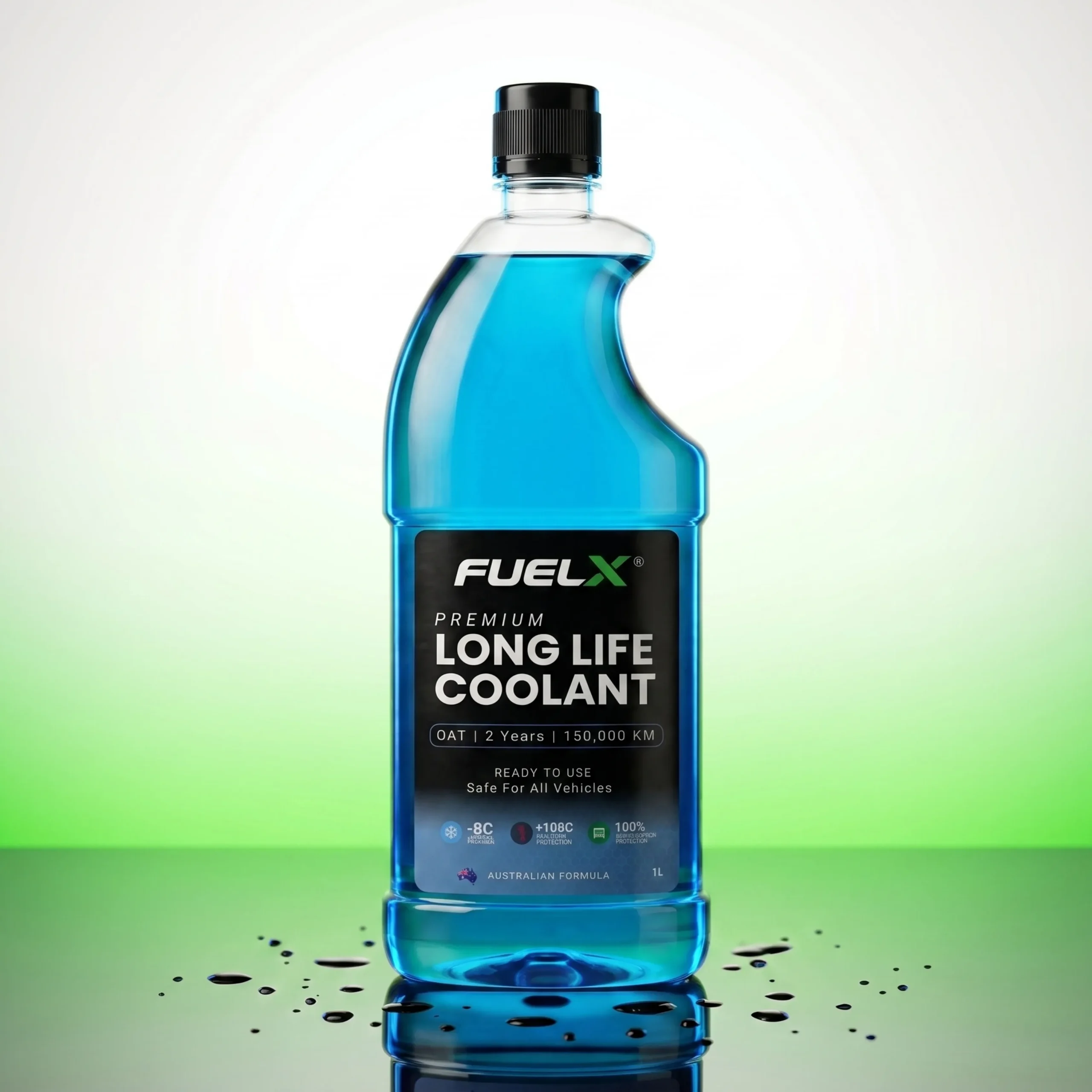
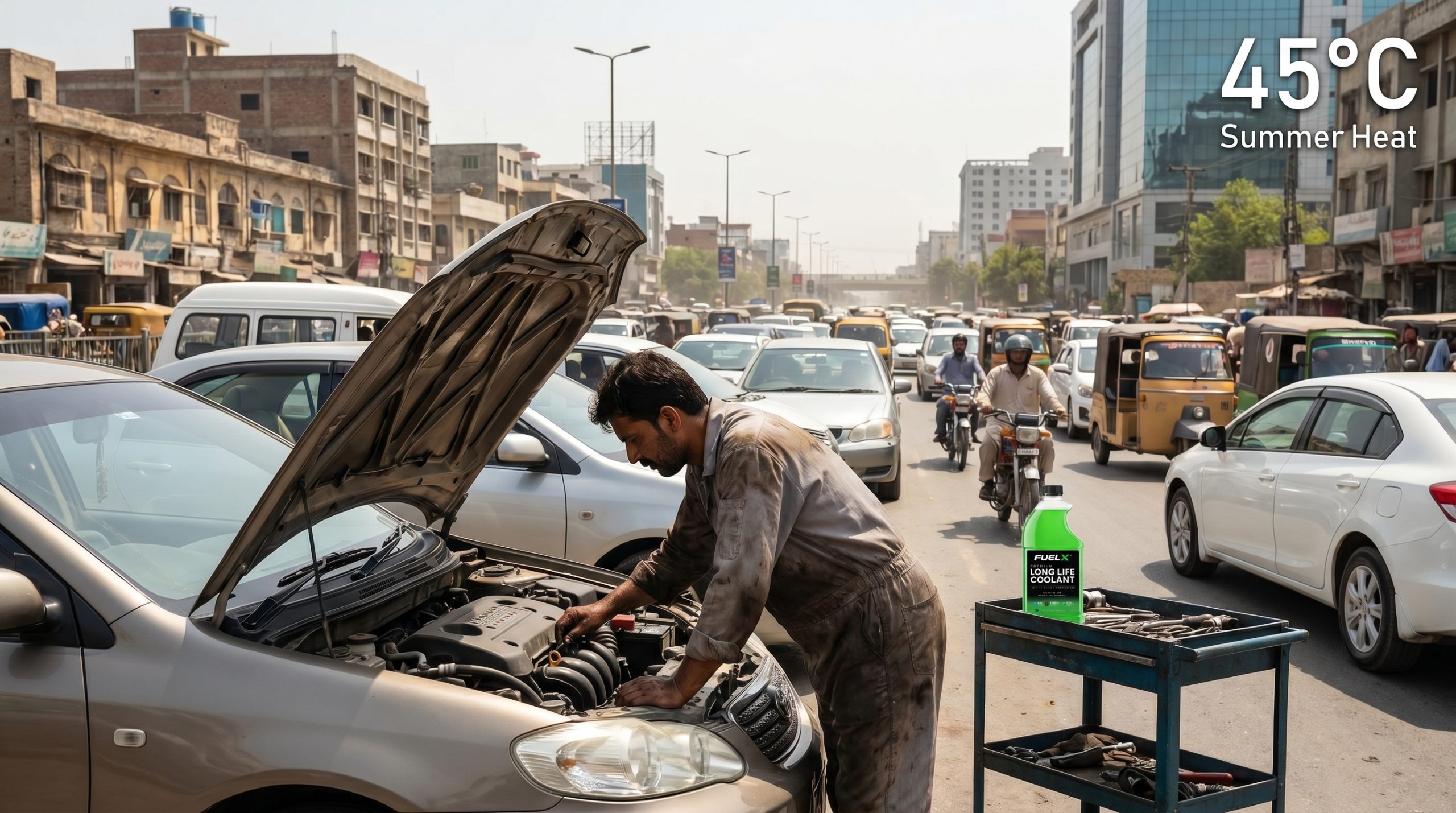
Your car coolant is one of the most important fluids inside the engine. It regulates engine temperature, reduces overheating and protects the cooling system from rust and damage. In Pakistan, where summer temperatures in many cities regularly exceed 40–45°C, the cooling system works even harder, especially during traffic jams and long drives.
Many drivers only think about coolant when the engine overheats but by that stage the damage may already have started. Old or contaminated coolant can reduce cooling efficiency by a significant margin, increase engine temperature and lead to expensive repairs like radiator blockage, water pump failure or head gasket damage.
Early warning signs can help protect your engine from overheating, wear and expensive damage.
In this guide, you will learn the most common signs your car coolant needs changing, why the coolant maintenance matters and how Pakistani drivers can protect their vehicle in harsh weather conditions.
Why Is Car Coolant Important?
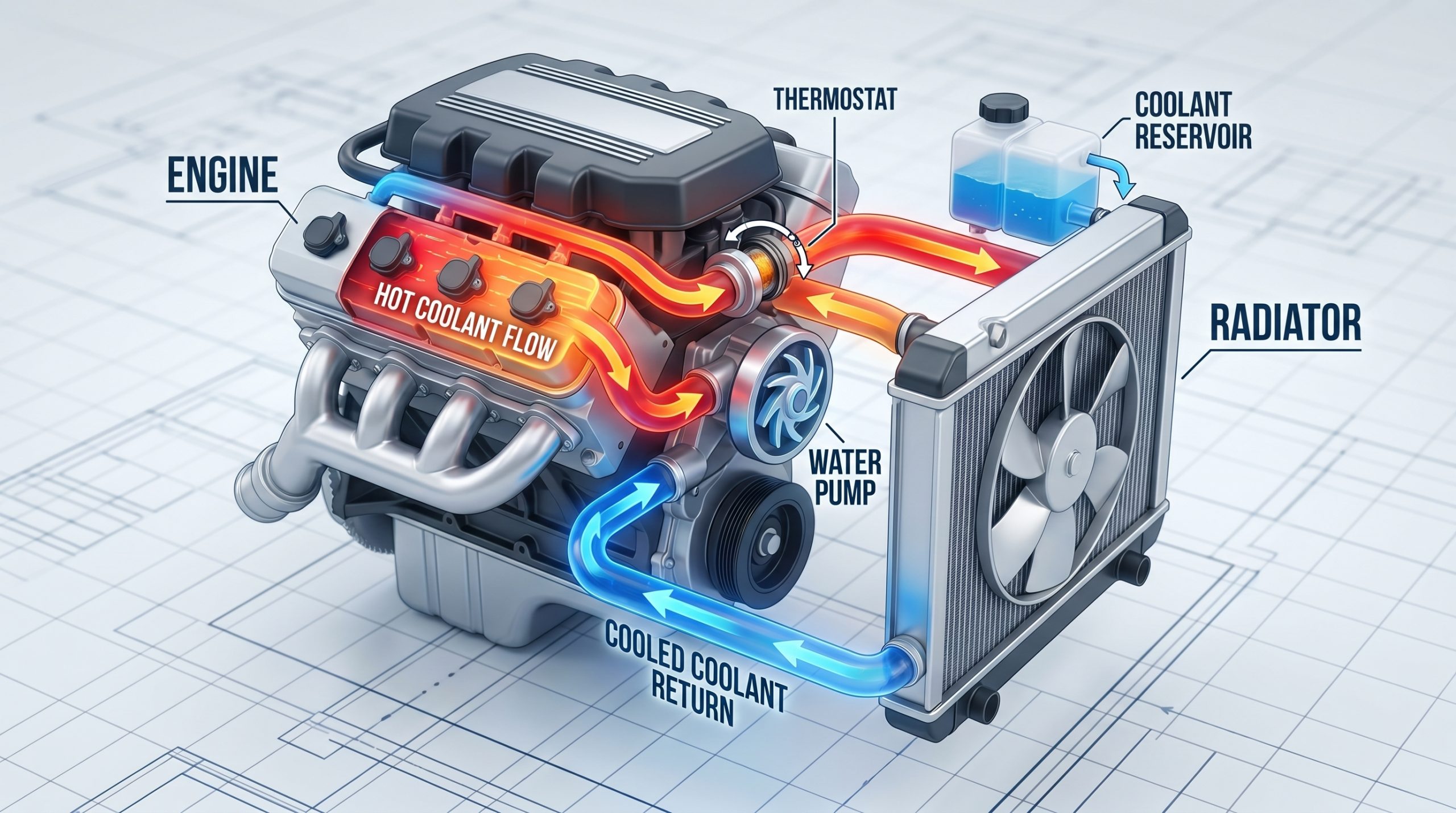
Coolant helps control engine heat and supports efficient cooling system performance. It keeps the engine from getting too hot while protecting important metal parts inside the system.
Good quality coolant has a number of important functions:
Avoid overheating the engine
Keeps the coolant from freezing in cold weather
Protects engine parts and radiator against corrosion
Lubricate the water pump.
Preventing mineral deposits and scaling
Increases heat transfer efficiency
Many Pakistani drivers still use plain tap water in radiators but water alone cannot protect the cooling system properly. Tap water minerals tend to build up as scale deposits in the radiator passages, reducing cooling performance over time.
For example:
A partially blocked radiator can reduce cooling efficiency significantly during peak summer traffic.
Rust inside the cooling system can damage hoses, radiator cores and thermostat components.
That is why modern vehicles require proper coolant instead of plain water.
Traditional green coolant lasts around 2 years or 40,000–50,000 km
The long life coolant can be used for 4-5 years or up to 100,000 km
But these intervals may decrease in Pakistan due to:
extreme summer heat
dusty roads
heavy city traffic
long idle times with AC running
In cities like Lahore, Karachi, Faisalabad and Rawalpindi, stop and go traffic puts extra stress on the cooling system. Engines take longer to make heat and the airflow through the radiator is restricted.
Experts recommend inspecting coolant conditions every few months rather than waiting for overheating symptoms.
1. Engine Temperature Starts Rising Frequently
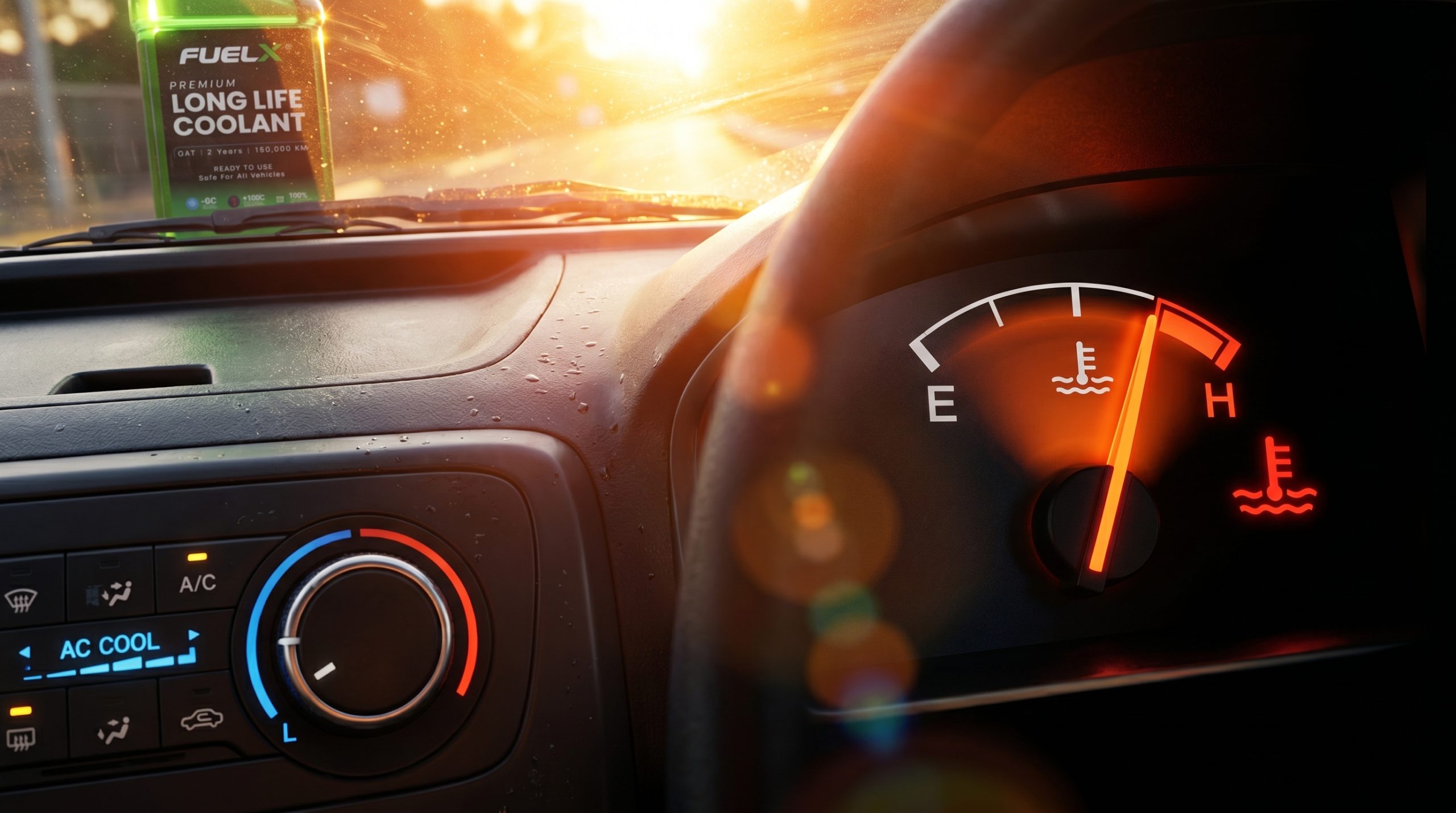
One of the earliest warning signs of bad coolant is an increase in engine temperature.
You may notice:
temperature gauge moving above normal
dashboard temperature warning light
overheating in traffic
AC cooling becoming weaker
engine fan running continuously
Normally, the temperature needle stays near the center of the gauge. If it frequently moves toward the “H” side, your coolant may no longer be cooling efficiently.
This happens because old coolant:
loses heat-transfer efficiency
becomes acidic over time
develops contamination and rust particles
In Pakistan’s summer heat, overheating becomes much more dangerous because road temperatures can become extremely high. Even a brief overheating event can damage:
rubber seals
plastic cooling components
head gaskets
cylinder heads
Automotive experts warn that coolant boiling can also create air pockets and internal corrosion inside the cooling system.
Example
Imagine driving in Lahore traffic at 3 PM in June with the AC running continuously. If the coolant is old or contaminated, the radiator may fail to remove heat fast enough, causing the engine temperature to rise rapidly during idle traffic conditions.
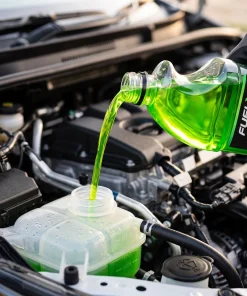
2. Dirty or Rust-Colored Coolant
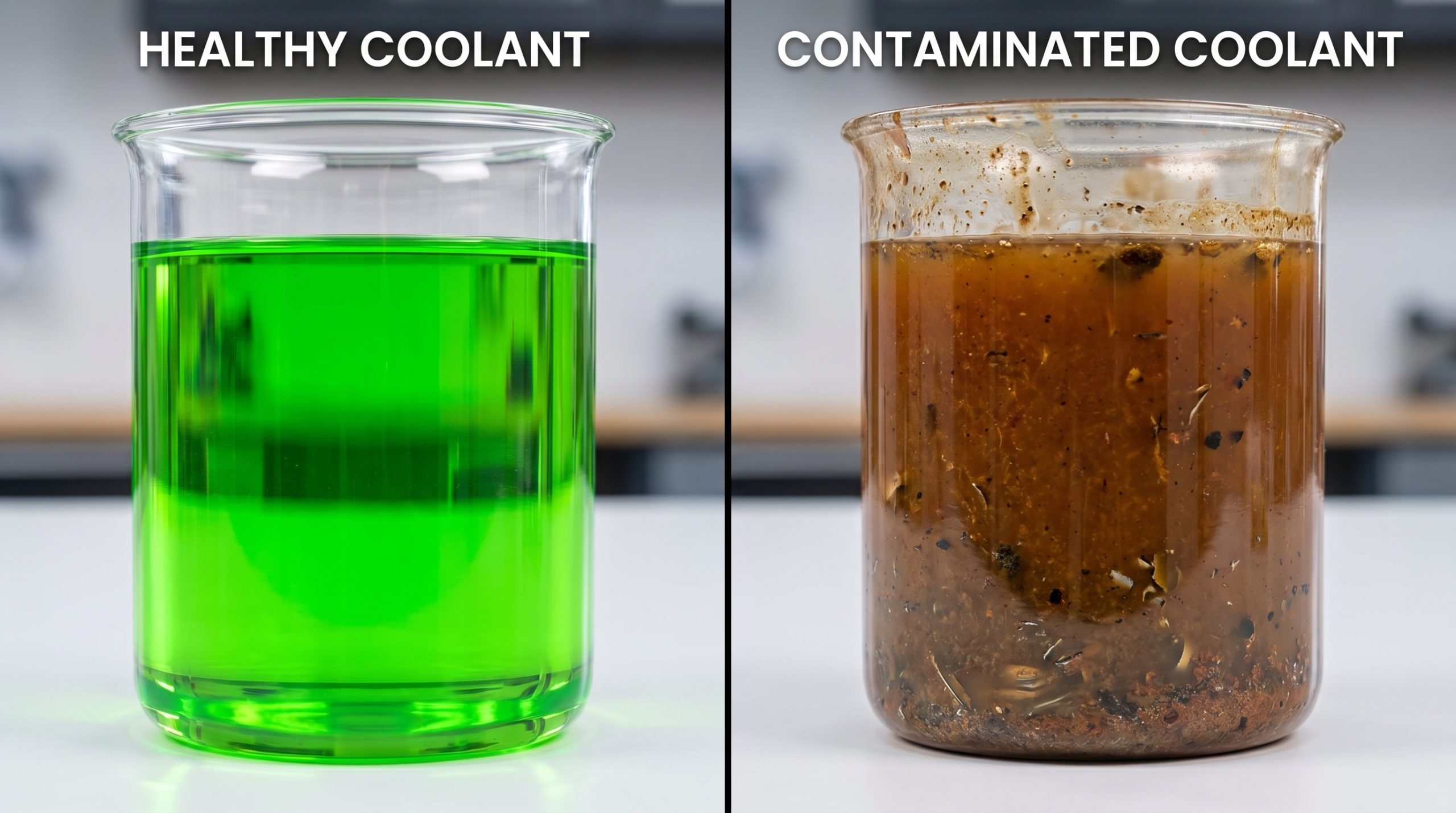
Healthy coolant is usually:
Clear
Bright
transparent
Depending on the coolant type, it may appear:
green
red
blue
orange
pink
If the coolant looks:
brown
rusty
muddy
cloudy
filled with floating particles
then it likely needs replacement immediately.
Dirty coolant may be a sign of:
internal rust
corrosion
coolant breakdown
mineral contamination
mixed coolant types
Rust and sludge can block radiator passages, reduce coolant flow and increase the risk of overheating.
Why This Problem Occurs
Coolant can wear out over time. When this happens, the cooling system may develop rust, sludge and contamination.
Warning
Do not remove the radiator cap while the engine is hot because pressurized steam can be dangerous.
3. Sweet or Burning Smell from the Engine Compartment
The coolant has chemicals like ethylene glycol that smell sweet.
If you see this:
sweet syrupy scent
smell of burning about the engine
cabin smell
your car may have a coolant leak.
There may be several reasons:
radiator hose leaking
busted radiator
cracked coolant tank
heater core leaking
coolant is leaking on hot engine parts
A burning smell can also be caused by the coolant leaking out onto the exhaust manifold and evaporating from the extreme heat.
For example,
A pleasant smell some drivers notice after a long drive with the AC on. Small coolant leaks may become more noticeable when the engine gets hot.
4. Coolant Level Keeps Dropping
Your cooling system is a closed system and coolant should not disappear on a regular basis.
If you find yourself constantly topping up your coolant you might have:
leak radiator
those cracks
water pump leak
broken radiator cap
engine internal leakage
Frequent loss of coolant is one of the most obvious signs of cooling system trouble.
Even small leaks can be dangerous because:
low coolant reduces heat absorption
risk of overheating rises quickly
cooling system air enters the
accelerates the rusting process
Warning
Ignoring coolant loss can eventually cause:
blown head gasket
warped cylinder head
engine lock-up
Fixing these problems can cost many times more than a simple coolant flush or hose replacement.
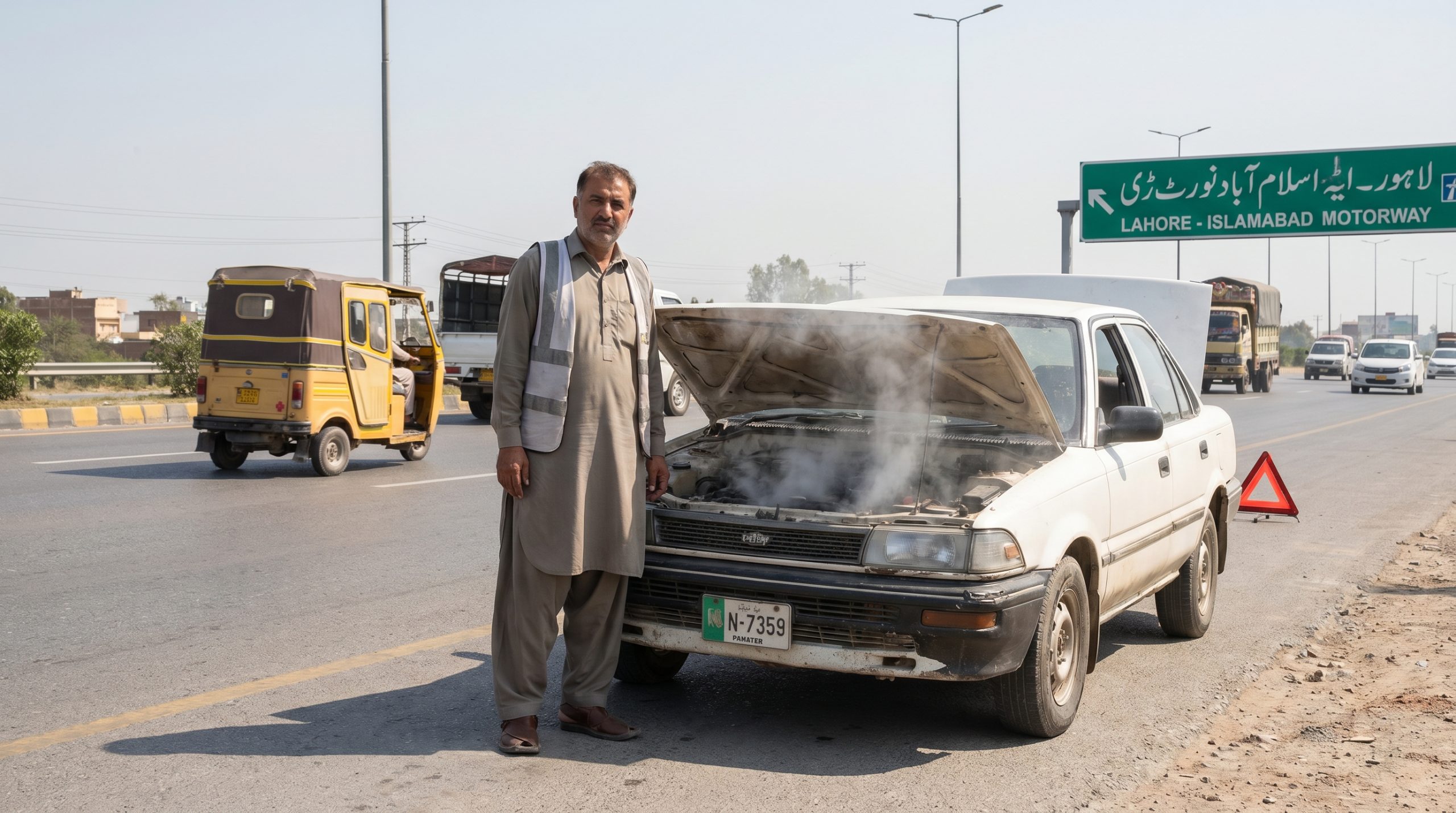
5. Steam Coming from Under the Hood
Steam under the hood usually means the engine is overheating.
Steam usually means:
coolant is boiling
the engine temperature is dangerously high
cooling system pressure is failing
Common causes include:
burst radiator hose
radiator blockage
failing water pump
damaged radiator cap
severe coolant leakage
Experts describe steam under the hood as a major overheating warning sign that requires immediate attention.
What To Do Immediately
Pull over safely
Turn off the engine
Allow engine to cool for 15–30 minutes
Never open radiator cap immediately
Hot coolant systems remain under pressure and can spray boiling liquid if opened too early.
6. Heater does not work properly
Most people don’t realize that the heater in the cabin relies on coolant circulation.
Warm air inside the cabin is produced by the heater drawing hot coolant from the engine. If the coolant flow is restricted, the heater may:
blow cool air
heat inconsistently
stop working completely
Possible causes include:
coolant level low
air caught in cooling system
heater core blocked
polluted coolant
Heater failure is a common symptom of cooling system trouble, according to auto experts.
While cabin heaters are not widely used in most of Pakistan, this symptom is still useful in diagnosing cooling system problems.
7. Visible Coolant Leaks Under the Car
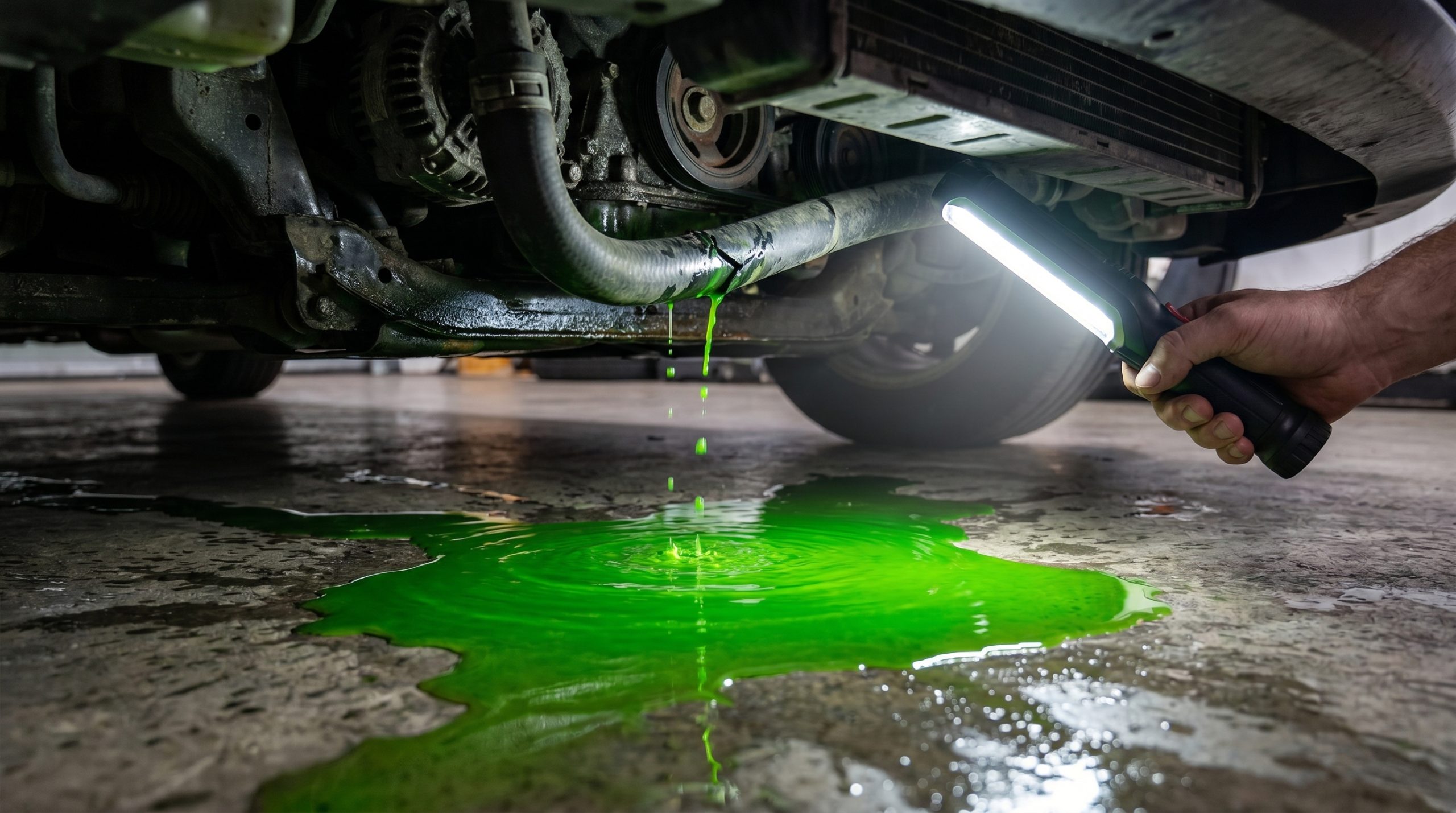
Coolant leaks are generally obvious because the coolant is brightly colored and has a distinctive smell.
You may notice:
green puddles
red liquid
orange or pink dots
wet areas around radiator hoses
Common leak locations are:
radiator Hoses
pump- water
radiator tank
thermostat case
Coolant leaks are one of the most common cooling system problems worldwide.
For example,
If you park your car overnight and you find colorful liquid under the front bumper in the morning, you should check the cooling system immediately.
Even slow leaks can become dangerous during hot weather because coolant levels may drop quickly during long drives.
8. Radiator Cap Rust or Scale
Rust deposits or white scaling near the radiator cap are usually an indication that:
coolant contamination
water usage
corrosion inside the cooling system
This is a common in pakistan where many drivers use :
tap water
drinking water.
low grade coolant
excessive mixing of water
Mineral deposits can gradually block radiator channels and reduce the efficiency of heat transfer.
Why This Is Dangerous
Clogged radiator results in the engine running hotter, especially during:
uphill driving
heavy traffic
long distance travel
summer weather
Over time, corrosion can destroy radiator fins, thermostat valves and water pump seals.
What happens if you do not change old coolant?
If you don’t maintain coolant, serious engine problems like these can occur:
engine overheating
radiator blockage
water pump damage
rust buildup
coolant boiling
head gasket failure
reduced fuel efficiency
Automotive experts warn of damage caused by overheating:
plastic connectors
rubber seals
O-rings
engine gaskets
One overheating event can cause long-term engine damage.
Repair Costs
In Pakistan, repairing overheating-related engine damage may cost:
radiator replacement: thousands of rupees
head gasket repair: much higher
engine rebuild: significantly expensive
Regular coolant service is far cheaper than repairing an overheated engine.
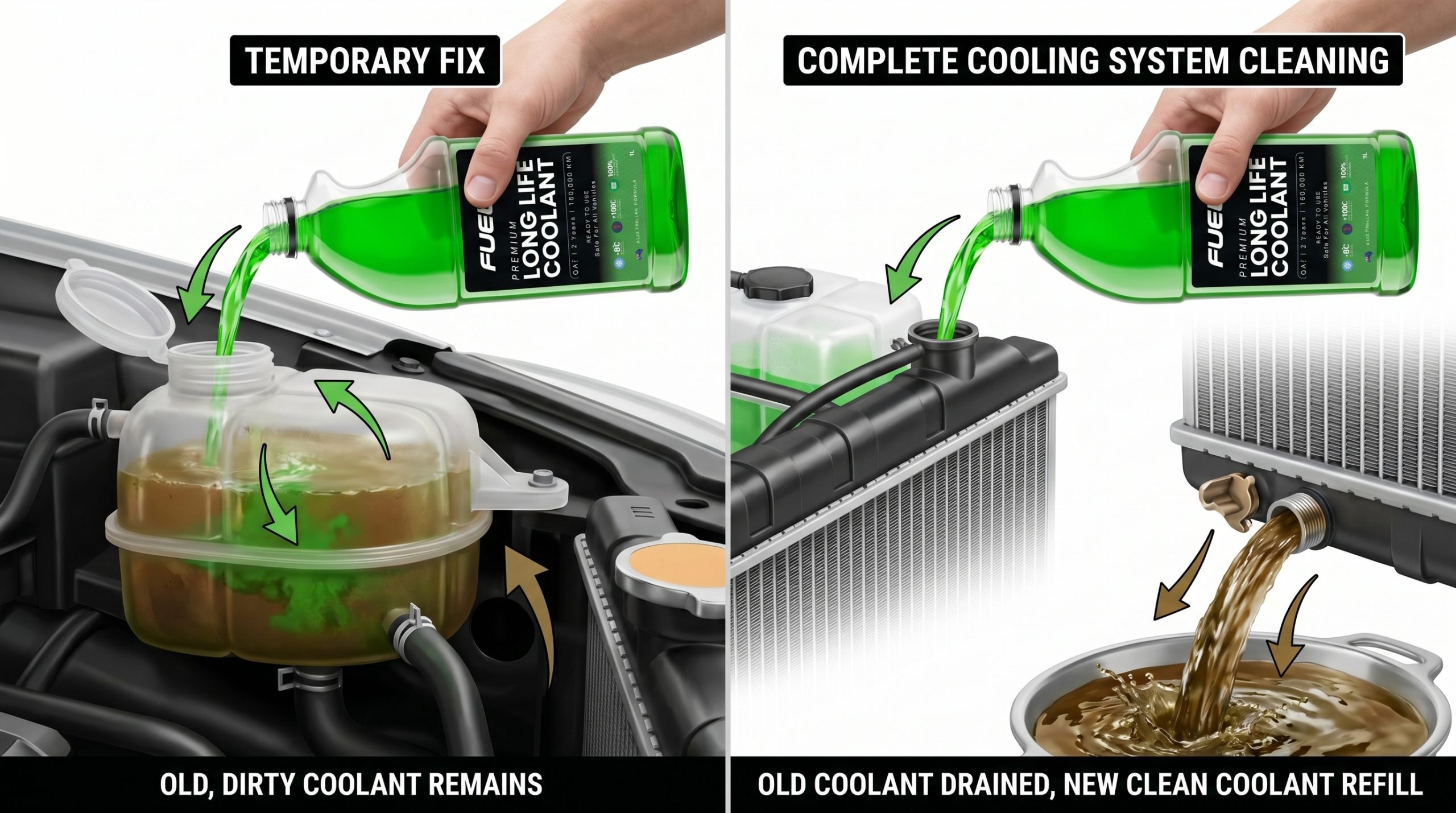
Coolant Flush vs Coolant Top-Up – What’s the Difference?
Coolant Top-Up
A top up just adds more coolant to the system for a while.
It doesn’t:
Kill Rust
sludge (clean)
replaced degraded chemicals
Top-ups are only needed when the coolant level is a little low.
Coolant Flush
A coolant flush completely removes old coolant and cleans the cooling system.
A proper flush:
removes rust particles
clears contamination
improves cooling efficiency
restores corrosion protection
A coolant flush is recommended when:
coolant appears dirty
overheating occurs frequently
coolant types were mixed
rust is visible
How to Extend the Life of Coolant
Here are some practices you can follow to improve cooling system performance and extend coolant life:
Use manufacturer recommended coolant
Don’t mix coolants of different colors blindly
Do not drink regular tap water
Use distilled water with concentrate coolant.
Inspect coolant regularly
Fix cooling system leaks early
Replace old coolant on time
Proper maintenance keeps the engine and cooling system working efficiently
Best Coolant Practices for Pakistani Drivers
Pakistan’s climate creates extra stress on vehicle cooling systems because of:
extreme summer temperatures
long traffic jams
dusty roads
continuous AC usage
To protect your engine:
use quality coolant
avoid cheap low-grade products
inspect radiator regularly
monitor temperature gauge
service cooling system on time
Modern aluminum engines especially require proper corrosion protection because aluminum components are more sensitive to coolant contamination.
Engine coolant is one of the most important fluids to protect the engine. Overlooking warning signs like overheating, coolant leaks, rusty fluid, sweet smells or steam coming from the hood can easily lead to expensive engine damage.
Regular inspection and replacement of the coolant, in a timely fashion, can help to:
prevent overheating
improve cooling efficiency
engine parts protection
extend the life of the engine
The significance of proper coolant maintenance increases further in the extreme weather conditions of Pakistan. A simple coolant service today will save you a lot of money in the future on major repairs.
FAQs
How do I know if my coolant is bad?
Common signs include overheating, rusty coolant, sweet smell, coolant leaks, rising temperature gauge and frequent coolant loss.
Can old coolant damage the engine?
Yes. If coolant is not replaced on time, it can lead to corrosion and serious engine problems.
Is coolant replacement necessary if the level is full?
Yes. Even if the coolant level looks normal, its protective chemicals break down over time.
Can I mix green and red coolant?
Combining incompatible coolants can lead to sludge formation, reduced corrosion protection and cooling system problems.
What color should healthy coolant look like?
Healthy coolant should appear bright, clean and transparent — not muddy, rusty or cloudy.
Can I use only water instead of coolant?
Using only water can work for a short time but it cannot protect the engine from rust, overheating or internal damage.