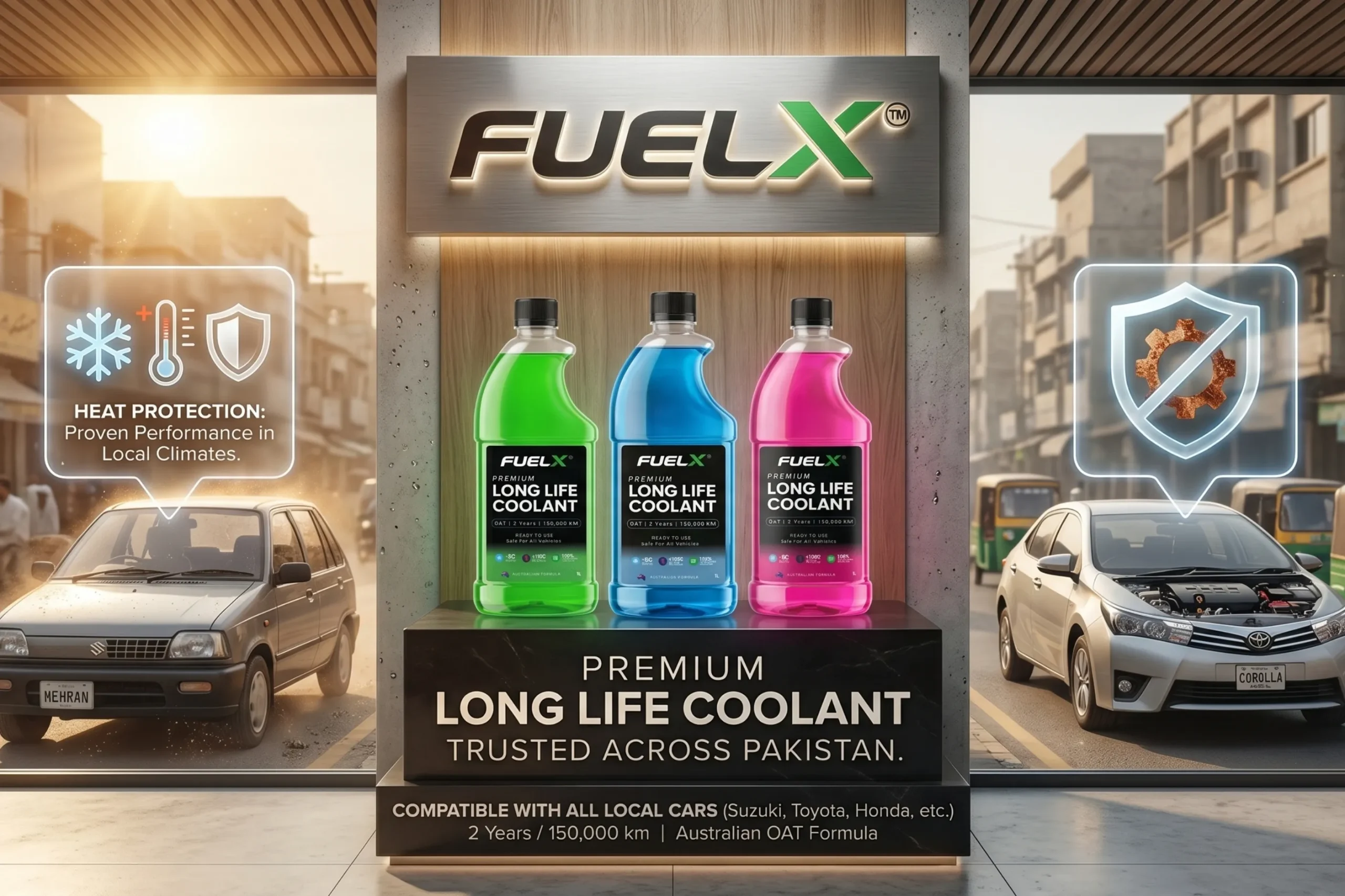
Pakistan’s hot summers, heavy traffic and dusty roads can put extra pressure on car engines. In cities like Lahore, Karachi, Multan and Faisalabad, the temperature can cross 45°C in peak summer months which causes the engines to heat up much faster than normal.
Many drivers regularly change engine oil but ignore coolant maintenance until the car starts overheating. Unfortunately, by the time overheating begins, damage may already be happening inside the radiator or engine.
Car coolant is one of the most important fluids in your vehicle because it:
Controls engine temperature
Prevents overheating
Protects metal parts from corrosion
Improves radiator efficiency
Extends engine life
A common question among Pakistani car owners is: How often should you change car coolant in Pakistan?
It depends:
The type of coolant
Your driving situations
Climate exposure
Vehicle manufacturers’ recommendations
Condition of cooling system.
This guide will help you learn when to change the coolant, how to identify warning signs and what maintenance tips you need to know and why proper coolant care is especially important in Pakistan’s hot climate.
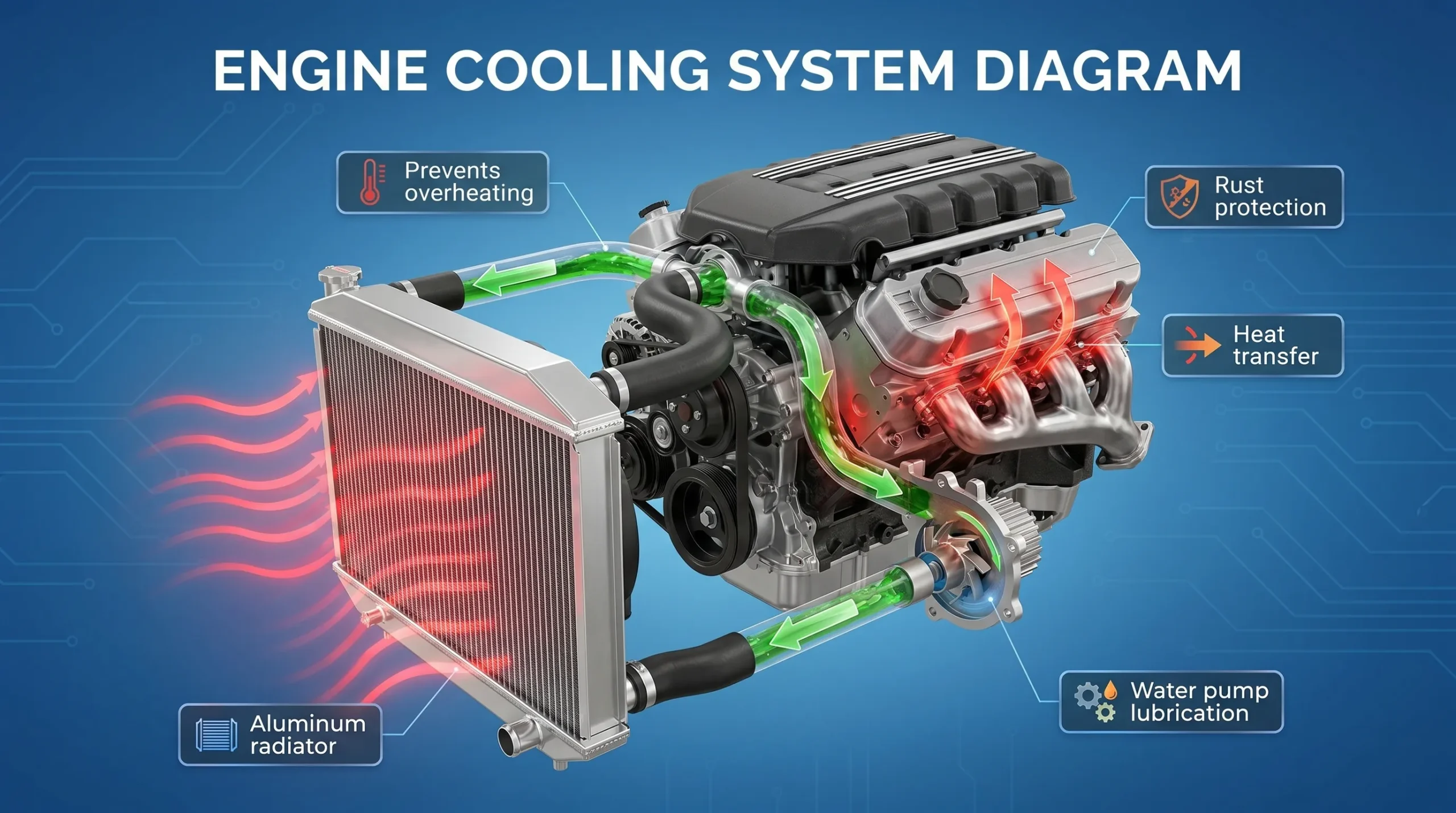
What Does Car Coolant Actually Do?
Many people think coolant only keeps the engine cool, but its job is much bigger than that.
The coolant is continuously circulated through the engine and radiator to:
Take in engine heat
Keep within safe operating temperature
Don’t overheat in stop-and-go traffic
Rust and corrosion protection of metal components
Grease the water pump
Reduced scale build-up in the radiator
Think of coolant as the “blood circulation system” for your engine. Coolant works like blood does in your body, keeping your car’s engine cool.
Modern engines run at very high temperatures. When the engine is operating normally, the heat can rise above 90C to 105C during combustion. Without coolant, these temperatures would quickly rise and damage parts of the engine.
How Often to Change Coolant in Pakistan?
The ideal coolant change interval depends primarily on the type of coolant used.
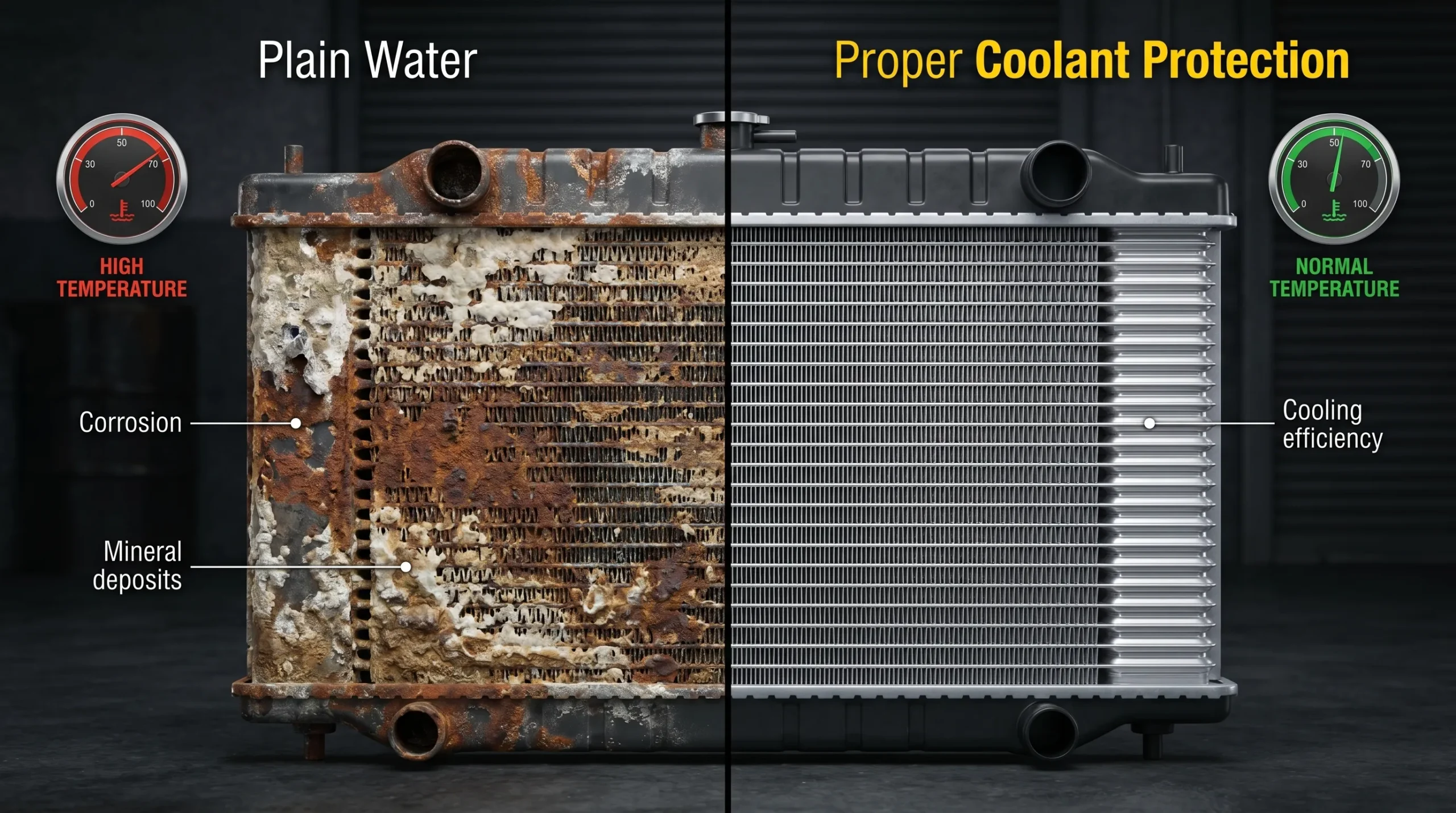
Many Pakistan drivers still use plain water in their radiators to save money.
This is dangerous because water:
Accelerates boiling
Causes rusting
Forms mineral deposits
Provides bad long-term protection
For instance:
Water, pure, boils at about 100° C.
Proper coolant mixtures significantly enhance the boiling resistance and also prevent rust.
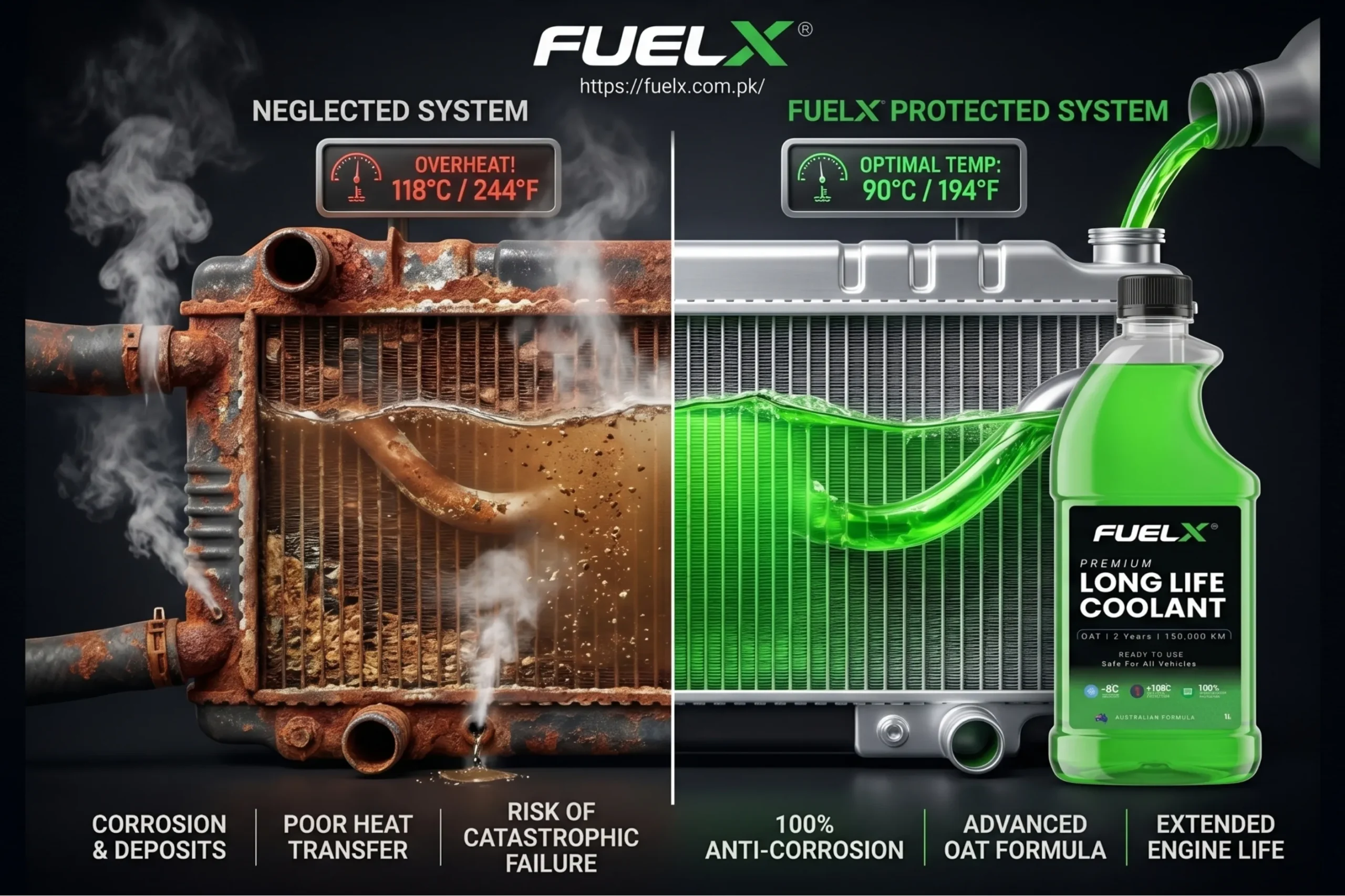
Using only water for an extended period can damage:
Radiators
Water pumps
engine channels
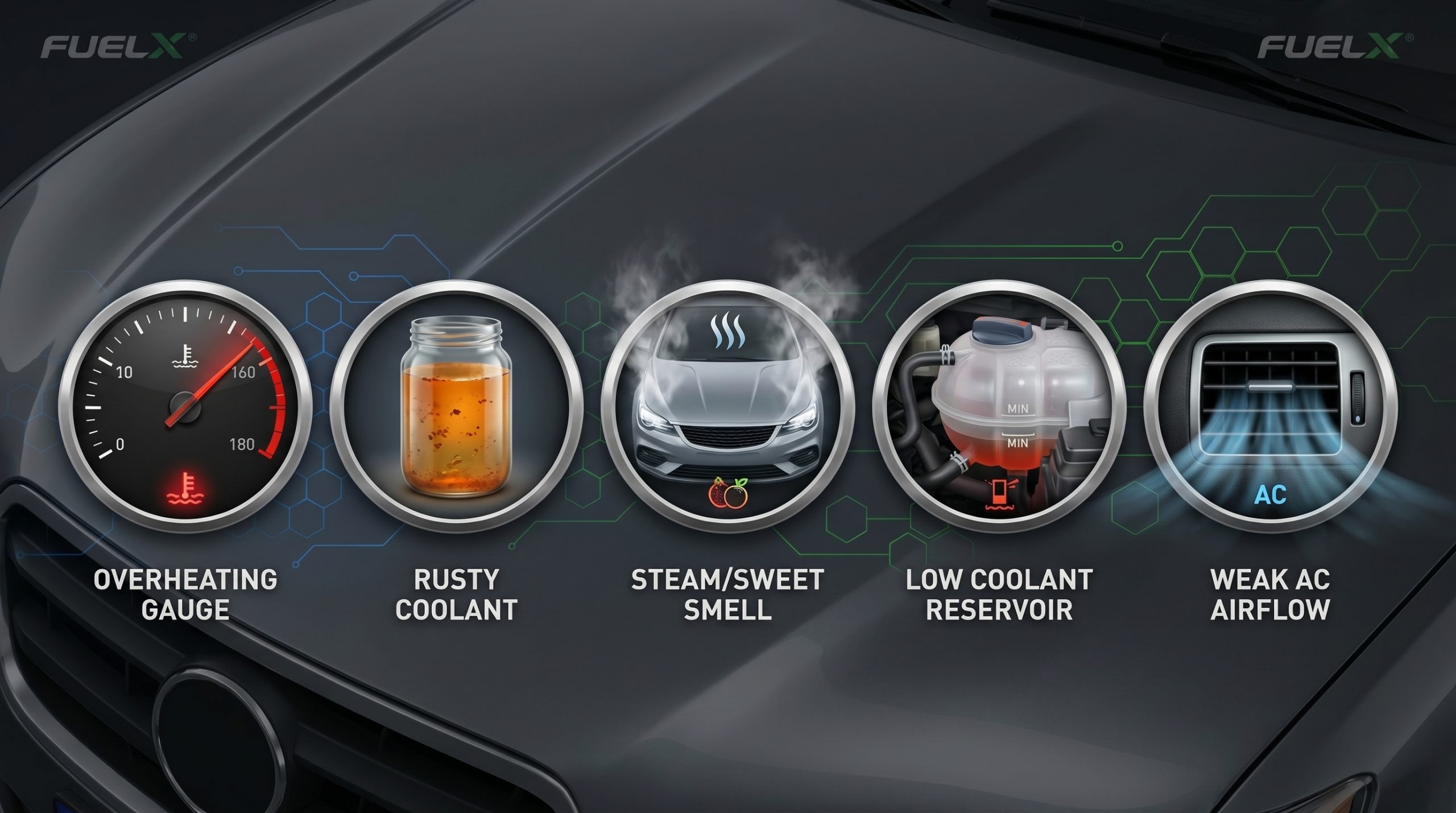
5 Signs Your Car Coolant Needs Changing
Even if you don’t remember the last coolant service, your car usually gives warning signs.
1. Frequent Engine Overheating
Increased frequency of high readings on the temperature gauge may indicate the coolant is no longer functioning properly.
It is especially clear:
In traffic,
On long drives
While using AC in summer
Good coolant will maintain engine temperatures, even in the heat.
2. Rusty or Dirty Coolant
Fresh coolant usually appears:
Bright green
Pink
Blue
Orange
depending on its type.
If coolant looks:
Brown
Muddy
Rusty
Cloudy
it likely contains corrosion and contamination.
Dirty coolant reduces cooling efficiency and may block radiator flow.
3. A Sweet Smell From The Engine Room
Coolant often smells sweetly chemical.
If you smell this odor near the hood area, it may be indicative of:
Coolant leaking out
Damage to the hose
Radiator leak
Small leaks can escalate rapidly in summer.
4. Coolant Level Continues to Drop
If you keep topping up the coolant every few days or weeks , then the system might be:
A concealed leak
Evaporation questions
Radiator cap issues
Coolant levels should remain fairly constant over long periods of time.
5. Weak AC Cooling or Heater Problems
Many people are not aware that coolant also influences the cabin heating and the general stability of engine temperature.
If :
AC performance degrades
Cabin heating becomes irregular
Engine temperature fluctuates
The cooling system may need checking.
What Happens If You Don’t Change Coolant on Time?
If you don’t change the coolant, you could end up with costly engine repairs.
Old coolant gradually loses:
Heat resistant
Protection corrosion
Lubricity
This can include:
Engine Overheat
Rusting
Failure of water pump
Radiator blockage
Head gasket damage
Automotive maintenance experts state that neglected coolant is among the leading causes of cooling system failures and overheating-related engine damage.
For example:
A coolant replacement may cost only a few thousand rupees.
A damaged head gasket repair can cost tens or even hundreds of thousands of rupees.
Preventive maintenance is always cheaper than engine repair.
Coolant vs Water — Which Is Better for Pakistani Cars?
Some drivers still believe plain water cools engines better than coolant.
While water can temporarily reduce heat, it lacks long-term protection.
Feature
Coolant
Plain Water
Heat Protection
Excellent
Weak
Rust Prevention
Yes
No
Boiling Resistance
High
Low
Scale Protection
Yes
No
Engine Safety
Strong
Risky
Proper coolant mixtures also help stabilize engine temperature during long drives and summer traffic.
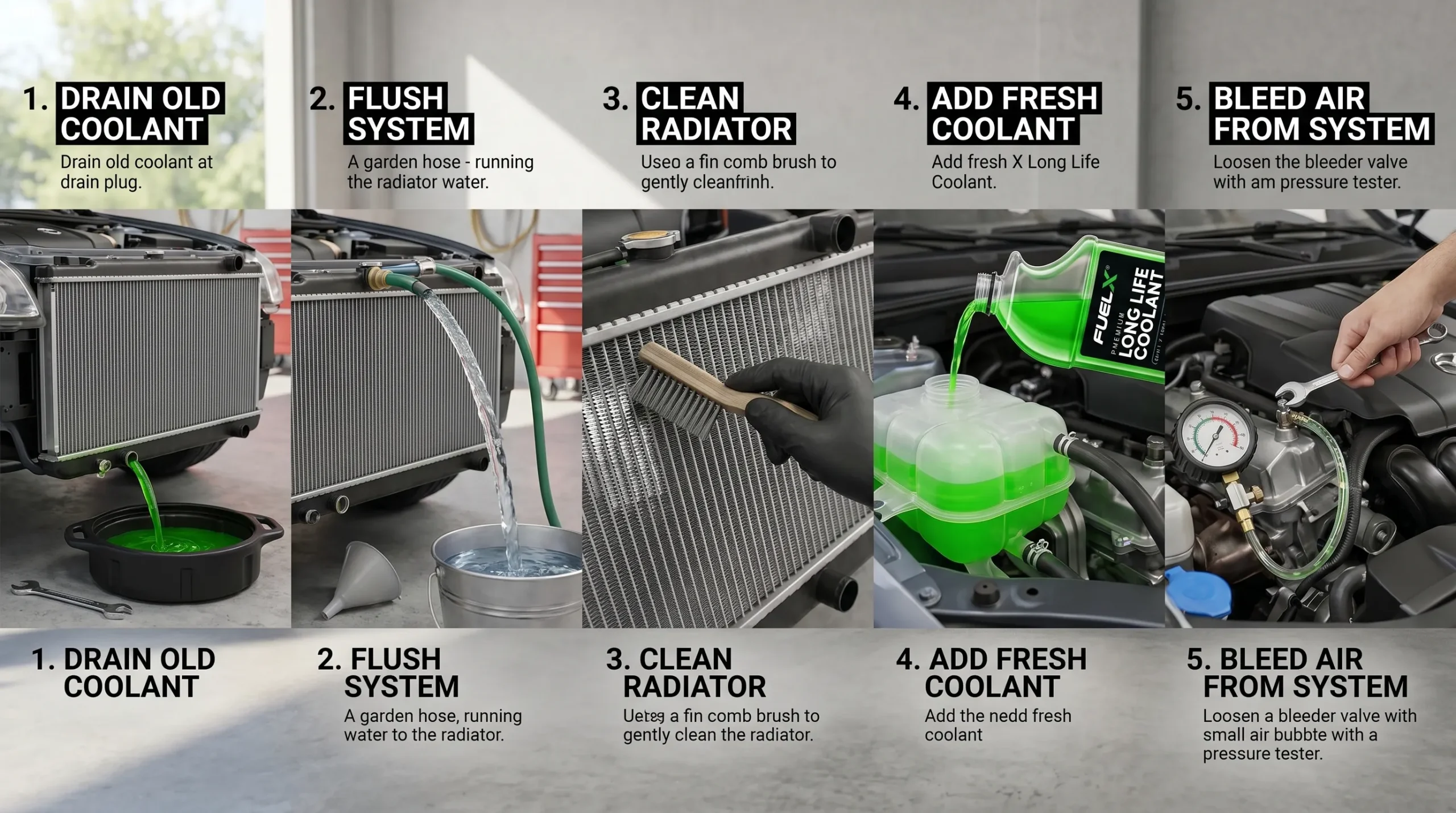
Should You Flush the Radiator When Changing Coolant?
Yes, particularly if:
Contaminated coolant
You see the rust
The car is old.
The coolant hasn’t been changed in years.
A radiator flush removes:
Old contaminated coolants.
Particles of rust
Deposits of sediment
Deposits of minerals
Without a flush, new coolant can become contaminated again quickly.
Most professionals suggest periodic coolant flushing as part of long-term cooling system maintenance.
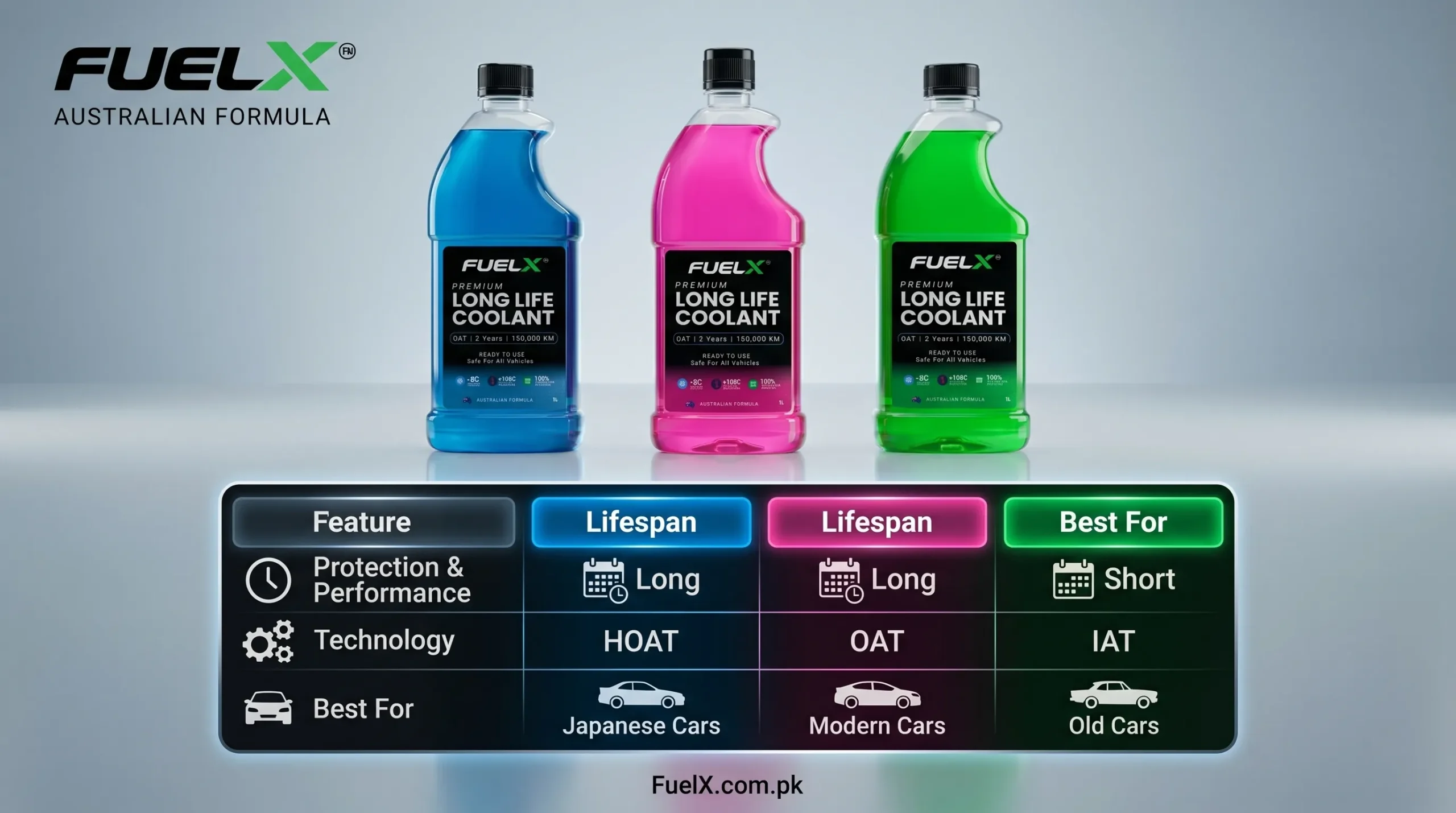
Which Type of Coolant Is Best for Pakistan?
Different vehicles use different coolant formulations.
Using the wrong coolant may reduce cooling performance or damage internal parts.
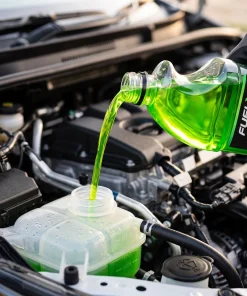
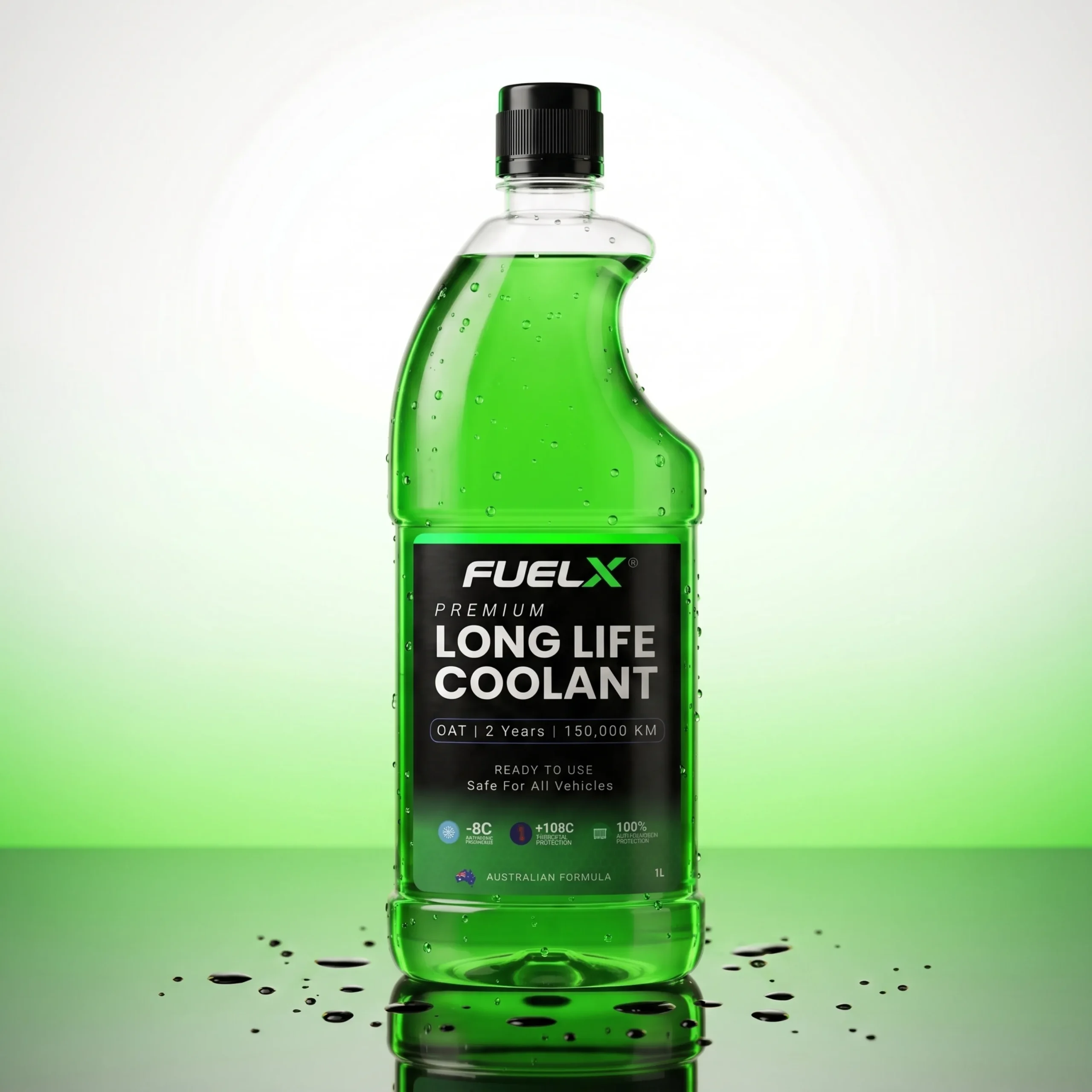
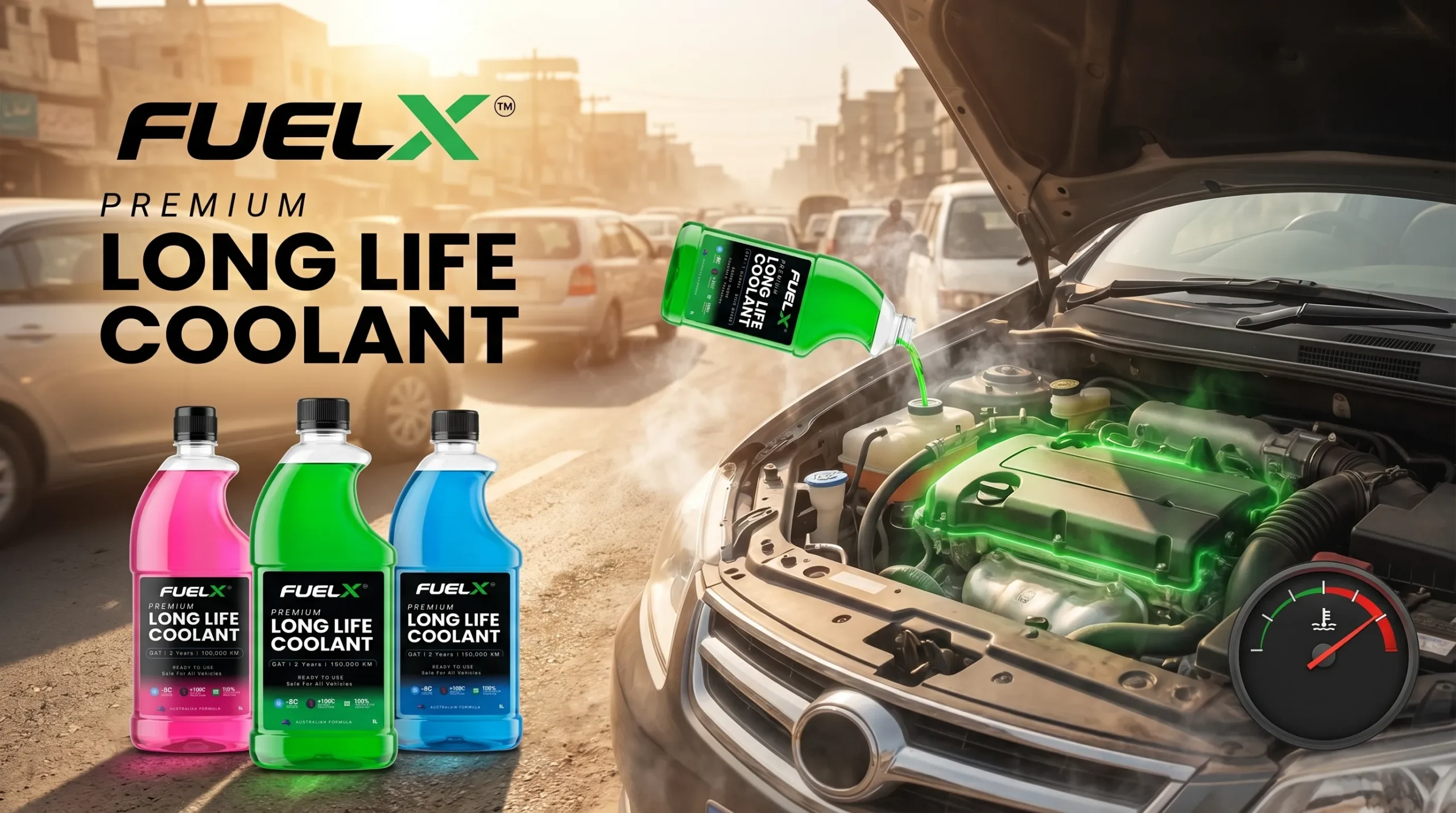
Coolant Green
Commonly seen in older vehicles
Normal coolant
Short life span
Replaced typically on a 2 year basis
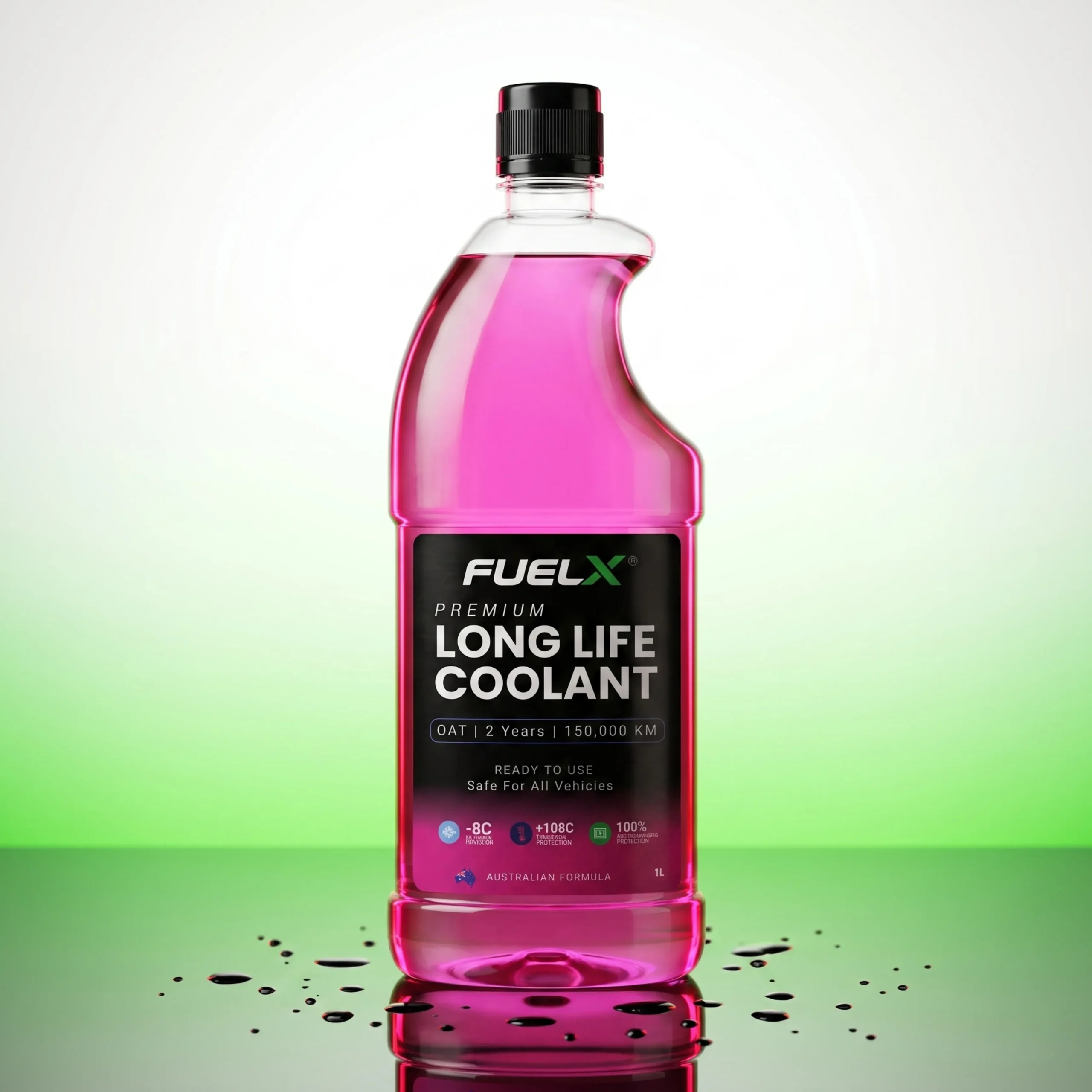
Coolant Pink
Coolant long life
Enhanced corrosion resistance
Common in Toyota vehicles
Suitable for high temperature
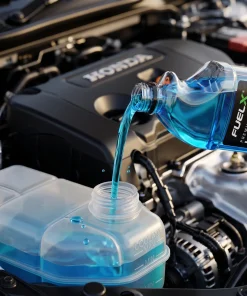
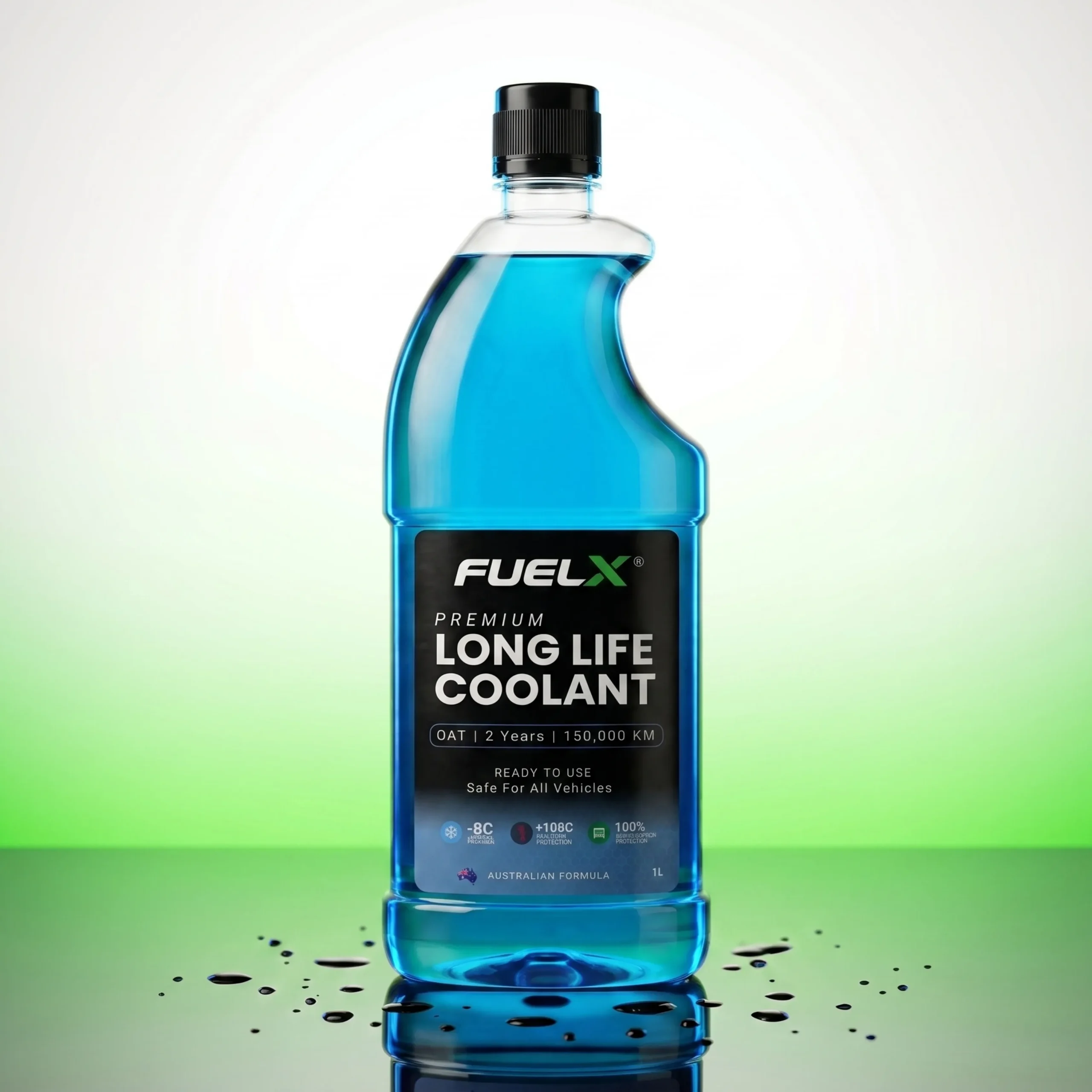
Blue Coolant
Long-life technology
Common in import cars and Honda’s
Longer intervals of service
Coolant Always use the coolant recommended by the vehicle manufacturer.
A quality coolant can improve cooling system reliability and engine safety.
Routine coolant inspection before summer and long trips is always recommended.
Pakistani Drivers Coolant Maintenance Tips
Here are some practical maintenance tips to improve cooling system performance:
Check coolant level monthly
Check the color of the coolant regularly
Never open the radiator cap when it is hot.
Don’t use plain tap water
Use distilled water when mixing coolant
Replace damaged radiator hoses in good time
Flushing coolant (periodic)
Check radiator fans for summer
Taking a few minutes for maintenance can keep your engine from serious damage later on.
Wrapping Up
Changing your car coolant on time is one of the simplest and most affordable ways to protect your engine from overheating and expensive repairs.
In Pakistan’s extreme summer temperatures, traffic congestion and dusty driving conditions, coolant works much harder than in many other countries.
As a general rule:
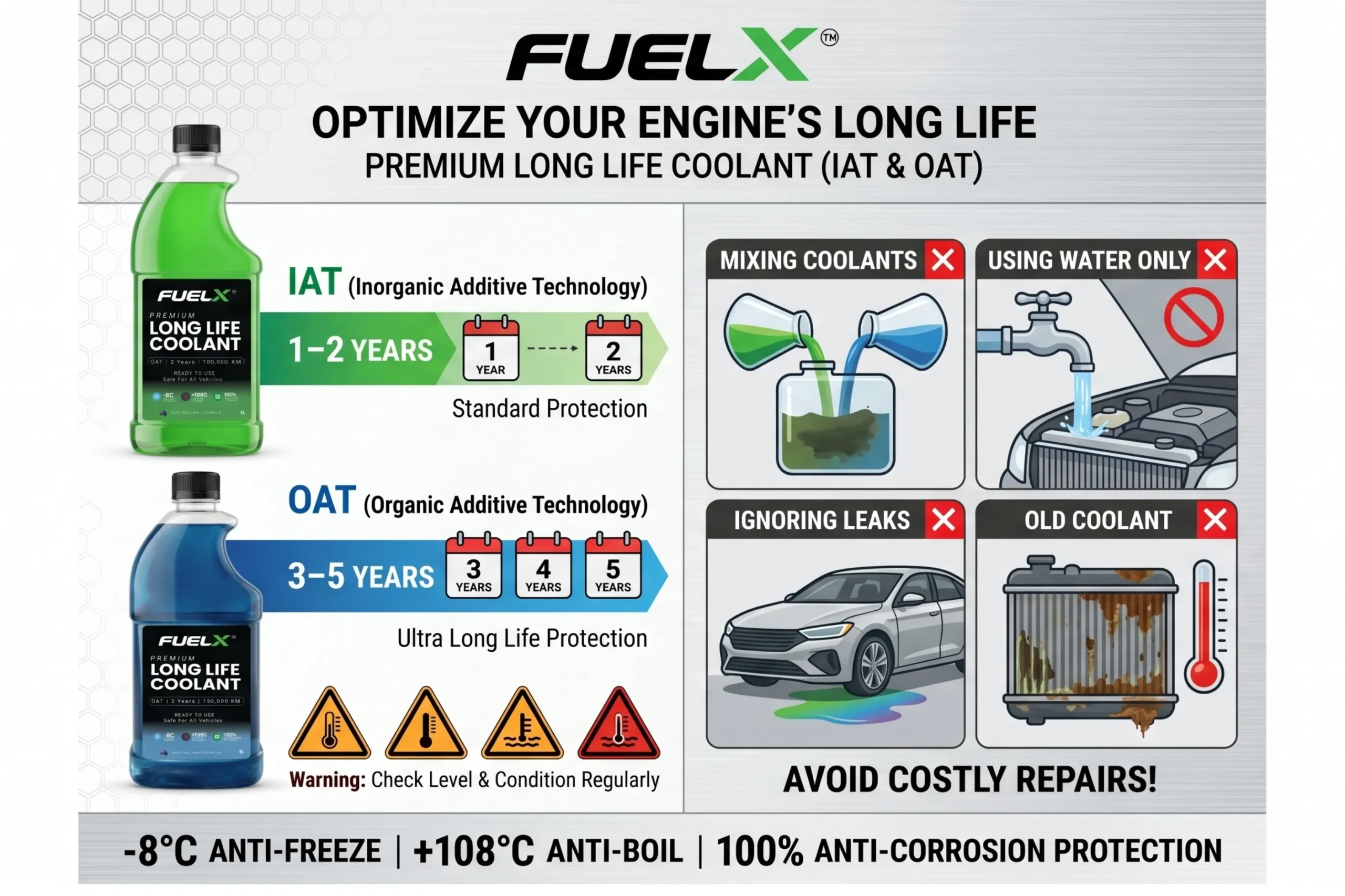
Conventional coolant should usually be replaced every 2 years
Long-life coolant may last 4–5 years depending on usage and condition
Regular coolant inspections, proper radiator flushing and using high-quality coolant can significantly improve engine reliability and cooling performance.
A small investment in coolant maintenance today can save you from major repair costs tomorrow.
FAQ’s
Can coolant expire even if the car is not driven much?
Yes. Coolant degrades over time even if the vehicle is rarely used because chemical additives slowly lose effectiveness.
Is topping up coolant enough?
No. Topping up only restores fluid level. Old contaminated coolant may still require complete replacement or flushing.
Can I mix water with coolant?
Yes, but distilled water should be used in proper ratios. Using only plain water long-term is not recommended.
Which coolant color is best?
The best coolant depends on your vehicle manufacturer’s recommendation, not the color itself.
How much coolant does a car need?
Most small cars usually require around 4–7 liters, but capacity varies depending on engine size and vehicle type.
Can old coolant damage the engine?
Yes. Old coolant may lose corrosion protection and cooling efficiency, increasing the risk of overheating and internal damage.
Is coolant replacement necessary every year in Pakistan?
Not always. Long-life coolants may last several years, but regular inspection is very important in Pakistan’s harsh climate.