Hand Wash Like a Pro: FuelX Car Wash Shampoo
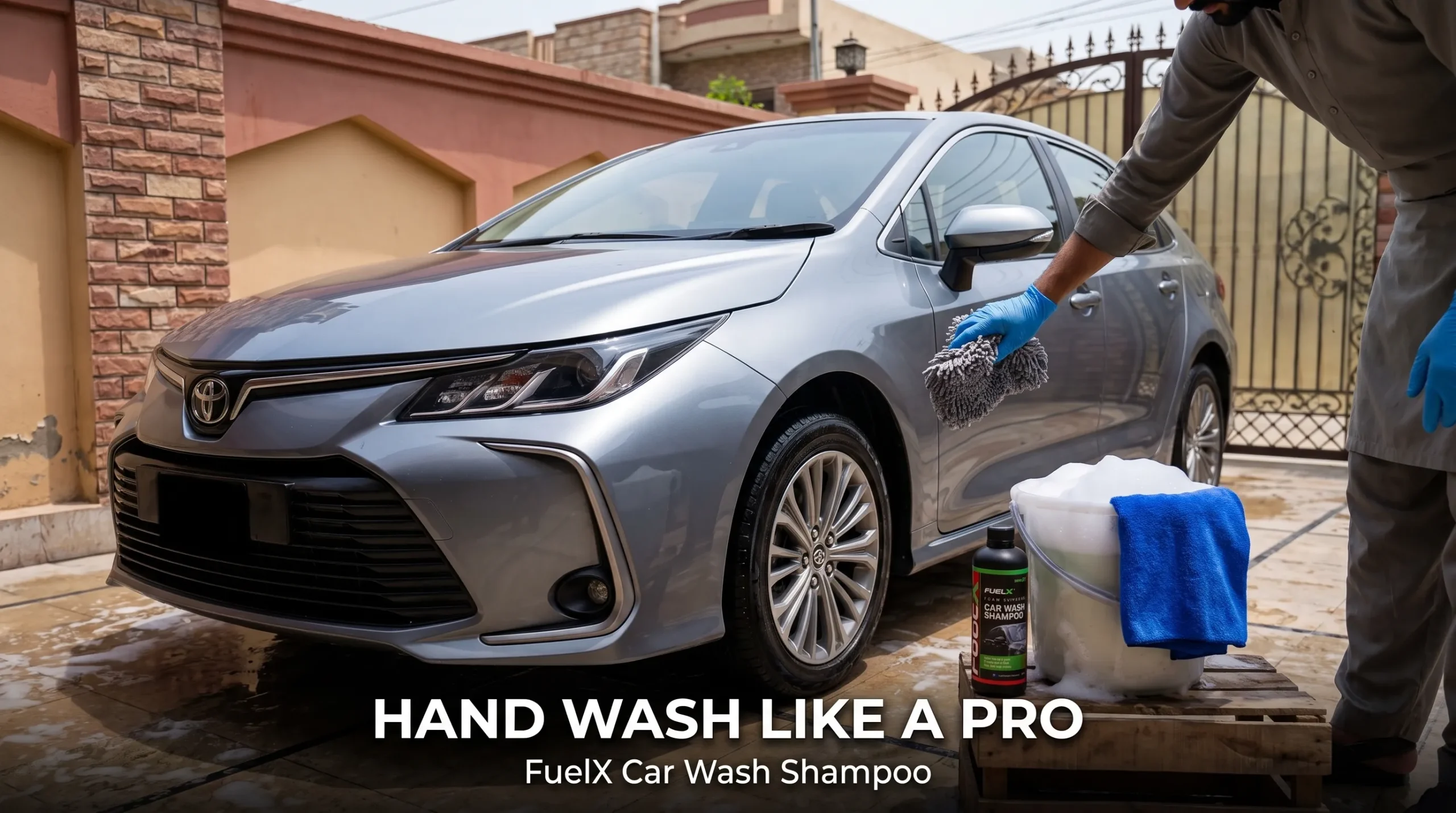
A clean car can completely change the way a vehicle looks. But getting that clean, glossy finish at home isn’t simply about pouring shampoo into a bucket and scrubbing the car as hard as possible.
The way you wash your car matters just as much as the product you use.
Everyday driving exposes your vehicle to dust, mud, traffic pollution, road grime, insects and other contaminants. In Pakistan, these conditions can become even more noticeable because of dusty roads, intense heat, outdoor parking and seasonal rain.
The good news is that you don’t need a professional detailing studio to give your car a careful hand wash. With the right car wash shampoo, clean tools and a systematic process, you can usually complete a thorough exterior wash at home in roughly 20–40 minutes, depending on the vehicle’s size and how dirty it is.
FuelX Car Wash Shampoo is designed for this type of routine exterior cleaning. FuelX describes it as a high-foaming, pH-neutral shampoo intended to remove dirt, dust, mud and road grime while supporting a clean, glossy finish. Its instructions recommend pre-rinsing, preparing the shampoo solution, washing section by section, rinsing thoroughly and drying with a clean microfiber cloth.
Here’s how to use it as part of a proper hand-washing routine.
Why Your Car Wash Technique Matters
Imagine wiping a dusty table with a dry cloth.
The cloth may remove some dust, but it can also push particles across the surface.
Your car’s paint faces a similar problem. Dust and road grime can contain fine particles that you don’t want to aggressively drag across the paint.
That’s why careful car washing focuses on loosening, lifting and rinsing contamination before applying unnecessary pressure.
FuelX’s own car-care guidance highlights the same principle: the goal is to remove contamination with water, lubrication and suitable wash media rather than simply increasing pressure.
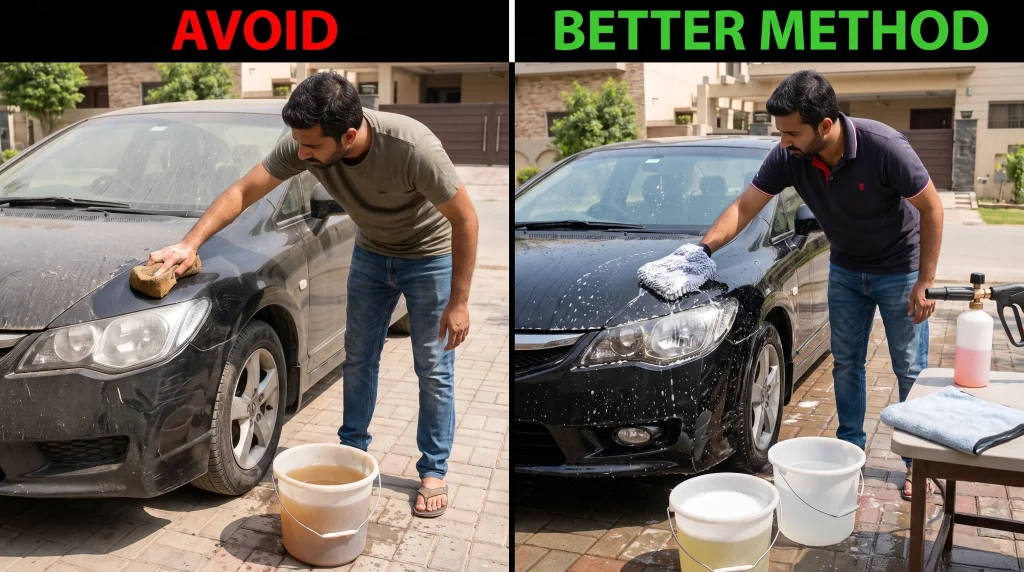
Common washing mistakes include:
- Washing a heavily dusty car without pre-rinsing
- Using household detergent instead of automotive shampoo
- Using one dirty cloth for the entire vehicle
- Starting with the dirtiest areas
- Scrubbing stubborn dirt aggressively
- Washing on a hot surface
- Allowing shampoo to dry on the paint
- Leaving the vehicle wet until the water evaporates
These shortcuts may save a few minutes, but they don’t necessarily produce a better finish.
A proper hand wash is more controlled: remove loose dirt first, use suitable lubrication during washing, work systematically and dry the vehicle properly.
What Makes a Good Car Wash Shampoo?
Before looking at the washing process, it helps to understand what a dedicated car shampoo is actually supposed to do.
1. Clean Everyday Contamination
Your car doesn’t stay clean for long.
Depending on where you drive and park, a vehicle can collect visible dust within a few days. Add rain, mud, traffic pollution and road spray, and the exterior can quickly develop a layer of grime.
A suitable automotive shampoo should help loosen and remove this everyday contamination during a normal wash.
This is particularly relevant for daily-driven vehicles in busy Pakistani cities where dust and road grime are part of normal driving conditions.
2. Provide Lubrication During Washing
One of the important advantages of a dedicated automotive shampoo is that it makes the washing process more controlled.
When you move a wash mitt across the paint, you want the cleaning solution to provide enough lubrication for the mitt to glide over the surface rather than dragging dry or dirty material across it.
FuelX describes its shampoo as reducing friction during washing and helping reduce the risk of swirl marks and micro-scratches.
However, there’s an important distinction:
No car shampoo can guarantee a completely scratch-free wash.
Your technique, wash mitt, rinse water, drying towel and the amount of dirt on the vehicle all matter.
If you put a dirty mitt onto heavily contaminated paint and scrub aggressively, even a good shampoo cannot eliminate the mechanical friction created by that process.
3. Be Suitable for Regular Washing
A maintenance shampoo should fit into your normal car-care routine rather than being reserved for an occasional detailing session.
FuelX states that its Car Wash Shampoo is suitable for regular use and is formulated for automotive surfaces.
For a daily-driven car, that matters because regular light cleaning is generally easier than allowing several weeks of dust and grime to build up and then trying to remove everything in one aggressive session.
4. Rinse Cleanly
After washing, you don’t want excessive cleaning residue remaining on the vehicle.
A proper rinse removes the shampoo and loosened contamination, while prompt drying helps reduce the chance of visible water spots.
This is particularly useful on dark-colored vehicles, where dried mineral deposits can be much easier to see.
Meet FuelX Car Wash Shampoo
FuelX Car Wash Shampoo is positioned as a high-foaming exterior cleaning product for removing dust, dirt, mud and road grime.
According to FuelX’s current product information, the shampoo features:
- High-foam cleaning performance
- pH-neutral formulation
- Dirt and grime removal
- Reduced friction during washing
- Support for a smooth, glossy finish
- Suitability for regular washing
- Use on cars, SUVs, hatchbacks and motorcycles
The product is currently listed by FuelX at ₨899.
But here’s the important part:
The shampoo is only one part of a professional-looking wash.
Think of it like cooking. Good ingredients matter, but preparation and technique still affect the final result.
The same principle applies to car washing.
FuelX’s own recent car-care content makes this distinction clearly: using a quality product incorrectly will not automatically produce a professional result.
What You Need for a Professional Hand Wash at Home
You don’t need a garage full of detailing equipment.
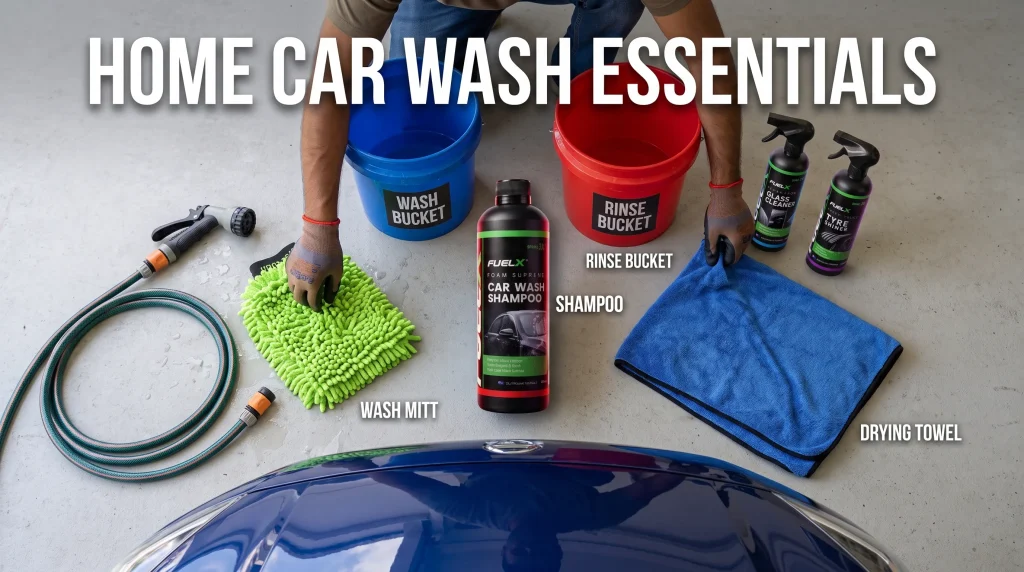
A practical setup includes:
- FuelX Car Wash Shampoo
- Two buckets
- Clean water
- Soft microfiber wash mitt or suitable sponge
- Clean microfiber drying towel
- Hose or another suitable water source
You can add separate products for specific surfaces after the main wash, such as glass cleaner and tyre care products.
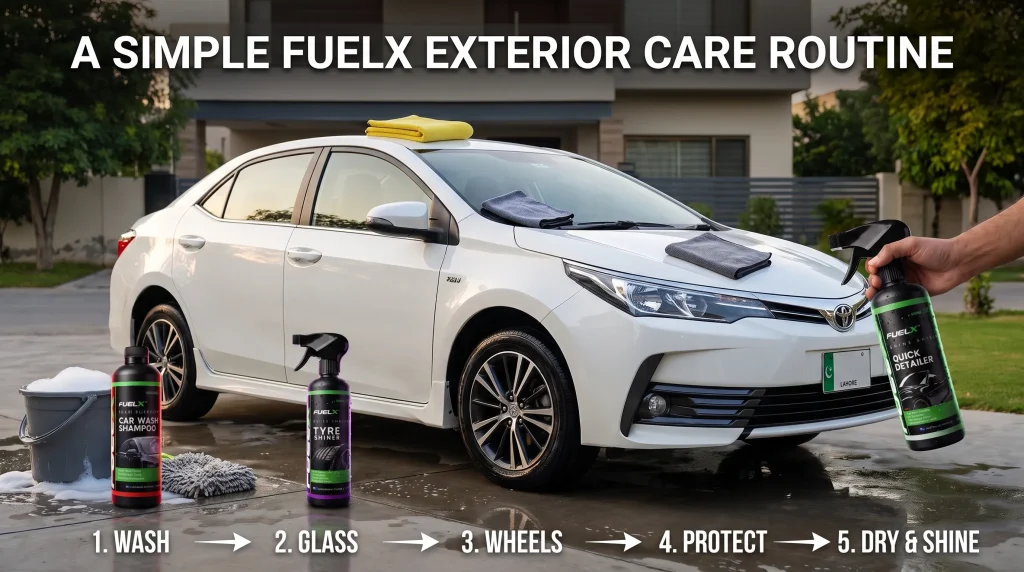
FuelX’s exterior-care range currently includes products such as Car Wash Shampoo, Premium Microfiber Detailing Towel, Glass Cleaner, Tyre Shiner and Quick Detailer.
A simple rule to remember
One product doesn’t need to do every job on the car.
Your paint, glass, tyres and interior surfaces have different cleaning requirements.
Keeping those jobs separate also helps prevent a dirty tyre or wheel towel from becoming the same towel you use on your paint.
Step-by-Step: How to Hand Wash Your Car Like a Pro
Now let’s get into the actual process.
For a normal sedan or hatchback with moderate dirt, allow roughly 20–40 minutes from preparation through drying. A heavily muddy SUV may take considerably longer because contamination needs more rinsing and attention.
The objective isn’t to rush.
It’s to minimize unnecessary rubbing while getting the vehicle genuinely clean.
Step 1: Choose the Right Time and Location
Whenever possible, wash your car in a shaded area rather than under strong direct sunlight.
This is especially useful during Pakistan’s hotter months.
When the exterior surface is very hot, water can evaporate quickly. Shampoo can also dry faster than you expect, leaving residue that requires additional rinsing.
A shaded location gives you more working time and makes it easier to control each panel.
Before starting, make sure:
- The car is parked safely
- The windows are closed
- You have enough clean water
- Your towels and wash mitt are clean
- Your shampoo is ready
- You have somewhere to place dirty tools separately
A useful timing tip
Don’t prepare the shampoo solution and then leave the vehicle sitting for 15–20 minutes while you search for towels.
Have everything ready first.
The smoother your workflow, the less likely you are to let shampoo or water dry on the surface.
Step 2: Pre-Rinse the Car
This is one of the most important steps.
Before putting your wash mitt onto the paint, use clean water to rinse away as much loose dust, mud and road grime as possible.

Start from the top and work downward.
Pay extra attention to:
- Lower doors
- Bumpers
- Wheel arches
- Rear bumper
- Muddy areas
- Areas behind the wheels
The purpose isn’t to make the vehicle perfectly clean at this stage.
The purpose is to remove loose contamination before physical contact with the paint.
FuelX’s product instructions specifically begin with pre-rinsing to remove loose dust, mud and dirt before washing.
Why does this matter?
Consider a car that has been parked beside a busy road for several days.
Its paint may have accumulated a mixture of dust, fine road particles and grime. If you immediately put a wash mitt onto that surface, the mitt is making contact with all of that contamination.
A thorough pre-rinse gives water a chance to remove the loose material before you start the contact wash.
Pro Tip
If the vehicle is heavily muddy, don’t immediately attack the mud with a sponge.
Give water time to soften and loosen the contamination.
Less aggressive contact is generally better than more aggressive scrubbing.
Step 3: Prepare Your FuelX Shampoo Solution
Fill your wash bucket with clean water and add the recommended amount of FuelX Car Wash Shampoo according to the product directions.
Mix the solution until rich foam forms.
One common beginner mistake is assuming: More shampoo = cleaner car.
That’s not necessarily true.
Using twice as much shampoo doesn’t automatically make the car twice as clean. It can simply create more residue and require more rinsing.
The current FuelX instructions specifically recommend using the recommended amount rather than guessing.
Don’t guess the dilution
If you’re using a different bottle size or product formulation, don’t rely on an internet recipe written for another shampoo.
Follow the dilution instructions supplied with your FuelX product.
That gives you a more consistent cleaning process and avoids unnecessary product waste.
Step 4: Use the Two-Bucket Method
If you want to make your home wash more professional, the two-bucket method is worth adopting.
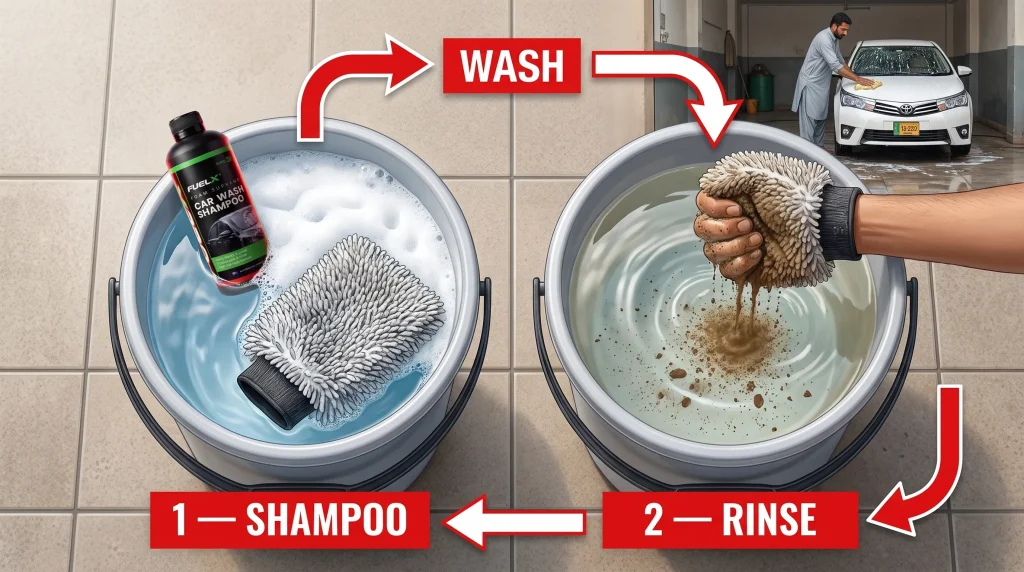
Bucket 1: Shampoo Solution
This contains your clean FuelX shampoo mixture.
Bucket 2: Rinse Water
This is used to rinse dirt from your wash mitt before putting it back into the shampoo solution.
The process is simple:
- Dip the wash mitt into the shampoo bucket.
- Wash a small section.
- Move the mitt to the rinse bucket.
- Rinse away accumulated dirt.
- Return the clean mitt to the shampoo bucket.
- Continue with the next section.
The idea is to reduce the amount of dirt transferred back onto the paint.
FuelX’s existing guidance recommends the same two-bucket approach, particularly when dealing with significant road contamination.
What if you only have one bucket?
You can still wash your car, but be more careful about rinsing your mitt frequently and replacing dirty water when necessary.
The two-bucket method simply gives you a better system for separating the cleaning solution from the dirt you’re removing.
Step 5: Wash From Top to Bottom
Now start washing.
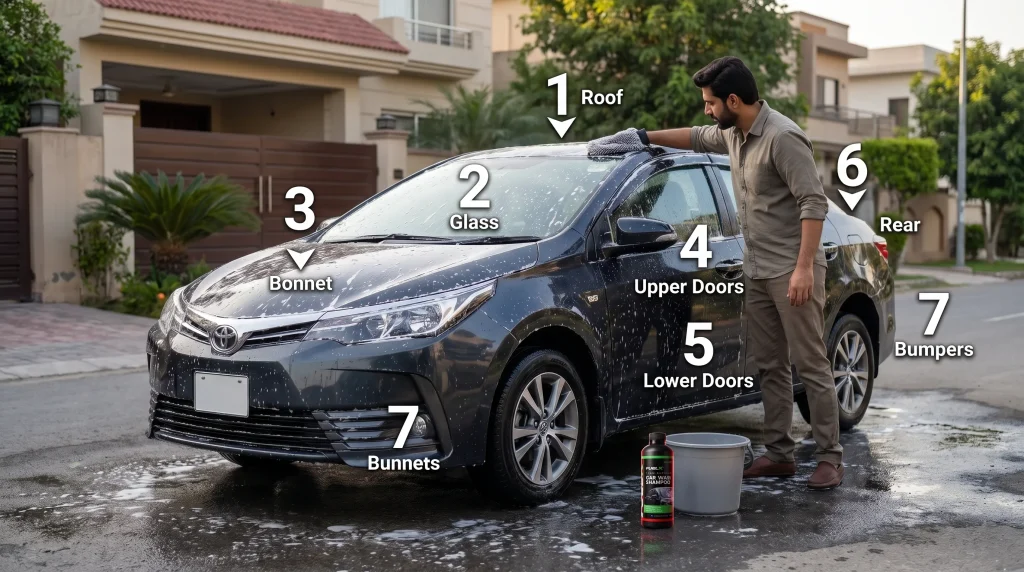
A practical order is:
Roof → Glass → Bonnet → Upper doors → Lower doors → Rear → Bumpers
Why start at the top?
The upper sections generally collect less heavy road grime than the lower panels.
The lower portions, bumpers and areas around the wheels are often much dirtier because they receive more road spray.
If you start with those areas and then use the same mitt on the roof, you’re potentially transferring more contamination onto cleaner surfaces.
Work in small sections
Instead of trying to wash the entire car at once, divide it into manageable areas.
For example:
- Roof
- Left side
- Right side
- Front
- Rear
Wash one section, rinse the mitt, then move on.
This gives you better control and helps prevent the shampoo from drying on the vehicle.
Step 6: Give Stubborn Dirt More Time—Not More Pressure
This is one of the biggest differences between a rushed wash and a careful wash.
Suppose you find a patch of dried mud on the lower door.
Your first reaction might be:
“I’ll just scrub harder.”
Instead, try this:
Rinse → apply shampoo solution → allow it to loosen → gently wash again.
If the contamination still doesn’t come away, repeat the process rather than immediately increasing pressure.
FuelX’s guidance for mud and rainwater contamination follows the same principle: loosen contamination with water and shampoo instead of aggressively rubbing it into the paint.
Remember the rule:
More soaking and lubrication before more pressure.
If something is genuinely bonded to the paint, normal car shampoo may not be enough. That doesn’t mean you should attack it with a harder sponge.
Step 7: Rinse the Vehicle Thoroughly
Once you’ve washed the complete exterior, it’s time for the final rinse.
Start from the roof and work downward.
Make sure you rinse:
- Roof
- Windows
- Bonnet
- Doors
- Mirrors
- Handles
- Grilles
- Bumpers
- Panel gaps
- Number-plate area
- Lower body panels
Don’t focus only on the large painted panels.
Soap and loosened dirt can remain around small edges and gaps.
A thorough final rinse removes the remaining shampoo and suspended contamination before you move to the drying stage.
A simple inspection trick
After rinsing, walk around the vehicle once before drying.
Look for:
- Remaining foam
- Mud around lower panels
- Shampoo around handles
- Residue near mirrors
- Dirt around bumper edges
It takes less than a minute and can save you from discovering dried residue later.
Step 8: Dry the Car Properly
Don’t simply leave the car wet and assume everything will evaporate cleanly.
As water evaporates, minerals and contaminants dissolved in the water can remain on the surface and create visible spots.
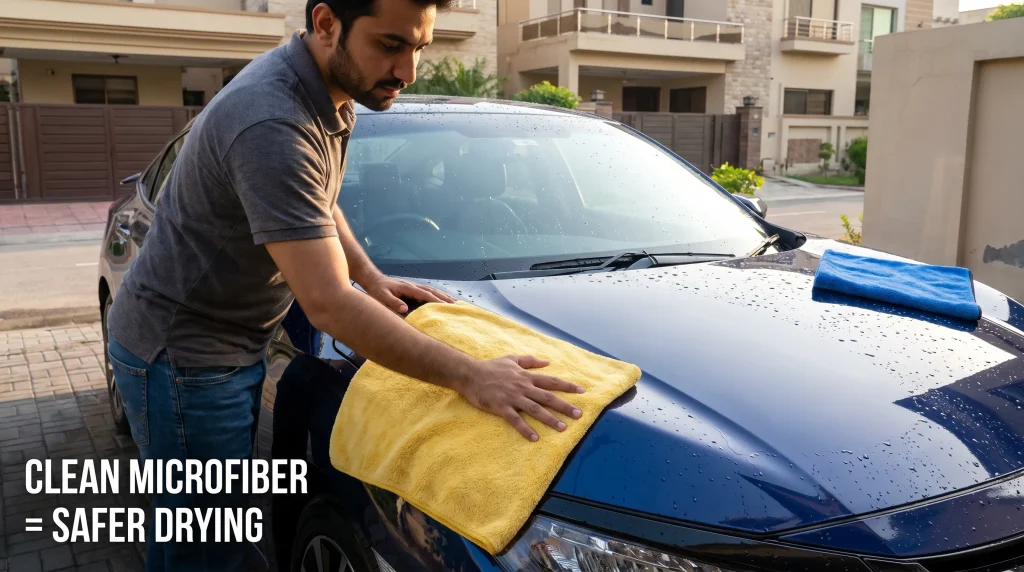
This can be especially noticeable on dark-colored vehicles.
Use a clean microfiber drying towel and work methodically.
Gently absorb the water rather than applying unnecessary pressure.
FuelX’s product instructions recommend drying with a clean microfiber cloth after rinsing to help prevent water spots.
Don’t underestimate the towel
You can have the correct shampoo and washing technique and still create problems if your drying towel is dirty.
A towel used previously on muddy lower panels or tyres can contain grit.
Keep separate towels for different jobs whenever possible:
- Paint drying towel
- Glass towel
- Wheels/tyres towel
- Interior towel
That small organizational habit can make your detailing routine much safer and cleaner.
After the Wash: Build a Simple Exterior Routine
Once the main washing and drying process is complete, you can move on to specific exterior surfaces.
You don’t need to apply every product after every wash.
Instead, think about the vehicle in zones.
Glass
Use FuelX Glass Cleaner for appropriate glass surfaces when you want to remove fingerprints, road film and streaks.
Clean glass isn’t only about appearance—it also contributes to better visibility, particularly during rain or nighttime driving.
Tyres
After cleaning the tyres, FuelX Tyre Shiner can be used on the tyre sidewalls when you want a cleaner, finished appearance.
Remember that tyre dressing is a finishing step; it doesn’t replace proper tyre cleaning.
Light Exterior Maintenance
FuelX Quick Detailer can be useful for suitable light-maintenance situations on an already-clean exterior.
It shouldn’t replace a proper wash when the vehicle is heavily dirty or muddy.
FuelX’s current exterior product range separates these functions into dedicated products rather than treating the shampoo as a universal cleaner.
7 Common Car-Washing Mistakes to Avoid
Even a good shampoo won’t compensate for poor technique.
1. Using Household Detergent
Dishwashing liquid and laundry detergent may be convenient, but they’re designed for household cleaning rather than routine automotive washing.
A dedicated car shampoo is a more appropriate choice for cleaning vehicle paint.
FuelX specifically advises against household detergents and recommends purpose-made automotive shampoo for regular washing.
2. Washing a Dry, Dusty Car
Don’t immediately wipe a heavily dusty vehicle.
Rinse first.
The first few minutes of a wash should be about removing loose contamination, not rubbing it around.
3. Using One Bucket for Everything
One bucket can work for a basic wash, but it allows dirt removed from the vehicle to accumulate in the same water you’re using to reload your mitt.
A second rinse bucket provides a simple separation between dirty rinse water and clean shampoo solution.
4. Using a Dirty Cloth
Your wash mitt and drying towels should be clean.
A towel covered in grit can defeat the purpose of careful washing.
5. Starting With the Dirtiest Areas
Save heavily contaminated lower areas for later.
Start with cleaner upper panels and work downward.
6. Washing in Strong Direct Sunlight
A hot surface can cause water and cleaning products to dry quickly.
Shade gives you more control and reduces the chance of dealing with dried residue during the wash.
7. Scrubbing Harder When Dirt Doesn’t Come Off
This is perhaps the most important mistake.
When dirt refuses to move, increase soaking and rinsing before increasing pressure.
The goal is to remove contamination, not to prove how hard you can scrub.
How Often Should You Hand Wash Your Car?
There’s no single washing schedule that works for every vehicle.
Your ideal frequency depends on:
- How often you drive
- Where you drive
- Outdoor or indoor parking
- Dust levels
- Rain and mud exposure
- Construction activity
- Traffic pollution
- Seasonal conditions
For a regularly driven city vehicle, washing roughly every one to two weeks can be a reasonable starting point.
FuelX’s existing guidance also recommends adjusting washing frequency according to actual contamination and driving conditions.
A practical example
If you normally wash your car every Saturday but drive through heavy mud on Wednesday, don’t wait until Saturday simply because that’s your “wash day.”
Rinse or clean the affected contamination sooner.
On the other hand, if your car has been parked indoors for several days and remains relatively clean, there’s no need to aggressively wash it just because seven days have passed.
Inspect the vehicle and respond to its condition.
When Car Shampoo Isn’t Enough
A good car shampoo is designed for routine washing.
It isn’t a universal solution for every type of surface problem.
For example, you may encounter:
- Tree sap
- Tar
- Heavy bonded contamination
- Severe water spots
- Oxidation
- Scratches
- Paint defects
- Deep stains
These problems may require specialized cleaning, decontamination or professional detailing.
Don’t keep scrubbing harder simply because normal shampoo isn’t removing a particular contaminant.
The correct solution depends on what is actually stuck to the surface.
This distinction matters
A car shampoo is primarily a wash product.
It isn’t a paint polish, scratch remover or heavy-duty tar remover.
Using the right product for the right problem is one of the basic principles of good detailing.
FuelX Car Wash Shampoo: Where It Fits Into Your Routine
Here’s a simple way to remember the process:
| Stage | Purpose | What to Use |
| Pre-rinse | Remove loose dirt | Clean water |
| Main wash | Clean exterior surfaces | FuelX Car Wash Shampoo |
| Rinse | Remove shampoo and loosened dirt | Clean water |
| Dry | Remove remaining water | Clean microfiber towel |
| Glass care | Clean windows and windshield | FuelX Glass Cleaner |
| Tyre care | Finish tyre sidewalls | FuelX Tyre Shiner |
| Light maintenance | Refresh a clean exterior | FuelX Quick Detailer |
This approach keeps your car-care routine organized.
Instead of asking:
“Which one product cleans everything?”
ask:
“What does this part of the car need?”
That simple change can make home detailing much easier.
A Simple 30-Minute Hand-Wash Routine
If you’re new to proper car washing, here’s a practical schedule you can use as a starting point.
| Approx. Time | Task |
| 0–3 min | Prepare tools and shampoo |
| 3–8 min | Thorough pre-rinse |
| 8–20 min | Two-bucket contact wash |
| 20–25 min | Final rinse |
| 25–35 min | Microfiber drying and inspection |
These are practical estimates, not fixed requirements. A small hatchback with light dust may take less time, while a large SUV covered in dried mud may take significantly longer.
The important thing isn’t finishing in exactly 30 minutes.
The important thing is having a repeatable process.
Why Consistency Beats Occasional Aggressive Cleaning
Imagine two car owners.
The first lets dust and road grime accumulate for three or four weeks and then spends an hour aggressively scrubbing everything.
The second performs a careful wash approximately every one to two weeks and deals with heavy contamination when it appears.
The second routine is usually easier because there’s less accumulated contamination to fight during each wash.
This is why professional-style car care is often less about one dramatic detailing session and more about consistent maintenance.
You don’t need to make every wash a five-hour project.
You need a process you can realistically repeat.
Final Thoughts
You don’t need a professional detailing studio to give your car a careful, high-quality hand wash.
You need the right process.
Pre-rinse the vehicle.
Use an automotive shampoo.
Keep your wash tools clean.
Work from top to bottom.
Use gentle movements.
Rinse thoroughly.
Dry with a clean microfiber towel.
And most importantly, don’t try to remove stubborn dirt by simply scrubbing harder.
FuelX Car Wash Shampoo is designed to be the main cleaning step in this routine, with its high-foam, pH-neutral formulation intended to help remove everyday dust, mud and road grime while supporting a smooth-looking finish.
The goal isn’t simply to make your car look clean for a few hours.
It’s to build a washing routine that is consistent, controlled and easy enough to repeat.
That’s how you can hand wash your car more like a professional—without turning every weekend into a trip to the detailing shop.
FAQ’s
Can I use FuelX Car Wash Shampoo for regular washing?
Yes. FuelX states that its Car Wash Shampoo is suitable for regular use and is designed for routine exterior cleaning.
How should I use FuelX Car Wash Shampoo?
Pre-rinse the vehicle, add the recommended amount of shampoo to water, mix the solution, apply it using a suitable wash mitt or sponge, wash from top to bottom, rinse thoroughly and dry with a clean microfiber cloth.
Do I need two buckets to wash my car?
A two-bucket setup isn’t the only way to wash a car, but it is a useful method because one bucket holds your clean shampoo solution while the other is used to rinse dirt from your wash mitt.
Can I wash my car in direct sunlight?
It’s better to work in the shade when possible. Hot panels can cause water and cleaning products to dry more quickly, making it harder to rinse and dry the vehicle evenly.
Why should I rinse my car before using shampoo?
Pre-rinsing helps remove loose dust, mud and dirt before your wash mitt makes contact with the paint. This reduces unnecessary rubbing during the washing process.
Can I use household detergent instead of car shampoo?
A dedicated automotive shampoo is the more appropriate choice for routine vehicle washing because it is formulated specifically for automotive surfaces. FuelX’s own guidance recommends avoiding household detergents for this purpose.
Does car shampoo prevent scratches?
No shampoo can guarantee that a vehicle will never develop scratches or swirl marks. Washing technique, clean tools, adequate lubrication, pre-rinsing and proper rinsing all play important roles.
Can FuelX Car Wash Shampoo be used on SUVs and motorcycles?
FuelX states that the product is suitable for cars, SUVs, hatchbacks and motorcycles.
How much FuelX Car Wash Shampoo should I use?
Use the amount recommended by the manufacturer for the specific product rather than guessing or simply adding more for extra foam. The current FuelX product instructions direct users to add the recommended amount to a bucket of water.
Can FuelX Car Wash Shampoo remove every type of stain?
No. It is intended for routine exterior washing and everyday dirt, dust, mud and road grime. Contaminants such as tar, tree sap, severe water spots or paint defects may require specialized treatment.
Is foam alone enough to clean a car safely?
No. Foam is only part of the process. Pre-rinsing, appropriate wash media, lubrication, clean rinse water, gentle technique and proper drying all contribute to a safer and more consistent wash.
About FuelX Research & Detailing Lab
FuelX engineers high-performance automotive cooling solutions and specialized car detailing products engineered for Pakistan's demanding driving conditions. All guides and tips are validated by our technical team to ensure engine longevity and lasting vehicle protection.
Keep Your Engine Cool & Your Ride Shining
Shop FuelX certified Long Life Coolants, high-gloss tyre shine, safe car wash shampoo, and lint-free microfiber accessories.