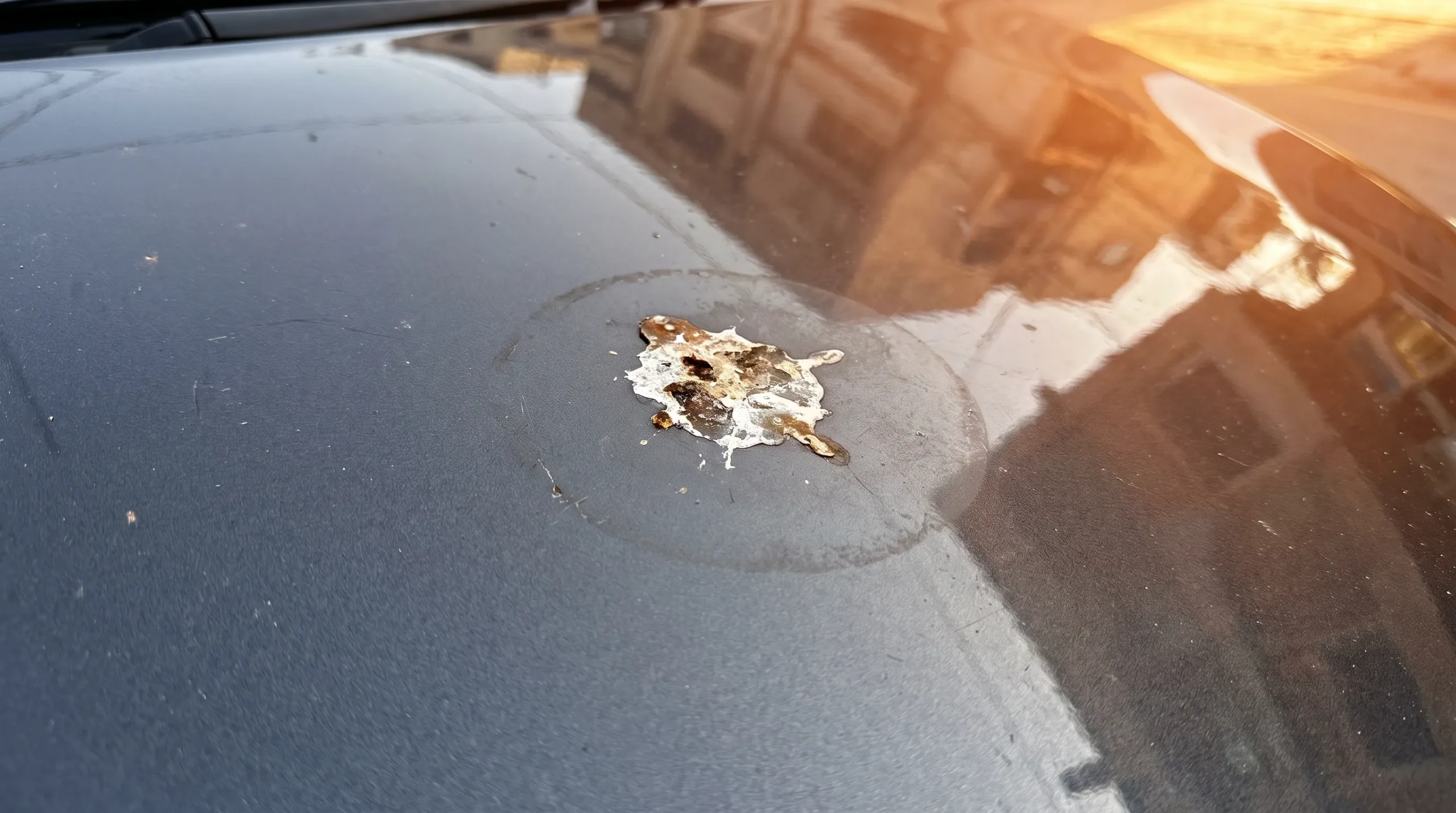
Bird droppings on a freshly washed car are frustrating, but they are more than an appearance problem. If left on automotive paint, bird droppings can contribute to staining and clear-coat etching, particularly when the vehicle is exposed to strong sunlight and heat.
The good news is that removing bird droppings safely does not require professional detailing equipment. In most cases, you need clean water, a suitable automotive cleaner, a good microfiber towel, and the right technique.
The most important rule is simple:
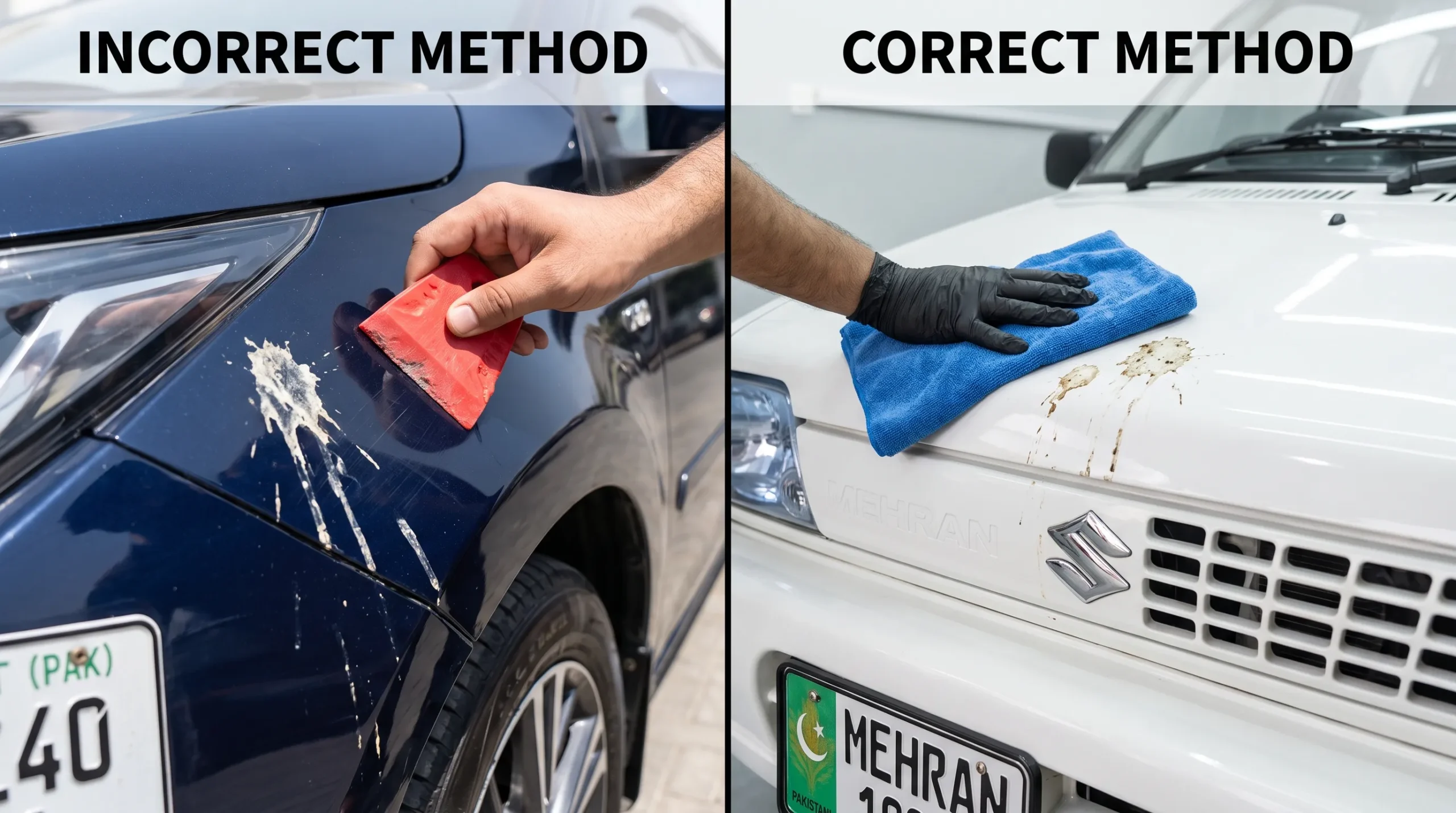
Never aggressively rub or scrape dried bird droppings from your car paint. Soften them first, then gently lift the residue.
This is especially useful in Pakistan, where summer temperatures can push well above 40°C in many cities. A dark-colored car parked in direct sunlight can become considerably hotter than the surrounding air, causing contaminants on the surface to dry quickly.
Let’s look at the safest way to deal with bird droppings before they turn into a paint problem.
Can Bird Droppings Damage Car Paint?
Yes, bird droppings can damage or stain automotive paint when they remain on the surface for extended periods.
Bird droppings contain uric acid, salts, organic material, and other compounds. Once deposited on your car, the material begins drying. As moisture evaporates, the remaining residue becomes more concentrated.
Heat can make the situation worse.
For example, if the outside temperature is around 38–40°C, a vehicle sitting in direct sunlight can have exterior surfaces significantly hotter than the surrounding air. Under those conditions, a fresh dropping can dry much faster than it would on a cool, shaded vehicle.
Modern automotive paint is protected by a clear coat, but clear coat isn’t an unlimited barrier against environmental contamination.
There are several possible outcomes:
Fresh contamination: Usually easy to remove with gentle cleaning.
Dried contamination: Requires soaking before removal.
Staining: A visible mark may remain after the dropping is cleaned.
Clear-coat etching: The affected area may develop a dull or irregular outline that doesn’t disappear through normal washing.
Not every bird dropping will permanently damage paint, and there is no universal “safe number of hours” because the risk depends on factors such as temperature, sunlight, paint condition, contamination composition, and how long it remains on the surface.
That’s why the best rule is not to wait for a specific deadline:
Remove bird droppings as soon as reasonably possible.
Why Is Heat So Important?
Heat doesn’t necessarily mean the bird dropping instantly damages your paint, but it can accelerate drying and make the contamination harder to remove.
Imagine two identical cars.
One is parked in a shaded garage. The other is parked outside under strong afternoon sunlight.
A dropping on the shaded car may remain softer for longer. On the sun-exposed car, moisture can evaporate rapidly, leaving behind a harder, more concentrated deposit.
This is one reason bird droppings are particularly inconvenient during hot Pakistani summers.
If your car is parked outdoors regularly, checking the bonnet, roof, boot lid, and other horizontal panels after parking can help you catch contamination early.
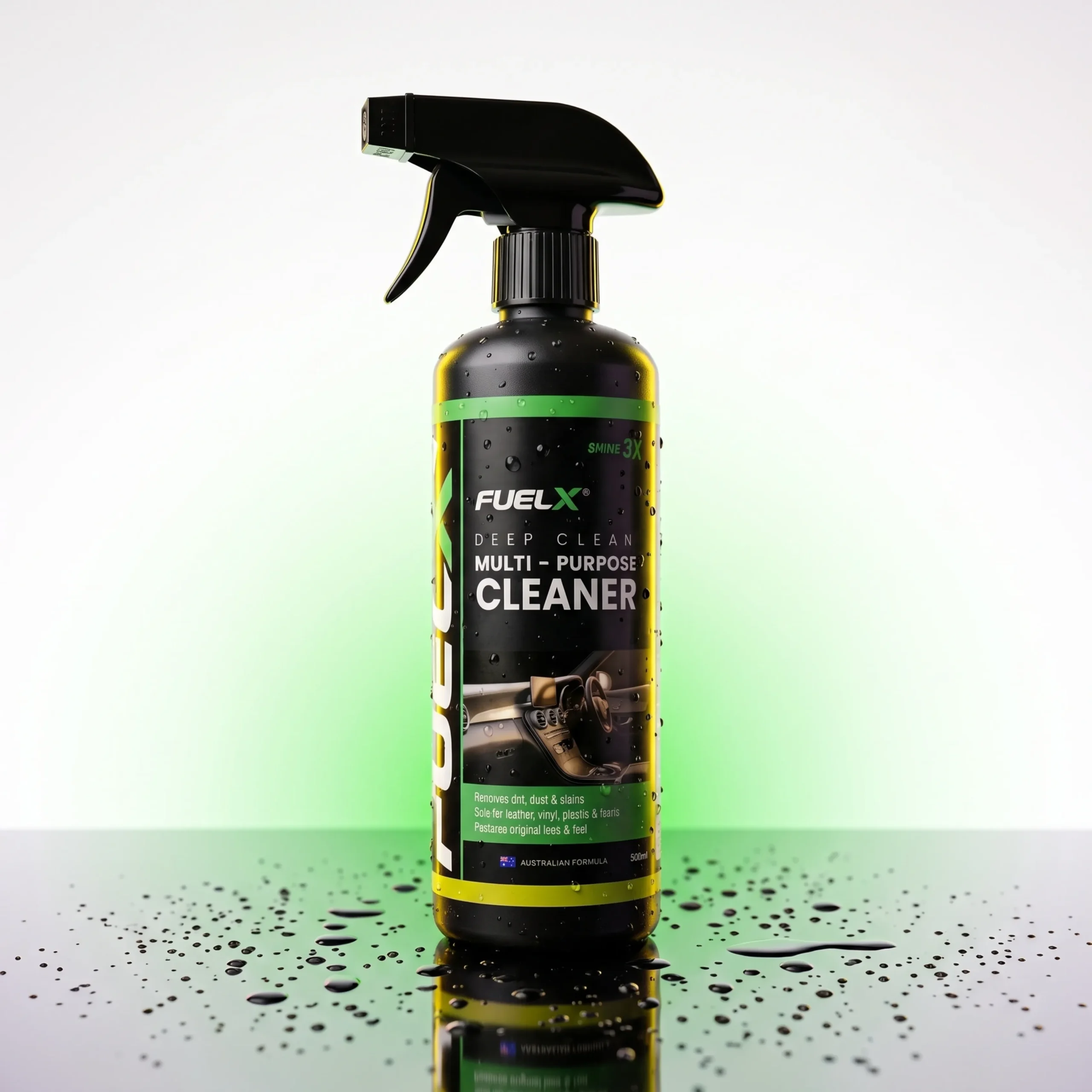
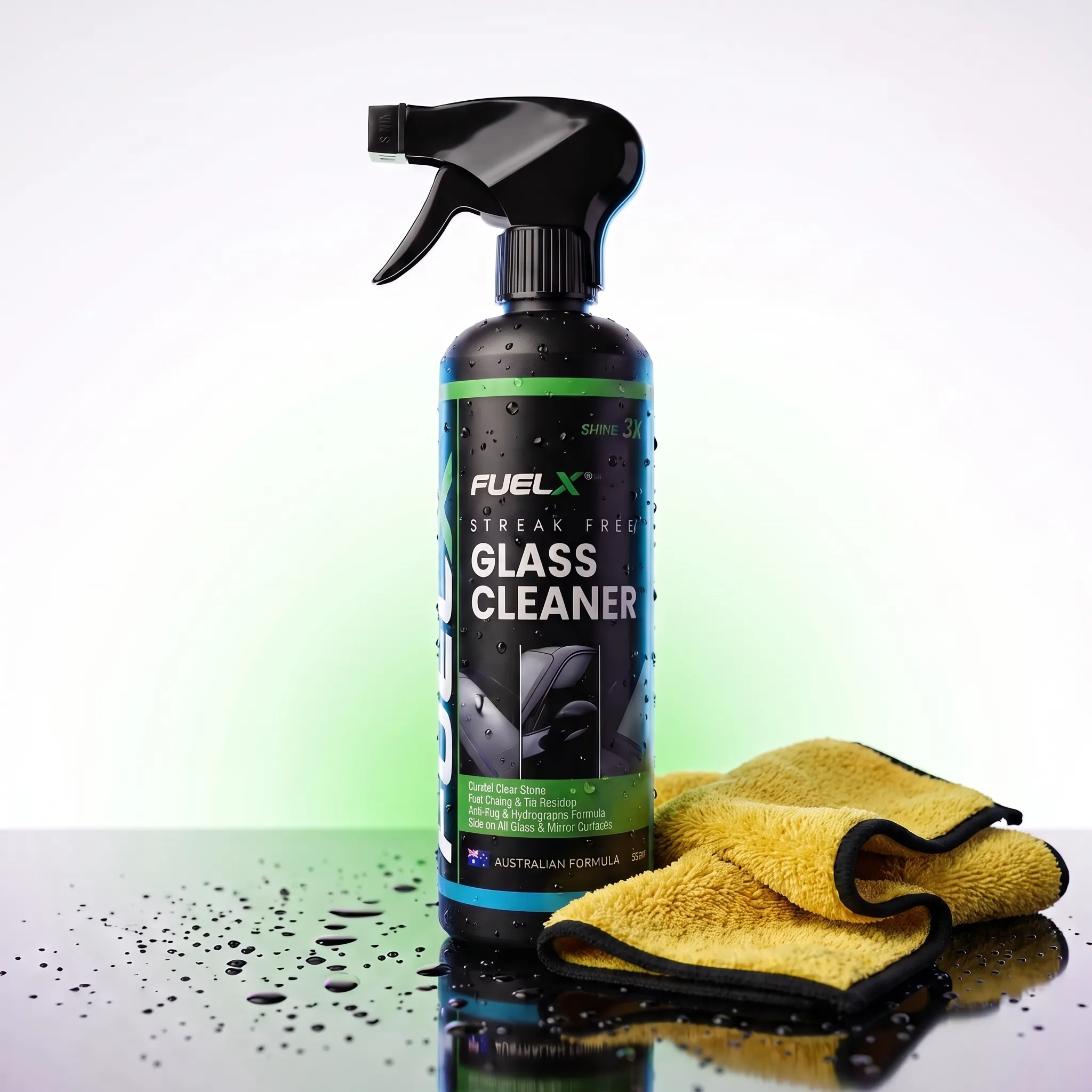
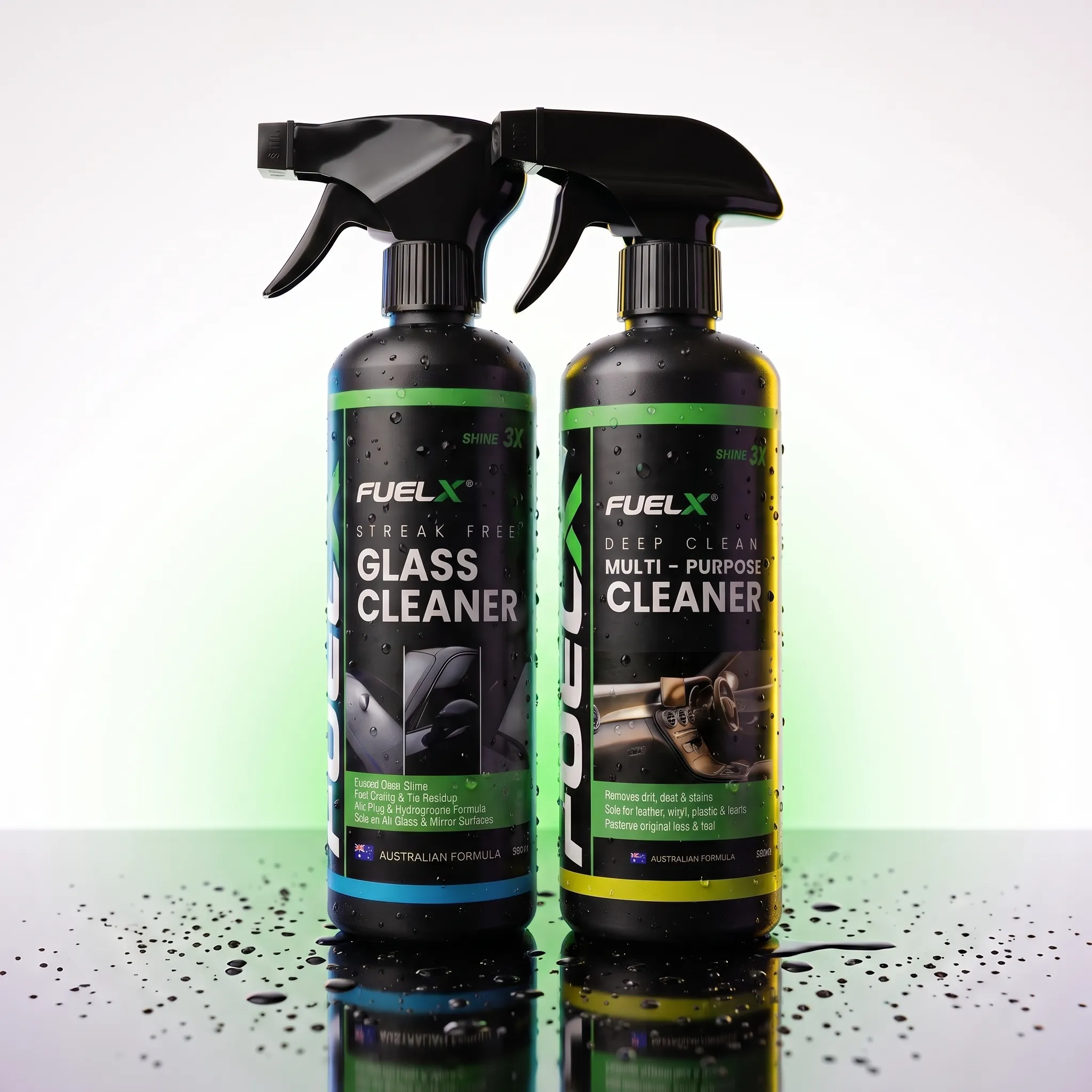
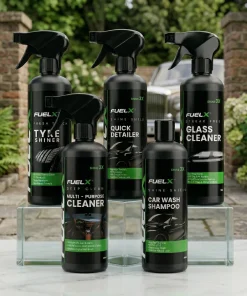
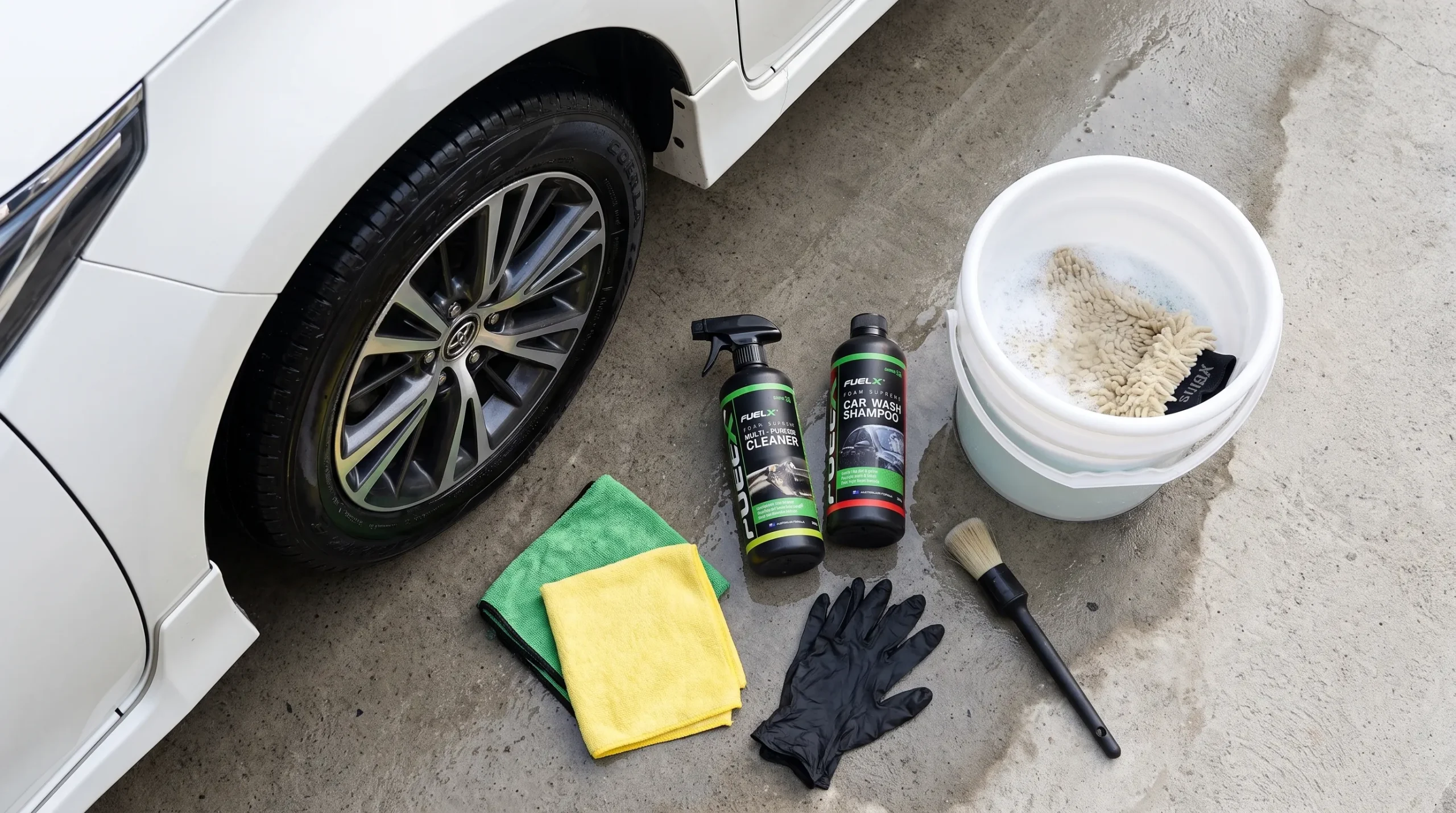
A product such as FuelX Multi-Purpose Cleaner can be useful for appropriate automotive cleaning applications when used according to its product directions.
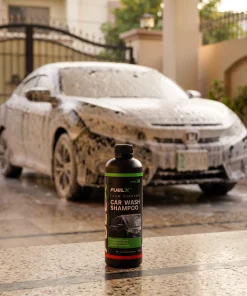
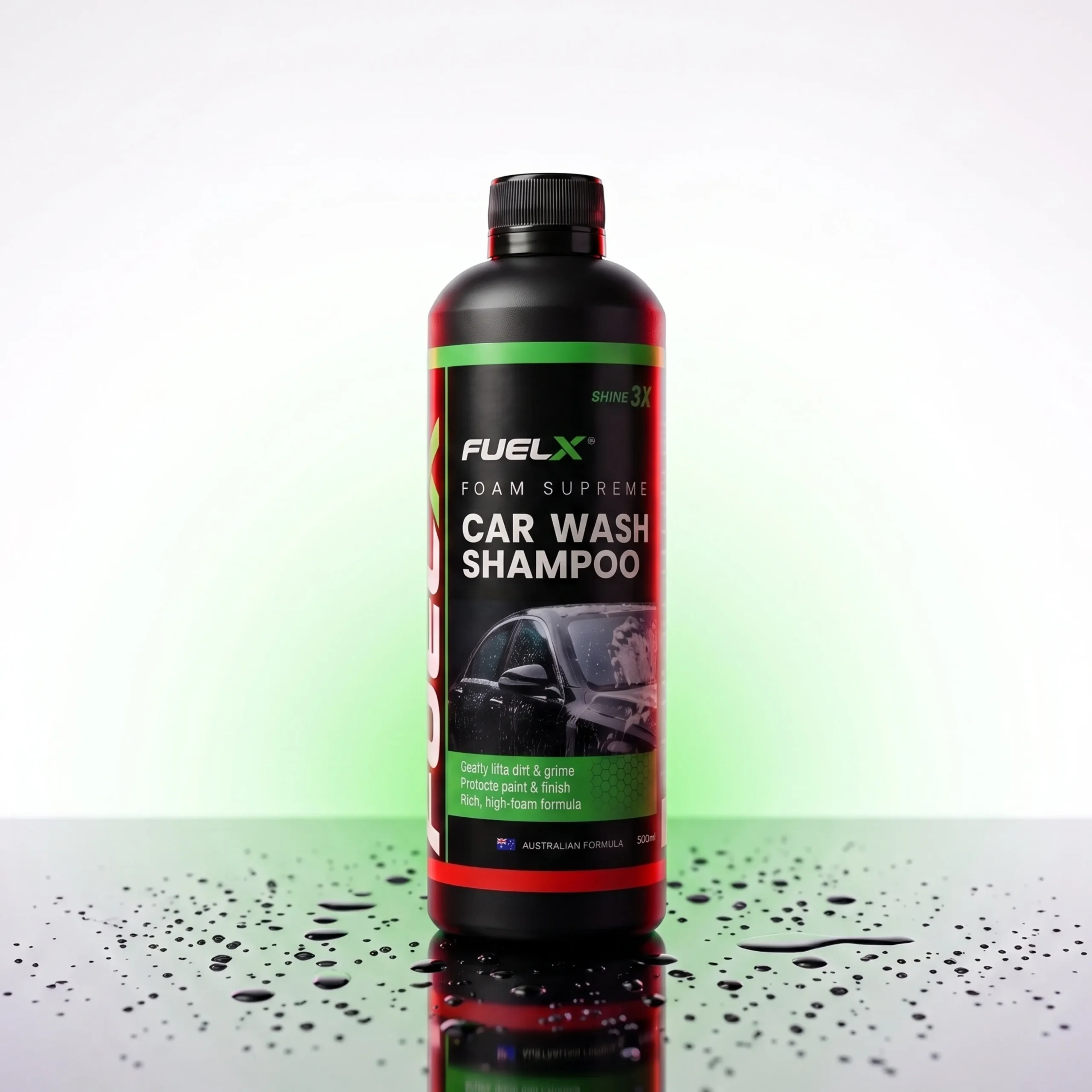
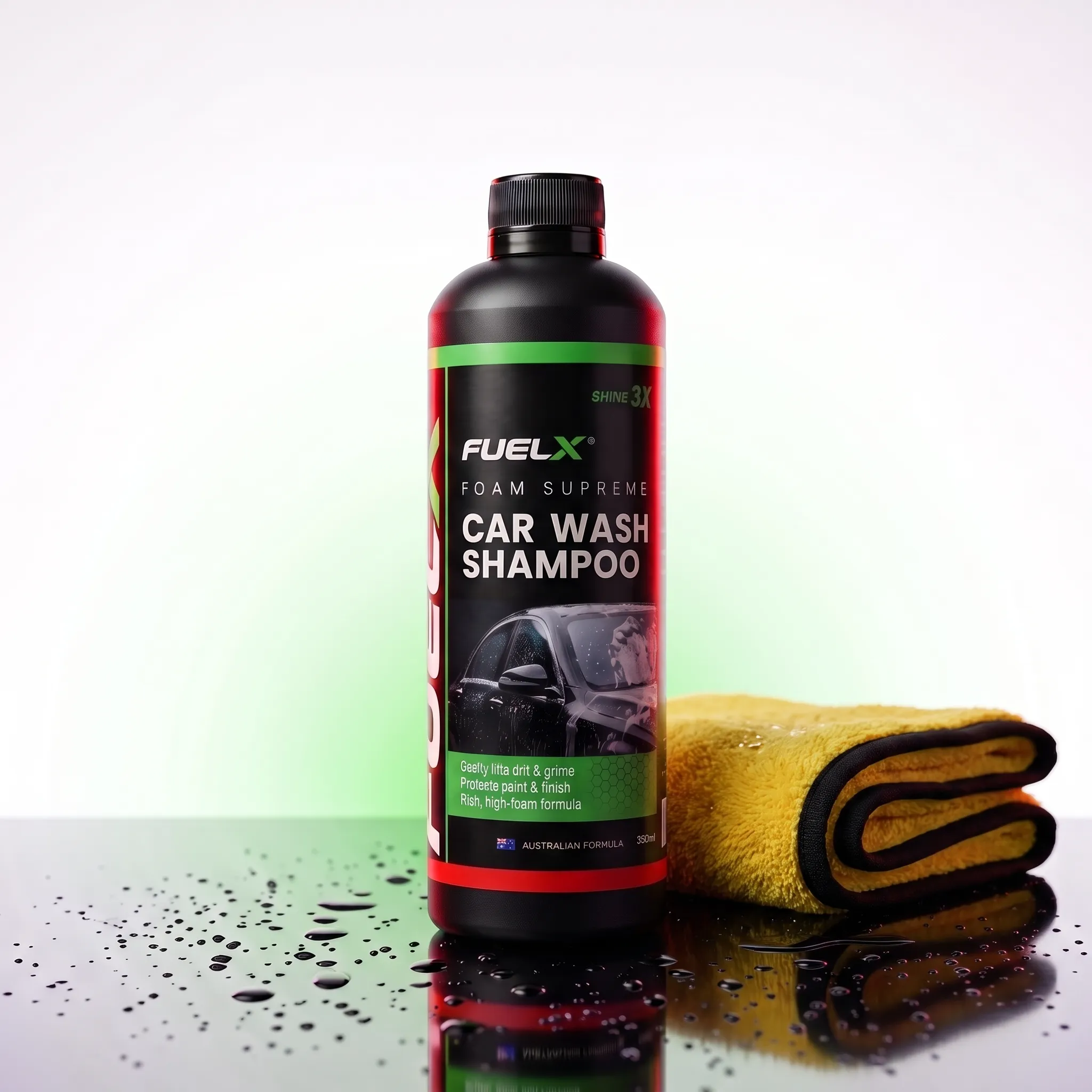
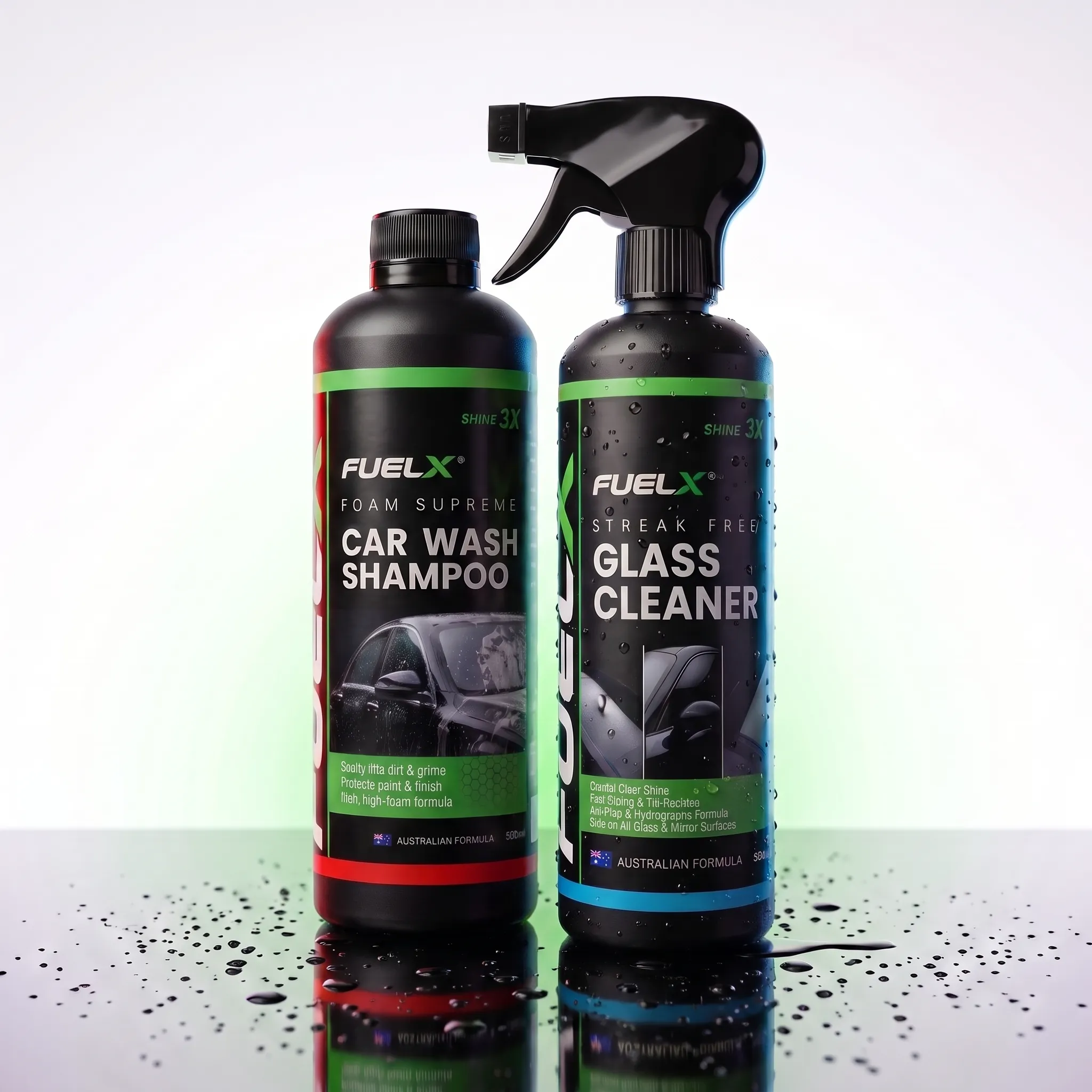
After the contamination has been safely removed, FuelX Car Wash Shampoo can be used as part of the normal exterior washing process.
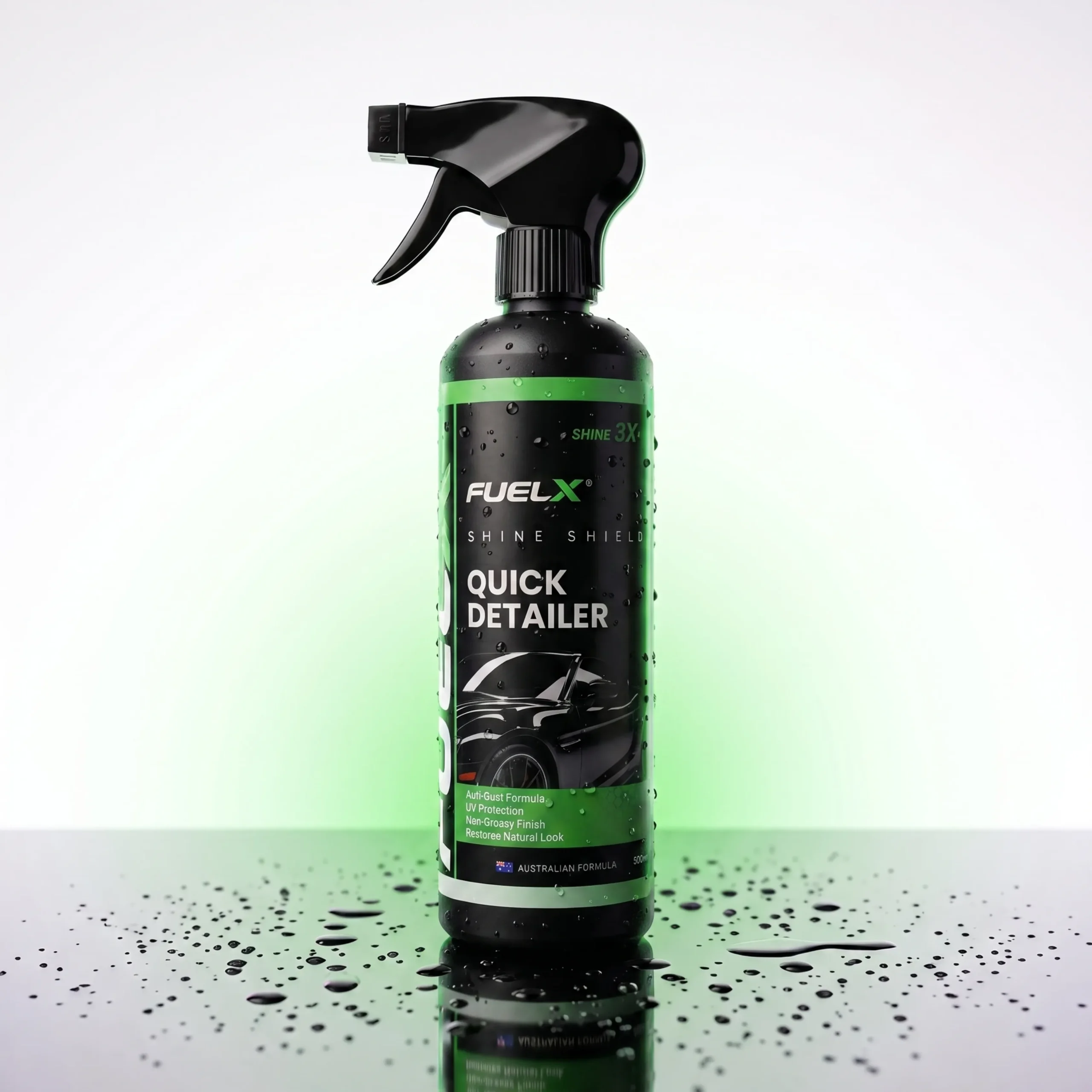
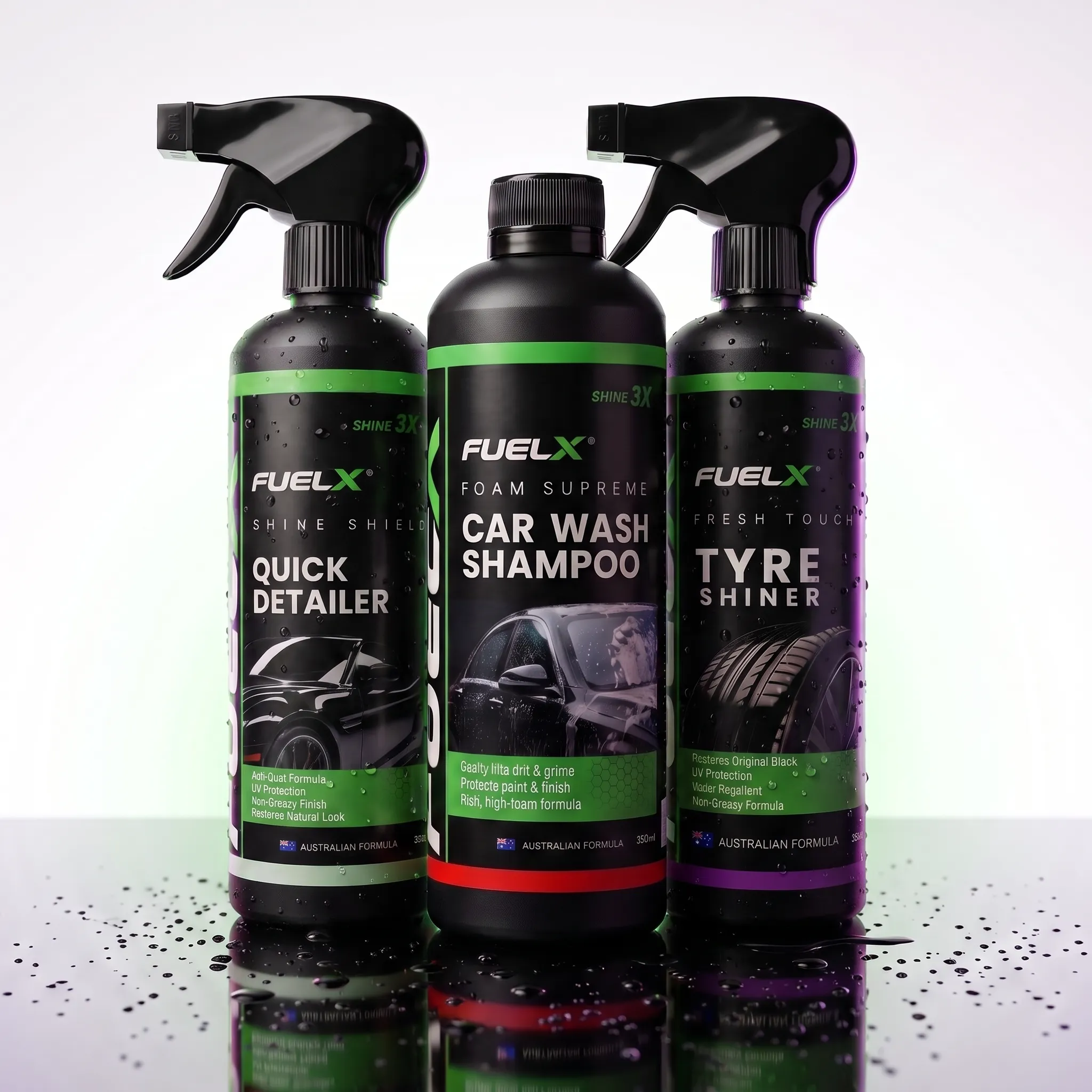
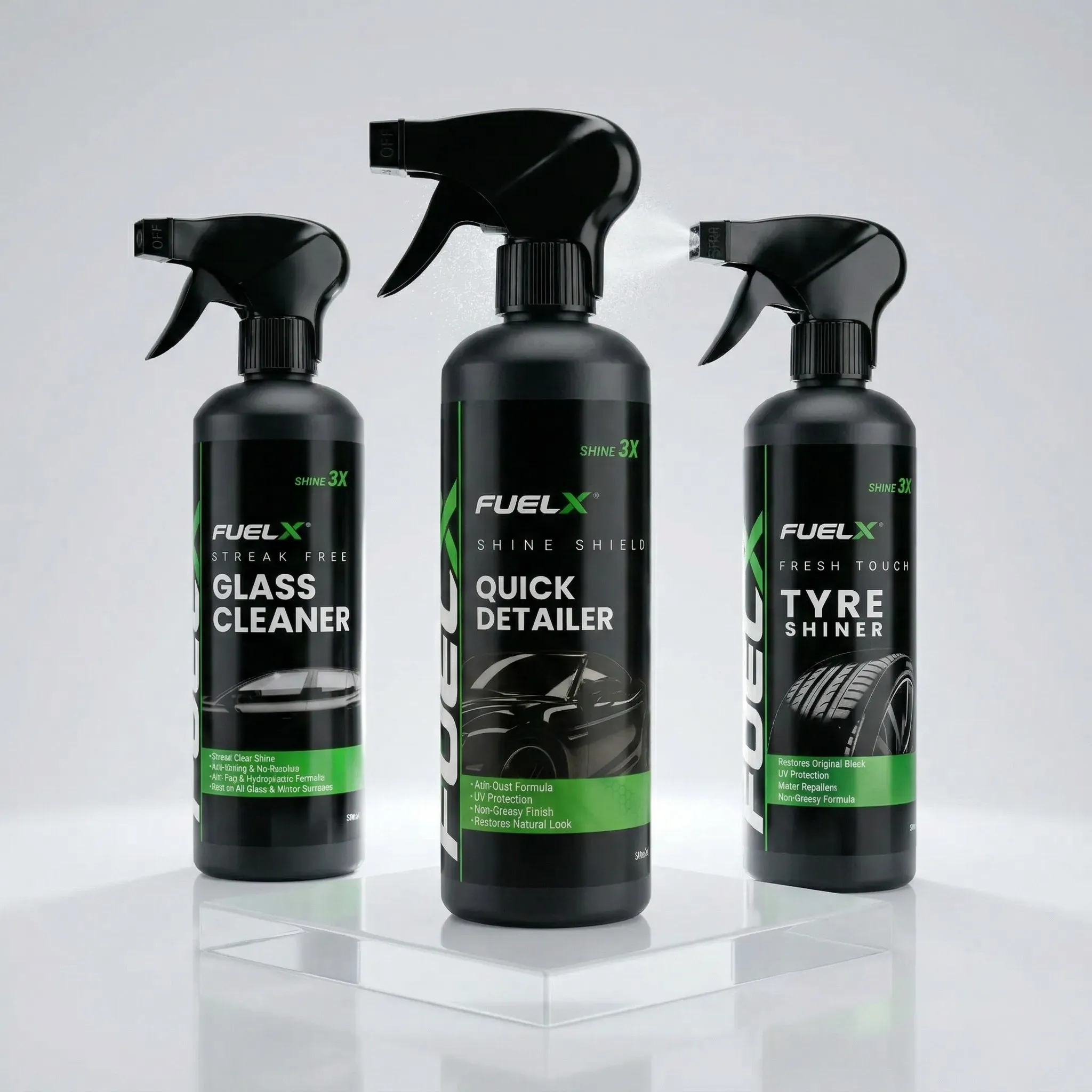
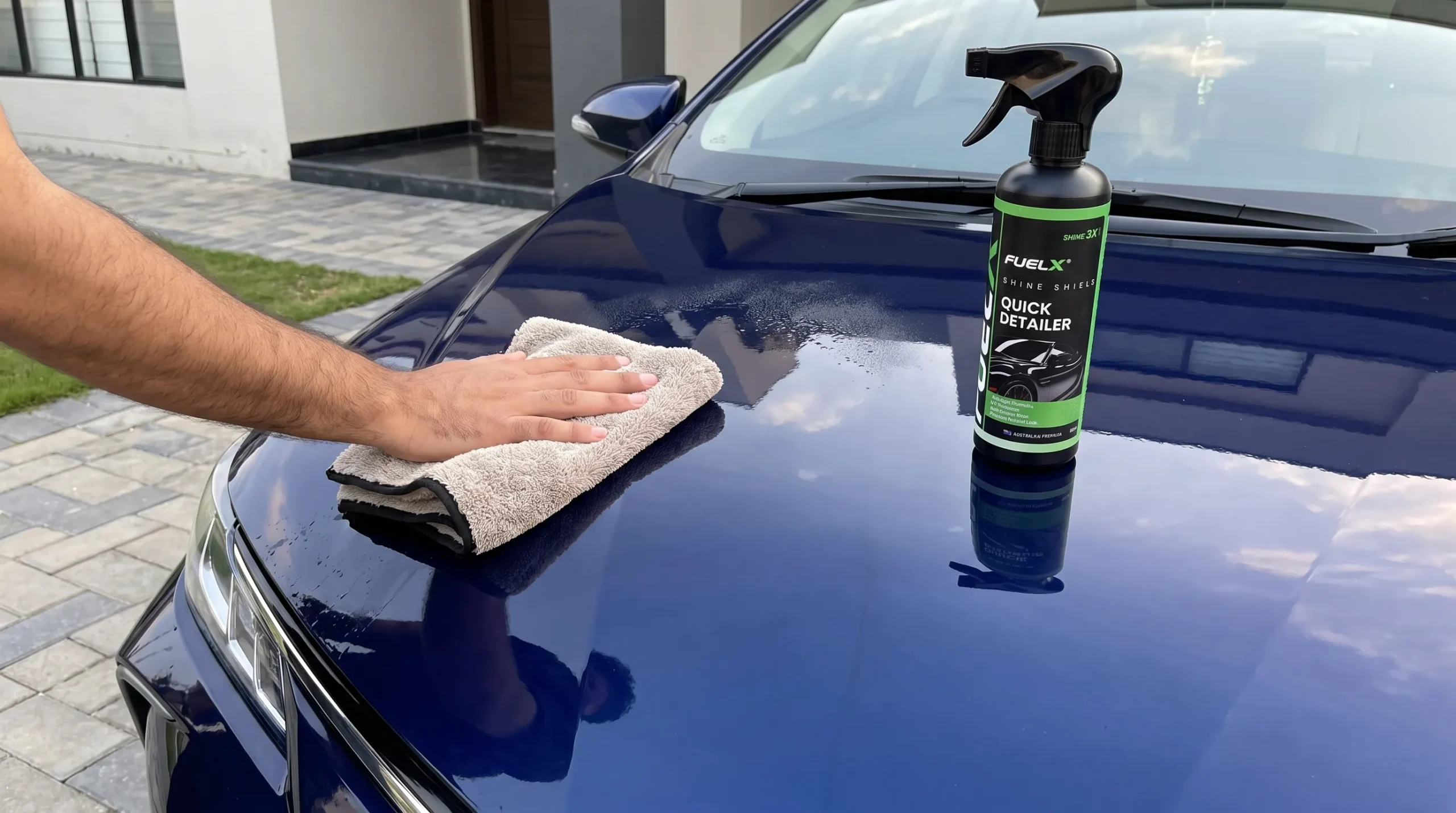
For finishing, FuelX Quick Detailer can be used according to its instructions to refresh the appearance of a clean exterior surface.
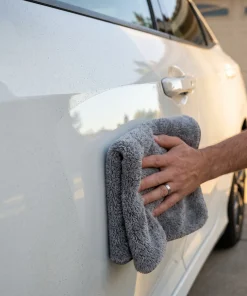
The microfiber towel is particularly important.
A clean microfiber towel can trap and lift particles with less risk of dragging abrasive dirt across the paint. By contrast, a towel that has previously been used on tyres, wheels, or dirty lower body panels may contain grit that can cause fine scratches.
How to Remove Bird Droppings From Car Paint Safely
Step 1: Remove the Dropping as Soon as Possible
The easiest bird dropping to remove is the one you don’t allow to dry completely.
If you notice fresh bird poop on your car while you’re at home, deal with it rather than waiting for your next full wash.
If the vehicle is sitting in direct sunlight, move it into shade if possible.
You should also avoid cleaning a very hot panel if you can wait a few minutes for it to cool. Cleaning products can evaporate quickly on a hot surface, making them less convenient to work with.
If you’re away from home and don’t have your cleaning supplies, don’t scrape the dropping off with a key, fingernail, bank card, or another hard object.
The objective is:
Soften → Lift → Clean → Rinse → Dry.
Not:
Scrub → Scrub harder → Scratch the paint.
Step 2: Rinse or Soak the Dropping
This is probably the most important part of the entire process.
Start by gently applying clean water to the affected area.
If the dropping is fresh, sufficient water may loosen much of it quickly. If it has dried, give the water time to work.
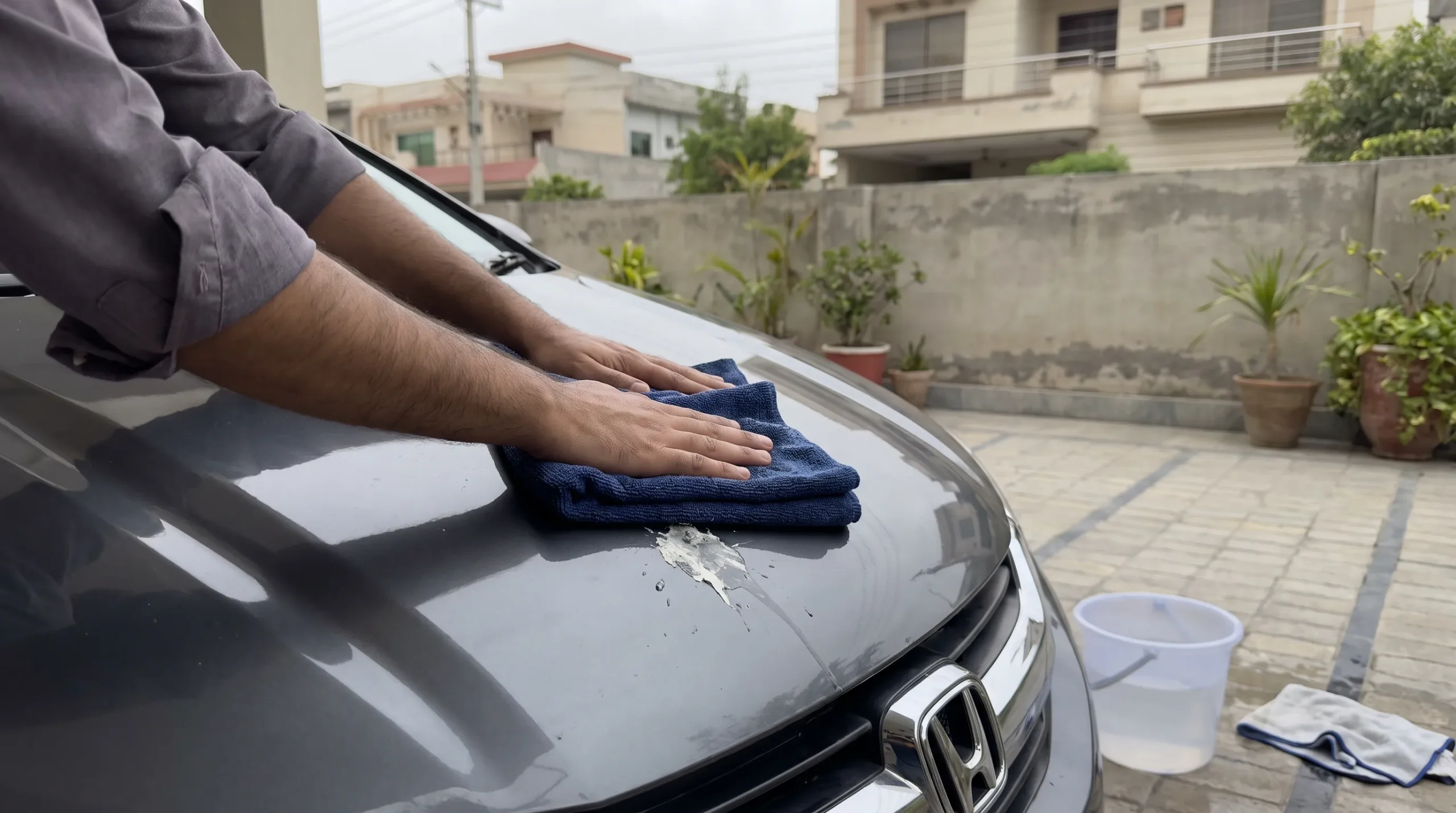
For stubborn contamination, soak a clean microfiber towel with water and place it over the affected area.
Allow several minutes for the moisture to soften the residue.
There is no magic soaking time that works for every situation. A thin, fresh deposit may soften quickly, while a thick, dried deposit can take considerably longer.
The principle is more important than the exact number:
The softer the contamination becomes, the less mechanical force you need to remove it.
This matters because scratches occur when abrasive particles are dragged across the paint surface.
Think about dried mud on a household floor. You can attack it with a brush, or you can wet it first and make removal easier. Your car paint benefits from the same basic principle.
Step 3: Gently Lift the Softened Residue
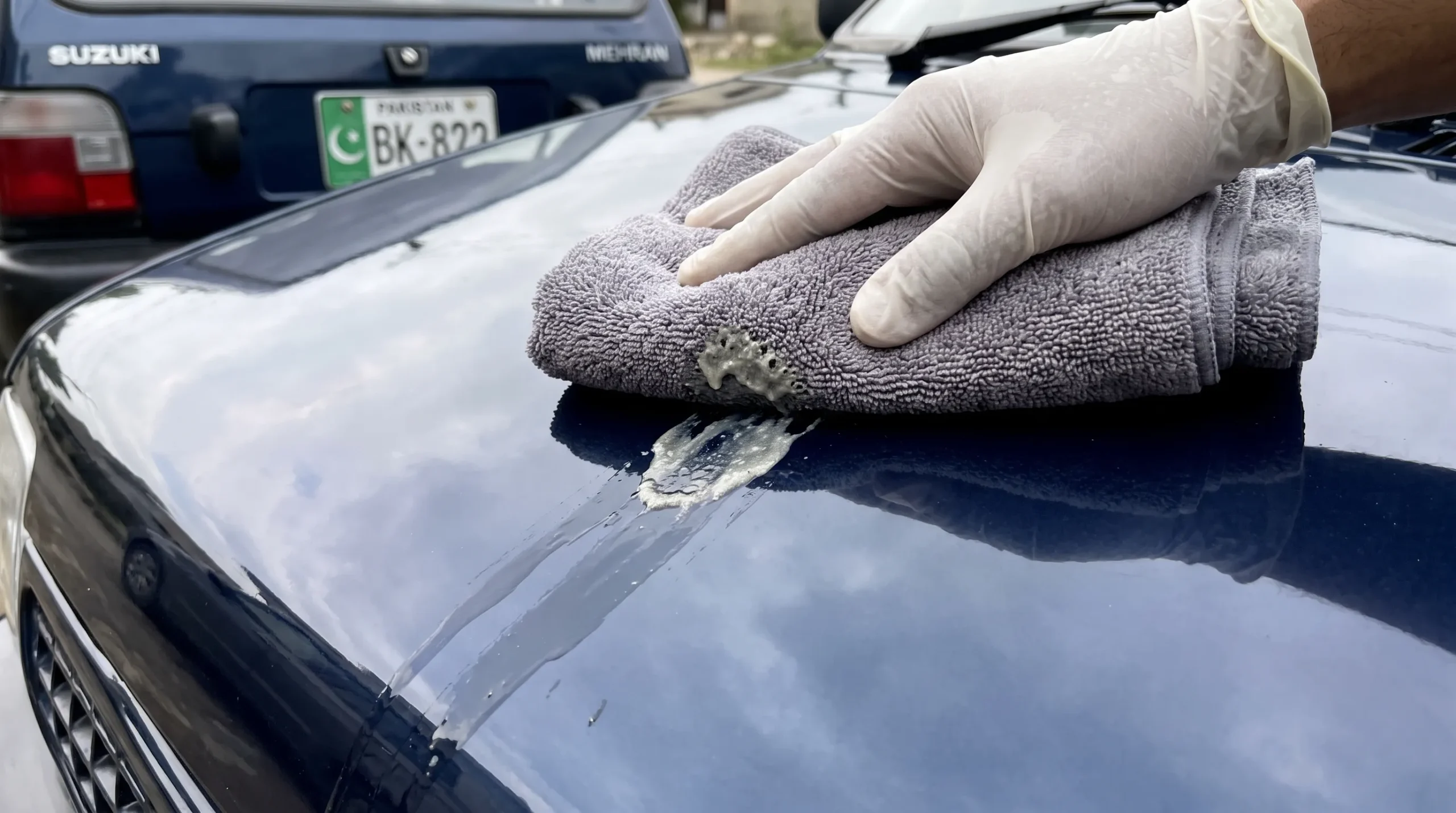
Once the bird dropping has softened, take a clean microfiber towel and gently lift the contamination.
Don’t scrub aggressively.
Use light pressure and controlled movements.
If the residue comes away easily, continue using a clean section of the towel.
If a piece refuses to move, don’t immediately increase pressure.
Soak it again.
This is one of the simplest habits that can protect your paint.
A few additional minutes of soaking are usually preferable to repeatedly rubbing a hard particle against the clear coat.
If the dropping is particularly large, avoid spreading it across a much larger area. Lift the softened material carefully and dispose of or wash the contaminated towel appropriately.
Step 4: Clean the Area With Car Shampoo or a Suitable Cleaner
After removing the main deposit, clean the surrounding area.
Use an automotive shampoo according to the manufacturer’s instructions.
FuelX Car Wash Shampoocan be incorporated into your normal exterior washing process to help remove remaining dirt and road contamination.
For appropriate general cleaning applications, FuelX Multi-Purpose Cleaner may also be useful when used according to its label directions.
Why use automotive products instead of whatever cleaner happens to be available at home?
Because car-care products are formulated with vehicle surfaces and cleaning requirements in mind. Using an unnecessarily harsh household chemical can introduce another problem while you’re trying to solve the first one.
You should also avoid assuming that “stronger” means “better.”
For automotive paint, controlled cleaning is generally preferable to aggressive chemistry or aggressive mechanical action.
Step 5: Rinse Thoroughly
Once you’ve cleaned the affected area, rinse it thoroughly.
Look at the panel from different angles.
Check for:
Remaining bird-dropping residue
Small particles
Smearing
Cleaner residue
Water spots
A visible outline
If you still see contamination, repeat the gentle cleaning process.
Don’t compensate for incomplete cleaning by applying more pressure.
The goal is to gradually remove the contamination while minimizing unnecessary contact with the paint.
Step 6: Dry With a Clean Microfiber Towel
After rinsing, gently dry the area with a clean microfiber towel.
Avoid using the same towel you used on extremely dirty areas.
For example, a towel used on tyres or the bottom edge of a muddy bumper can pick up particles that you don’t want to drag across the bonnet.
If you’re maintaining your car regularly, keeping separate microfiber towels for:
Paint
Glass
Wheels and tyres
Interior
is a simple way to reduce cross-contamination.
You don’t need dozens of towels, but having designated towels for different jobs is a worthwhile detailing habit.
Step 7: Finish With a Quick Detailer
Once the surface is clean and dry, you can use a suitable quick detailer as a finishing step.
FuelX Quick Detailer can be used according to the product’s instructions to refresh the appearance of the exterior surface.
Apply it as directed and wipe with a clean microfiber towel.
A quick detailer can improve the surface’s appearance and provide a freshly detailed look, but it’s important to understand its limitation.
It cannot repair clear-coat etching that has already occurred.
If the bird dropping has chemically etched the paint, the solution may involve polishing or professional paint correction rather than simply applying another detailing spray.
What Not to Do When Removing Bird Droppings
Many paint problems happen because of the cleaning method rather than the contamination itself.
Don’t Scrape Dried Bird Droppings
Avoid using fingernails, keys, razors, plastic cards, or other hard objects.
Even if you remove the dropping quickly, you may leave fine scratches behind.
Don’t Rub Dry Contamination
A dried bird dropping can contain hard particles and grit.
Dragging those particles across the paint can create micro-scratches, especially when combined with pressure.
Always soften the material first.
Don’t Use Rough Sponges or Brushes
Kitchen scrubbers and abrasive pads are designed for cleaning objects that can tolerate aggressive friction.
Automotive clear coat isn’t the place to experiment with them.
Don’t Use Excessive Pressure
If the residue won’t come off, stop and soak it again.
More pressure doesn’t necessarily mean better cleaning.
Don’t Experiment With Harsh Chemicals
Avoid randomly using bleach, strong solvents, abrasive cleaners, or other chemicals that aren’t intended for automotive paint.
Use products according to their intended purpose and instructions.
Don’t Use a Dirty Microfiber Towel
A microfiber towel can be soft but still dirty.
If it contains sand, dust, or other abrasive particles, it can scratch paint.
How to Remove Dried Bird Droppings From Car Paint
Dried bird poop requires more patience, not more force.
Follow this process:
Park in shade.
Let the panel cool.
Thoroughly wet the contamination.
Cover it with a damp microfiber towel.
Allow it to soften.
Gently lift the residue.
Re-soak stubborn areas.
Wash with automotive shampoo.
Rinse thoroughly.
Dry with a clean microfiber towel.
Inspect the surface.
A common mistake is stopping after the first soaking attempt and assuming the contamination is “too hard.”
If the material remains attached, add more water and give it more time.
The objective is to minimize mechanical friction.
What If Bird Droppings Have Already Left a Mark?
Sometimes you remove every visible piece of bird poop but a mark remains.
This is where it’s important to understand the difference between contamination and paint damage.
Surface contamination
The residue is still physically sitting on the paint.
Proper cleaning can remove it.
Staining
The contamination has left discoloration that remains after cleaning.
Some staining may improve with further detailing, depending on its severity.
Clear-coat etching
The surface itself has been chemically affected.
You may see a dull outline or irregular mark even though the surface is completely clean.
Normal washing won’t necessarily remove clear-coat etching.
If the mark is mild, appropriate paint-correction techniques may help. More severe damage may require professional detailing.
Most importantly, don’t keep rubbing the area harder in an attempt to remove an etched mark. If the contamination is already gone, additional friction can create scratches without fixing the underlying damage.
How to Prevent Bird Dropping Damage
Prevention is easier than paint correction.
If possible:
Park under covered parking.
Avoid parking directly beneath trees with heavy bird activity.
Avoid areas where birds regularly perch.
Check horizontal surfaces after outdoor parking.
Keep a microfiber towel in your car.
Keep a suitable automotive cleaner available.
Remove droppings promptly.
Wash your vehicle regularly.
Maintain the paint surface properly.
For people who park outside every day, a small emergency cleaning kit can be surprisingly useful.
You can keep a microfiber towel and suitable automotive cleaning product available so that a fresh dropping doesn’t remain on your paint for the entire day.
How Often Should You Wash Your Car?
There isn’t one perfect washing interval for every vehicle.
A car that spends most of its time inside a garage has different cleaning requirements from one that sits outdoors beside a busy road.
Your washing needs can depend on:
Daily driving distance
Outdoor parking
Dust
Traffic pollution
Rain
Heat
Construction activity
Bird activity
For a vehicle exposed to dusty roads and outdoor parking, regular cleaning can help prevent contaminants from accumulating.
But don’t confuse spot cleaning with a full car wash.
If a bird drops something on your bonnet today, you don’t necessarily need to perform a two-hour full detail. Safely remove the contamination promptly and perform your normal wash according to your vehicle’s condition.
Best FuelX Products for Bird Dropping Cleanup
FuelX products can fit naturally into a simple home car-care routine.
FuelX Multi-Purpose Cleaner
A useful option for appropriate general automotive cleaning applications. Follow the product’s instructions and make sure the intended surface is suitable before use.
FuelX Car Wash Shampoo
Useful for the washing stage after contamination has been softened and removed.
It can also become part of your regular exterior car-washing routine.
FuelX Quick Detailer
A practical finishing product for maintaining the appearance of a clean exterior surface between regular washes.
FuelX Premium Microfiber Detailing Towel
A clean microfiber towel is one of the most important tools in this process.
It helps you gently lift contamination, dry the surface, and reduce unnecessary friction.
For someone building a home car-care setup, combining the appropriate cleaner, shampoo, microfiber towels, and detailing products gives you a much more controlled cleaning process than relying on random household products.
Final Thoughts
Bird droppings are one of those small car-care problems that become much easier when you use the correct technique.
Don’t scrape them.
Don’t attack dried residue with a dry towel.
Don’t scrub harder when something refuses to move.
Instead, soften the contamination with water, gently lift it, clean the area with an appropriate automotive product, rinse it thoroughly, and dry it with a clean microfiber towel.
This approach is particularly useful in Pakistan, where strong summer sunlight, high surface temperatures, dust, and outdoor parking can make environmental contamination more difficult to manage.
If you’re regularly maintaining your car at home, keep the basic supplies ready: a suitable car shampoo or cleaner, quality microfiber towels, and a finishing product such as a quick detailer.
And remember the most important rule:
When bird droppings won’t come off easily, don’t use more force. Use more soaking time.
That small change in technique can help you clean the contamination while reducing the risk of turning a simple bird-dropping problem into an expensive paint-correction job.
FAQ’s
Can bird poop damage car paint?
Yes. Bird droppings can contribute to staining and clear-coat etching when they remain on paint, particularly under prolonged exposure to heat and sunlight.
How quickly should I remove bird droppings from my car?
As soon as reasonably possible. There is no universal number of hours that guarantees damage, because conditions vary, but prompt removal reduces the time contaminants remain against the paint.
Can I wipe bird poop off with a dry cloth?
It’s better to soften it with water first. Dry rubbing can drag hardened residue and particles across the paint.
Should I use water to remove bird poop?
Yes. Water helps soften the contamination and reduces the mechanical force needed to remove it.
Can I use dish soap to remove bird droppings?
It’s better to use a dedicated automotive wash product for routine vehicle cleaning. Don’t assume that a stronger household cleaner will provide better results.
What should I do if bird poop has dried on my car?
Soak it thoroughly, give it time to soften, and gently lift it using a clean microfiber towel. Repeat the soaking process rather than scrubbing harder.
Does bird poop permanently damage car paint?
Not necessarily. Fresh contamination can often be removed without lasting damage. However, prolonged exposure can cause staining or clear-coat etching that normal washing cannot reverse.
Can I use a microfiber towel?
Yes. A clean, soft microfiber towel is well suited to gently removing softened contamination from automotive paint.