Rain is good for clearing dust from roads and cooling the air, but it can create an unpleasant problem inside your car: a musty or damp smell. This is particularly common during the monsoon season when wet shoes, umbrellas, muddy floor mats, humid air and rainwater can introduce moisture into the cabin.
The smell usually doesn’t come from rainwater itself. It develops when moisture remains trapped with dirt, organic residue and poorly ventilated air. A carpet that feels only slightly damp can continue holding moisture underneath, while a wet floor mat can keep releasing humidity into a closed cabin.
For example, if wet floor mats remain inside a parked car overnight, the cabin may still feel humid the next morning. Simply spraying an air freshener may make the interior smell better for a few hours, but it doesn’t remove the moisture causing the problem.
The effective approach is straightforward:
Find the moisture → remove wet items → clean dirty surfaces → dry the interior → check for leaks → prevent the moisture from returning.
Here’s how to do it properly.
Why Does Your Car Smell Bad After Rain?
Before trying to remove the odor, it helps to understand where it comes from. In most cases, several small problems combine to create the smell.
Wet Floor Mats and Carpets
Floor mats are usually the first place to inspect.
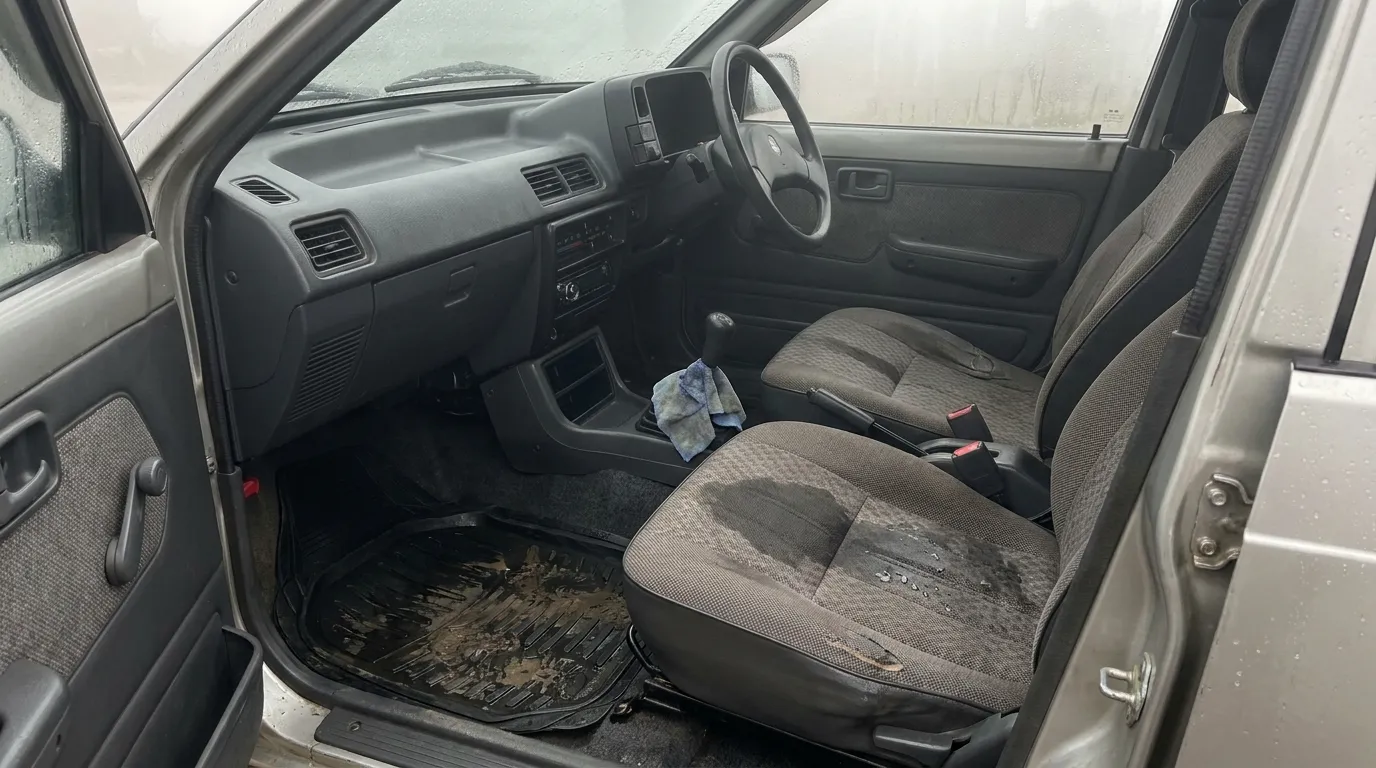
During rain, water can enter the cabin from wet shoes, umbrellas, clothing and muddy footwear. A few small puddles may not seem serious, but fabric mats can hold considerably more moisture than their surface appearance suggests.
The problem becomes worse when the mats are left inside a closed vehicle. Instead of evaporating quickly, moisture increases the humidity inside the cabin and can migrate into the carpet underneath.
That’s why removing and drying the mats should be one of your first steps after heavy rain.
Damp Seats and Upholstery
Fabric seats can absorb moisture from wet clothes and humid air. Moisture can remain around seams, stitching and the lower portions of seats even when the visible surface looks dry.
Leather and synthetic-leather seats generally behave differently, but moisture can still collect around seams and gaps.
If the cabin remains closed for several hours, the trapped humidity can make the entire interior smell stale.
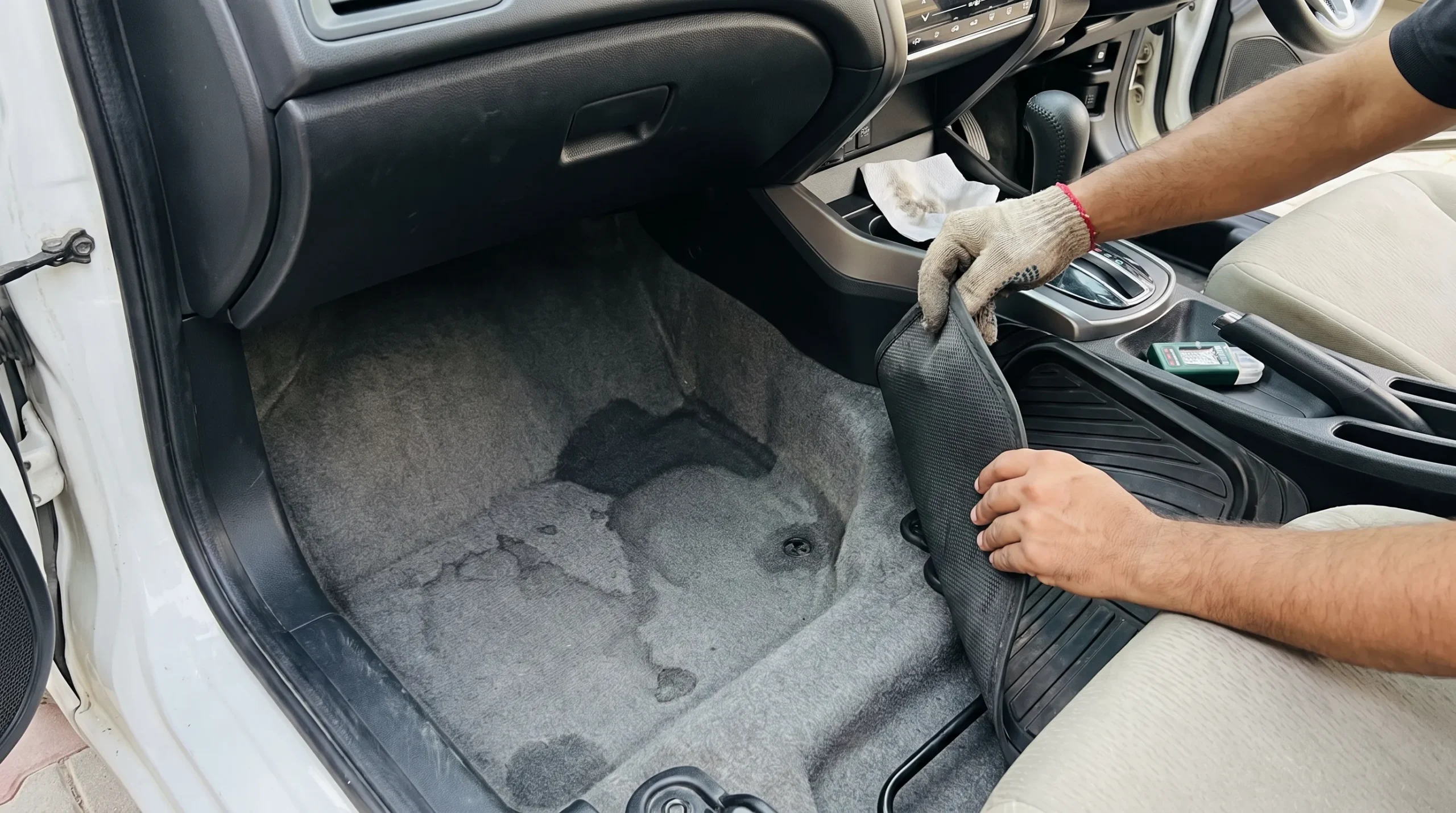
Moisture Under the Carpet
This is one of the most commonly missed areas.
Your car’s carpet isn’t just a thin piece of fabric. Depending on the vehicle, there may be padding and other layers underneath it. If water reaches these layers, the visible carpet can dry while moisture remains underneath.
This explains why some cars continue to smell even after the owner washes the mats and wipes the seats.
If you notice a persistent damp smell from one particular area, press the carpet gently and check whether it feels unusually cool, damp or soft.
Blocked or Leaking Drainage Areas
Cars are designed to channel rainwater away through drainage paths. Problems can occur when drains become blocked with leaves, dirt or debris, or when seals and other components allow water into the cabin.
Sunroof-equipped vehicles can be particularly sensitive to blocked drainage channels because water that should drain away may instead find another path.
If your car develops the same smell after every rainfall, don’t keep treating the odor as a cleaning problem. There may be an underlying water-entry issue.
Poor Cabin Ventilation
A closed vehicle can trap moisture for many hours.
Consider a simple example: you enter your car with wet shoes, bring in a damp umbrella and park it with the windows closed. Even if there isn’t enough water to create a visible puddle, that moisture still has to go somewhere. With limited ventilation, evaporation can keep the cabin humid.
Proper ventilation after rain helps moisture escape and speeds up drying.
How to Remove Bad Smell From Your Car Interior After Rain
Once you’ve identified the likely causes, follow these steps in order.
Step 1: Find the Source of the Smell
Don’t start by spraying perfume or air freshener.
First, remove loose items from the vehicle and inspect the areas most likely to hold moisture:
Front floor mats
Rear floor mats
Carpet underneath the mats
Under the front seats
Seat seams and creases
Door pockets
Trunk or cargo area
Spare-wheel compartment
Use your hands to carefully check for dampness where appropriate. Look for water marks, muddy residue, stains or areas that feel different from the surrounding carpet.
This inspection can take only 5–10 minutes, but it can save you from cleaning the wrong area.
For example, if the front passenger carpet is damp because of a leak, cleaning the dashboard won’t solve the smell. You need to address the wet carpet and, more importantly, identify why it became wet.
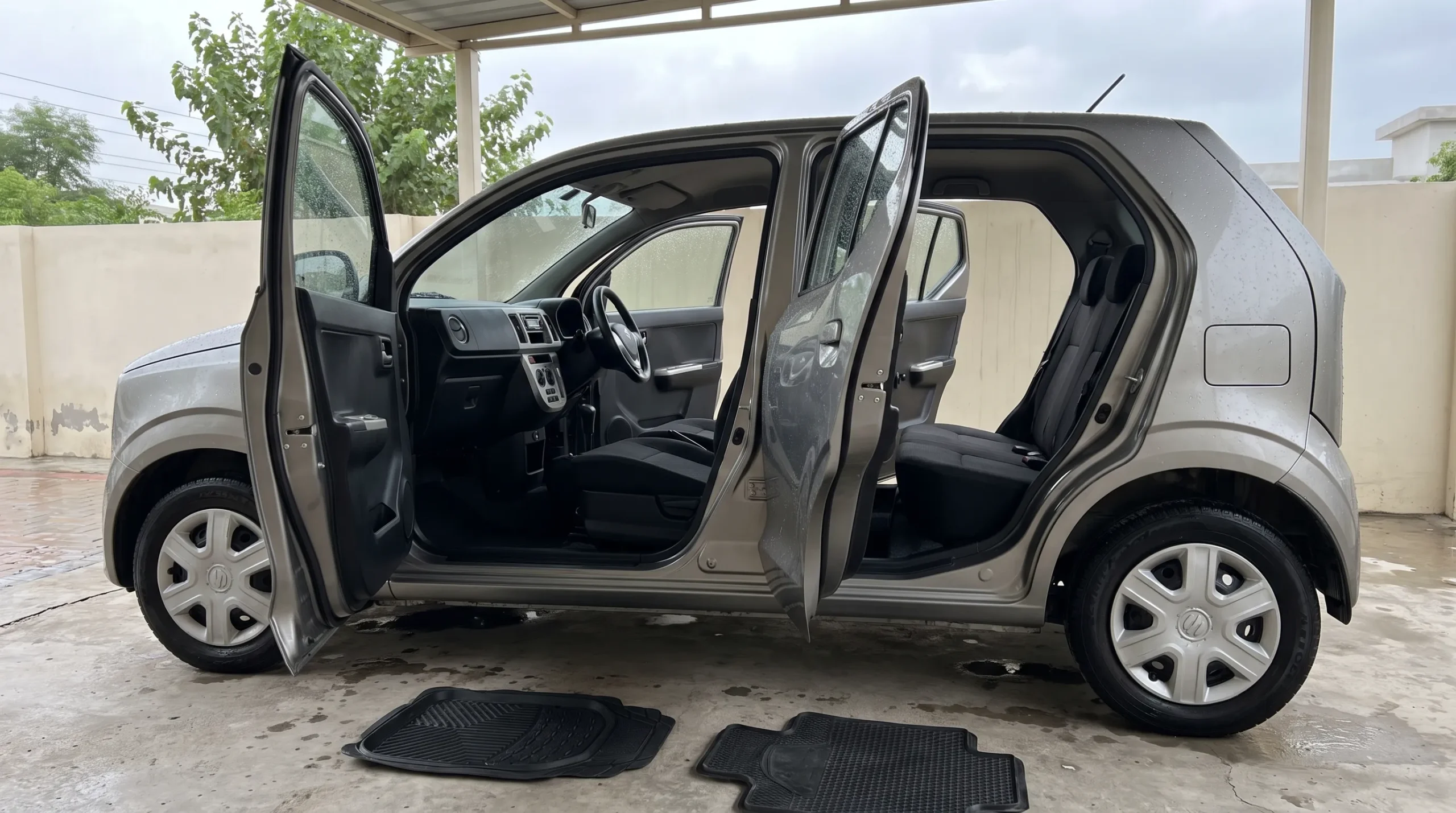
Step 2: Remove and Dry the Floor Mats
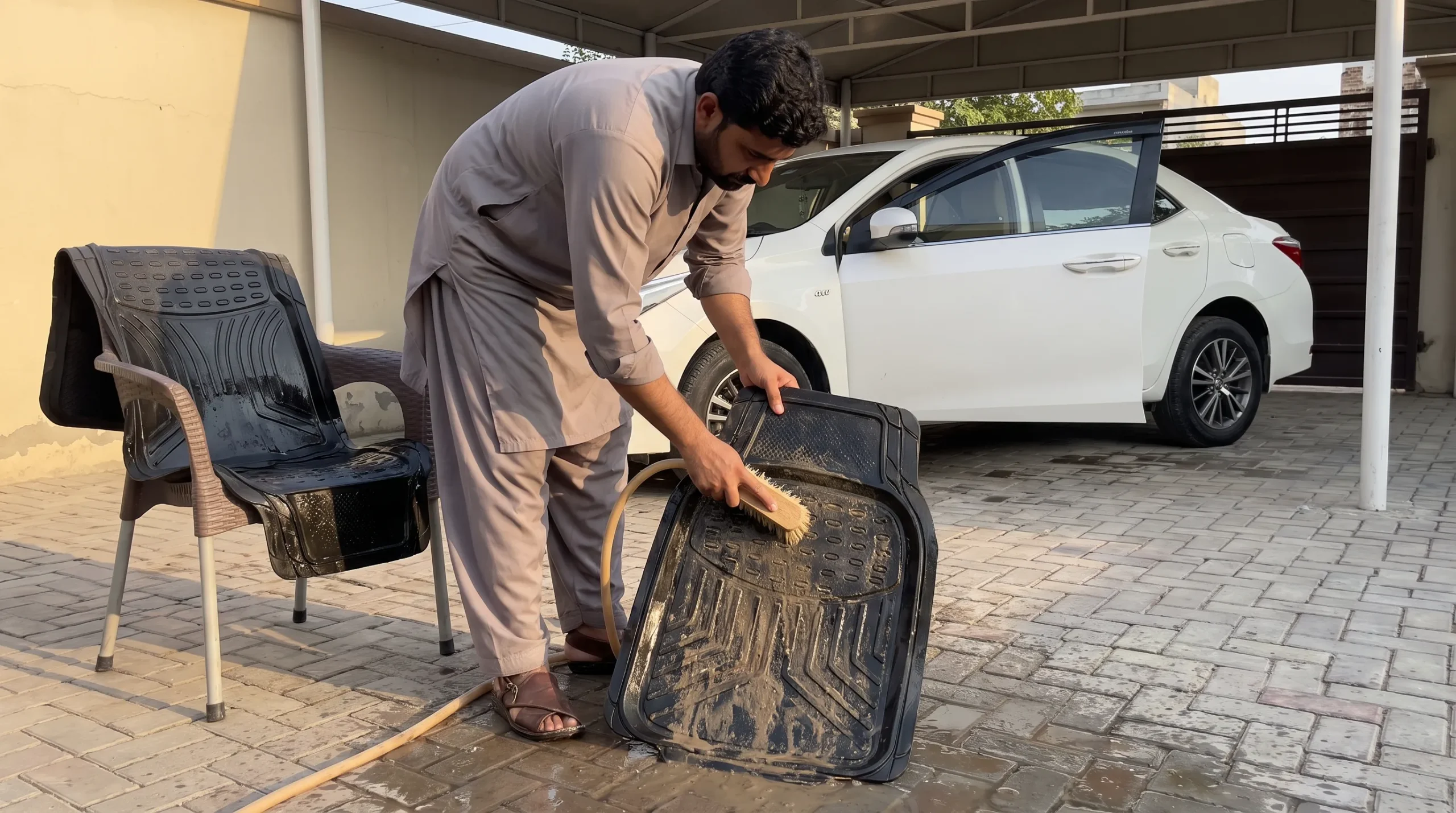
Take all removable mats out of the car.
Shake off loose mud and dirt before cleaning. If the mats are washable, clean them according to their material and allow them to dry completely.
Rubber mats are generally easier to clean because they don’t absorb water like fabric mats. Fabric mats need more drying time because water can remain inside the material.
Don’t put a damp mat back into the vehicle just because the top feels dry.
If possible, leave the mats in a well-ventilated, dry location until they are completely dry. During humid weather, this can take several hours depending on the material and conditions.
A useful test is simple: if the mat still feels cool, damp or smells musty, it probably isn’t ready to go back into the car.
Step 3: Clean the Carpet
Once the mats are removed, inspect the carpet underneath.
Start by vacuuming loose dust, sand and dried mud. This matters because dirt can hold moisture and can also make a damp smell more noticeable.
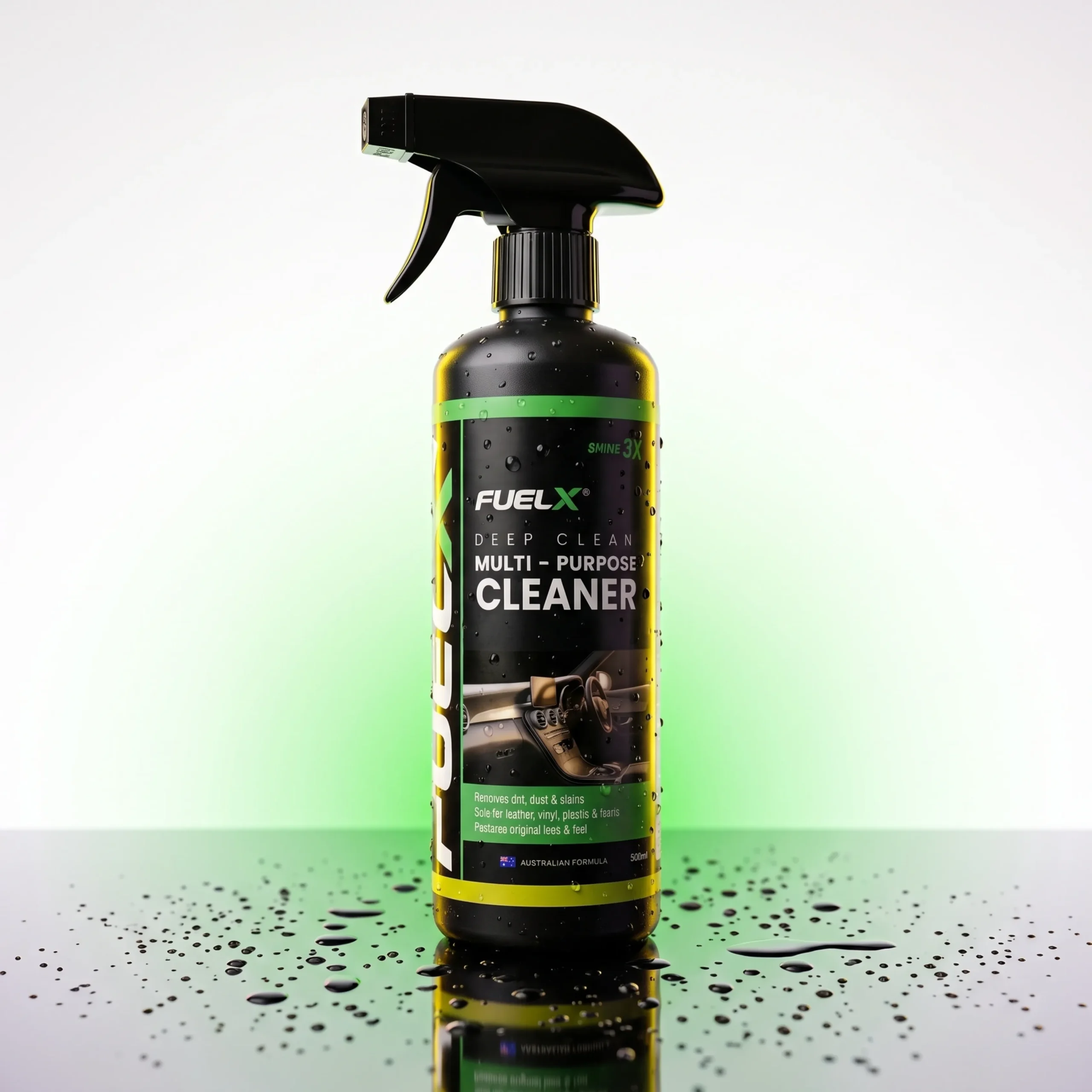
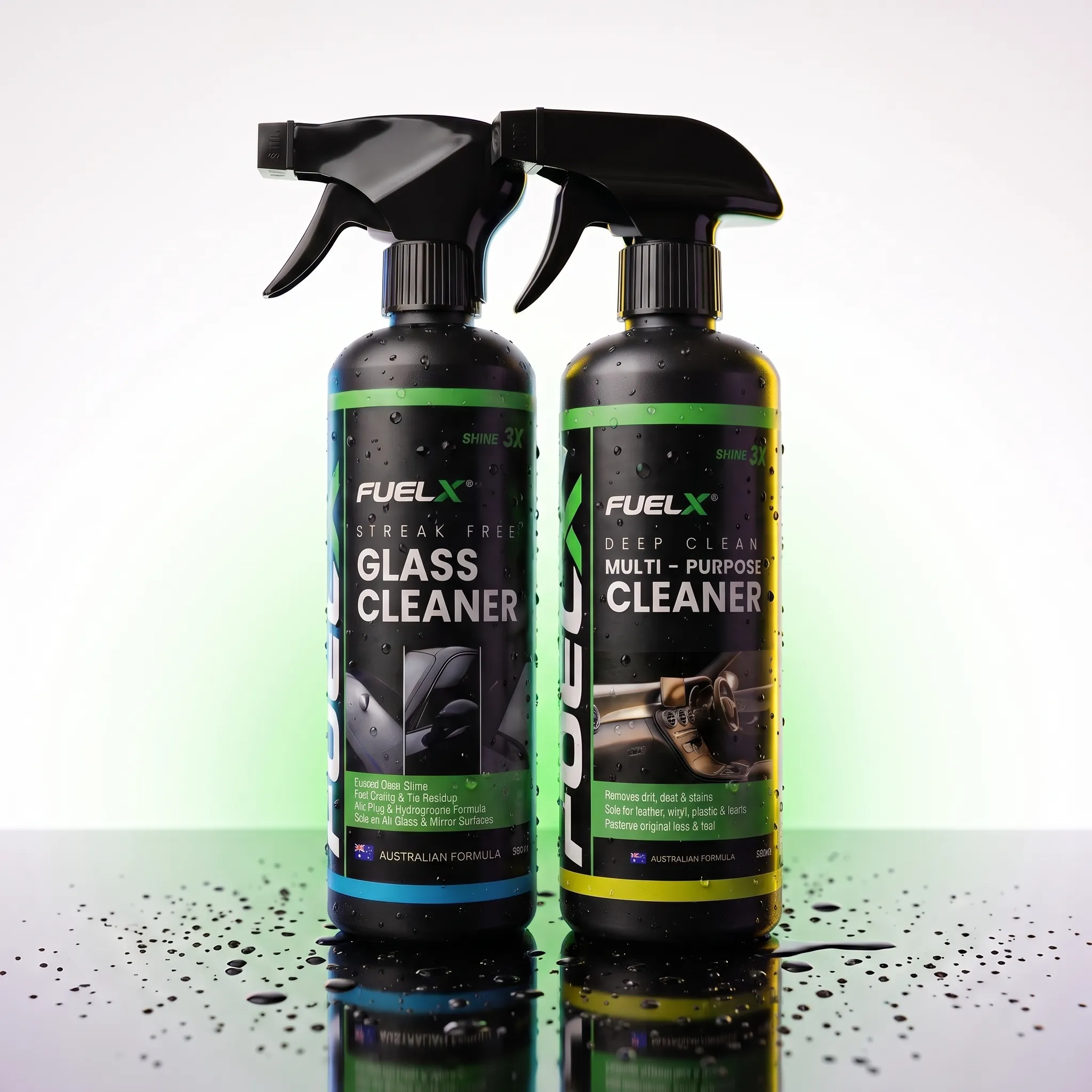
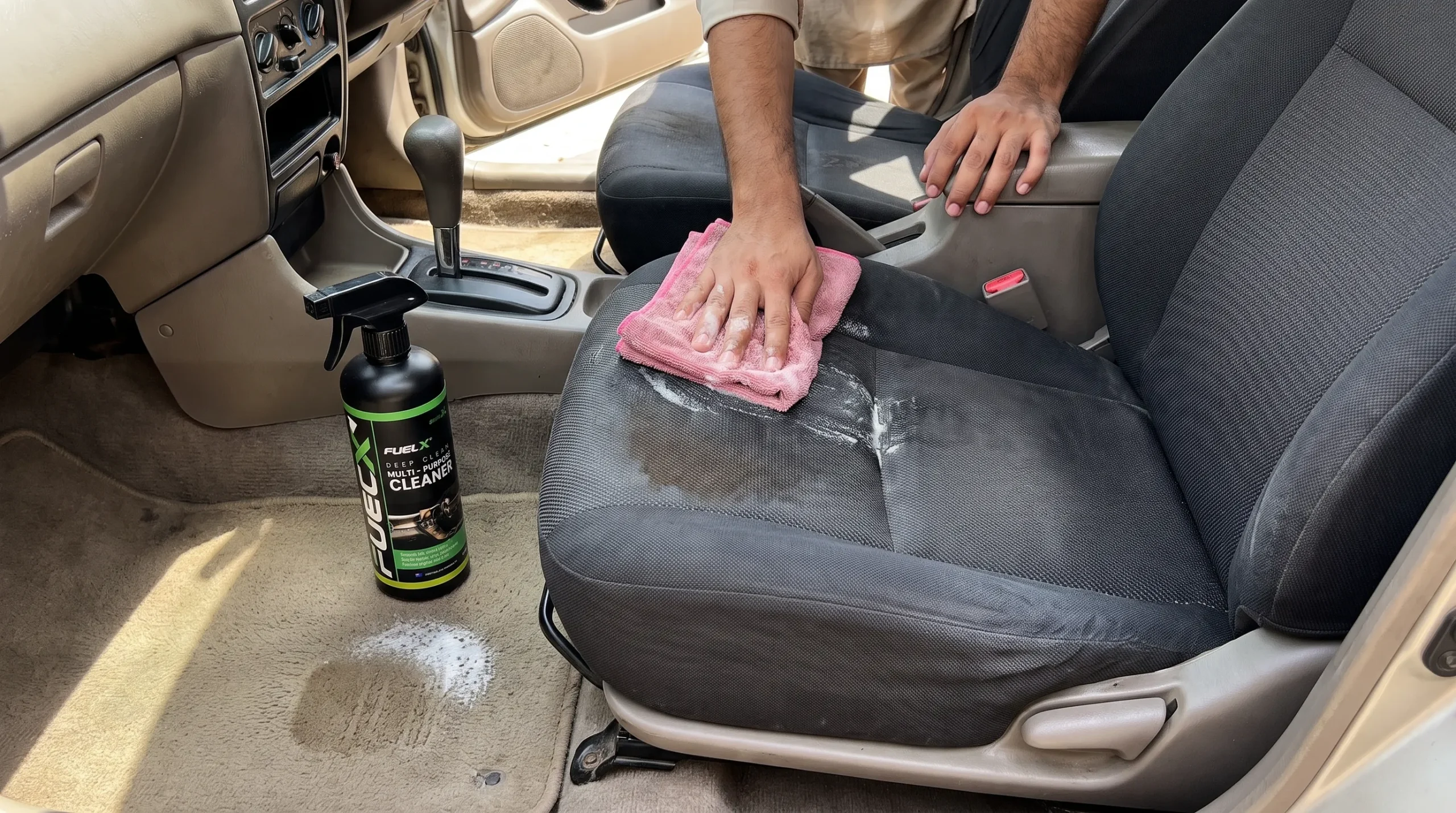
For dirty areas, use an appropriate interior cleaner according to its instructions. A product such as FuelX Multi-Purpose Cleaner can be incorporated into a suitable interior-cleaning routine.
Don’t flood the carpet with cleaning solution. More liquid isn’t automatically better cleaning.
Instead, apply the appropriate amount, work on the affected area, and use a clean microfiber towel to remove loosened dirt and excess moisture.
This approach is especially important during monsoon weather because adding unnecessary water to an already damp interior can make drying considerably harder.
Step 4: Clean the Seats and Fabric Surfaces
Next, inspect the seats.
Pay special attention to:
Seat seams
Creases
Lower seat cushions
Areas near the door
Areas that may have contacted wet clothing
The correct cleaning method depends on the seat material.
For fabric upholstery, avoid saturating the seat. For leather or synthetic leather, use products and methods suitable for that material.
The objective is to remove dirt and residue while keeping additional moisture to a minimum.
If a child has spilled a drink, for example, the smell may not actually be from rain. Rain may simply make an existing odor more noticeable because the cabin becomes warmer and more humid.
Step 5: Dry the Entire Interior
This is the most important part of the process.
Cleaning removes dirt. Drying removes the moisture that allows a musty environment to persist.
When weather and safety conditions allow, park the vehicle in a suitable dry location and ventilate the cabin.
You can:
Remove wet floor mats.
Remove wet umbrellas, clothing and other items.
Open doors or windows when appropriate.
Use the vehicle’s ventilation or air-conditioning system according to the manufacturer’s normal operating guidance.
Use clean towels to absorb visible moisture.
Give carpets and upholstery enough time to dry.
Keep the cabin ventilated rather than immediately sealing in damp air.
Don’t leave the vehicle open where it could be exposed to more rain or an unsafe environment.
If the carpet padding has become significantly wet, surface drying may not be enough. In that situation, professional drying or inspection may be necessary.
Step 6: Clean the Dashboard and Door Panels
Once the wet areas are under control, clean the hard surfaces.
Rainy weather often brings more dirt into the cabin because passengers enter with wet or muddy hands and shoes.
Wipe areas such as:
Dashboard
Center console
Door panels
Door handles
Cup holders
Gear-selector area
Other frequently touched surfaces
A clean microfiber detailing towel is useful for this work because it can collect loosened dust and grime while reducing lint compared with many ordinary household cloths.
Use an appropriate interior cleaner for the surface and avoid leaving excessive moisture behind.
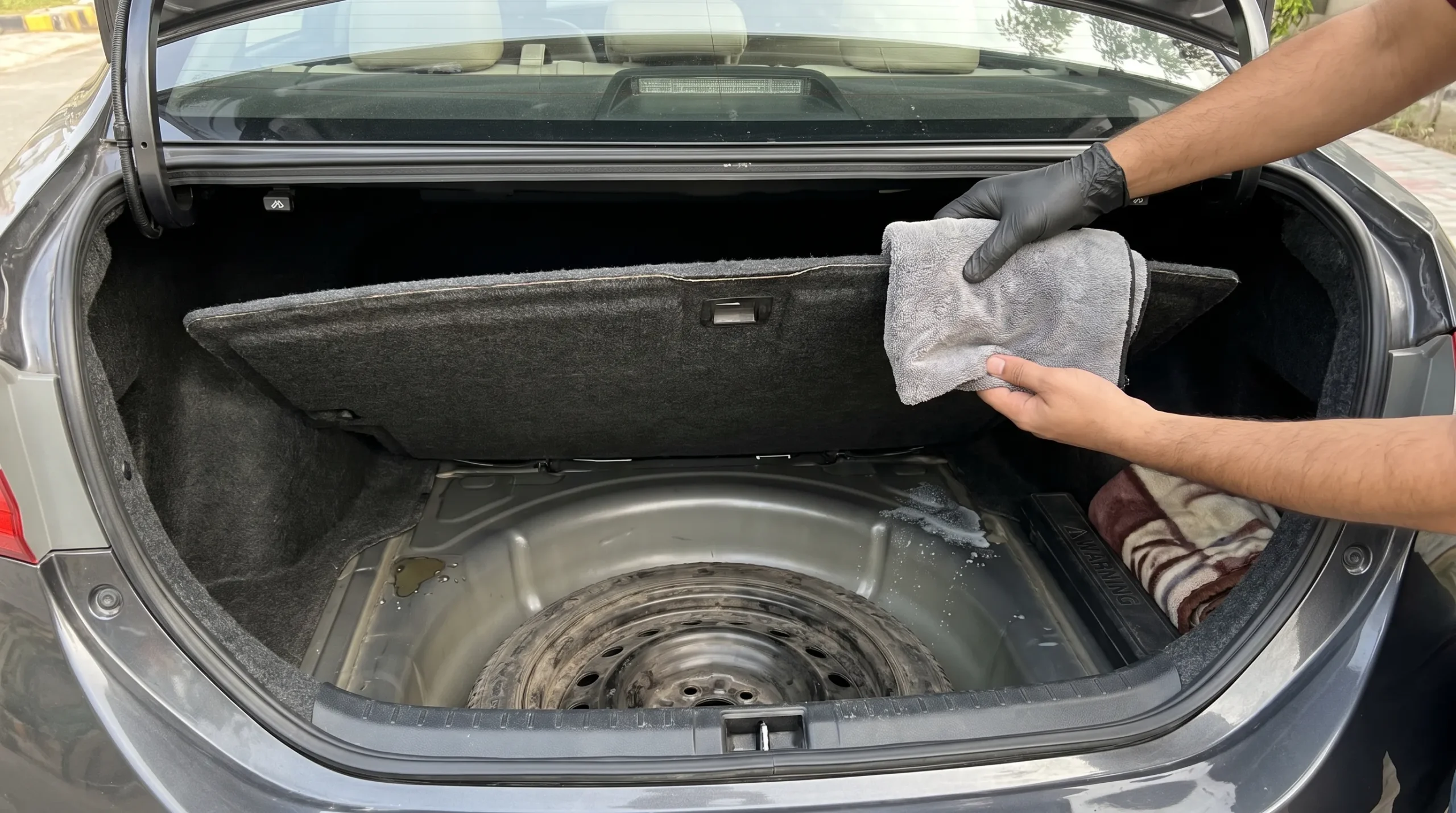
Step 7: Check the Trunk and Spare-Wheel Area
If the smell remains after cleaning the cabin, inspect the trunk.
Lift the trunk mat and check underneath it. If your vehicle has a spare-wheel compartment, inspect that area too.
Look for:
Standing water
Damp carpet
Water marks
Mud
Staining
Musty odor
This is an easy area to forget because it may not be visible during normal driving.
Imagine a small amount of water collecting underneath the trunk liner after a heavy storm. The trunk may look completely normal from above, but the hidden moisture can continue contributing to an unpleasant smell.
What If the Smell Keeps Coming Back?
If the smell disappears after cleaning but returns after the next rainfall, investigate the cause of the recurring moisture.
Possible issues include:
Damaged door seals
Window-seal problems
Blocked door drains
Sunroof drainage problems
Trunk water intrusion
Wet carpet padding
Water collecting beneath the spare-wheel area
A useful clue is when the smell returns.
If the smell appears only after rain, water intrusion becomes more suspicious. If it remains all the time, there may be another source such as food residue, spills, dirty upholstery or an air-conditioning-related issue.
Don’t repeatedly spray fragrance and deep-clean the cabin without investigating recurring water entry.
If you repeatedly find wet carpet or standing water, have the vehicle inspected by a qualified technician.
Should You Use an Air Freshener?
Yes, but only after dealing with the underlying problem.
Think of an air freshener as the final step rather than the solution.
For example:
Wet carpet + air freshener = wet carpet that smells like perfume.
If the source of the odor is moisture or trapped dirt, fragrance may only hide it temporarily.
Strong fragrance can also make it harder to identify whether a musty odor is still present.
Common Mistakes That Make the Smell Worse
Putting Wet Mats Back Inside
A wet mat can reintroduce moisture into the cabin immediately after cleaning.
Always dry it completely first.
Using Too Much Water
Flooding a carpet or seat doesn’t guarantee better cleaning. It can actually create a second problem: now you have a wet interior that takes longer to dry.
Spraying Perfume Over the Smell
This masks the symptom instead of addressing the cause.
Ignoring the Carpet Under the Mats
The top of a carpet may feel dry while moisture remains underneath.
Forgetting the Trunk
Hidden water in the trunk or spare-wheel compartment can be responsible for persistent odors.
Ignoring Recurring Water Leaks
If the same area becomes wet every time it rains, cleaning isn’t the complete solution.
How to Prevent Bad Car Smells During Monsoon
The easiest way to deal with post-rain odors is to prevent moisture from staying inside the car.
After Heavy Rain
Spend a few minutes checking the cabin:
Remove wet mats when practical.
Check the carpet underneath.
Dry visible water.
Remove wet umbrellas and clothing.
Ventilate the cabin when conditions permit.
Check the trunk if you’ve driven through heavy rain or standing water.
Weekly Interior Maintenance
During the monsoon, a short weekly cleaning routine can make a noticeable difference.
Vacuum the floor and seats, clean dirty mats, wipe hard surfaces and remove rubbish.
Don’t wait until the interior smells bad before cleaning it.
Monthly Deep Cleaning
A deeper interior cleaning once a month can help remove accumulated dust, mud and residue, particularly if the vehicle is used frequently in busy urban areas.
If you regularly drive through muddy roads or park outdoors during heavy rain, you may need to clean affected areas more frequently.
Best FuelX Products for Post-Rain Interior Cleaning
The objective isn’t to use a large number of products. It’s to have the right tools for the specific cleaning job.
FuelX Multi-Purpose Cleaner
FuelX Multi-Purpose Cleaner can be useful for suitable interior cleaning tasks where dirt, muddy residue and everyday grime have accumulated.
Use it according to the product instructions and test an inconspicuous area first when you’re uncertain about material compatibility.
The key is to clean the dirt without unnecessarily soaking the surface.
FuelX Premium Microfiber Detailing Towel
A quality microfiber towel is useful for wiping dashboards, door panels and other appropriate interior surfaces.
It’s also handy for removing excess moisture after cleaning.
Keeping several clean towels available is practical. A towel that has already collected mud or heavy grime shouldn’t be used immediately on a clean dashboard.
FuelX Interior Deep Clean Kit
For a more comprehensive interior cleaning session, the FuelX Interior Deep Clean Kit provides a convenient option for car owners who want to tackle multiple interior-cleaning tasks as part of one routine.
It can be particularly useful after periods of heavy rain when the cabin has accumulated mud, dust and moisture.
When Should You Get Professional Help?
Not every bad smell requires professional detailing, but persistent moisture shouldn’t be ignored.
Consider professional inspection if:
The smell remains after thorough cleaning and drying.
The carpet stays wet underneath.
Water returns after rainfall.
You find standing water.
You notice repeated water stains.
The smell is particularly strong and persistent.
You suspect water has reached electrical components.
If water continues entering the vehicle, repairing the source is more important than repeatedly cleaning the interior.
Conclusion
A bad smell after rain is usually a moisture problem before it is a fragrance problem.
Wet mats, damp carpets, humid upholstery and hidden water can all contribute to that familiar musty smell. The most effective solution is therefore not to cover the odor with a stronger air freshener but to remove the conditions creating it.
Start by finding the wet area. Remove and dry the mats, clean dirty carpets and upholstery carefully, wipe down the interior, and give the cabin enough time to dry. Don’t forget hidden areas such as the trunk and spare-wheel compartment.
For Pakistani car owners, this simple routine is particularly useful during the monsoon when repeated rainfall can keep introducing moisture and road grime into the vehicle.
A practical post-rain routine can be summarized in four steps:
Find the moisture. Clean the dirt. Dry the interior. Fix recurring leaks.
Do that consistently, and your car will not only smell fresher after rain—it will also be easier to keep clean throughout the monsoon season.
FAQ’s
How do I get rid of a musty smell in my car after rain?
Start by finding the source of moisture. Remove and dry wet mats, clean affected carpets and upholstery, ventilate the cabin, and make sure hidden areas such as the trunk and spare-wheel compartment are dry.
Why does my car smell like wet clothes after rain?
Moisture trapped in fabric mats, carpets or upholstery can create a musty odor. High humidity and poor ventilation can make the smell stronger.
Can wet floor mats make a car smell?
Yes. Wet mats can retain moisture and dirt, especially when left inside a closed vehicle. Remove them, clean them and allow them to dry completely.
Should I use an air freshener after rain?
You can, but only after cleaning and drying the interior. An air freshener can improve the cabin’s fragrance but doesn’t remove the moisture or dirt responsible for a musty smell.
How do I prevent my car from smelling during monsoon?
Keep the interior dry, remove wet items promptly, clean floor mats regularly, ventilate the cabin when appropriate, and investigate recurring water leaks.
What if my car carpet keeps getting wet?
Repeated wetness after rain may indicate a blocked drain, damaged seal or another water-entry problem. Have the source inspected rather than repeatedly treating the smell.